
Chapter 1 of 8
Which Rhodes walk suits your holiday?
Choose a mountain hike for a walking-focused outing, an attraction walk for scenery and sightseeing, or a viewpoint climb for the view. These are different outings: the Salakos mountain path, Butterfly Valley’s visitor walks and the climb to Monolithos Castle need different planning.
Mountain hikes, attraction walks and viewpoint climbs
The path from Salakos towards the Monastery of Prophet Elias is the mountain-walking option here. It suits you if walking through mountain scenery is the main reason for going. Butterfly Valley suits a different plan: a nature visit along visitor paths beside trees, wooden bridges and the Pelekanos River.
A viewpoint climb puts the destination first. At Monolithos, a short but steep path from the parking area reaches the castle and its Aegean views. Keep this as a castle visit rather than adding an open-ended ridge walk.
Ancient Kamiros offers another sightseeing-led option: walking among the terraced remains of an ancient city with coastal views. If you mainly want photographs, a visit to Lindos may also suit you better than planning a countryside hike. Neither needs to become a named hiking circuit to be worthwhile.
Compare scenery, effort and navigation
Start with what you want to see, then consider what reaching it involves. Trees, visitor paths and a short approach each tell you something useful, but none gives a complete difficulty rating.
- Salakos–Monastery of Prophet Elias path: Choose it for mountain and woodland scenery around Profitis Ilias. Plan from Salakos with a route map covering the intended finish and return. Base your decision on the full route’s ascent and surface, rather than a short distance figure. Woodland scenery is not a promise of shade throughout.
- Butterfly Valley visitor walks: Choose them for trees, wooden bridges and the Pelekanos River in northern Rhodes. This is an attraction visit, not a separate mountain circuit. The wooded setting offers shade, but the walking still needs to match your group’s stamina and mobility. Use the visitor routes open on the day rather than adding an upper-trail extension.
- Monolithos Castle approach: Choose it for castle ruins and wide sea views. Access starts at the parking area, followed by a short, steep approach. The climb matters more than its length, especially if slopes trouble your knees. Keep the castle as your destination; a ridge continuation is a different undertaking. Plan sun protection rather than relying on shade.
- Ancient Kamiros terraces: Choose them if history interests you as much as scenery. The walking takes place among terraced ruins, so this is not the same as a level promenade. Keep your visit within the archaeological site instead of adding an undefined trail towards the sea. Plan sun protection for the sightseeing walk.
Choosing with beginners or children
For a first walking outing with children, I’d look at Butterfly Valley before planning a mountain route. The river, bridges and trees give the visit a clear focus beyond covering distance. That recommendation is about the outing’s appeal, not a promise of step-free access or suitability for every child.
Butterfly Valley also needs a quiet approach so the insects are not disturbed. It suits children who enjoy watching nature calmly. If your children mainly want space to run and play, choose another Rhodes activity instead.
For beginners keen on mountain scenery, choose the Salakos path only when the complete route matches everyone’s fitness. A woodland setting alone does not make it an easy hike. Anyone wanting a casual sightseeing stop may prefer Butterfly Valley or Ancient Kamiros.
Monolithos suits travellers happy with a short, steep climb for a view. It is a poorer choice if anyone struggles with slopes or expects a flat stroll. With children, judge the actual approach and your ability to supervise them, rather than using distance as a shortcut for suitability.
My suggestion: If you want to explore Salakos and the Profitis Ilias area independently, I’d rent a car for flexibility. Choose your walking route first, especially if it finishes somewhere different from where you park.
Chapter 2 of 8
What should you know about the Salakos–Profitis Ilias path?
A structured path connects Salakos with the Monastery of Prophet Elias on Profitis Ilias. It is a mountain-walk option to plan carefully, rather than choosing it as a short stroll from the 650-metre figure alone.
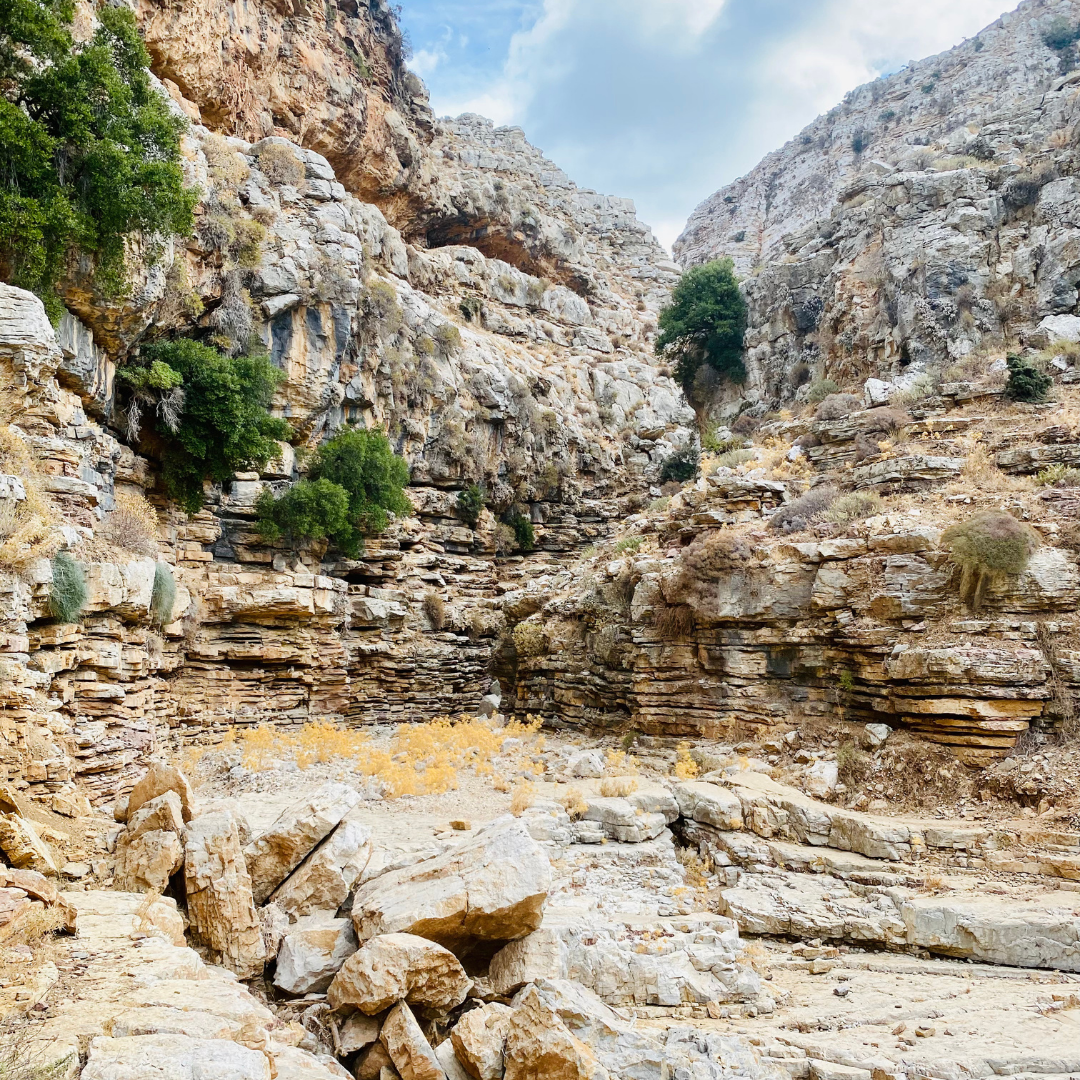
Salakos to the Monastery of Prophet Elias
The connection to look for is Salakos–Monastery of Prophet Elias, not simply a walk labelled “Profitis Ilias”. The mountain has other paths, so a general destination pin is not enough to identify this route.
This is worth considering if you want a village-and-mountain outing rather than another beach day. For the wider setting and places to visit, see Profitis Ilias.
If you need a predictable, easy walk with children or someone with limited mobility, I’d choose only after seeing the full route profile. A short distance figure alone tells you little about the effort involved.
Route length, endpoints and return options
You may see a length of 650 metres given for this path. Before using it to plan your day, match that measurement to a mapped section with clear start and finish points. Keep it separate from the distance of your complete outing, including the return.
Use one route map that shows the exact start, monastery endpoint, distance, ascent and whether you retrace your steps. Base your timing on that route and your walking pace—not on the 650-metre figure. There is no reason to build a circular outing around that number.
For a one-way walk, arrange collection at the endpoint you have chosen. If you leave a car at the start, your plan needs to bring you back there. Compare the wider travel options in getting around Rhodes, then settle the trailhead access and return together.
Terrain, shade and navigation
Profitis Ilias has pine woodland, but that does not make every route shaded throughout. Choose this walk for the mountain setting, not as a guaranteed escape from summer heat.
A structured path is not a promise of an even surface or continuous signs. Get current local advice on the specific Salakos–monastery route, including access, footing and waymarking, before setting off.
Download the route for offline use, as phone signal can vary in the mountains. Follow the mapped connection rather than taking another forest path simply because it looks well used.
My suggestion: If you want to explore beyond the walk, I’d rent a car for the day. You can compare car rental options, but plan your walking return before leaving the car.
Chapter 3 of 8
Is Butterfly Valley a hike or a scenic walk?
Butterfly Valley is a nature attraction with scenic visitor walks, not a stand-alone hiking circuit. Choose it for trees, wooden bridges and insect watching beside the Pelekanos River, rather than a mountain outing.
Walking beside the Pelekanos River
The Valley of the Butterflies is a natural habitat in northern Rhodes. Its visitor walks take you beside the Pelekanos River, among trees and across wooden bridges. The appeal is the valley itself, with time to stop and look closely at your surroundings.
Keep this separate from choosing a hiking route with a set distance, ascent and return plan. Trees and bridges also don’t guarantee an easy, step-free or fully shaded walk. If you need step-free access, check the visitor route’s suitability before committing to the visit.
Who this attraction walk suits
I’d choose Butterfly Valley if you want a nature-focused attraction visit rather than making a mountain walk your main activity. It suits travellers who enjoy looking closely at wildlife and woodland scenery. For families, the important question is whether your children will enjoy watching quietly.
It is less suited to anyone looking for a demanding climb, a summit or a long independent circuit. If mountain scenery is your priority, explore Profitis Ilias instead. Choose the valley for its habitat, not as a substitute for a full hiking day.
Insect season, quiet walking and admission
May–September is the main period for observing the insects at Butterfly Valley. That is an insect-observation window, not an opening calendar or a recommendation for the best hiking season. Choose your visit date around what you want to see, then check access separately.
Remain as quiet as possible to avoid disturbing the insects. Keep voices low, and explain this to children before entering. Watching without trying to make the insects move is the better approach.
Before setting off, use planning a Butterfly Valley visit for admission, opening arrangements and full destination logistics. Check the current entry fee and seasonal opening dates there rather than budgeting for free access or relying on the May–September observation period.
Chapter 4 of 8
When should you go hiking in Rhodes?
Go hiking in Rhodes when conditions are cooler and you have enough daylight to finish without rushing. Choose your start around the forecast, the full route and your return journey—not the season alone.
Choose cooler conditions for longer walks
Spring and autumn are better starting points for planning longer walks than the hottest summer months. Spring brings greener scenery and wildflowers, while autumn offers warm light for photography. Neither season guarantees comfortable conditions on your chosen day.
If walking is a main reason for your trip, compare the seasons when choosing when to visit Rhodes. Then match each outing to the forecast and the effort involved, especially for longer climbs.
Avoid midday heat in July and August. During extreme heat, shorten a demanding outing or cancel it rather than relying on an early start or forest cover. A shorter walk is only a sensible alternative if conditions are suitable.
Plan your start around heat and daylight
My suggestion: aim for an early-morning start in warm weather, once there is enough light to follow the route. Starting early helps only if you can also finish before the worst heat.
Late afternoon can offer lovely light, but it leaves less daylight for delays. Keep that option for walks you can comfortably finish before dark, rather than squeezing in a longer route for sunset.
- Forecast: look at conditions for the whole outing, not just your departure time.
- Route length: allow for the complete walk, including the return, breaks and slower sections.
- Daylight: work backwards from a finish time that leaves spare daylight. Avoid a plan that needs everything to go perfectly.
- Return arrangements: fit the walk around your pickup or bus departure, with time to spare. If using buses, plan both journeys with the Rhodes bus information before choosing your start.
Separate wildlife season from walking conditions
At Butterfly Valley, May to September is the main period for observing the insects. That wildlife window is not a recommendation for longer hikes during summer heat, and it does not tell you the attraction’s opening dates.
Choose the day and start time around walking conditions, then check the attraction’s current opening arrangements separately. While watching the insects, stay as quiet as possible to avoid disturbing them.
Chapter 5 of 8
How do you reach the walk and get back?
Plan both the outward and return journey before choosing your Rhodes walk. A car gives you more flexibility, but buses can work when the village stop, walking access and return timetable fit your day.
When renting a car makes sense
I'd lean towards a car for exploring around Salakos and Profitis Ilias, especially if you want control over your start time. It also makes sense when you want to combine a walk with village stops without building everything around buses.
Start by checking live car rental prices. If walking is only one part of your holiday, you could rent a car for one or two days rather than the whole stay.
A car solves the drive, not every part of access. Locate the walk's actual starting point and a suitable, permitted parking place before setting off. For a one-way walk, you still need a way back to the car.
- Choose a car for flexible start times and several stops in one day.
- Choose the bus when the full journey works comfortably, including the walk between the stop and the path.
- Compare your wider holiday transport options in the Rhodes Island Guide's getting-around section.
Village buses versus trailhead access
Western-side bus destinations include Salakos, Embona, Kritinia and Monolithos. KTEL serves eastern-side destinations, including Prasonisi. These destination names alone tell you nothing about trailhead stops, service frequency or a workable return.
Bus services and prices change, so use Rhodes bus routes and practical advice to plan both journeys. Match the stop to your intended starting point, then include any extra walking in your day's plan.
For the Salakos–Profitis Ilias path, reaching Salakos village is only one part of the journey. Your plan also needs to cover getting to the path and reaching your return stop after the walk. If that leaves a tight connection, I'd choose another outing or rent a car.
Return journeys and separate airport transfers
Work backwards from your journey home rather than choosing a return bus after you finish walking. Leave room for breaks and a slower pace. A one-way drop-off is only useful when the pickup from the other end is arranged too.
For a separate private transfer or customised island outing with GES Travel, you can request a quote via WhatsApp. The message is already prefilled with Looneytravels, so your 10% partner discount is applied automatically. Agree the journey, pickup point and return arrangements directly with GES Travel before booking; this is not a dedicated hiking-shuttle booking.
Keep Rhodes airport transfers separate from your walking plans: they cover your airport journey, not your return from a trail. Even with arrival and departure transport booked, you still need a complete outward-and-back plan for each walk.
Chapter 6 of 8
How do you follow a route safely?
Independent hiking in Rhodes needs a defined walking route and a navigation plan, not just a destination pin. Know where you start, where you finish and how you’ll get back before setting off.
Use a complete route, not just a destination pin
A pin for a monastery, castle or viewpoint shows where the attraction is. It doesn’t tell you which walking path reaches it, whether that path is open or how to return.
Use the Map of Rhodes to place your destination within the island, then save a complete walking route. That route should show the actual path, including junctions, rather than just a line between two places.
- Start and finish: identify the exact walking access points, not simply the nearest village or attraction.
- Route type: know whether it’s a loop, an out-and-back walk or a one-way route.
- Full outing: include the return leg when judging distance, climbing and the time you need.
- Return plan: for a one-way walk, arrange how you’ll leave the finish before you start. Compare transport options under getting around Rhodes if needed.
Waymarking and offline maps
Are hiking trails in Rhodes well marked? Plan around the individual route, not an island-wide promise of clear signs. A well-worn path isn’t the same as a marked route, especially when it splits.
I’d download an offline map even for a walk that looks straightforward. Phone signal can vary in the mountains, so save the route and surrounding map before leaving your accommodation.
- Start with a charged phone and enough battery for navigation throughout the walk.
- Keep the route description available offline alongside the map, including the start, finish and key junctions.
- Compare signs and junctions with your saved route as you go. Stop if they no longer match.
- Share your planned route and expected return time with someone. Let them know when you’re safely back.
Access restrictions and turning back
Follow current access restrictions, barriers and instructions on the ground, even if your saved route continues beyond them. A line on a map is not permission to enter a closed area.
If you lose the route, stop rather than pushing on towards the destination pin. Return to the last point you recognise only if you can retrace your steps safely; don’t cut across unfamiliar ground.
Turn back while the return is still manageable if heat, wind, poor visibility or difficult footing makes continuing unsafe. Reaching a viewpoint is optional; keeping enough time and energy to get back is not.
Chapter 7 of 8
What should you wear and carry?
Wear comfortable walking shoes with grip, and carry drinking water, sun protection and an offline route map. Pack for the whole outing, including your return, rather than relying on shops, water points or shade along the way.
Footwear for uneven ground and steps
Choose walking shoes that fit well and have soles with good grip. Uneven ground and steps need more secure footing than flip-flops or smooth-soled beach shoes provide.
I’d choose shoes you already find comfortable rather than wear a new pair for the first time. Think about the descent as well as the climb: a short outing can still involve demanding steps.
Water, sun protection and essentials
Carry supplies for the full time you expect to be out, with room for delays and breaks. Your water needs depend on the route, conditions and your group’s pace—not just the distance.
Keep the hiking kit simple and useful. For wider holiday preparation, you can also read these practical Rhodes travel tips.
- Drinking water: bring enough for the whole outing and return, rather than planning around a refill.
- Sun protection: pack a hat, sunglasses and sunscreen, even for a walk that includes trees.
- Navigation: carry your route map offline on a charged phone; mountain phone signal can vary.
- Light snacks: bring something easy to eat during a break, especially when walking with children.
- Extra layer: carry a light jacket in the shoulder seasons.
- Optional swim kit: add a swimsuit if a beach stop is already part of your plan.
Adjusting the plan to your group's pace
A short climb is not automatically an easy walk. Steps, uneven footing and sustained uphill effort can matter more than the distance, especially for children or less confident walkers.
Plan around your slowest walker, with time for rests and the journey back. If someone is struggling, shorten the outing rather than pushing on to reach a viewpoint.
For families, I’d choose a manageable walk over a more ambitious climb that leaves everyone tired halfway through. If walking is not a good fit for your group, compare other things to do in Rhodes with children.
Chapter 8 of 8
How should you fit a walk into your holiday?
Build your day around one main walk, rather than joining unrelated paths into an improvised circuit. Add a village or cultural stop only if it leaves enough time for the walk and your return.
Choose one main walking outing
My suggestion: make the walk the main event, with any sightseeing afterwards kept optional. That gives you room to enjoy the scenery without rushing to another attraction.
Choose between a planned hike and an attraction visit with walking, rather than trying to fit both into one outing. Butterfly Valley offers visitor walks beside trees, wooden bridges and the Pelekanos River. It makes sense when you want nature to be part of your day, rather than planning a mountain route.
For a Salakos–Profitis Ilias outing, settle the walking route and return plan before adding other stops. Nearby villages, monasteries and viewpoints are not reasons to extend your route along unfamiliar paths.
- Walking-focused day: give the route priority and leave the rest of the day flexible.
- Sightseeing-focused day: choose an attraction walk, with time to enjoy the place itself.
- Mixed-energy group: choose an outing everyone wants to complete, rather than stretching it for the strongest walker.
Add a village or cultural stop
Salakos is a sensible village stop alongside a properly planned walk in the Profitis Ilias area. Keep village time separate from the walking route, rather than adding an improvised descent or onward connection.
A village pause can provide a change of pace after the walk. Keep it flexible: you should be able to shorten or skip it without affecting your journey back.
If a monastery visit is part of your day, allow time for it as a visit in its own right. Explore Rhodes monasteries and sacred places for the history and cultural context.
When an organised activity is a better fit
An organised outing may suit you if you would rather not manage route finding yourself. It is less appealing if your priority is choosing your own pace, stops and finish time.
Compare organised excursions by their actual itinerary, not just a scenic title or an “outdoor” label. A sightseeing trip with short walks is different from a guided hike, and arranged transport alone does not provide walking guidance.
- Itinerary: choose the places and time on foot you actually want, rather than the longest list of stops.
- Walking requirements: match the terrain, climbing, pace and walking duration to everyone in your group.
- Guidance: look for clear details about who leads the walking sections if navigation is your main concern.
- Transport: compare pickup, drop-off and return arrangements, including whether they are included in the price.
Make the booking fit your day
You can browse Rhodes activities and booking options to compare ways to spend the day. Choose an outing only when its walking requirements and transport arrangements suit your plans.
Keep the walking day simple, then leave other activities for another day. For the wider itinerary, continue with planning the rest of your Rhodes holiday.
Book transport and walking activities
transfersFrequently asked questions
Which Rhodes walks should beginners consider?
Butterfly Valley is an option for an attraction walk rather than a mountain hike. Choose how much walking to do around your fitness, and consider steps and uneven surfaces when planning your visit.
Is Butterfly Valley a hike?
It is best described as an attraction walk beside trees, wooden bridges and the Pelekanos River. Keep it separate from mountain routes when comparing your options.
Can you walk from Salakos towards Profitis Ilias?
There is a structured path from Salakos to the Monastery of Prophet Elias. Choose a mapped route with a clear start, finish and return plan before setting off.
Are hiking trails in Rhodes well marked?
Plan navigation for each individual route rather than relying on island-wide advice. Carry an offline map and turn back if you cannot follow your planned path confidently.
What is the best time to go hiking in Rhodes?
Choose cooler conditions and enough daylight for your whole route. For longer walks, avoid the hottest part of the day and shorten or cancel your outing during extreme heat.
When can you see the insects at Butterfly Valley?
May to September is the main observation period. Stay quiet to avoid disturbing the insects; this period is separate from opening dates and suitable hiking conditions.
Can you reach Rhodes hikes by bus?
A bus to a village is only part of the journey. Check the stop-to-path connection and the return service using the Rhodes bus guide before choosing a bus-based outing.
Do you need a car for hiking in Rhodes?
I'd favour a car if your chosen walk needs a flexible start or finish. You still need a route that brings you back to the vehicle, or a separate return arrangement.
What should you bring for a walk in Rhodes?
Bring drinking water, sun protection, footwear with grip, a charged phone and an offline map. Carry what you need for the whole outing rather than relying on finding supplies along the path.
Are short viewpoint climbs easier than longer walks?
Not necessarily. Steps, steep ground and heat can make a short climb demanding, so compare terrain and conditions as well as distance.
Related pages
Planning your complete Rhodes holiday?
Our Island Mega Guide brings together everything you need to plan your Rhodes holiday, from choosing where to stay and finding the best beaches to transport, activities and practical travel advice.
Open the Rhodes Island Guide