
Chapter 1 of 8
What food should you try first in Rhodes?
Start with pitaroudia, choose a regional stuffed-leaf dish, and look for melekouni among the sweets. Add a traditional main, such as clay-pot goat or Archangelos rifiki, only when it is available and suits your tastes.
A short first-visit food shortlist
I'd start with these flavours rather than work through a long must-eat list. They give you a useful introduction to Rhodian cuisine without making every meal an experiment.
- First small plate — Pitaroudia: Rhodian chickpea fritters with mint, crisp outside and soft inside. These are a good starting point if you enjoy chickpeas and herbs.
- Stuffed leaves — Giaprakia or regional dolmadakia: Choose Lindos-style giaprakia if you enjoy a meat-and-rice filling. Lentil-and-rice dolmadakia offer a different option, but fillings and sauces vary; the dish name alone does not guarantee a vegetarian meal.
- Something sweet — Melekouni: This honey-and-sesame sweet is closely associated with Rhodes and traditionally served at celebrations. Look for it if you enjoy sesame and want a local sweet rather than a familiar cake.
- Optional traditional main — Clay-pot goat or rifiki: Consider these if you enjoy goat or lamb. Rifiki is an Archangelos tradition made with rice-stuffed kid or lamb backbone, roasted overnight in a clay pot; choose it when offered, rather than expecting every taverna to serve it.
Rhodian traditions versus familiar Greek dishes
Rhodes food combines regional traditions with dishes served throughout Greece. Pitaroudia, melekouni and local stuffed-leaf preparations help you explore the island's food identity. That does not mean every dish associated with Rhodes originated only here.
For familiar alternatives, moussaka offers a baked aubergine-and-mince dish, while lamb kleftiko is a slow-cooked meat option. Seafood choices include grilled octopus, whole sea bream or sea bass, crispy fried anchovies, and shrimp saganaki with tomato and feta. These belong to the wider Greek dining repertoire, rather than being specialities unique to Rhodes.
Regional dishes suit curious eaters who want to try something beyond their usual Greek favourites. If you prefer familiar flavours, there is nothing wrong with choosing moussaka or grilled fish. I'd add pitaroudia to share rather than order an unfamiliar main simply because it sounds more local.
Browse traditional taverns in Rhodes if regional cooking is your priority. For a broader choice, including familiar Greek dishes and seafood, compare places to eat across Rhodes near where you are staying.
Chapter 2 of 8
What are pitaroudia, and what small plates can you try?
Pitaroudia are Rhodian chickpea balls with mint, also described as chickpea fritters. Other small-plate choices to look for include village bread, myzithra cheese and pouggakia cheese pastries.
Pitaroudia: chickpea balls with mint
If you want a local starter rather than another familiar Greek dish, I’d start with pitaroudia. Chickpeas and mint give you a clear idea of what you’re ordering, without needing a long food shortlist.
Ask for pitaroudia by name and find out whether they’re available that day. They’re a simple starting point for trying Rhodian food, especially if you enjoy chickpea dishes and herbal flavours.
You can browse traditional taverns in Rhodes when choosing somewhere to eat. Keep pitaroudia on your shortlist, rather than expecting every menu to include them.
Village bread, myzithra and pouggakia
For a bread-and-cheese option alongside your starter, keep these three names handy. They offer different tastes and textures, so choose whichever appeals rather than ordering all three.
These are choices to look for, not items you’ll find everywhere. To choose a place near your plans, browse restaurants around Rhodes.
- Village bread, or horiatiko psomi: wood-fired bread, often crisp outside and soft inside, served with olive oil, tomatoes or local cheese.
- Myzithra: a soft, creamy, slightly tangy cheese, often served with honey or fruit.
- Pouggakia: crisp pastry pockets with cheese; spinach-filled versions also feature. A useful choice if you fancy pastries to share.
Chapter 3 of 8
How do giaprakia and dolmadakia differ?
Giaprakia and dolmadakia are stuffed-leaf dishes, but recipes vary: the names alone do not identify a vegetarian meal. Lindos giaprakia contain meat, while other preparations use lentils and rice or feature cyclamen leaves with egg-lemon sauce.
- Lindos giaprakia: vine leaves, minced meat and rice; cooked with tomato juice, lemon juice and olive oil.
- Lentil-and-rice dolmadakia: vine or cyclamen leaves, with a lentil-and-rice filling.
- Cyclamen-leaf dolmades with egg-lemon sauce: a separate preparation; the sauce does not tell you what filling is inside.
Lindos giaprakia with meat and rice
Lindos giaprakia use vine leaves filled with minced meat, rice, onion, tomato pulp and dill. They cook in tomato juice, lemon juice and olive oil, so lemon is part of the cooking rather than just a finishing squeeze.
I'd choose these if you want a meat-filled local speciality with herbs, tomato and lemon. They are not a vegetarian option, even though the leaf wrapping may look similar to meat-free dolmadakia.
If you're eating in Lindos, you can compare restaurants in Lindos when choosing where to stop. This regional recipe is something to look for, not a dish guaranteed on every menu.
Lentil-and-rice stuffed leaves
Another Rhodian dolmadakia preparation combines lentils and rice, wrapped in either vine leaves or cyclamen leaves. The filling is the key difference from meat-filled Lindos giaprakia; the leaf alone will not distinguish them.
For a meat-free preference, this is the version I'd ask about first. A lentil-and-rice filling is a useful starting point, but vegetarian or vegan suitability also depends on the cooking liquid and any sauce.
Cyclamen leaves with egg-lemon sauce
Rhodes also has a cyclamen-leaf dolmades preparation served with egg-lemon sauce. Keep this separate from the lentil-and-rice version: sharing the same type of leaf does not mean sharing the same filling.
The sauce contains egg, so this preparation is not vegan and does not suit an egg allergy. If you enjoy lemon-based sauces, it is another version worth looking for while comparing traditional taverns in Rhodes.
Chapter 4 of 8
Which traditional main dishes should you look for?
Look for rifiki, goat cooked in a clay pot, lopia, and snails with bulgur or cumin. Rhodes also has ceremonial foods such as wedding pilaf, which belong to its food traditions rather than every everyday menu.
Archangelos rifiki
Rifiki is a speciality associated with Archangelos: a kid or lamb backbone stuffed with rice and roasted overnight in a clay pot. Here, kid means young goat. The stuffed cut and overnight cooking distinguish it from a general clay-pot goat dish.
If you enjoy roast goat or lamb, I’d put rifiki on your shortlist. Archangelos gives you the dish’s regional context, not a reason to plan a village visit around a guaranteed serving.
Goat in a clay pot and lopia
Goat cooked in a clay pot is another traditional Rhodian main dish. Keep it separate from rifiki: the clay pot alone does not mean you’re ordering a rice-stuffed backbone.
Lopia is goat with dried beans, not a vegetarian bean dish. Choose it if you like meat and beans together; skip it if you’re looking for a meat-free main.
- Rifiki: kid or lamb backbone stuffed with rice, roasted overnight in a clay pot.
- Clay-pot goat: a goat dish identified by its cooking vessel, without rifiki’s specific stuffed preparation.
- Lopia: goat with dried beans.
Snails and chicken dishes
Traditional Rhodian snail dishes include snails with bulgur or with cumin. These are alternatives, so you needn’t look for a dish containing both. If you already enjoy snails, they’re a good choice for exploring beyond familiar Greek taverna mains.
Chicken with loukoumi is also part of Rhodian cooking. The name alone won’t tell you the full recipe, so ask for a description if it catches your eye.
Gamopilafo and wedding food
Gamopilafo is pilaf served at weddings. Its wedding connection is the key detail: it isn’t simply another name for any rice side dish.
For places to eat, compare traditional taverns in Rhodes or choose restaurants by area. Before making a special trip for any of these less everyday dishes, ask the restaurant whether it will be serving it.
Chapter 5 of 8
What can vegetarians and vegans eat in Rhodes?
Vegetarians and vegans in Rhodes can start with chickpea dishes, lentil-and-rice fillings, stuffed vegetables and vegetable roasts. The full recipe matters: meat stock, egg-lemon sauce and cheese can change which dishes suit you.
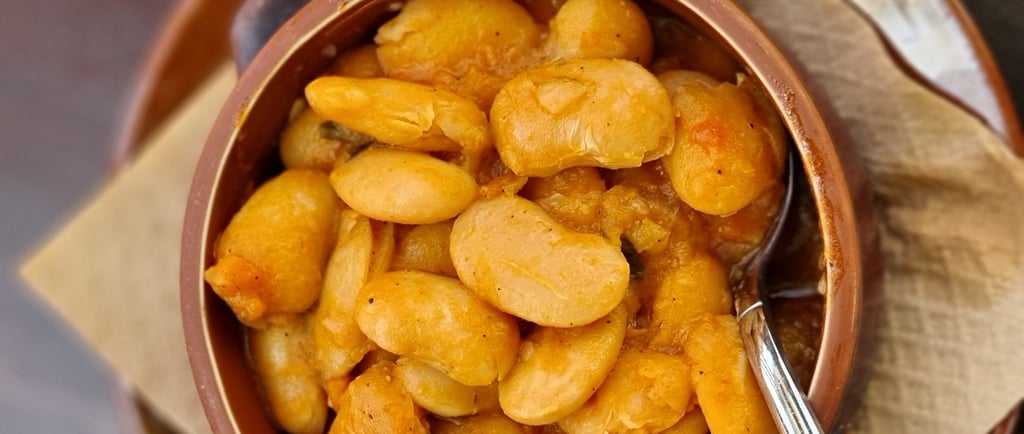
Plant-based dishes to look for
You have more choices than salad, including several comforting cooked dishes. Some are wider Greek favourites served in Rhodes, rather than specialities found only on the island.
- Gemista: stuffed tomatoes and peppers. Look for the version filled with rice, herbs and olive oil.
- Fasolakia ladera: green beans cooked in tomato. A good choice if you prefer soft, slow-cooked vegetables, especially with bread.
- Briam: a vegetable roast with courgettes, potatoes, onions, tomatoes and herbs. I'd start here if you want a vegetable-led plate rather than fried starters.
- Pitaroudia: keep these chickpea bites on your shortlist, with the recipe checks below in mind.
- Lentil-and-rice dolmadakia: a useful stuffed-leaf option, but distinct from meat-filled giaprakia.
- Lentil or bean stews, roasted vegetables and greens pies: other options to look for, with particular attention to stock, pastry and cheese.
Amarangi with garlic sauce
Amarangi is a Rhodian preparation of daisy shoots served with garlic sauce. It is worth looking for if you want a local vegetable dish beyond the familiar stuffed peppers and vegetable roasts.
I'd put it on your shortlist if you enjoy greens and garlic. For a vegan meal, the sauce needs the same ingredient check as the rest of the plate.
Browse traditional taverns in Rhodes when choosing somewhere to eat. Ask about amarangi before making a special journey, rather than expecting it on every menu.
Fillings, sauces and cooking stock
A vegetable name tells you the main ingredient, not everything in the dish. For vegetarians, meat fillings and meat stock are the key exclusions; vegans also need to avoid eggs and dairy.
Keep the stuffed-leaf variations separate. Lindos giaprakia contains minced meat, while lentil-and-rice dolmadakia offers a meat-free filling; a cyclamen-leaf preparation comes with egg-lemon sauce.
One useful ordering phrase is: “I'm vegan—does this dish contain meat or meat stock, eggs, or dairy?” If you're vegetarian, explain that you avoid meat and meat stock but eat eggs or dairy, if that applies.
You can choose restaurants by area once you have a shortlist. If your meal depends on a particular dish, check its availability and recipe before booking.
- Egg-lemon sauce: contains egg, so it is not vegan. A meat-free filling alone does not make the finished dish vegan.
- Cheese: changes a vegetable dish's vegan suitability. Myzithra and cheese-filled pouggakia are dairy choices, not plant-based alternatives.
- Cooking stock: matters even in a rice or vegetable dish. A meat-free-looking plate still needs a meat-free cooking liquid.
- Lopia: belongs among meat dishes. It is goat with dried beans, not a vegetarian bean stew.
Chapter 6 of 8
Which sweets and local products should you try?
Start your Rhodes sweets shortlist with melekouni, marzipan and spoon sweets. For a concrete connection to village food-making, look to the Apolloniatisses women’s agrotourism association in Apollona.
Melekouni, marzipan and spoon sweets
Melekouni is a signature sweet of Rhodes, and it would be my first choice if you only try one. Marzipan and spoon sweets also belong on your shortlist of traditional products to try.
You can add two other sweets to your holiday tasting list. These offer a change from the local-product shortlist rather than replacing it:
- Loukoumades: small fried dough balls drizzled with honey and cinnamon.
- Ravani: a soft semolina cake with syrup—a good choice with an afternoon coffee.
Traditional products from Apollona
The Apolloniatisses women’s agrotourism association in Apollona is a useful example of traditional product-making on Rhodes. Its range includes sweets, pantry foods and drinks, rather than sweets alone.
- Sweets: melekounia, marzipans and spoon sweets.
- Other traditional products: trahana, souma and wine.
Choosing what to try
If you are already spending time in Apollona, ask locally which association products are available. Keep the list as tasting ideas, not a reason to expect every item on sale that day.
For a separate pastry or coffee stop, browse bakeries in Rhodes. If you are choosing a meal first, compare places to eat in Rhodes and ask what sweets are available when you order.
Chapter 7 of 8
What local wine or spirit goes with a Rhodes meal?
Choose Athiri for Rhodian white wine, Mandilaria—also called Amorgiano—for red, and Muscat for aromatic sweet wines. If you prefer a local spirit, try souma, a traditional grape distillate produced mainly in Embonas.
Athiri white and Mandilaria red
Athiri is the flagship grape variety of Rhodes’s white wines. For red, look for Mandilaria or Amorgiano: these are two names for the same grape, not different varieties.
You may also see PDO Rhodos on a label. PDO means Protected Designation of Origin; Rhodos is the protected name for wines from Rhodes.
My suggestion: start with the colour you normally enjoy, then ask which local bottle suits your meal and budget. If you’re choosing somewhere for a traditional dinner, browse traditional taverns in Rhodes.
Muscat sweet wines
White Muscat and Trani Muscat are the varieties to recognise for Rhodes’s aromatic sweet wines. These are worth trying if you enjoy sweetness, but they are not the obvious choice for a dry-wine drinker.
The protected designation PDO Moschatos Rhodou is also rendered as Muscat Rhodes. Recognising both names helps when reading a bottle label or wine list.
Souma from Embonas
Souma is a strong traditional grape distillate, made from grape skins and produced mainly in Embonas. Choose it if you want to try a local spirit rather than another wine; skip it if strong spirits aren’t your thing.
If you want a tasting beyond dinner, consider Rhodes: Wine Tasting in Embonas, the Land of Rhodian Wine.
If you plan to drink, arrange your return without driving. Compare ways to get around Rhodes, or book a transfer if you need a pre-arranged ride.
Chapter 8 of 8
How do you turn your food shortlist into a meal?
Choose the Rhodes dishes that interest you, then find a restaurant that serves them. Regional specialities and recipes vary, so build your meal around what is available rather than expecting every dish on every menu.
Choose a restaurant for the dishes you want
Start with restaurants in Rhodes to narrow your search by area. For village cooking, look through traditional taverns; Apollona, Psinthos and Salakos are useful places to consider.
Regional names help you understand a dish, but they do not guarantee it appears on a nearby menu. Rifiki has a tradition in Archangelos, for example, while gamopilafo is wedding food rather than an everyday menu staple.
If a particular speciality is the reason for your visit, contact the restaurant before travelling. Ask whether it will be served and how it is prepared; fillings and sauces matter more than the name alone.
My suggestion: choose a few small plates to share, then add a main that interests you. That gives you room to explore different flavours without turning the meal into a must-try checklist.
If you are staying in town, start with restaurants in Rhodes Town rather than planning a village trip for every meal. Choose the food first, then decide how much the setting matters to you.
Try a cooking experience
A cooking class suits you if you want to learn how dishes are made, not simply order them. If you prefer choosing freely from a menu, a restaurant meal is the better fit.
Browse food experiences when you want eating to be the main activity. One specific option is Rhodes: 1952 Farmhouse Cooking & Lunch with Unlimited Wine, which combines hands-on cooking with lunch.
Choose by the advertised cooking programme, not by expecting every Rhodian speciality to be included. Before booking, read the menu details, dietary arrangements and meeting-point information together.
Keep booking and transport simple
If your chosen experience requires independent transport, compare car rental options before committing. If you plan to drink wine, arrange a non-driving return instead.
For arrival transport, use airport transfer options to arrange the journey to your accommodation. Keep that separate from any transport needed for your meal or cooking activity.
If you also want to arrange another holiday activity, browse the Rhodes Booking Marketplace. Choose something that fits around your food plans rather than squeezing both into a rushed day.
For practical help keeping spending manageable, see eating and travelling on a budget. Use the Rhodes Island Guide to fit your meals and experiences into the wider holiday.
Book a food experience in Rhodes
foodtransfersFrequently asked questions
What food is Rhodes known for?
Pitaroudia and melekouni are good starting points. Regional traditions also include Lindos giaprakia, Archangelos rifiki, snails with bulgur or cumin, and goat cooked in a clay pot.
What local dishes should I try on my first visit?
I'd start with pitaroudia, then try a stuffed-leaf dish whose filling suits you. Add a traditional main if available, and look for melekouni among the sweets.
What are pitaroudia?
Pitaroudia are Rhodian chickpea balls with mint, also described as chickpea fritters. They're a useful starting point when you want to try a local dish.
Are giaprakia and dolmadakia vegetarian?
Not always. Lindos giaprakia contain minced meat, rice, onion, tomato and dill. Other preparations use lentils and rice, while a separate cyclamen-leaf version comes with egg-lemon sauce.
What vegetarian food can I eat in Rhodes?
Look for chickpea dishes, lentil-and-rice stuffed leaves, and amarangi, described as daisy shoots with garlic sauce. Explain your diet when ordering and ask about the filling, sauce and cooking stock.
Can vegans order local dishes by name alone?
No. A vegetable or pulse-based dish name does not tell you every ingredient. Ask specifically about meat stock, eggs and dairy; egg-lemon sauce is not vegan.
What is rifiki?
In Archangelos, rifiki is kid or lamb backbone stuffed with rice and roasted overnight in a clay pot. It belongs to ceremonial food traditions, so ask about availability rather than expecting it on an everyday menu.
What is gamopilafo?
Gamopilafo is a pilaf served at weddings. Its place in local food traditions does not mean every taverna serves it.
Is lopia a vegetarian bean dish?
The Rhodian dish covered here is goat with dried beans. If you see the name on a menu, ask for the ingredients rather than choosing it as a vegetarian option.
Which traditional sweets should I look for?
Look for melekouni, marzipan and spoon sweets. The Apolloniatisses women's association in Apollona offers these among its traditional products.
Which local wines should I try in Rhodes?
Look for Athiri white wine, Mandilaria red wine, also called Amorgiano, and aromatic sweet wines made with White Muscat or Trani Muscat.
What is souma?
Souma is a traditional grape distillate produced mainly in Embonas. It is a spirit, not a wine.
Related pages
- Best Restaurants in Rhodes (2026 Local Guide)
- Best Traditional Taverns in Rhodes (2026 Local Guide – Authentic Greek Food)
- Best Restaurants in Lindos Rhodes (2026 Local Guide – Where to Eat in Lindos)
- Best Bakeries in Rhodes (2026 Local Guide – Greek Pastries & Bread)
- Best Restaurants in Rhodes Town: What’s Worth It (and What to Avoid)
- Rhodes on a Budget 2026: Cheap Areas, Food & How to Save Money
Planning your complete Rhodes holiday?
Our Island Mega Guide brings together everything you need to plan your Rhodes holiday, from choosing where to stay and finding the best beaches to transport, activities and practical travel advice.
Open the Rhodes Island Guide