
Chapter 1 of 8
What the Rhodes tourist tax actually is
In Greek, we call it the "τέλος ανθεκτικότητας στην κλιματική κρίση", but everyone just shortens that to TAKK. This fee replaced the older, lower 'overnight-stay tax' in 2024, with the current higher rates taking effect from 1 January 2025.
I want to be clear: this isn't some local Rhodes council tax. It’s a national fee set by the Greek government. The money raised is specifically for preventing and repairing damage from natural disasters and helping the country adapt to climate change. As someone living on an island that has seen devastating wildfires, I can tell you the purpose behind this fee is something we locals understand all too well.
Chapter 2 of 8
How much is it?
The most important point to remember is that the amount is per room or apartment, per night. It is not per person. A couple sharing one room pays the same single fee as a solo traveller. A family that books two rooms will pay the fee for each room.
For hotels, the rate is simply based on its official star rating. The category 'short-term rentals' covers private homes you'd find on platforms like Airbnb or Booking.com, while 'rented rooms and apartments' refers to the classic, licensed 'rooms to let' that are a huge part of our local tourism scene across Rhodes.
- 1–2 star hotels: €2 (April–October), €0.50 (November–March)
- 3 star hotels: €5 (April–October), €1.50 (November–March)
- 4 star hotels: €10 (April–October), €3 (November–March)
- 5 star hotels: €15 (April–October), €4 (November–March)
- Rented rooms and apartments (any category): €2 (April–October), €0.50 (November–March)
- Short-term rentals: €8 (April–October), €2 (November–March)
- Short-term rental detached houses over 80 m²: €15 (April–October), €4 (November–March)
- Tourist furnished villas: €15 (April–October), €4 (November–March)
- Tourist furnished residences under 80 m²: €8 (April–October), €2 (November–March)
- Tourist furnished residences of 80 m² or more: €15 (April–October), €4 (November–March)
Chapter 3 of 8
Who pays it?
The law is simple: you, the guest staying in the room, are the one who owes the fee. Your hotel, rental business, or private host is legally responsible for collecting it from you before you leave.
My advice: check your booking documents before you pay at reception, especially on a package holiday, so you know whether the fee is already covered.
Chapter 4 of 8
When and how is it collected?
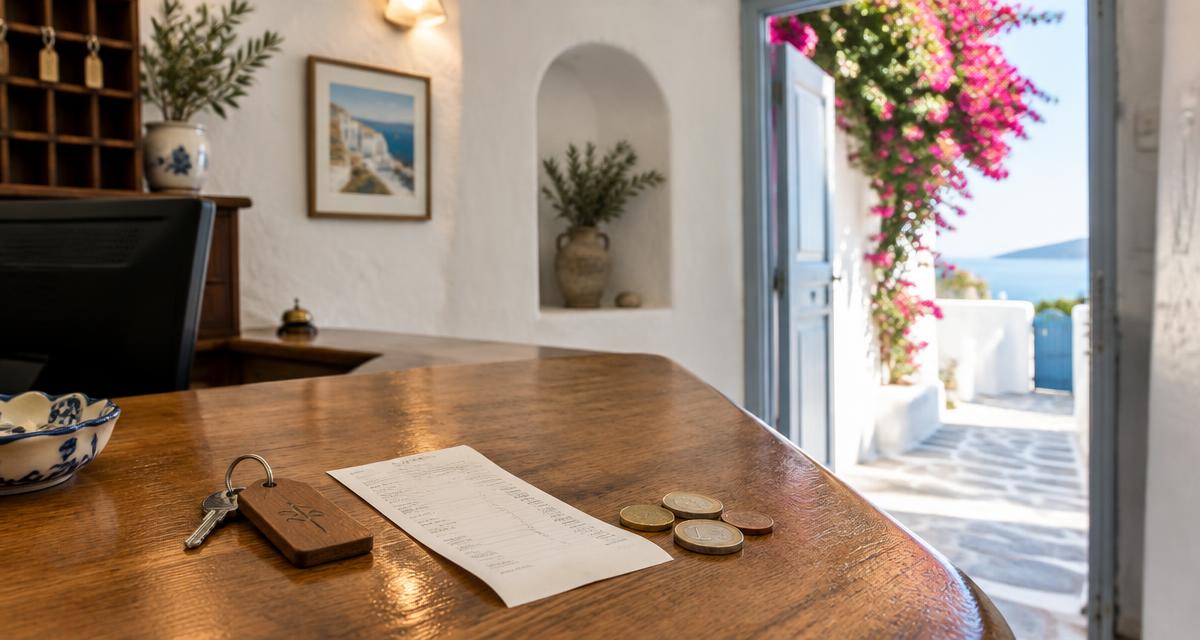
The fee should be charged before you check out. Crucially, the hotel must give you a special receipt that is separate from your main accommodation bill, and the fee is not subject to VAT. One quirk is that for a stay crossing months with different rates, they should issue a separate receipt for each month's portion.
Most hotels I know ask for payment at check-out, but some will take it at check-in or simply charge the credit card they have on file. It’s up to them, so I always think it's wise to have a little cash on you, especially for smaller, independent rentals. My guide to cash and cards in Rhodes explains when it's useful.
Chapter 5 of 8
Is it included in my booking price?
Sometimes, but you can't assume it is. My advice is to always scrutinize the price breakdown on your booking confirmation. Look for phrases like 'climate resilience fee', 'tourist tax', or 'local taxes' and check if the booking says 'included' or 'to be paid at the property'.
If it's not crystal clear, don't guess. Just send a quick message to the hotel or host and ask them directly. It takes two minutes and saves you an annoying surprise on your departure day.
Chapter 6 of 8
Examples: what a typical stay costs in fee
To make it clearer, here are a few real-world examples. For these, I'm assuming the entire stay is within one rate period (e.g., all in July) and the accommodation category is correct.
- 7 nights in July, one room in a 4-star hotel: 7 × €10 = €70.
- 7 nights in July, two rooms in a 3-star hotel: 7 × €5 × 2 rooms = €70.
- 10 nights in August in a villa: 10 × €15 = €150, however many people stay.
- 7 nights in June in a licensed rooms-to-let apartment: 7 × €2 = €14.
- 5 nights in December in a 4-star hotel: 5 × €3 = €15.
Chapter 7 of 8
Common misunderstandings
I hear the same points of confusion from visitors all the time, so let me set the record straight. It is not per person. Many European city taxes work that way, but the Greek fee is strictly per room or apartment, per night.
This fee has nothing to do with cruise passengers. If you arrive on a cruise ship, there's a separate levy handled by the cruise line. What I'm talking about on this page is only for people staying in accommodation on the island.
Finally, this is not optional, nor is it a tip. Your hotel is legally required to collect it. If they forget and then contact you after you've left, my advice is to first check your booking confirmation to make sure you hadn't already paid it.
Chapter 8 of 8
What to check before you arrive
Trust me, spending two minutes checking these details now will prevent confusion later at the reception desk. If you're still choosing where to stay, my Rhodes area comparison can help you find the right base, and my Rhodes villas guide is perfect if you're considering a villa holiday.
- Your property's official star rating or category from your booking confirmation.
- Whether the fee is already included in your booking price or is payable at the property.
- How many rooms you've booked, as the fee is charged on each one.
- If your stay crosses from October to November, when the rates change.
- How the property prefers to be paid – by card, cash, or by charging the card on file.
Sources and product information
Frequently asked questions
Do children pay the Rhodes tourist tax?
No. The fee is charged per room, not per person, so there's no extra cost for children. A family sharing one room pays one single fee for that room each night.
Is the fee different in Lindos, Faliraki or Rhodes Town?
No, the rate is exactly the same whether you stay in Lindos, Faliraki, Rhodes Town or a tiny village. It's a national Greek tax, so the only things that change the amount are your accommodation's official rating and the time of year.
Do I pay if I cancel before arrival?
No, you shouldn't have to. The law applies the fee to nights you actually spend in the accommodation. Any charges for cancelling are a separate matter between you and the property, based on your booking terms, and have nothing to do with this state fee.
Will I get a receipt?
Yes, you absolutely must get one. Your accommodation provider is legally required to give you a special, separate receipt for the climate fee payment. It should not just be a line item on your main hotel invoice.