
Chapter 1 of 8
Is Seven Springs worth visiting?
Yes—Seven Springs Rhodes is worth visiting if you want a nature stop with shaded forest paths, freshwater springs and an optional tunnel. Near Archangelos, the springs feed a small lake, offering a change from the coast rather than a dramatic sightseeing stop.
What Epta Piges is like
Seven Springs, also called Epta Piges, sits inland above Kolymbia. Pine and plane trees shade the paths, while small bridges, water channels and a tree-lined lake give you reasons to pause. The appeal is in these small details, not sweeping views or spectacular waterfalls.
The lake is man-made and fed by the springs. Reflections, woodland scenery and birds such as ducks and peacocks add interest, especially if you enjoy photography. Summer water levels and flow can vary, so come for the woodland setting rather than a guaranteed display of rushing water.
The dark water-channel tunnel is the most unusual feature, but it is an optional part of the visit. Seven Springs is also a different attraction from Kallithea Springs—the similar names can easily cause confusion.
Who will enjoy it
I'd recommend Seven Springs to travellers who enjoy a gentle woodland outing more than a big landmark. The shade makes a welcome change from exposed coastal spots, although a peaceful setting does not guarantee solitude.
If you're considering a nearby holiday base, read what to expect in Kolymbia. Seven Springs adds an inland outing to a stay there, but I wouldn't choose your whole holiday base around this attraction alone.
- Casual walkers: come for forest paths, springs and small bridges rather than a demanding hike.
- Couples: a good choice for an unhurried walk and woodland photos, without needing to tackle the tunnel.
- Families: bridges, water channels and birds give children things to notice beyond simply walking. Keep the tunnel a choice, not a test of bravery.
- Photographers: look for reflections, bridge details and soft light beneath the trees rather than dramatic panoramas.
- Adventure-curious travellers: the dark tunnel, with running water around your feet, offers something different from the usual beach day.
Who may prefer another stop
If swimming is your main aim, I'd choose a beach instead. Seven Springs is better approached as a woodland visit, not a planned freshwater swim; you can choose a beach to suit your day.
If you need assured step-free access, another outing with confirmed accessible routes is a better choice. Forest paths are not the same as a paved promenade, and an easy, step-free route between the main areas is not guaranteed.
Skip the tunnel if you have claustrophobia or dislike dark, enclosed spaces. That alone needn't rule out Seven Springs, but if the forest and springs hold little appeal, I'd spend your holiday time elsewhere.
Chapter 2 of 8
When should you visit, and how much time should you allow?
Plan Seven Springs as a flexible visit, not a tightly timed stop. A look around the springs needs less time than a visit with forest walking, the tunnel, the lake and lunch.
Choosing a comfortable time
Choose daylight so you can find your way along the outdoor paths and see the ground clearly. On hot days, I’d start earlier rather than leave the walking until the middle of the day.
The trees provide shade, but an early arrival is no guarantee of cool conditions or empty paths. Choose your timing around the day’s weather and your own comfort, rather than chasing a supposedly perfect arrival hour.
A later visit can also work, provided you leave enough daylight for exploring and returning. Daylight helps outdoors; it does not make the Seven Springs tunnel any less dark.
A short stop or a slower visit
Decide what you want to include before setting your next appointment or return journey. There’s little benefit in squeezing walking, the tunnel and lunch into a gap meant for a quick look.
If you’re arranging the day around transport, compare options through Rhodes Booking Marketplace. Leave some breathing room between finishing your walk and your planned departure.
For a second stop, see what Kolymbia offers rather than packing several more places into the same outing. Seven Springs works better when you have time to pause.
- Springs-focused stop: keep your plan to the springs and nearby forest surroundings. This suits you if you want a brief nature break without making the tunnel or lake essential.
- Longer exploration: leave room for walking, the lake and the tunnel if you want that experience. Keep the pace flexible rather than setting a deadline for each part.
- Exploring plus a meal: allow a separate, unhurried break for lunch. A meal at the shaded taverna, when operating, makes this a different plan from a short sightseeing stop.
Planning around seasonal conditions
Spring and early summer, especially April–June, would be my first choices for a visit focused on the woodland setting. If water flow matters most to you, I’d favour spring over the driest part of summer.
Still, don’t choose Seven Springs on the promise of strong flowing water during dry weather. The springs feed a small lake, but you should come for the forest setting rather than expect dramatic waterfalls or guaranteed overflow.
In July and August, the shade is part of the appeal, not a reason to ignore the heat. Late September or October can be alternatives if your holiday dates are flexible; plan around that day’s weather and daylight.
If you’re still choosing your travel dates, compare when to visit Rhodes. For this particular outing, keep your expectations flexible rather than judging the season by one lush photograph.
My suggestion: if Seven Springs is one of several stops, compare car rental options so you can leave when you’re ready rather than rush your visit.
Chapter 3 of 8
How do you get to Seven Springs?
A car gives you the most flexibility for visiting Seven Springs, also called Epta Piges. A taxi works well if you prefer not to drive, but arrange your return pickup before setting off.
Driving to Epta Piges
Seven Springs is inland near Archangelos, with Kolymbia a useful coastal reference point. Set your navigation destination to Seven Springs or Epta Piges, rather than either nearby town.
I'd choose a car for this visit if you want control over when you arrive and leave. It also makes sense if Seven Springs is one stop in a longer day out. Compare car rental prices and local deals if that flexibility suits your plans.
If you're still choosing transport for your holiday, compare the options in the Rhodes Island Guide's getting-around section. For this particular visit, the main advantage of driving is not having to work around a pickup or bus connection.
Taxi and return pickup
A taxi suits you if you want a door-to-door journey without renting a car. Give the driver your exact starting point and name Seven Springs or Epta Piges as the destination.
Ask for a quote covering your actual route and return arrangement. Make clear whether you want the driver to wait or collect you later, as these are different bookings.
Agree on the pickup time and meeting point before the driver leaves, and save their contact number. Mobile signal can be weak inside the forest, so I'd avoid leaving the return journey to a last-minute call.
Planning a bus journey
Start with Rhodes bus routes and planning advice to work out the journey from your accommodation. Services change seasonally, so check both outward and return departures, the stop location, and any onward transport needed.
Compare the whole journey, not just the bus fare. If your route needs a taxi connection, include that cost and arrange the connecting pickup. I'd choose a car or a prearranged taxi if the connections leave little freedom for your visit.
If you'd rather avoid managing connections, browse guided excursions and choose an itinerary that explicitly includes Seven Springs. Look at how much time the trip allows there before booking.
Airport arrival and onward transport
For your wider arrival journey, you can compare Rhodes airport transfers to your accommodation. Plan your Seven Springs visit separately unless the operator agrees to include that exact destination.
If you want to visit on arrival day, request a quote for the full route, including any stop and onward drop-off. That keeps your airport journey and attraction visit clear from the start.
Chapter 4 of 8
What should you know about entry, parking and facilities?
Before committing to Seven Springs, check current local information on admission, parking charges, seasonal opening, grounds and tunnel access, and taverna facilities. Budget separately for transport and refreshments, and bring drinking water and a snack.
Entrance fee and parking arrangements
There is a parking area near the entrance. Leave room in your budget for any admission or parking charges rather than planning around a completely free outing.
Your journey is another part of the cost. If you’re comparing travel options, use the Rhodes transport overview to help plan your budget.
Opening and tunnel access
Grounds access, tunnel access and taverna opening are separate arrangements. An open food stop is not a guarantee that the tunnel is accessible, and access to the grounds does not guarantee food service.
If the tunnel is your main reason for coming, make its availability part of your decision before setting off. Follow any access signs or barriers when you arrive.
Taverna, drinks and toilets
The shaded Greek taverna at Seven Springs is a possible stop for food or drinks when operating. I’d keep lunch here flexible rather than make the whole outing depend on it being open.
Carry drinking water and a snack so you can explore without depending on food service. For another meal option nearby, consider Kolymbia or Archipoli.
Plan a toilet stop before arriving, especially if reliable access matters for your group. Leave enough flexibility to manage the visit without visitor toilets on site.
Chapter 5 of 8
Can you explore without using the tunnel?
Yes—you can visit Seven Springs Rhodes without entering the tunnel. The springs and forest paths are worth exploring in their own right; for the lake, ask on arrival which above-ground route is currently open.
Seeing the springs and forest paths
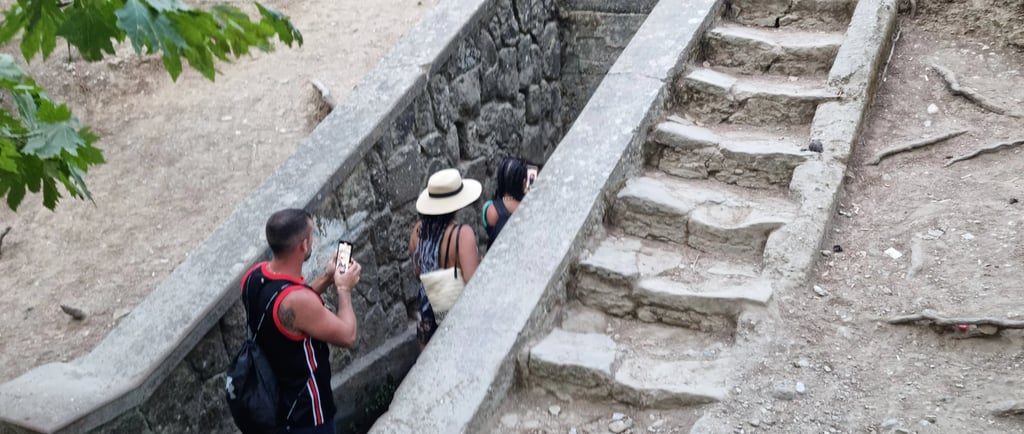
The tunnel is optional, not the whole attraction. Pine and plane trees shade the forest, with small water channels and stone and wooden bridges adding interest along the paths. The springs feed the small lake.
Take your time around the springs rather than heading straight for the tunnel entrance. This part of the visit suits you if you prefer trees, shade and photos to an enclosed adventure. If dark spaces make you uncomfortable, there is no reason to push yourself into the tunnel.
The forest also makes a change from the resort setting of nearby Kolymbia. Expect a quiet nature stop rather than dramatic waterfalls or sweeping views.
Reaching the lake above ground
An upper forest path provides an alternative to the tunnel, but ask on arrival which route to the lake is open. Get directions for that route before setting off, especially if you need to avoid steps or uneven ground.
Choosing the open-air route avoids the tunnel's darkness, but it does not guarantee a smooth or step-free walk. Stay on open paths rather than searching for unofficial shortcuts through the trees. If the route does not suit your group, keep the visit around the springs instead.
Walking comfort and accessibility
Plan around the sections you want to reach, rather than a single accessibility label for Seven Springs. Tree roots cross some paths, and ground near the lake can be uneven. Shade makes walking more pleasant, but does not remove those obstacles.
I'd choose comfortable footwear with grip for the forest paths. Keep your route flexible and turn back when the ground stops feeling manageable.
- Pushchairs: ask about the surface and any steps on the specific route you plan to use. Be ready to leave the lake out.
- Wheelchairs: get route-specific access advice before travelling, covering the arrival point, springs and lake separately.
- Restricted mobility: choose a manageable section and allow for the return walk. Reaching the lake is not essential to enjoying the springs.
Chapter 6 of 8
What is the Seven Springs tunnel like?
The Seven Springs tunnel is a dark, 150-metre water channel, 2.5 metres high, with running water reaching your feet. It is the adventurous part of Epta Piges, but you can leave it out of your visit.
Length, darkness and running water
Expect a walk through an enclosed water channel, not a dry passage. The darkness and water flowing around your feet are what make the experience unusual.
If that sounds exciting, the tunnel may be the highlight of your visit. If you came for a peaceful forest break, there is no need to turn it into a challenge.
- Length: 150 metres.
- Height: 2.5 metres.
- Conditions: dark, with running water reaching your feet.
Who should skip the tunnel
The tunnel is not recommended for people with claustrophobia. I'd also skip it if darkness or enclosed spaces make you uneasy, rather than pushing yourself to keep up with others.
Keep children's participation optional. Being excited about the springs does not mean they will enjoy the tunnel, and there is no reason to pressure them. For other family outings, explore things to do in Rhodes with children.
Deciding before you enter
Before entering, make sure everyone understands the length, darkness and running water. Ask each person whether they feel comfortable with the enclosed space, including anyone quietly following the group.
My suggestion: agree that skipping the tunnel is fine before you reach the entrance. If your group splits up, arrange where to meet beforehand and keep children with a responsible adult.
Choose the experience because it appeals to you, not because it feels compulsory. If the tunnel is the main reason you considered coming and it sounds uncomfortable, compare other things to do in Rhodes instead.
Chapter 7 of 8
What can you do at the lake?
The lake at Seven Springs Rhodes is best enjoyed as a viewing and photography stop, rather than a swimming destination. Pause for the tree-lined scenery and reflections, and keep your visit on the open paths.
Seeing the lake fed by the springs
The waters of Seven Springs feed this small, man-made lake, surrounded by tall trees. Its greenish water and wooded setting are the attraction here—not dramatic waterfalls or sweeping views.
It suits you if you enjoy slowing down to look at the scenery or take photographs. You may spot ducks or geese, while still water can reflect the surrounding trees. Water levels and flow can vary, so leave expectations of dam overflow or a full summer lake behind.
Cold water and depth
The lake’s reported depth ranges from 1–8 metres. Its water is cold and provides less buoyancy than seawater, making it harder to float.
I’d keep this as a stop beside the water, not a place to cool off by swimming. Follow local barriers and signs, including any restrictions on approaching the edge or entering the water.
If swimming is your priority, choose a separate coastal stop using these Rhodes beach comparisons. Tsambika Beach is one option to pair with Seven Springs.
Photography without entering the water
A phone is enough to capture the lake’s reflections and light filtering through the trees. Look for softer light in the shade, especially when direct sunlight creates strong contrasts.
Take photographs from open paths, keeping clear of barriers and the water’s edge. Roots and uneven ground near the lake deserve attention, particularly when you’re looking at your screen. You can find a pleasing frame without entering the water or searching for an empty lakeside corner.
Chapter 8 of 8
How should you prepare for a family visit?
Plan your family visit to Seven Springs around your least confident walker, not around completing the tunnel. Bring a few basics and let your children’s comfort decide how much you explore.
Choosing the visit around your children
Seven Springs suits children who enjoy watching ducks, spotting little bridges and exploring beside water channels. The shaded outdoor setting can be enough on its own; children do not need to take part in every activity.
I'd keep the plan especially loose with toddlers, reluctant walkers or children who dislike darkness. Explain that the tunnel is dark and has running water around your feet before asking whether they want to try it. Never make entering it the measure of a successful visit.
Tree roots cross some paths, and ground near the lake can be uneven. With a pushchair or a child who needs walking support, choose your route by the ground ahead rather than committing to a full circuit.
Leave space around this outing instead of packing the day with stops. If you need a different activity for another day, browse these family things to do in Rhodes.
What to wear and bring
Pack for a short outdoor walk, with extra thought for wet belongings if the tunnel interests you. These are practical recommendations for comfort, not admission requirements.
- Comfortable walking shoes: choose footwear your children already walk well in, particularly around roots and uneven ground.
- Drinking water: carry enough for your family rather than relying on buying drinks when you arrive.
- A small snack: useful when a child needs a break before you are ready for a meal.
- A waterproof pouch or dry bag: keep phones, valuables and spare clothing protected if you choose the tunnel.
- A small towel and spare socks: handy extras if anyone gets wet feet.
A simple plan without pressure
1. Start with the springs. Let the children look at the water channels and bridges before deciding how far to walk.
2. Choose an open-air walking route that suits everyone. Follow paths open on the day, stay together and turn back if the ground becomes awkward. If you reach the lake, follow the lake safety advice above.
3. Decide whether to add anything else. The tunnel is an optional extra, and a food stop may suit your family better. Use the taverna if it is open, or leave lunch for Kolymbia.
A look at the springs and a short walk can be your whole visit. If anyone is tired, worried or uncomfortable, keep it short and leave without feeling you have missed the point.
Arrange your transport to Seven Springs
transfersFrequently asked questions
Is Seven Springs Rhodes worth visiting?
Yes, if you like nature stops, forest walks and the idea of a dark water tunnel. I'd skip it if your main aim is swimming or a fully step-free outing.
Where is Seven Springs in Rhodes?
Seven Springs, also called Epta Piges, is near Archangelos. Use both names when searching for directions or arranging transport.
How long is the Seven Springs tunnel?
The water-channel tunnel is 150 metres long and 2.5 metres high. It is dark, with running water reaching your feet.
Can you visit Seven Springs without going through the tunnel?
Yes, you can visit without entering the tunnel. If you also want to reach the lake above ground, ask for the currently open walking route on arrival.
Is the Seven Springs tunnel suitable for people with claustrophobia?
No. The tunnel is not recommended for people with claustrophobia. Leave it out rather than feeling you must complete it.
What is the Seven Springs Rhodes entrance fee?
Check the current admission and parking arrangements before setting your budget. Avoid relying on older descriptions of free entry.
How long should you spend at Seven Springs?
I'd leave a flexible part of your day for the visit rather than squeeze it between fixed bookings. Your timing will depend on the walking you choose, the tunnel and any food stop.
How do you get to Seven Springs Rhodes?
I'd choose a car for flexibility, or arrange a taxi with a return pickup. If you prefer public transport, establish the current route and return connection before setting out.
Can you swim in the Seven Springs lake?
Plan to view the lake rather than swim. Its water is cold, it is 1–8 metres deep, and freshwater provides less buoyancy than seawater. Follow any local access and swimming signs.
Is Seven Springs suitable for children?
A visit can suit children who enjoy outdoor walks, but keep the tunnel optional. Stay close beside water and choose your route around the youngest child's comfort.
Related pages
Planning your complete Rhodes holiday?
Our Island Mega Guide brings together everything you need to plan your Rhodes holiday, from choosing where to stay and finding the best beaches to transport, activities and practical travel advice.
Open the Rhodes Island Guide