
Chapter 1 of 8
Is Butterfly Valley worth visiting?
Yes—Butterfly Valley Rhodes is worth visiting if you enjoy a quiet nature walk and patient wildlife spotting. It is less rewarding if you expect insects constantly flying around you or an attraction packed with activities.
What Petaloudes is
Butterfly Valley, Valley of the Butterflies and Petaloudes are three names for the same nature attraction in western Rhodes. It is an inland wooded valley where insects gather seasonally, resting in clusters on tree trunks and shaded rocks.
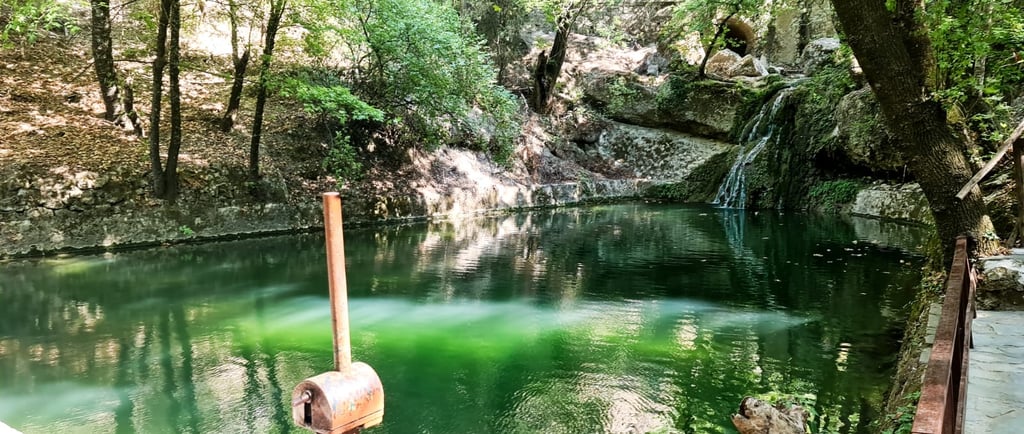
The appeal is the whole setting: woodland paths, wooden bridges, streams and wildlife that rewards a closer look. There are small waterfalls and ponds, but this is not a place for dramatic cascades. Water flow varies with the season.
Tree cover gives you welcome shade and a change from the open coast. It does not guarantee a cool visit: summer heat still matters, especially around midday.
Who will enjoy it—and who may not
I'd recommend Petaloudes if you enjoy slowing down and noticing small things. The resting insects can blend into bark, so the experience is more about looking carefully than watching constant movement.
Families can enjoy it too, especially when children like spotting wildlife rather than rushing to the next activity. If that sounds like your family, you can also explore other places to see wildlife in Rhodes.
- Good for nature lovers: the woodland and smaller wildlife give you more to enjoy than the seasonal insect gathering alone.
- Good for curious children: looking closely at trees, rocks and streams gives the walk a purpose.
- Less suited to anyone expecting a flying display: many insects rest during the day rather than fluttering around you.
- Less suited to a rushed sightseeing stop: moving quickly makes it easier to miss what you came to see.
Chapter 2 of 8
When should you visit Butterfly Valley?
Visit Butterfly Valley Rhodes between early June and mid-September for the seasonal wildlife gathering, though sightings depend on the day. I’d choose an early visit within confirmed opening hours rather than plan the walk around midday summer heat.
The early June to mid-September gathering
Early June to mid-September is the gathering period to aim for if seeing the insects is your main reason to come. The timing can shift with the weather, and no particular month guarantees a better display.
Keep the wildlife season separate from the admission-price calendar. The higher-priced July–September ticket period does not match the gathering dates exactly. A cheaper June ticket can overlap with the gathering, while a September ticket cannot guarantee sightings late in the month.
If wildlife is the priority, plan within the gathering period but leave room for a woodland walk whatever you see. If you’re still choosing your holiday dates, compare the wider seasonal picture under when to visit Rhodes.
Choosing a time of day
My choice would be an early morning visit, once the valley is open. The tree cover gives welcome shade, but it does not make a summer midday walk heat-free.
Choose morning for walking comfort, not as a promise of empty paths or more wildlife. The insects rest during the day, so an early start is not a special viewing window.
Check current opening dates and daily hours before setting your arrival time, especially outside summer. Bring drinking water and comfortable walking shoes; the Rhodes packing checklist can help with the rest of your day bag.
Visiting outside the wildlife season
Outside early June to mid-September, make the woodland walk—not the insect gathering—the reason to visit, provided the attraction is open. This suits you better if you enjoy forest scenery without needing a wildlife display to make the outing worthwhile.
Spring often brings greener surroundings and more visible water in the streams. Water flow varies, though: think small streams and waterfalls rather than a dramatic waterfall attraction.
If seeing the gathering is your only reason for going, I’d save the visit for its season. For a shaded nature walk, an outside-season visit can still appeal, but the ticket calendar alone does not tell you when access is available.
Chapter 3 of 8
What are Butterfly Valley ticket prices and opening hours?
Butterfly Valley’s published adult admission ranges from €3 to €6, depending on your visit date. These are planning figures, not guaranteed current charges; confirm opening hours and last admission before setting your arrival time.
Adult admission by date
The published adult tariffs follow three date bands. Valley admission includes the Museum of Natural History.
- €3 per adult: 12 April–30 June.
- €6 per adult: 1 July–30 September.
- €3 per adult: 1–31 October.
Children and other concessions
Free admission for children under 12 is published alongside the July–September and October tariffs only. For an April–June family visit, leave room in your budget for child admission until the applicable rate is confirmed.
For anyone aged 12 or over, use the adult tariff as your budgeting starting point. Only factor in another concession when it applies to your visit and eligibility.
Opening hours and last admission
Before travelling, confirm current charges, opening dates, daily hours and last admission together. Plan around the last entry time, rather than aiming to arrive shortly before closing.
The tariff calendar gives prices for specific dates, not a complete opening calendar. It tells you neither whether winter access is available nor whether the valley is closed outside those dates.
Entry tickets versus organised visits
The €3–€6 published tariff is valley admission, not an organised day-trip price. If you prefer someone else to arrange the journey, compare offers through Rhodes Booking Marketplace.
Read each offer as separate parts: transport, valley admission and any extra stops. A trip that visits Butterfly Valley may still charge entrance fees separately.
Some organised visits combine the valley with Filerimos Hill. Choose a combined trip because you want both stops, rather than comparing its headline price with valley admission alone.
My suggestion: compare organised excursions if you want a fixed plan without arranging your own transport. If you prefer control over your visit length, compare independent travel options in the Rhodes Island Guide’s transport section.
- Transport: look for the pickup area, return arrangements and any pickup charges.
- Valley admission: look for an explicit statement that entry is included or payable separately.
- Extra stops: allow for any separate entrance charges and consider how much time the trip gives you at the valley.
Chapter 4 of 8
How do you get to Butterfly Valley?
From Rhodes Town, follow the Rhodes–Kamiros road and turn toward Psinthos after Paradisi; Butterfly Valley is before Psinthos. Driving gives you the most flexibility, while bus travel needs seasonal planning and organised trips offer a car-free alternative.
Driving from Rhodes Town via Paradisi
A car suits you best if you want to choose your arrival time and explore without a fixed return departure. My suggestion: compare car rental prices and local deals if you want that freedom, especially when adding another stop.
For your arrival on the island, you can book Rhodes airport transfers separately.
Planning a bus journey
Bus services change seasonally, so use Rhodes bus routes and planning advice to plan both your outward and return journeys. Look at the service for your travel date rather than building your visit around an old summer timetable.
I'd choose the bus only if the return departure leaves enough time for the visit you want. If the timetable feels restrictive, an organised trip or private transport may be a better fit.
Organised trips and local transport enquiries
If you'd rather leave the driving to someone else, examine the Rhodes: Butterfly Valley and Filerimos Hill Bus Trip. Check its available dates, pickup location, time at each stop and admission inclusions before booking.
For private transport, ask GES Travel via WhatsApp about a transfer or private tour for your chosen date. Include where you're staying and whether you want Butterfly Valley alone or a combined outing. Use the prefilled message to request a quote with the 10% partner discount.
You can also compare excursions if you prefer a planned outing. Choose by the route and time allowed at the valley, not just the number of stops.
Combining the visit with Filerimos
Filerimos Hill adds a monastery setting and panoramic west-coast views to a Butterfly Valley outing. It makes sense if you'd enjoy a second sightseeing stop rather than a valley-only visit.
With a car, you can set your own pace between the two places. If you prefer organised transport, the combined bus trip is an option to examine; I'd skip the extra stop if it makes the valley visit feel rushed.
Chapter 5 of 8
What is the Butterfly Valley walk like?
The Butterfly Valley walk runs 1.3 km from the northern entrance beside the Museum of Natural History to Panagia Kalopetra Monastery. That is the route to the monastery, not a return distance or a visit-duration estimate.
The 1.3 km route toward Kalopetra
The route takes you through shaded woodland, with bridges, stone steps and uneven paths along the way. It suits travellers who enjoy walking slowly and stopping to notice wildlife, rather than simply reaching a finish point.
Keep the climb toward Kalopetra optional. You do not need to make the monastery your goal to enjoy the valley, especially with children or anyone who tires easily.
I'd plan around your group's comfort rather than the 1.3 km figure alone. Steps, uphill walking and wildlife stops all affect your pace, and you still need to allow for your return.
Bridges, wooden rails and water features
Bridges and wooden rails guide you through parts of the valley, alongside streams, ponds and small waterfalls. Dense tree cover gives much of the walk shade, but it does not remove the need for water or breaks.
Expect small natural water features, not large waterfalls. Water flow changes with the season and conditions, so flowing streams and waterfalls are not guaranteed on every visit.
The bridges and waterside sections are places to slow down, especially when walking with children. Pause somewhere that leaves the path clear when you want to watch wildlife or take a photo.
Footwear, children and access needs
Wear secure walking shoes with good grip rather than loose beach footwear. The steps and uneven ground matter more than the route's relatively short distance.
This is not a walk I'd describe as easy for every family or as a step-free outing. If you use a wheelchair or pushchair, or have limited mobility, arrange a suitable route with the attraction before committing.
With children, choose how far to go based on their energy rather than aiming automatically for the monastery. For other outings to balance your holiday, explore the family activities in the Rhodes Island Guide.
- Bring drinking water and take breaks when your group needs them.
- Keep children close on bridges, beside water and around steps.
- Walk at a pace that leaves room for wildlife watching, without rushing to reach the top.
- Pack footwear for this walk as well as the beach; use what to pack for Rhodes to plan both.
Chapter 6 of 8
How can you watch the wildlife without disturbing it?
Stay as quiet as possible around resting insects in Butterfly Valley Rhodes, and watch without touching or disturbing them. Looking closely at trees and rocks is more rewarding than expecting a constant display of flying insects.
Spotting resting insects
Look carefully at tree trunks and shaded rocks for groups of resting insects. During the day, they rest with their wings closed and blend into their surroundings. What first looks like bark patterns or dry leaves can deserve a second look.
Give yourself time to pause rather than scanning each tree as you walk past. This is a good activity for patient, curious travellers, but less satisfying if you expect wildlife flying around you throughout the visit.
Keeping noise and movement gentle
Loud noise can disturb resting insects and cause them to fly. Keep conversations low and movements gentle, especially when stopping to look or take photographs.
With children, I’d make spotting—not chasing—the activity: who can quietly notice a group resting on a tree? Explain the quiet rule before you begin, rather than waiting until someone gets excited. If that pace does not suit your children, explore other things to do with kids in Rhodes.
- Never shake branches, clap or make noise to get insects airborne.
- Do not try to make insects fly for a photograph.
- Leave resting insects untouched, and watch from the path.
Looking for life beside the streams
Look beside the streams and around the waterside rocks as well as at the trees. You may spot small crabs, although a sighting is not guaranteed. Rushing through means you can easily miss these smaller details.
A quiet crab-counting challenge gives children another reason to look carefully. Watch from the path without lifting rocks, reaching into the water or trying to catch anything. For more nature outings, explore where to see wildlife in Rhodes.
Chapter 7 of 8
Should you include the Museum of Natural History?
Yes—the Museum of Natural History is included in Butterfly Valley admission. I’d include it in your valley visit rather than plan a separate museum outing.
Museum admission is included
You don’t need to budget for a separate museum ticket: your valley entry covers both. When working out your Rhodes trip budget, count them as one attraction.
Fitting the museum into your visit
The Museum of Natural History is beside the northern entrance to Butterfly Valley. This is also where the walking route towards Panagia Kalopetra Monastery starts, making the museum a useful landmark.
My suggestion: fit the museum in when you’re at the northern entrance, rather than leave it for a separate trip. Keep it within your valley plans, especially if you’re also making time for other wildlife spots in Rhodes.
Chapter 8 of 8
Should you continue to Panagia Kalopetra Monastery?
Panagia Kalopetra Monastery is an optional uphill extension to Butterfly Valley, not an essential part of every visit. I’d continue only if you still have energy and want a little history alongside the nature walk.
Making the uphill extension optional
Decide during your valley visit rather than committing to the climb beforehand. The extension suits you if you enjoy walking and still feel comfortable heading uphill. If you’re tired, travelling with weary children or finding the climb difficult, skip it without feeling you’ve missed the main attraction.
Before continuing, ask valley staff whether the uphill route is accessible and whether the monastery interior is open. Make the decision with your return walk in mind, too.
The route from the northern entrance, beside the Museum of Natural History, to Kalopetra is 1.3 km. That is the full entrance-to-monastery route, not an extra 1.3 km beyond the valley or a return distance. The monastery area offers views across the surrounding hills and countryside.
The 1782 monastery and surviving iconostasis
Alexander Ypsilantis, ruler of Moldavia, had Kalopetra Monastery built in 1782. The iconostasis—the screen holding religious icons—is the only surviving part of that monastery. The present building as a whole therefore does not date from his construction.
That surviving feature gives the extension a reason beyond simply reaching the top. If the interior is open, the iconostasis is the historic detail to look for.
If monastery visits particularly interest you, consider Filerimos Hill as another stop. For your wider plans, choose other sights through the Rhodes Island Guide’s things to do rather than feeling you need to fit everything into this visit.
Book transport or a Butterfly Valley excursion
transfersFrequently asked questions
Is Butterfly Valley Rhodes worth visiting?
Yes, if you enjoy quiet nature walks and patient wildlife watching. I'd recommend the gathering season if insects are your main interest. It is less suited to anyone expecting constant activity or guaranteed sightings.
Are Petaloudes and the Valley of the Butterflies the same place?
Yes. Petaloudes, Butterfly Valley and the Valley of the Butterflies all refer to the same attraction in western Rhodes.
When can you see butterflies in Butterfly Valley Rhodes?
The seasonal gathering runs from early June to mid-September. Sightings vary, and no particular day or month guarantees a display.
How much are Butterfly Valley Rhodes tickets?
Published adult tariffs are €6 for 1 July–30 September. They are €3 for 12 April–30 June and 1–31 October. Allow for changes when planning your budget.
Do children enter Butterfly Valley for free?
The published July–September and October tariffs list free entry for children under 12. For April–June visits or other concessions, ask about the applicable ticket.
What are Butterfly Valley Rhodes opening hours?
Check the attraction's current opening hours and last admission before setting off. The ticket-price calendar is not an opening timetable and does not establish winter access.
How do you get to Butterfly Valley from Rhodes Town?
The road approach follows the Rhodes–Kamiros road. After Paradisi, turn toward Psinthos; the valley is before the village. For public transport, use the Rhodes bus guide to plan both the outward and return journeys.
How long is the Butterfly Valley walk?
The route from the northern entrance beside the Museum of Natural History to Panagia Kalopetra Monastery is 1.3 km. That is the route to the monastery, not a return distance or a walking-time estimate.
Is the Museum of Natural History included in the ticket?
Yes. Valley admission includes the Museum of Natural History beside the northern entrance.
Is Butterfly Valley suitable for pushchairs or wheelchairs?
Ask the attraction about a suitable route before committing to the visit. Bridges and wooden rails do not tell you whether the whole path meets your access needs. I'd keep the monastery extension separate from that decision.
Related pages
Planning your complete Rhodes holiday?
Our Island Mega Guide brings together everything you need to plan your Rhodes holiday, from choosing where to stay and finding the best beaches to transport, activities and practical travel advice.
Open the Rhodes Island Guide