
Chapter 1 of 8
Which sacred sites in Rhodes should you choose?
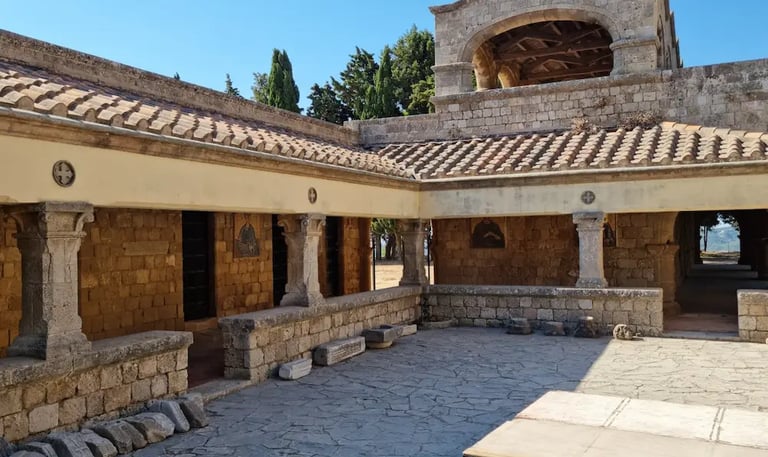
Choose Tsambika for its hilltop religious setting, Filerimos for layered history, or Profitis Elias for a small church beside mountain scenery. The best choice depends on whether you want a religious landmark, ancient history or a quiet forest stop.
These places are not interchangeable: a monastery, a church and an archaeological setting offer different visits. Think of them as cultural and religious stops, not large entertainment attractions. If you’re balancing them with other holiday plans, use the Rhodes Island Guide to choose what fits your interests.
- Tsambika — east coast, near Archangelos. Separate upper and lower religious sites; choose the upper monastery for its hilltop setting and coastal views.
- Filerimos — above Ialyssos in north-west Rhodes. A monastery within the ancient Acropolis of Ialyssos setting; choose it for religious and ancient history together.
- Profitis Elias — inland, near Salakos. A small church dedicated to Elijah the Prophet; choose it for the surrounding pine forest and mountain scenery.
Tsambika for a hilltop religious setting
Tsambika is the strongest choice if you picture a religious landmark high above the east coast. Upper Tsambika stands at an altitude of 320 metres, with wide coastal views. The setting is a major part of the appeal, rather than the scale of the building.
Panagia Tsambika has separate upper and lower sites, so decide which one you mean before planning your visit. The lower monastery is not the hilltop destination. If the elevated setting is what attracts you, keep Upper Tsambika on your shortlist.
I’d choose it for couples who want scenery alongside a religious stop. It also suits travellers drawn to the island’s sacred landmarks rather than extensive ancient remains. If your main interest is archaeology, Filerimos is the better match.
Filerimos for religious and ancient history
Filerimos is my first choice for history-minded travellers comparing these three places. The hill was the acropolis of ancient Ialyssos before its Christian religious buildings took shape. Ancient remains, medieval architecture and later Italian additions give you several periods of Rhodes history in one setting.
The monastery is modest rather than grand, and the wider hill includes the path towards the large cross and coastal views. Its appeal is the combination of history, religious meaning and space to slow down. Explore Filerimos Hill in more detail if that sounds like your kind of visit.
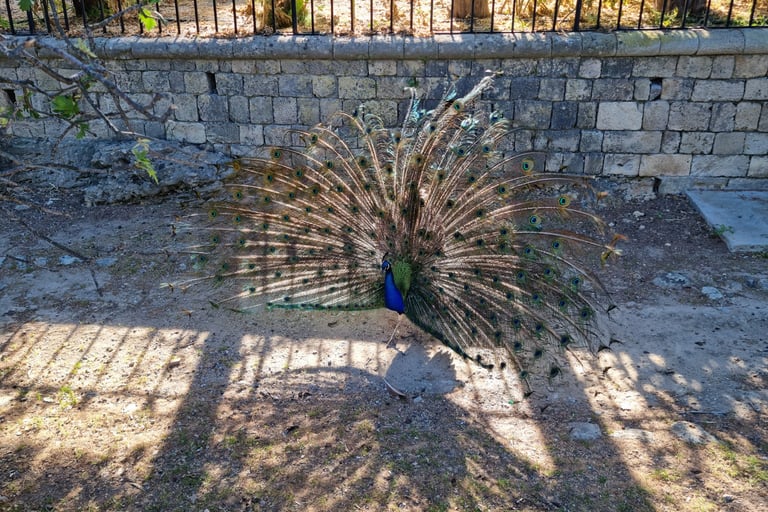
For families, the free-roaming peacocks add interest beyond the buildings and ruins. I’d lean towards Filerimos if your children enjoy animals and outdoor exploring, while keeping them close near elevated viewpoints. It is still a cultural stop, not an organised animal attraction.
Profitis Elias for a church and forest setting
Profitis Elias is a small church of Elijah the Prophet, not a monastery. Choose it when the forest and mountain surroundings matter as much as the religious building. It is a better fit for a nature-focused outing than a visit centred on a large religious complex.
The mountain lies in central-western Rhodes and is covered in dense pine forest. Its higher elevation often brings cooler air than the coast. Nearby Italian-era mountain hotels add architectural interest, but they are not castles.
I’d recommend this option to couples and travellers who enjoy scenic drives and quieter landscapes. If you want a major monument as the main event, you may find the church too small. For more places with this outdoor appeal, explore Rhodes for nature lovers.
Who will enjoy these visits—and who may prefer something else
You do not need a religious reason to appreciate these places. History, scenery and an interest in local culture are all good reasons to visit, provided you respect their religious character.
My suggestion: choose one that genuinely interests you rather than trying to collect all three. These stops reward a slower pace; rushing between them can make their differences harder to appreciate.
- Couples: choose Tsambika for a hilltop setting, Filerimos for a reflective historical visit, or Profitis Elias for forest scenery.
- Families: Filerimos offers history, outdoor paths and peacocks. Keep the visit focused on what your children enjoy rather than a long sightseeing checklist.
- History-minded travellers: start with Filerimos, where ancient Ialyssos and later religious buildings share the same hill.
- Nature lovers: choose Profitis Elias if the mountain landscape is your main reason for going.
- Travellers seeking entertainment: none of these is a large activity attraction. If your group wants constant action, make a sacred site a brief cultural stop rather than the centre of the day.
Chapter 2 of 8
Upper or lower Tsambika: what is the difference?
Panagia Tsambika has two separate religious sites on Rhodes’s east coast: an upper hilltop monastery and a lower monastery beside the road. Choose your destination before setting off—the two names refer to different stops, not different parts of one complex.
Upper Tsambika: the monastery at 320 metres
Upper Tsambika is the oldest Tsambika monastery, standing on a hilltop at an altitude of 320 metres. That figure is its elevation above sea level—not the walking distance or the amount you need to climb.
Choose the upper site if the hilltop setting and wide east-coast views are your main reasons for visiting. My suggestion: decide whether you want that hilltop visit before choosing your map destination; arriving at Lower Tsambika will not put you at the same place.
Lower Tsambika: a separate religious stop
Lower Tsambika is the separate monastery beside the main road. It is a religious destination in its own right, rather than the entrance to the upper monastery.
Choose it if this is the monastery you want to visit, rather than the hilltop site. If you want to see both, plan them as two separate stops.
Finding the two approaches from the Rhodes–Lindos road
Travelling from Rhodes town toward Lindos, you reach the Tsambika approaches before Archangelos. Upper Tsambika is on the hill to your left; Lower Tsambika is on your right.
These left-and-right directions apply when travelling toward Lindos, so keep your direction of travel in mind. Select the named upper or lower destination before starting navigation.
For the wider journey, use the Rhodes Island Guide to plan your route around the island. Compare ways to get around Rhodes if you are still deciding how to travel.
Chapter 3 of 8
Why choose Filerimos for a sacred-site visit?
Choose Filerimos if you want religious and ancient history in one setting. Above Ialyssos on Rhodes’s west coast, its monastery, ancient remains, cross and roaming peacocks make a rewarding, unhurried visit.
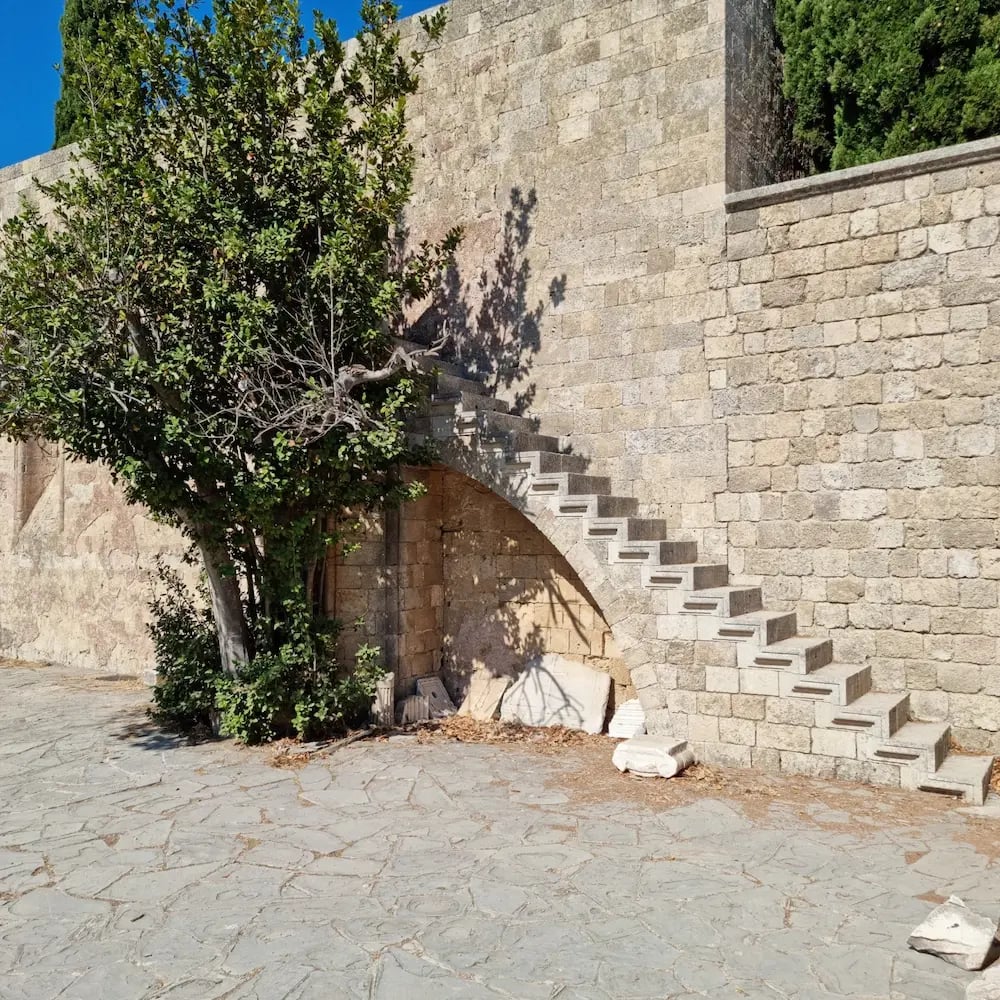
The monastery within the Acropolis of Ialyssos
Filerimos was a place of worship long before Christianity reached Rhodes. The hill held the acropolis of ancient Ialyssos, one of the island’s three major ancient cities, alongside Lindos and Kamiros.
The monastery stands within that ancient setting, where temple foundations and later religious buildings share the same ground. Much of the monastery you see today dates to the medieval period, with later additions during Italian rule.
Its appeal is in the details rather than its size: a sheltered courtyard, religious mosaics, historic icons and places to pause. I’d choose Filerimos if you enjoy seeing how different periods of Rhodes’s history meet in one place.
The cross, ancient setting and peacocks
The cypress-lined Stations of the Cross route, also called the Path of Golgotha, leads from the monastery towards the large cross. This religious walk adds meaning to the viewpoint, with wide views over Ialyssos, Ixia and the Aegean.
Peacocks roam freely around the courtyard, paths and viewpoints. They give children something to notice beyond the buildings, though you’ll need to supervise young children closely near elevated paths and viewpoints.
Filerimos suits history lovers, couples and families happy with a gentle sightseeing stop. It is less suited to anyone looking for entertainment or an attraction packed with activities; leave room to walk slowly rather than rushing through.
Where to plan the detailed Filerimos visit
Start with planning a visit to Filerimos Hill for access, parking and visitor arrangements. Use that page for admission prices, seasonal hours, concessions and which areas your ticket covers.
A car is the simplest option, while a taxi can make sense if you’re staying nearby. Buses serve Ialyssos, but reaching the town is not the same as reaching the hilltop entrance.
Allow roughly 45–60 minutes for a relaxed introduction, with longer if you want to linger. To fit the stop around your base and other plans, use the Rhodes Island Guide.
My suggestion: if Filerimos is one stop on a longer west-coast day, rent a car for flexibility rather than building the day around buses.
Chapter 4 of 8
Is Profitis Elias worth visiting for its church?
Profitis Elias is a small church of Elijah the Prophet, not a monastery, and its mountain setting is a major part of the visit. It is worth choosing if you enjoy quiet sacred places, pine forests and viewpoints, rather than a large religious complex.

A small church of Elijah the Prophet
The church stands among the trees near the summit of Profitis Elias, also written Profitis Ilias. This is inland Rhodes, near Salakos in the central-western part of the island.
Come for a small religious stop within a peaceful mountain outing. I would not make the journey solely expecting an extensive church visit: the forest, views and nearby historic buildings give the outing its appeal.
It suits you if you like combining culture with nature and a slower pace. If your main interest is a large monastery complex or a monument with plenty to explore, this would not be my first choice.
Pine forests, viewpoints and Italian-era buildings
The mountain rises about 800 metres above sea level, with dense pine forests and winding roads. Its cooler atmosphere makes a welcome change from the coast during summer. On clear days, viewpoints reveal the west coast, distant villages and wooded hills.
Near the church, look for Elafos Hotel and the smaller Elafina building. Built in 1929 as a luxury mountain retreat, Elafos has stone walls, wooden balconies and a distinctive tower. Elafina originally provided accommodation for women during the Italian period and shares the alpine-lodge style.
These are Italian-era mountain buildings, not castles. Their unusual architecture adds interest, but this is not a large standalone attraction. Leave time for the forest drive and scenery instead of arriving with a long sightseeing checklist.
Spring brings greener forest scenery, while autumn often offers clear views and fewer visitors. Late afternoon is appealing for photographs of the hills and trees. If the landscape is your main reason to come, explore more nature-focused places in Rhodes.
Driving is the easiest way to reach the area, roughly 45 km from Rhodes Town. These approximate driving times help you judge whether it fits your day:
- From Rhodes Town: about one hour.
- From Faliraki: about 50 minutes.
- From Kolymbia: about 40 minutes.
- For a simple outing: combine the church and forest viewpoints with Salakos, which has traditional tavernas. Use the Rhodes Island Guide to fit this inland stop into your wider plans.
The optional path toward Nymfi spring
A path starts beside the church and reaches Nymfi spring outside Salakos after about one hour of walking. That is the time toward the spring, not a round-trip estimate.
This is an optional nature extension, not a necessary part of visiting the church. Choose it if you want a proper walk alongside your sacred-site stop; skip it if you prefer a short visit and scenic drive.
Plan your return before setting off, especially if your car is still beside the mountain attractions. Wear walking shoes, carry water and leave enough daylight for the whole outing.
My suggestion: Rent a car for this visit if you want time for forest viewpoints and a meal in Salakos. The mountain drive is part of the pleasure, rather than just the journey to the church.
Chapter 5 of 8
Which other Rhodes monasteries belong on your shortlist?
Tharri, Panagia Ipseni, Kalopetra and Panagia Skiadi are additional monasteries to shortlist; Agios Nektarios in Kremasti is a smaller sacred-site option. Choose one that fits your interests and route, rather than trying to visit all five in one tour.
These religious places add a different cultural dimension to a Rhodes holiday: faith, local traditions and quiet countryside settings. Use the Rhodes Island Guide to fit your chosen stop into your wider holiday plans.
Archangel Michael Tharri, also called Moni Tharri
Moni Tharri stands near Laerma, surrounded by pine forests and farmland. Dedicated to Archangel Michael, it is an active monastery with stone architecture and a peaceful courtyard.
Choose Tharri if you want a countryside religious stop away from the busy resort areas. Its appeal is the monastery and its calm setting, rather than a packed sightseeing programme. I'd give it space in your day rather than squeeze it between several attractions.
Panagia Ipseni
Panagia Ipseni lies between Laerma and Lardos and is home to an active monastic community. Its church, courtyard and icon, believed by worshippers to be miraculous, give it a distinctly religious focus.
This is a good choice if you want to include a monastery while exploring the Lardos area. Choose it for a quiet religious visit rather than simply another photo stop.
Kalopetra and Butterfly Valley
Kalopetra Monastery sits just above Butterfly Valley, making it the most natural choice here for combining nature with a religious stop. Built in the 18th century by Prince Alexandros Ypsilantis, it has a small church, stone steps and terraces.
The green surroundings and shaded pathways are part of its appeal. I'd choose Kalopetra if you're already planning to explore Butterfly Valley and want to add a quieter cultural stop. Keep the stone steps in mind if stairs are difficult for you.
Panagia Skiadi
Panagia Skiadi stands near Mesanagros in the remote south-west, surrounded by a quiet, rugged landscape. It is an important pilgrimage site, centred on the icon of the Virgin Skiadeni, which worshippers believe is miraculous.
The surrounding villages mark Easter with celebrations connected to the icon. Choose Skiadi if religious heritage is a real interest, especially when you're already exploring the south-west. For a quick stop during a stay near Rhodes Town, I'd choose somewhere closer instead.
Agios Nektarios in Kremasti
Agios Nektarios in Kremasti is a small church and local shrine, rather than a large monastery complex. It offers a quiet religious stop close to Rhodes Town and the airport.
Local people visit regularly, especially on Saint Nektarios's feast day. Choose it if you're nearby and want a smaller sacred place, without making a countryside monastery the focus of your day.
My suggestion: if Tharri or Skiadi is your main reason for exploring the countryside, I'd rent a car for flexibility rather than build the day around buses.
Chapter 6 of 8
How should you travel between the sacred sites?
A car is the practical choice for several scattered sacred-site visits; compare car rental prices and local deals before choosing your day. A prearranged transfer can suit a single outing, especially if you would rather not drive.
When renting a car makes sense
I’d rent a car if you want to visit several monasteries in Rhodes or explore the inland churches. You control how long you stay, rather than fitting quiet visits around bus connections. For one stop near your accommodation, a taxi or transfer may be simpler.
Filerimos sits above Ialyssos, while Profitis Elias involves a winding drive into the forested mountains. Tharri, near Laerma, and Skiadi, near Mesanagros in the southwest, also favour independent travel. Use the Rhodes Island Guide to choose an area rather than trying to cross the whole island in one day.
The forest drive is part of the appeal at Profitis Elias, not just a way to reach its small church. Allow roughly the following driving times, with extra time for scenic stops:
- Rhodes Town to Profitis Elias: about one hour.
- Faliraki to Profitis Elias: about 50 minutes.
- Kolymbia to Profitis Elias: about 40 minutes.
What western-side bus services cover
RODA serves western-side areas including Ialyssos, Salakos and Eleousa. That area coverage is not a direct connection to a monastery or church entrance. Reaching Ialyssos, for example, is not the same as reaching Filerimos Hill.
Bus services change seasonally, so use planning bus journeys in Rhodes to check both your outward and return journey. Work out the final stretch between the stop and your chosen site before committing to the bus.
For one visit, a bus combined with an arranged taxi may suit you. For several scattered stops, I’d choose a car rather than spend the day managing connections. You can compare that choice with the practical advice on renting a car in Rhodes.
Prearranged transfers and transport enquiries
A prearranged transfer suits a single sacred-site outing when you want to avoid driving and bus connections. Agree on the exact destination, pickup point and return arrangement as part of the booking. Specify Upper or Lower Tsambika rather than simply asking to go to “Tsambika”.
You can contact GES Travel via WhatsApp to enquire about transport or a private outing. Include your accommodation, chosen site and preferred date so you can request a suitable quote. Keep the prefilled partner message and ask for the 10% partner discount to be included in your quote.
Arrange airport travel separately from sightseeing through Rhodes airport transfers; book any sacred-site stops as a separate outing. This keeps your arrival or departure plan clear, without relying on an airport journey to double as a sightseeing trip.
When to consider an organised outing
An organised outing makes sense if you dislike mountain driving or prefer someone else to handle the route. Some island tours include Profitis Elias alongside villages and viewpoints. These suit a broader countryside day better than a visit focused only on the church.
Use Rhodes Booking Marketplace to compare transport or outing options. Choose by the listed stops, not just a title such as “island tour”: look for your chosen sacred site and enough time there. For Tsambika, the itinerary should distinguish between the upper and lower sites.
My suggestion: browse Rhodes excursions if you want a mixed sightseeing day. If one particular monastery is your priority, a private transfer gives you more control over that visit.
Chapter 7 of 8
How should you prepare for a sacred-site visit?
Prepare for outdoor sightseeing as well as a religious visit: bring comfortable shoes, water and modest clothing. Choose a pace that suits your group, and pack a light jacket if Profitis Elias is on your route.
Choosing a comfortable season and time of day
I'd choose spring or autumn if you want to combine sacred sites with walking. Spring brings greener forest scenery around Profitis Elias, while autumn often offers clear views and fewer visitors. You can compare seasons in the Rhodes Island Guide’s advice on when to visit.
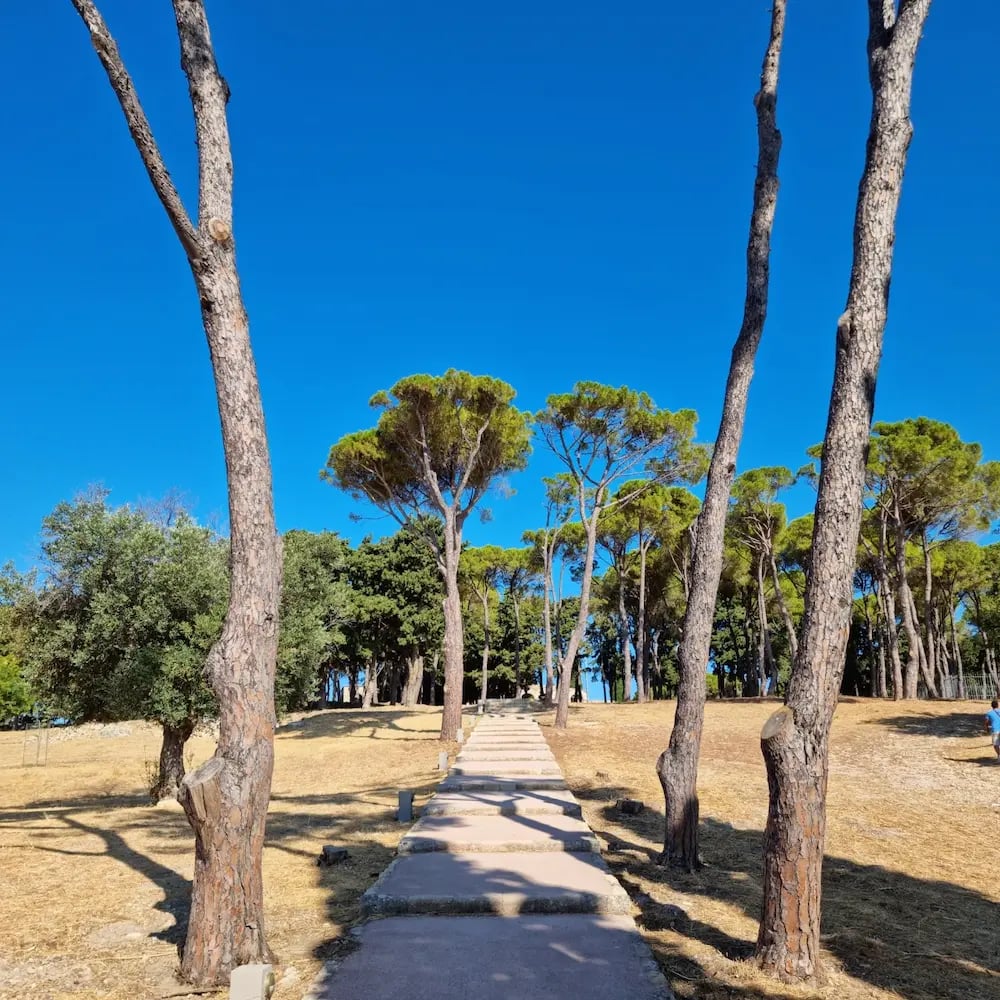
In summer, plan exposed outdoor stops for a cooler part of the day rather than midday. Early morning or late afternoon can make walking more comfortable, particularly on Filerimos’s exposed paths. These are suggestions for outdoor comfort; check current opening hours separately if entering a church or monastery matters to you.
Profitis Elias offers cooler mountain air than the coast, making it a good summer choice for escaping the heat. Late afternoon also brings softer light across the forests and mountain views.
Footwear, water and a mountain layer
Pack for the walking you plan to do, not just the time inside a church. A short religious stop can easily become a longer wander along stone paths or through the surrounding landscape.
- Comfortable shoes: choose shoes you can walk in comfortably, especially for Filerimos’s stone paths or any forest walking.
- Water: carry enough for your planned visit, particularly during summer, rather than relying on buying it at the site.
- Light jacket: bring one for Profitis Elias, even in summer. The mountain air can feel noticeably cooler than the coast.
Respectful behaviour and photography
Choose modest clothing, cover your shoulders and save beachwear for the beach. These are respectful choices for a religious visit, rather than one formal entry rule shared by every site.
Keep conversations quiet and give anyone praying plenty of space. If worship is taking place, let it set the pace of your visit rather than moving around for photographs.
For interior photographs, follow any signs or ask before using your camera. Ask permission before photographing worshippers, monks or nuns, and avoid interrupting prayer for a picture.
Planning with children or limited mobility
With children, I'd choose one main sacred-site stop rather than a long checklist. Leave room for pauses and keep extra walking optional. A relaxed visit is more rewarding than trying to see every monastery in a day.
The roaming peacocks can make Filerimos Hill especially appealing to families. Supervise children closely near viewpoints and elevated paths, and give the birds space rather than chasing them.
If you need step-free access, arrange the visit around your access needs before setting out. Discuss the route through the parts you want to see with the site or your visit organiser. Choose the stop around a route that works for you, rather than committing to a hilltop visit first.
Chapter 8 of 8
What can you combine with your chosen sacred site?
Pair one sacred site with a nearby beach, town or village rather than crossing Rhodes to visit several. You’ll spend less time driving and have more time to enjoy both stops.
Choose the pairing that fits where you’re already exploring. You can compare the island’s areas in the Rhodes Island Guide before adding a longer journey.
Tsambika and an east-coast beach stop
Pair upper or lower Panagia Tsambika with Tsambika Beach for a simple east-coast outing. This suits you if you want some culture without giving up your beach day.
Upper Tsambika stands on the hill above the beach, so the two stops connect naturally through the landscape. The lower religious site is separate; choose which one interests you rather than feeling you must visit both.
I’d keep the beach as the relaxed part of the outing, not add another distant attraction afterwards. This pairing makes more sense for a mixed sightseeing-and-swimming day than a trip focused entirely on religious history.
Filerimos and Ialyssos
Filerimos sits above Ialyssos, making the town the natural companion stop. Combine the hill’s religious and ancient setting with a meal or time by the coast below.
This works particularly well if you’re staying in Ialyssos or Ixia and want a quieter outing nearby. Choose among other things to do in Ialyssos rather than turning the visit into a long west-coast circuit.
The peacocks roaming around Filerimos add interest for families and photographers, alongside the stone buildings and sea views. Give the hill time rather than rushing through it; this pairing suits a gentle day better than anyone seeking constant activity.
Profitis Elias and mountain villages
Pair Profitis Elias Church with Salakos for a mountain outing built around scenery, village life and a taverna meal. The religious building is a small church dedicated to Elijah the Prophet, not a large monastery complex.
Nearby, Elafos and Elafina add Italian-era architecture to the visit. These alpine-style buildings are former mountain retreats and hotel buildings, not castles; the pine forest and viewpoints are just as much of the attraction.
Salakos, at the foot of the mountain, is the most natural village companion. Explore village stops by car if you want to choose another stop, but I’d favour one unhurried village visit over several brief stops.
This pairing suits you if you enjoy forest drives and a cooler inland setting. It’s less suitable if you want a major monument with lots to see inside. I’d rent a car for the church-and-village combination so you can stop for scenery and leave time for lunch.
Kalopetra and Butterfly Valley
Kalopetra Monastery sits just above Butterfly Valley, making this the clearest pairing for nature lovers. Its small church, stone steps and terraces offer a quiet change of pace alongside a valley visit.
Choose this combination if greenery and walking appeal more than a beach stop or town visit. The two places belong together geographically, but leave enough energy for the monastery rather than adding it automatically after a tiring walk.
Start by planning a Butterfly Valley visit to decide whether the season and walking suit you. Wildlife sightings are seasonal, so choose the pairing for the setting as well as the chance to see butterflies.
Arrange transport for your sacred-site visits
transfersFrequently asked questions
Which monasteries should I visit in Rhodes?
Start with Panagia Tsambika and Filerimos. Tsambika has separate upper and lower religious sites; Filerimos combines a monastery with the ancient Acropolis of Ialyssos setting.
Are upper and lower Tsambika the same place?
No. They are separate religious sites approached from the Rhodes–Lindos road before Archangelos when travelling from Rhodes town.
Which side of the road are the Tsambika monasteries on?
Travelling from Rhodes toward Lindos, upper Tsambika is on the hill to your left. Lower Tsambika is on your right.
How high is upper Tsambika Monastery?
The oldest Tsambika monastery stands on a hilltop at an altitude of 320 metres. That is its elevation, not the distance you walk.
Is Profitis Elias a monastery?
No. The religious building at Profitis Elias is a small church dedicated to Elijah the Prophet. You may also see the name written as Profitis Ilias.
Is Filerimos only a monastery?
No. Filerimos is also the setting of the Acropolis of Ialyssos. The monastery, cross and ancient history make it a broader cultural visit.
Can I reach these sacred sites by bus?
RODA serves western areas including Ialyssos, Salakos and Eleousa. An area service is not necessarily a bus to a sacred-site entrance. Use the Rhodes bus planning advice to plan your journey and return.
Is renting a car worthwhile for visiting Rhodes monasteries?
I’d rent a car if you want to visit several scattered sites. For one visit, a prearranged transfer may be simpler than hiring a car for the day.
Can I combine Profitis Elias Church with a walk?
Yes. A path beside the church leads toward Nymfi spring outside Salakos in about one hour. Plan your return separately; that time is not a round-trip estimate.
Which other sacred places can I consider in Rhodes?
Other choices include Archangel Michael Tharri, Panagia Ipseni, Kalopetra and Panagia Skiadi. Agios Nektarios in Kremasti is another sacred-site option.
Related pages
Planning your complete Rhodes holiday?
Our Island Mega Guide brings together everything you need to plan your Rhodes holiday, from choosing where to stay and finding the best beaches to transport, activities and practical travel advice.
Open the Rhodes Island Guide