

Area guide
Asklipio guide: what to know before you go
Asklipio is the village-and-history outing to choose when you want a break from the south-east coast’s beaches. Inland from Kiotari, it brings together a fresco-filled Byzantine church, an old olive press and a ruined castle above whitewashed houses.
Make the church your priority, add the castle for the landscape, then leave room for a meal on the square. For most visitors, Asklipio works better as part of a southern Rhodes day out than as a base for the whole holiday.
Asklipio village: where it is and who it suits

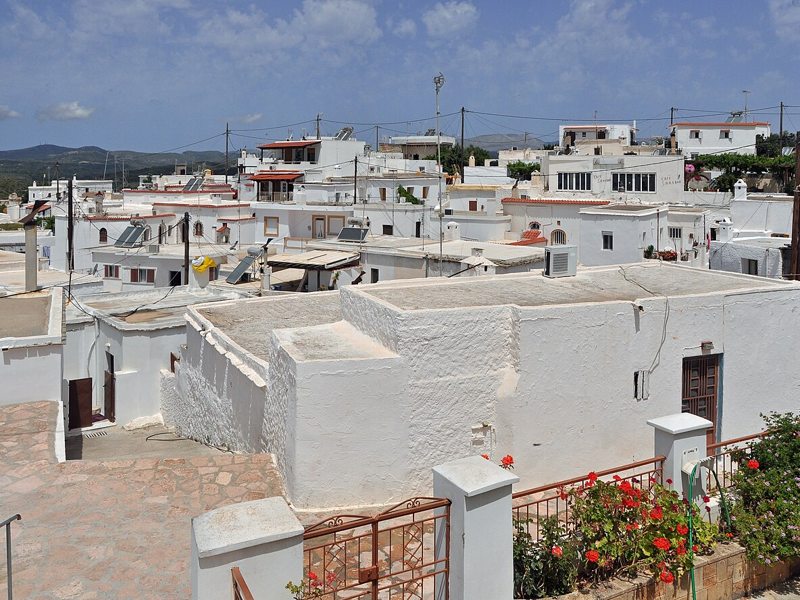
Asklipio sits inland in south-east Rhodes, above the coast near Kiotari. Olive trees, pine-covered countryside and the castle hill give it a different setting from the coastal resorts. The whitewashed houses and village square are part of a working settlement, not a purpose-built sightseeing complex.
Its strongest draw is the combination of religious art and rural history in one small village. You can look closely at the church paintings, see the equipment once used to press olives and then head uphill to the castle. That is a more rewarding plan than coming only for a quick photograph of the square.
Choose Asklipio as a holiday base only if quiet village evenings matter more to you than walking to the beach, and you are happy to use a car. For an easier beach holiday, stay on the coast and visit. Compare the wider options through Areas of Rhodes, or use the Rhodes Island Guide to put the southern villages into your island itinerary.
Asklipio’s Panagia Church and olive-press museums
The Church of the Dormition of the Virgin Mary, also called Panagia or Kimisi tis Theotokou, stands in the village centre. Its origins date to 1060, although the building and decoration reflect later work as well. Do not let its modest exterior persuade you to skip the interior: the wall paintings are the main reason to come.
Look for Christ Pantocrator in the dome and the scenes from the Revelation of St John. The paintings form a much larger religious programme, including the Creation, the life of Christ and the Dormition of the Virgin. Rather than trying to identify every figure, choose a few scenes and give them your attention.
The churchyard’s old olive press retains its stones and equipment and serves as a folklore museum. The former oil-storage cellar houses the ecclesiastical collection. Together, they connect the church with the village’s agricultural life rather than treating it as an isolated monument.
Check access arrangements locally before making a special journey for the interiors. Wear clothing suitable for an active church, keep your voice low and ask before taking photographs. The square’s listed fountain is another detail worth noticing while you are here.
Asklipio Castle: ruins and views above the village
The medieval castle occupies the rocky hill above Asklipio. Its history includes Byzantine fortification and later work by the Knights of Saint John, including restoration under Grand Master Pierre d’Aubusson in the 1470s. Expect a ruined defensive site, not furnished rooms or a complete fortress.
Go for the relationship between the castle, the village below and the surrounding countryside. The hilltop makes the village’s setting easier to understand than it is from the square. If you want detailed interiors and objects, the church and museums offer more; if you want open views, make time for the castle.
Choose a cooler part of the day for the uphill visit. Wear shoes with grip, carry water and take care around broken masonry and exposed edges. With young children or anyone who finds steep, uneven ground difficult, make the castle optional rather than the centrepiece of the outing.
Asklipio traditions, August panigiri and village food
Asklipio’s rural traditions include bread baking in outdoor wood-fired ovens. The olive press beside the church gives you another tangible link to everyday village work. These are better clues to its character than the story linking its name to an ancient sanctuary of Asclepius: that association is a tradition, not an identified archaeological site.
The feast of Panagia on 15 August
The Dormition of the Virgin Mary is celebrated on 15 August, with the village’s main summer panigiri on the central square. Religious observance is followed by a communal celebration with traditional music, dancing and food. This is a very different visit from an ordinary quiet sightseeing day.
Check the current programme locally and arrange your journey home before joining the evening celebrations. Asklipio also holds an August celebration for the Transfiguration; ask locally about that year’s arrangements rather than assuming both events follow the same format.
Eating and practical supplies
The square has tavernas serving local food, so a village lunch is a sensible part of the visit. Ask what is being cooked that day rather than arriving with a fixed list of dishes. You do not need to build the outing around a named restaurant.
Treat Asklipio as a sightseeing and meal stop, not your main shopping stop. Bring essential medicines and what you need for the castle visit; if staying in the village, ask your host about groceries and other practical facilities before arrival.
Beaches near Asklipio and places to combine
Asklipio is inland: there is no village beach to walk out onto after breakfast. The straightforward pairing is sightseeing here followed by the coast at Kiotari. The measured drive to Kiotari is 7.6 km, typically 10–15 minutes; your exact beach access point may differ from the destination used for that measurement.
Use Kiotari Beach Rhodes: Boat Trips, Rentals & Beach Guide to choose your coastal stop. Gennadi, at 7.3 km and typically 10–15 minutes, is another useful combination, particularly if you want a relaxed square, local dining or evening drinks as well as time by the sea. Its village distance is not a measurement to every point along the beach.
- Choose Asklipio and Kiotari for the simplest village-and-swim day. Visit the church before committing to a long beach stop if seeing the interior matters to you.
- Add Lardos for another village square and tavernas. It is a better addition for food and village life than for a second major monument.
- Combine Asklipio with Lindos for a more substantial history day, including Lindos’s ancient acropolis. Avoid treating both places as quick photo stops; drop the extra beach plan if you want to explore properly.
Getting to Asklipio by car, bus or taxi
A rental car is the practical choice for combining Asklipio with the southern coast. Approach from the Kiotari side, then leave the car in a lawful space without blocking house entrances or village access. Explore the centre on foot rather than trying to drive between its sights.
KTEL serves the Rhodes Town–Asklipio route, but direct village services are limited. Check both directions in the live Rhodes bus timetables: a service reaching the village does not necessarily give you a workable same-day sightseeing return. Do not assume that a bus serving coastal Kiotari also comes into Asklipio.
For a taxi visit, agree the pickup and return arrangements in advance, especially if you are staying for the panigiri. Use Rhodes taxi prices for planning, then obtain a quote for your actual journey. From Rhodes Town, the drive is substantial enough that combining Asklipio with another southern stop makes more sense than travelling down solely for a brief look.
Road distances from Asklipio
Use these measured road distances to plan combinations, not as timings for a whole outing. Allow additional time for parking, walking to sights and finding your chosen beach access.
| From Asklipio to | Road distance | Typical drive |
|---|---|---|
| Gennadi | 7.3 km | 10–15 min |
| Kiotari | 7.6 km | 10–15 min |
| Lardos | 13 km | 15–20 min |
| Pefkos | 19 km | 25–35 min |
| Lindos village | 22 km | 25–30 min |
| Apolakkia | 23 km | 25–35 min |
| Rhodes Airport | 56 km | 65–90 min |
| Rhodes Old Town (Mandraki) | 64 km | 80–110 min |
Frequently asked questions
How far is Asklipio from Rhodes Town?
Asklipio is 64 km by road from the Rhodes Old Town (Mandraki) reference point. Allow a typical drive of 80–110 minutes, plus time for parking.
What is the main sight in Asklipio?
Make the Church of the Dormition of the Virgin Mary your priority, particularly for its frescoes and scenes from Revelation. The ruined hilltop castle is the other main sight, best visited for its setting and views.
Does Asklipio have a beach?
No, Asklipio is an inland village. Kiotari is a straightforward coastal pairing at 7.6 km by road, typically 10–15 minutes, with the final journey varying by beach access point.
Can you visit Asklipio without a rental car?
Yes, by taxi or a suitable KTEL service, but direct buses are limited. Check the outward and return timetable before committing; a pre-arranged taxi is more flexible for an evening festival visit.
When is the Asklipio village festival?
The main Panagia celebration marks the Dormition of the Virgin Mary on 15 August, with music, dancing and food on the square. Check the current local programme for the evening arrangements.
Plan where to stay in Rhodes
- Where to Stay in Rhodes — All 16 main areas and every village guide
- Rhodes Area Comparison — Areas side by side by travel style
- Rhodes Greece Hotels — Hotels by area, style and budget
- Top Hotels in Rhodes — My curated hotel picks, area by area
- Where to Stay Without a Car — Walkable bases with good bus links
- Where to Stay With Kids — Family areas by age and holiday style
- Best Villas in Rhodes — My handpicked villas, ready to book