
Chapter 1 of 8
Is Glystra Beach worth visiting?
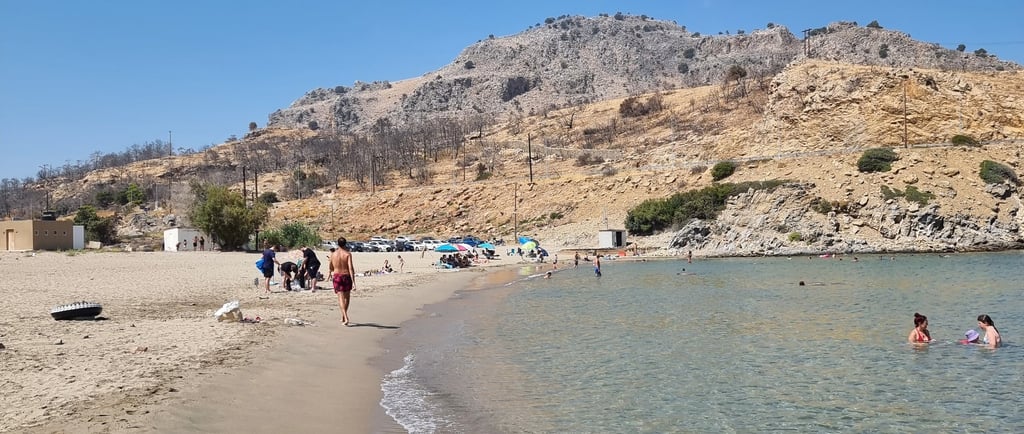
Yes — I’d recommend Glystra Beach as a relaxed sandy beach stop, especially if you’re already exploring southeast Rhodes. This small bay between Lardos and Kiotari suits a few unhurried hours of swimming, reading and enjoying the shore more than an activity-packed beach day. Its appeal is the soft sand, gently sloping shallows and low-key atmosphere, not a promise of solitude or resort-style facilities.
Who will enjoy this small sandy bay?
Glystra is a good match for travellers who want a simple beach break without the energy of a beach-club setting. The bay’s shape offers some shelter, and the sandy centre makes it particularly appealing if you prefer sand underfoot to the pebblier stretches found elsewhere along the southern coast.
- Couples: a good choice when the plan is an easy swim, a book and time together rather than music and a busy social scene.
- Families: the sand and gradual entry make the bay appealing for children who like playing at the water’s edge. Shallow water still needs close supervision, and conditions on the day matter more than the bay’s sheltered reputation.
- Solo and low-key travellers: well suited to a quiet few hours without needing a packed itinerary. Relaxed does not mean deserted, especially in summer.
- Older travellers who prefer a gentler entry: the sandy centre and parking directly behind the beach are useful advantages, though these alone do not establish step-free or assisted access.
Who might prefer another beach?
I’d look elsewhere if your ideal beach day depends on a lively beach club, extensive organised activities or a full range of services close to your towel. New sunbeds and a small watersports area offering boat rentals and other options were added in mid-summer 2026, so Glystra is no longer a wholly unorganised beach. Those additions broaden its appeal, but the small sandy bay remains the main reason to come.
Equally, I wouldn’t choose it on the promise of an empty, untouched shoreline: it is compact, attracts summer visitors and now has some organised activity. If you’re travelling across the island specifically for one standout beach day, compare the Rhodes beach shortlist first. My preference would be to fit Glystra into a relaxed southeast-coast day rather than build a long journey around expectations of either complete seclusion or comprehensive facilities.
Chapter 2 of 8
What are the beach and water like?
Glystra Beach is a small, curving sandy bay with a soft central stretch and clear, turquoise water—the appeal is an easy swim rather than a dramatic coastline. Its sheltered shape gives it a generally calm character, making it a good fit for families and anyone who prefers relaxed swimming. The shoreline becomes rockier towards the edges, so choose your entry point rather than expecting the same footing everywhere.
Sand and choosing your water entry
Yes, Glystra Beach is sandy, and the centre of the bay is the best starting point if sand underfoot is your priority. The golden sand makes it an appealing alternative to the pebbly or mixed beaches found along much of the southern coastline, while low dunes and vegetation form the backdrop.
My suggestion: look at the waterline before settling down, then walk into the sea slowly to check the footing. The central area is the sandiest choice, but inspect the seabed where you actually plan to swim; the rockier margins offer a different entry experience.
Water shoes are optional rather than essential for the sandy centre, though they can help if your chosen entry feels uncomfortable. If beach texture is a deciding factor for your holiday, the Rhodes Island Guide’s beach comparison can help you weigh up other options.
Swimming with children
The sandy centre and generally gentle water make Glystra a sensible choice for a family swim. I’d start there with children, checking the entry myself before letting them paddle rather than choosing a spot simply because the water looks clear.
Keep young children and non-swimmers within arm’s reach, and give supervision your full attention whenever they are in or beside the sea. Choose how far to go by their ability and the conditions in front of you, not by a fixed expectation of where the water becomes deeper.
The bay’s shelter is part of its appeal, not a guarantee of safe swimming. If waves make it difficult for a child to stand comfortably or enter and leave the water, I’d keep the visit to sand play instead.
Snorkelling and changing sea conditions
Glystra suits a little casual snorkelling alongside a beach swim, provided visibility and sea conditions are good. The rockier parts of the shoreline offer a different seabed to explore from the sandy centre, but there’s no need to venture farther out just to make a snorkel worthwhile.
Check that you can see clearly underwater, stay within your swimming ability and keep an easy route back to shore. Wind and waves can change the experience even in a sheltered bay; if the water becomes choppy or visibility deteriorates, leave snorkelling for another day.
I’d choose Glystra primarily for sandy-beach swimming, with snorkelling as a bonus rather than the main reason to visit. If exploring underwater is your priority, compare the snorkelling spots around Rhodes before choosing your beach.
Chapter 3 of 8
How do you get to Glystra Beach?
Glystra Beach is on southeast Rhodes, between Lardos and Kiotari, and a car is the most straightforward way to reach it: parking is directly behind the beach. A taxi also makes sense for a single beach visit from nearby accommodation, while coming by bus needs a little more planning around the walking approach and return service.
Finding Glystra between Lardos and Kiotari
Look for Glystra on the southeast coastline, just north of Kiotari and near Lardos. You may also see it written as Glistra—this is an alternative spelling of the same beach.
Set your navigation destination to the beach itself rather than Lardos village or Kiotari generally. If you’re still deciding how to travel around the island, the Rhodes Island Guide’s transport advice will help you weigh up a rental car, buses and transfers.
Driving, parking and the final approach
Parking is directly behind Glystra Beach, which makes driving particularly practical when you’re carrying beach bags or travelling with children. Follow the beach destination in your navigation, then use the signs and parking arrangements on arrival to choose where to leave the car without blocking access.
If you’re combining several southeast-coast stops, I’d compare Rhodes car rental options rather than build the day around separate bus connections. Before booking, compare insurance coverage as well as the rental price.
For a beach-only outing from a hotel in Lardos or Kiotari, a taxi is a convenient alternative to hiring a car. Ask your accommodation to arrange one, or explore pre-booked transfer options if you’d rather organise the journey ahead of time; agree the return pickup as part of the plan.
- If anyone in your group needs step-free access or has difficulty walking, ask specifically about the route between the parking area and the sand. Nearby parking alone doesn’t tell you whether that final approach will suit them.
Coming by bus or on foot
Buses connect Rhodes Town with the Lardos and Kiotari area, but plan the beach connection rather than simply choosing a service to either destination. Use the Rhodes bus planning information and confirm the stop serving Glystra, the safe walking approach from it, and the return service together before setting off.
If you’re staying nearby and considering walking the whole way, ask your accommodation for a suitable pedestrian route to the beach entrance. I’d judge that choice by the actual walking route—not just how close the beach looks on a map—especially with children or beach gear.
Chapter 4 of 8
What facilities should you plan around?
Glystra Beach now has sunbeds, following their installation in mid-summer 2026, but shade, toilets and refreshments still need some planning. There is also a small watersports area renting boats and offering other watersports options. If facilities determine your visit, check the current sunbed, umbrella, toilet and refreshment setup locally before committing to a long beach day.
Sunbeds and shade
The old description of Glystra as a beach without sunbeds is out of date. The new beds make it an option for travellers who prefer a lounger to sitting on the sand, though their summer installation is not a promise of year-round availability.
Sunbeds and shade are separate considerations: a lounger alone does not solve the need for shelter from the sun. Natural shade is limited, and the low dunes and vegetation behind the beach are not useful shade spots.
My suggestion: if you’re travelling with young children or anyone who needs dependable shade, settle that arrangement before choosing Glystra for several hours. If shaded comfort is your priority, use the Rhodes Island Guide’s beach section to help compare your options.
Toilets and refreshments
Plan your visit without relying on an on-beach toilet or refreshment stop. The addition of sunbeds and watersports does not mean every other facility has arrived alongside them, so anyone needing dependable toilet access should arrange a suitable option before settling in.
For a proper meal, nearby Kiotari has restaurants and cafés, while Lardos Village offers tavernas and bakeries. These are off-beach options rather than facilities beside your sunbed; I’d keep the visit shorter if leaving for food or a toilet would make the day awkward.
Chapter 5 of 8
When should you visit Glystra Beach?
Visit Glystra Beach in the morning for an unhurried start, or choose late afternoon for softer light and a relaxed end to the day. My pick would be a morning visit, followed by a proper break from the midday sun. The bay has a laid-back atmosphere, but it is small: crowd levels vary through the season, and neither an early arrival nor a late visit guarantees empty sand.
Morning or late afternoon?
Morning is the best fit if you want to settle in with a book and enjoy the softer early light without turning your beach visit into an all-day commitment. Locals often favour mornings here, especially in summer. I'd aim to arrive before 11:00 as a practical starting point, rather than a guaranteed quiet-time cutoff.
Late afternoon suits anyone who prefers a slower start or wants a few beach hours towards the end of the day. After 16:00 is a useful window to consider for softer light and a gentler pace, although it will not necessarily mean fewer people on every visit.
Glystra also works well for lingering into the early evening, but choose it for the relaxed atmosphere rather than a dramatic west-coast-style cliff sunset. If you're fitting your beach time into a wider holiday plan, the Rhodes Travel Guide can help you leave room for these slower days.
Midday sun and seasonal crowds
Full midday sun brings out the bay's bright turquoise colours, which can be lovely for photographs. It also makes a long stretch on the sand less appealing if you're sensitive to heat or travelling with young children. I'd keep midday beach time shorter and build in a shaded lunch or an indoor break rather than pushing through the strongest sun.
Glystra's appeal is its low-key feel, not a promise of solitude. Summer brings more visitors, and autumn can feel quieter as crowds thin, but the amount of space you find varies throughout the season. For the broader seasonal picture before choosing your holiday dates, see the Rhodes Island Guide's advice on when to visit.
Chapter 6 of 8
What should you bring?
For Glystra Beach, bring drinking water, sunscreen, a hat, a towel, snacks and a bag for your rubbish. For a longer stay, I’d also pack personal shade and a light cover-up; water shoes and a swimming mask are optional rather than essentials.
The beach-day essentials
Keep the packing simple, but give sun protection priority: natural shade at Glystra is limited. If you’re preparing for the wider holiday too, the Rhodes Island Guide’s practical essentials are a useful companion.
- Drinking water — pack enough for everyone for the length of your visit.
- Sunscreen, a hat and a light cover-up — keep them handy for time out of the water.
- A towel — useful for drying off and sitting on the sand.
- Snacks — especially helpful with children or if you want to linger.
- A rubbish bag — take your wrappers and other waste away with you.
- Personal shade for a longer stay — I’d bring a beach umbrella rather than rely on the low vegetation behind the beach.
- A book — an easy extra if your plan is simply to swim and unwind.
Useful extras for children and swimmers
For children, add spare dry clothing and plan regular sun breaks under shade. Having a cover-up within reach makes those breaks easier without packing an entire second beach bag.
Water shoes are optional: Glystra is mostly sandy, so they’re for anyone who prefers extra protection underfoot, particularly towards the rockier edges. A mask is another optional extra if conditions suit a look underwater, not a reason to expect excellent snorkelling; if that’s your main priority, browse the Rhodes snorkelling spots guide before choosing your beach.
Chapter 7 of 8
What can you combine with Glystra Beach?
Combine Glystra Beach with one other stop: Lardos for village atmosphere, Kiotari for lunch by the coast, or Pefkos or Lindos if you want more than a beach day. My suggestion: choose either a long, unhurried beach session or a shorter swim followed by one place—not a circuit that leaves you watching the clock. I compare all the main beaches coast by coast in my guide to the best beaches in Rhodes.
Keep it local with Lardos or Kiotari
Glystra sits between Lardos and Kiotari, so these are the natural pairings when you want the beach to remain the main event. I'd choose whichever offers the change of scene you actually want, rather than adding both.
- Lardos: choose the village for tavernas, bakeries and a break from the coastline. It makes sense after swimming if you'd rather have a meal and a village wander than move straight to another beach.
- Kiotari: choose this coastal area for restaurants, cafés and beach bars. It's a good fit for lunch after Glystra when you want to keep the day focused on the seaside.
Add Pefkos or Lindos without overpacking the day
Pefkos offers bays, tavernas and relaxed evening spots, making it an appealing follow-on if you want dinner after your beach session. I'd skip another swim stop unless trying a second bay is genuinely what you want; there's no need to leave Glystra just to tick off another beach.
Lindos is the stronger choice if you want sightseeing alongside your swim, with the acropolis as the obvious contrast to beach time. Keep Glystra to a shorter session and leave room for exploring; the Rhodes Island Guide's Lindos section can help you decide whether that deserves a separate day instead.
Chapter 8 of 8
Where should you stay for a Glystra Beach visit?
For a Glystra Beach visit, I’d look at Lardos or Kiotari first, with Pefkos and Lindos also worth considering if they better suit the rest of your holiday. Glystra sits between Lardos and Kiotari, but enjoying the beach for a few hours is a different decision from choosing where you’ll eat, spend your evenings and stay for a week.
Choosing a nearby base
Choose your accommodation area around your everyday holiday needs, rather than proximity to one beach alone. Here’s how I’d narrow down the nearby options:
For broader base-selection questions, use the Rhodes travel guide. My suggestion: decide where you want to spend most evenings first, then check the accommodation’s exact location and transport options before booking.
- Lardos village: choose this for a quieter, inland village stay with tavernas, bakeries and a local atmosphere. It suits travellers who prefer village life over a seaside resort; check the property’s exact location so you’re booking the setting you want.
- Kiotari: the strongest fit for seaside hotels, family-friendly resorts and comfort-focused holidays. Its coastline has restaurants, cafés and beach bars, making Glystra an outing rather than the centre of every day.
- Pefkos: a good choice for couples and families who want calm bays, restaurants, beach bars and relaxed evening options. I’d favour it if variety matters more than staying immediately around Glystra.
- Lindos: consider it if exploring Lindos and its acropolis is a bigger holiday priority. You can still plan a Glystra visit without choosing your whole base around the beach.
Arranging transport to your accommodation
If you’re arranging arrival transport to your southeast-coast accommodation, compare Rhodes airport transfer options. Use your property’s exact address when booking, and plan any later beach trips separately.
I’d recommend a rental car if you want to explore several southeast-coast beaches during your stay. For occasional Glystra visits from Kiotari or Lardos, a taxi is another practical option; the Rhodes Island Guide’s transport section can help you weigh up your wider plans.
If you still have travel arrangements to organise, you can also explore the Rhodes Booking Marketplace.
Book transport for your Glystra Beach visit
transfersFrequently asked questions
Where is Glystra Beach in Rhodes?
Glystra Beach is on the southeast coast of Rhodes, between Lardos and Kiotari. It makes a sensible beach stop when you’re spending time in this part of the island.
Are Glystra Beach and Glistra Beach the same place?
Yes. Glystra and Glistra are spelling variations for the same beach in southeast Rhodes.
Is Glystra Beach sandy?
Yes, Glystra is a sandy bay with a central sandy beach area. Choose your entry point by looking at the shoreline and seabed rather than expecting every part of the bay to feel identical underfoot.
Is Glystra Beach suitable for children?
The sand and relaxed atmosphere make it a good option to consider for a family beach stop. Check the water entry and conditions when you arrive, keep young children close, and bring sun protection.
Is the sea at Glystra Beach always calm?
No beach has guaranteed calm water. Glystra is known for its calm-bay character, but wind and sea conditions still matter; decide whether to swim or snorkel after looking at the water.
Does Glystra Beach have sunbeds, toilets and refreshments?
Check the current beach setup locally if sunbeds, toilets or refreshments are essential to your visit, including any sunbed charge. I’d bring drinking water and sun protection so the basics are covered.
How do you get to Glystra Beach, and can you go by bus?
I’d recommend a car if you want to combine Glystra with other southeast-coast stops. For a bus visit, use the Rhodes bus planning information and confirm the appropriate stop, the walking route to the beach and your return service before setting out.
When is the best time to visit Glystra Beach?
My pick would be the morning for an unhurried start, or later in the afternoon for softer light. Midday suits time in the sun, but bring shade and take breaks; a small bay’s relaxed atmosphere doesn’t mean you’ll have it to yourself.