
Chapter 1 of 14
Rhodes Beaches at a Glance: How to Choose
For sandy beaches and swimming days, start on the east coast; for windsurfing and sunsets, look west. The north has convenient town beaches, while the south offers more space but longer journeys. Choose a coastline that fits your day, then narrow it by shore type, water entry, and facilities.

Which Rhodes beach should I choose?
This is my quick-start guide to finding the right beach. Use these pointers to narrow your choices, then read the full guide for that beach to confirm it's a good fit for your day.
- Want a classic sandy beach day? → My all-round choice is Tsambika Beach for its long golden sand and shallow water. Faliraki Beach offers sand with full resort convenience, while Agathi and Glystra are smaller, relaxed sandy bays.
- Staying near Lindos? → Lindos Beach and St Paul's Bay are right by the village. Vlycha offers a more spacious alternative just to the north, Pefkos has its own set of sandy coves, and Kalathos is a long, quiet pebble-and-sand shore.
- Looking for quiet and natural spots? → See my guide to quiet beaches. For a wilder feel, try the west coast's pebbly Kopria and Fourni beaches, or the vast, dark sands of Plimmiri and long, pebbly Gennadi in the south.
- After the clearest or bluest water? → Check my guides to the clearest and bluest water. The emerald cove of Anthony Quinn Bay and neighbouring Ladiko are famous for their water colour.
- Keen to snorkel? → The rocky coves of Anthony Quinn Bay and Ladiko are top choices. Traganou Beach has a sea cave to explore, and the Pallas side of Lindos Beach has interesting rock formations.
- Based in Rhodes Town without a car? → Elli Beach is the city's main beach. For a change of scene, Kallithea Springs offers cove swimming with historic architecture, and the Ixia & Ialyssos coast is a short bus ride west.
- Planning to beach-hop? → The east coast is easiest. A drive from Faliraki south towards Stegna links several popular spots. Alternatively, exploring the less-crowded southern beaches makes for a great day trip by car.
- Want wind and watersports? → Head to the northwest coast at Ixia and Ialyssos for windsurfing. For both windsurfing and kitesurfing, Prasonisi at the southern tip is the island's main hub.
- Prefer a day on the water? → If seeing the coast from the sea appeals more than sitting on one beach, explore boat trips or self-drive boat rental.
East coast or west coast?
The east coast is best for soft sand, sheltered bays, and relaxed swimming. It isn't a single sandy shore; long resort beaches sit beside pebble stretches and rocky coves. Faliraki Beach is a classic example of an easy sandy day with full facilities.
The west coast offers open Aegean views and wind, which is part of the experience. The Ixia and Ialyssos beaches combine this setting with resorts and water sports. Farther west, the focus shifts to rugged scenery over convenience.
East-coast shelter and west-coast wind are general tendencies. An east-facing bay can still have waves. Check a forecast, but let the conditions on the day decide your swim.
- Choose east for a swimming-led holiday, especially when sand and paddling matter.
- Choose northwest for windsurfing, an active beachfront and sunset views without travelling far from Rhodes Town.
- Choose the wilder west for coastal scenery, not as a substitute for a gentle family swimming bay.
North, central coast or southern Rhodes?
The north easily combines beach time with town life. From Rhodes Town or a nearby resort, a beach reached by foot, bus, or taxi is often a better use of an afternoon than a long drive. A car is useful for visiting several spots, not just one.
The central east coast has a good mix of sandy beaches, small bays, and seaside villages towards Lindos. This area offers variety without long drives. I'd explore a small cluster of beaches near your base rather than trying to see the whole coast.
Southern Rhodes offers space and a slower pace, but isn't uniformly wild. You'll find resort areas and long, open shores like the pebbly Gennadi Beach. At the island's tip, Prasonisi is a unique destination for its sandbar and windsurfing scene, not a simple swimming spot.
My advice: to explore multiple southern or west-coast beaches, renting a car provides the most flexibility. If you're still choosing accommodation, our Rhodes Island Guide helps match your base to the right coastline.
Sand, pebbles or a rocky cove?
Rhodes has plenty of sandy beaches, especially on the east coast. Sand is great for lounging and play, but check the seabed too. For children or less confident swimmers, a gentle, shallow entry is more important than the view.
Pebble beaches are excellent for swimming if you don't mind the footing. Water shoes help. Pebbles don't guarantee clearer water, and the sea can deepen quickly.
Rocky coves are more about scenery and snorkelling than soft sand. The trade-off is often uneven access and less space. Our guide to clear-water beaches helps you find a swim that truly suits you.
- Sand: the best starting point for sandcastles, paddling and comfortable lounging.
- Pebbles or mixed shore: a good match for people happy with firmer, stonier footing.
- Rocky cove: appealing for scenery and snorkelling, but prioritise an entry you can comfortably manage.
Comforts, solitude or a day on the water?
An organised beach is simpler if you want loungers, shade, and lunch nearby. This works well for families or groups with different interests. The trade-off is more people and noise in the busiest sections.
For peace, I recommend seeking space over total isolation. A long beach allows you to walk away from crowds, while a small cove can feel busy quickly. Our quiet-beach comparison covers everything from spacious shores to wilder bays.
A natural shore requires you to bring your own water, food, and sun protection. If facilities like toilets or step-free access are essential, check the specific beach guide before you go. An 'organised' label doesn't cover every need.
A boat day offers a different perspective. If you'd rather see the coast from the water with swimming stops, compare boat trips and rentals. Consider the departure point, trip format, and time spent swimming.
For reaching several beaches in one day, car rental in Rhodes is my first choice: direct journeys, your own departure times and room for beach bags. Keep remote rough-road beaches and boat-only coves out of an ordinary rental-car itinerary.
Chapter 2 of 14
Sandy Beaches and Easier Family Days
Choosing a sandy beach in Rhodes depends on how much you want to organise. You can have an organised beach with umbrellas and lunch, a village beach within walking distance, or a natural bay where you bring everything. Soft sand and gently shelving water are good for paddling, but a successful family day also needs shade, easy access, and a simple trip home. These five beaches offer different ways to have that day.
Tsambika for a classic sandy beach day
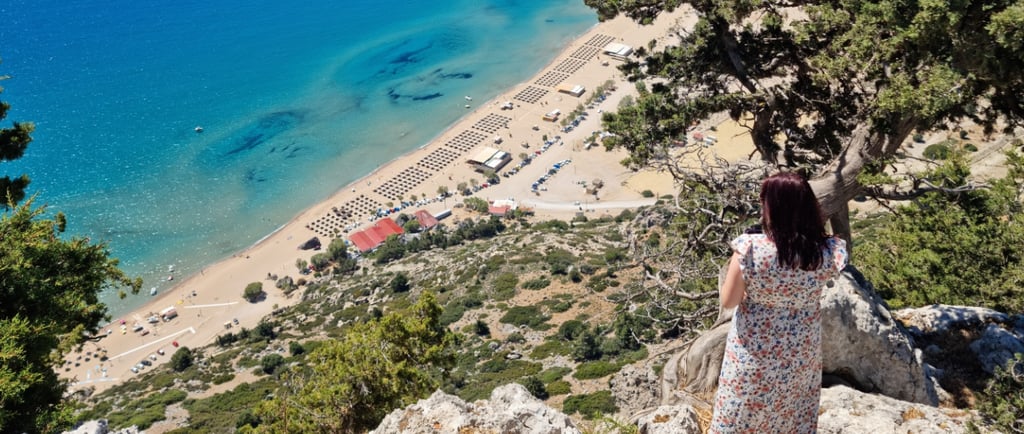
Tsambika Beach is my all-round choice for a classic Rhodes beach day: long sand, clear water and room to spread out. Located on the east coast near Kolymbia, it’s a popular, organised beach and not a secluded spot.
The soft sand continues into a gradually sloping seabed, letting children paddle without a pebbly entry. There’s enough space for a shoreline walk and several swims, making it easy to spend a full day here. It's better for relaxed swimming than for a dedicated snorkelling trip.
Beach bars and restaurants make a full day simple, with toilets, showers, and changing facilities available. Before renting sunbeds, confirm the total price for your group, what it includes, and any minimum spend.
Aim for a 09:00 arrival in July and August, as central areas fill by late morning. The centre is convenient for refreshments, while either end is usually quieter. May, June, and September offer a good balance of beach weather and smaller crowds.
A car is simplest for families with bags. There's a large free parking area beside the beach with a short, flat approach. Set navigation to Tsambika Beach, not the monastery, and don't leave valuables in your car. For a single visit from a nearby hotel, a pre-booked taxi is a good alternative.
For an extra activity, climb to the monastery viewpoint. The path has around 300 steps from its car park, so go early with water and only if everyone can manage stairs. Otherwise, the beach itself, with its seasonal watersports, can fill the day.
Agathi for sandcastles and your own shade
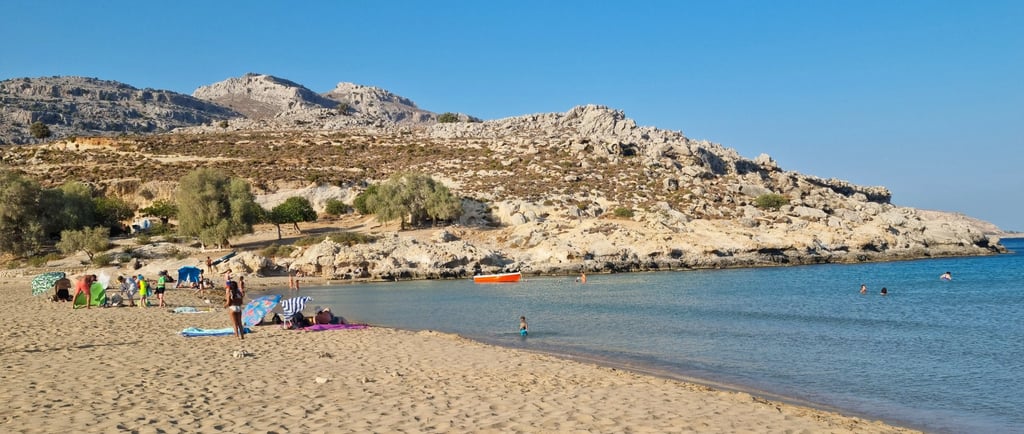
Agathi Beach, or Agia Agathi, is the sandy bay just past Haraki. Its fine golden sand slopes gently into a broad shallow area, making it a great spot for sandcastles and a simple towel-on-the-sand morning.
The key difference from Tsambika is that Agathi is a wild beach with no sunbeds, toilets, or other facilities. An inflatable water park is its only attraction. Natural shade is scarce, so you must bring your own umbrella, drinking water, and food.
This simplicity suits self-sufficient visitors. The sandy centre is best for swimming; the rocky sides offer minor interest for snorkelling, but that isn't the main reason to visit. The bay is somewhat sheltered.
A car is the easiest way here, with parking directly behind the beach. The walk from the nearest bus stop is exposed, which isn't practical with children and beach gear. A taxi with a pre-arranged return is the better car-free option.
Mornings are quieter, while a short late-afternoon session also works well. My plan would be a long swim followed by a meal in Haraki village, rather than unpacking at a second beach. With small children, I’d make the first visit short so the lack of toilets doesn’t become an issue.
Faliraki for a sociable, convenient beach day
Faliraki Beach is the sociable, convenient choice: a long sandy shoreline with everything nearby. It's a good option for groups with different interests, as people can swim, eat, or try watersports without splitting up.
The centre has the most music and activity. For more space, move away from the main cluster, but remember Faliraki is a developed resort beach, not a secluded cove.
Most of the beach has soft golden sand and a gradual entry. For families, balance a quieter spot against the convenience of nearby food and shade. Always swim clear of watersports launch areas. The beach is long, so pick a specific entrance for navigation.
Central areas have organised sunbeds and beach service. Food options range from quick gyros to full restaurant meals. For a quieter, more traditional meal, head towards the southern end near Kathara. Check where the toilets are for your chosen spot before settling in.
From Rhodes Town, bus 40 is a simple option for a beach-only day. A car is better for multiple stops or a flexible return time. A taxi is useful if you have a specific entrance or venue in mind. July and August are busiest, so start early to get your bearings.
Pefkos for sand close to the village
Pefkos Beach is a sensible choice if you're staying in the resort and want easy access to the sea. Pefkos is about 4 km southwest of Lindos. I’d start at Lee Beach, the main bay, which has soft golden sand and a gentle slope into the water.
Lee is the most organised local option, with sunbeds, umbrellas, and restaurants directly behind the sand. The availability of toilets adds to the convenience, making it the best local choice for a full family day of sandcastles, swimming, and lunch.
The trade-off is that Lee gets busy. Its appeal is convenience, not seclusion. Arrive early in July and August for a good spot. May, June, and September offer a better balance of good weather and lighter crowds.
- Plakia: a sandy alternative for a slower day. Smaller and more relaxed than Lee, with soft sand and rocky sides. Bring your own supplies for a longer stay.
- Kavos: a smaller cove with fewer sunbeds and less bustle, good for low-key swimming.
- Fokia Bay: a rocky cove southeast of Pefkos with no facilities. Suits confident swimmers and snorkellers, not families needing sandy entry.
Glystra for an unhurried southern swim
Glystra Beach, or Glistra, is a small sandy bay on the southeast coast between Lardos and Kiotari. I’d pick it for a few unhurried hours of swimming, especially if you're staying nearby. The appeal is its soft sand and relaxed pace.
The centre has gently sloping shallows, best for those who want sand underfoot. The edges are rockier, offering a different entry and a spot for casual snorkelling. The low dunes behind the beach provide little shade.
Glystra is not a full-service resort beach. You should bring your own drinking water, snacks, and sun protection. For a proper meal, nearby Kiotari has restaurants and cafés, while Lardos village offers tavernas.
Parking is directly behind the beach, making a car practical. For a single outing from nearby, a taxi is sufficient. A bus trip requires careful planning for the walk to the beach and the return journey. This compact bay is best for a shorter swim paired with a meal, not a long cross-island trip.
Practical Tips for Family Beach Days
For the least hassle, I recommend Tsambika, a suitable part of Faliraki, or Lee Beach in Pefkos. Agathi works if you prefer a self-sufficient day. Glystra is a good choice for a short sandy swim if you're based on the southeast coast. Often, the best beach is the one you can leave easily when children have had enough.
Shallow sand makes paddling easier, but no beach is automatically safe. An adult should always check the water depth and conditions first. Supervise children continuously, keeping non-swimmers within arm's reach, and stay well clear of boat and watersports lanes.
- Shade and essentials: Always take drinking water, sunscreen, hats, towels, and sandals for hot sand. Bring your own shade for natural beaches like Agathi; at organised beaches, check your umbrella provides enough cover.
- Reaching the shore is not entering the water: Easy parking doesn't guarantee easy sea access. The final approach can be over loose sand, steps, or uneven ground. For wheelchair or pushchair access, confirm the exact route and facilities before you go.
- Choose accommodation by the real walk: Lee Beach and Plakia are walkable from Pefkos, but the effort depends on your property's location. Smaller coves have their own approaches, so don't assume you can walk between them along the shore.
My suggestion: if you want several beach outings beyond your resort, compare Rhodes car rental options—carrying your own shade and leaving when the children have had enough are much easier with your own wheels. For one nearby beach visit, a taxi can be enough.
Chapter 3 of 14
Clear Water, Blue Bays and Snorkelling
For clear-water swimming and snorkelling, I start with the rocky coves near Faliraki. They offer interesting underwater scenery, not just a view from your towel. Choosing between them depends on how you want to enter the sea and whether swimming or scenery is your focus. A vivid blue bay isn't always the easiest place to swim, nor will it have the best visibility.
Blue water isn't the same as visibility
Water colour is the view across a bay; visibility is what you see beneath the surface. Sunlight, depth, and the seabed affect colour, while wind and waves can reduce underwater clarity. A dark blue patch can be perfectly clear, while bright turquoise water might just be stirred-up sand.
For visual appeal, see Rhodes' Bluest Water. For practical swimming factors like visibility and shore entry, our guide to the clearest water is more useful. A comfortable swim matters more than a colour ranking.
Rocky edges offer more for snorkellers to see than open sand. Only snorkel where you'd be comfortable swimming anyway, and ensure you have an easy route back to shore. For visibility, the day's wind and waves are more important than an early arrival.
Anthony Quinn Bay for rocky-cove swimming
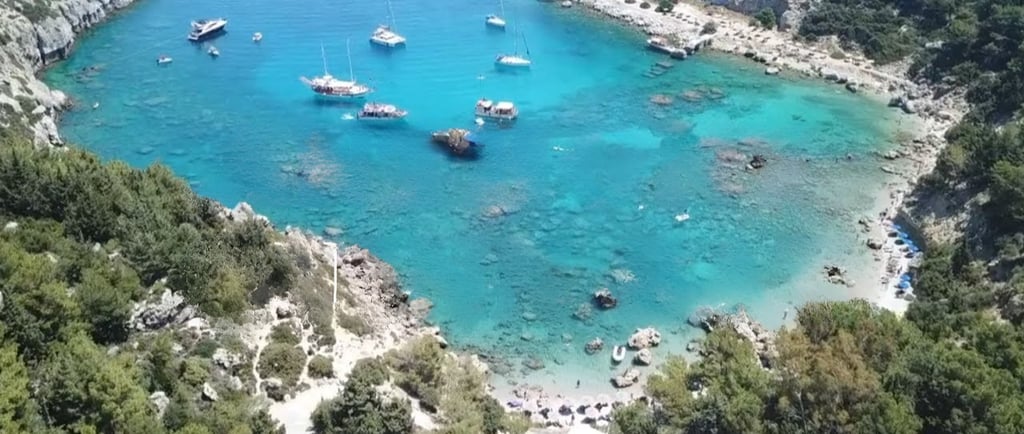
Anthony Quinn Bay is a dramatic, narrow cove near Faliraki, with pine-covered slopes and emerald water. I come here for a proper swim and to snorkel, not for a sprawling sandy beach day. The shore is compact, with sunbeds on rocky terraces instead of a sweep of sand.
Bring a mask for the underwater scenery. The trade-off is the rocky entry: it can be slippery, the water deepens quickly, and waves make exiting difficult. This bay suits confident swimmers; for sand and paddling, Tsambika is a better choice.
In summer, arrive before 09:30 to find parking and a spot. The bay is busiest from 11:00–16:00, when loungers fill up. Late afternoon is a good alternative for a shorter visit. For fewer crowds, come in May, early June, or late September.
Follow signs from Faliraki for Ladiko and Anthony Quinn Bay. Limited parking sits above the cove, leading to a steep, rocky descent. Secure footwear and a backpack are more practical than beach bags. The path is not step-free.
A small beach bar is the only option for refreshments. Bring water, snacks, and water shoes. There is little natural shade. Check what a sunbed rental includes before paying.
A pre-arranged taxi is a simple option. To avoid the parking and descent, consider boat trips that feature a swim stop here. Check that the itinerary specifically names Anthony Quinn Bay and that a swim stop does not always mean going ashore.
Ladiko for a smaller swimming-focused day
Ladiko, next to Anthony Quinn Bay, is a more open but still small cove. It's for swimming and relaxing, not long walks. It suits couples and swimmers looking to settle in for a few hours.
The shore is a mix of sand, pebbles, and rock. The bay's rock formations provide some interest for snorkelling. While there are shallow areas, the uneven, stony entry makes it less simple than an all-sand beach. I'd recommend it for confident swimmers over toddlers.
Sunbeds line the shore, with a beach bar, toilets, and changing areas available. Don't expect a choice of restaurants. Natural shade is limited, so rent an umbrella for a long stay.
Arrive before 10:30 in peak season, as sunbeds fill by late morning. After 16:00 is good for a shorter visit, and the shoulder seasons offer a quieter atmosphere. Ladiko can be less busy than Anthony Quinn but is still popular.
Ladiko is the first bay you reach when following signs from Faliraki to Anthony Quinn. Parking is limited. The approach is easier than its neighbour's, but the uneven ground is difficult for pushchairs and inaccessible for wheelchairs.
A taxi from Faliraki is simple. From Rhodes Town without a car, take a bus to Faliraki and then a taxi. Check my guide to getting around Rhodes for transport details, as buses to Faliraki do not go all the way to the cove.
A small path connects Ladiko and Anthony Quinn Bay. I'd pick one for the day and walk over to see the other without moving your gear. Ladiko is a good alternative if Anthony Quinn is full, but it's not a secret escape.
Traganou for a different coastal setting
Traganou Beach (or Traounou) near Faliraki is a natural-feeling shore known for its limestone scenery and a large cave at one end. I choose it for the landscape, not as an enclosed swimming cove like Ladiko.
Enjoy the cave's view from the beach; you don't need to go inside. Its main draw is the coastal setting, not snorkelling. With children, treat it as a scenery stop rather than a cave exploration adventure.
For swimming, pick a calm day and find a secure entry point. If you need easy, shallow access, choose a different beach. A windy day here is better for scenery than swimming.
Facilities are found only on certain parts of the beach. Find an organised section if you want a sunbed, otherwise bring your own water, snacks, and shade. Expect a simple canteen at most; Faliraki has more lunch options.
A pre-arranged taxi from Faliraki is easy; the bus requires a walk from the main road. I suggest you rent a car if you plan to visit Traganou and another beach, giving you flexibility. Always check rental terms before booking.
What Blue Flag adds to your decision
A Blue Flag indicates assessed water quality and beach management, not how blue the sea looks. The certification requires 'Excellent' bathing water quality and other standards. Our Rhodes Blue Flag Beaches guide lists awarded locations and explains the criteria.
The award applies only to the specified section of a beach, not its entire length. It doesn't guarantee calm, shallow water or specific facilities. Use it as supporting information, but don't overlook a good beach that lacks an award, as its absence isn't proof of poor water quality.
Chapter 4 of 14
Quiet, Natural and Wild Beaches
For a quieter beach day in Rhodes, choose between a peaceful bay, a long shoreline with room to spread out, and a remote beach that takes real effort to reach. Those are very different outings: a low-key beach bar might make your day more relaxing, while an exposed cove or a demanding hike might do the opposite. I’d choose around how you want to spend the day—not how isolated a beach looks in a photograph.

Space and isolation are different things
In your search for Quiet Beaches in Rhodes, remember that fewer people, less development and calmer water are different things. A beach can offer one without the others. A spacious resort beach isn't necessarily calm, and an empty west-coast cove can have lively waves.
Long beaches like Gennadi and Kiotari give you room to spread out. A smaller bay feels more intimate but can get crowded. Neither needs to be deserted to feel peaceful.
Early visits, plus spring and autumn, can mean a quieter atmosphere. For swimming, water conditions matter more than crowd levels. With children or nervous swimmers, I’d put a manageable entry and comfortable conditions ahead of seclusion.
- Choose a peaceful bay when you want a book, a swim and perhaps refreshments nearby.
- Choose a long shoreline when breathing room and a seaside walk matter more than feeling cut off.
- Choose a wild cove when scenery is the main attraction and you’re happy to bring your own supplies.
- Choose a demanding approach only when everyone in the group genuinely wants the journey as part of the day.
Kopria for a quieter west-coast stop
Kopria Beach is a small, low-key bay on the west coast in the Kritinia area, not near Kattavia. With a natural backdrop and a central beach-bar, it offers an informal, local-feeling afternoon rather than a polished beach club.
The shore is mostly pebbles with some coarse sand. The clear, deep-blue water is good for snorkelling when calm. As a wind-exposed west-coast setting, it suits confident swimmers better than toddlers.
Shade is limited. Seasonal sunbeds and umbrellas are available, but be sure to check the current terms before using them. Bring your own water and snacks, plus water shoes for the pebbles.
Parking is behind the shore. Navigate to the beach itself, not just Kritinia village. A morning or late-afternoon visit avoids the strongest sun. I'd pair it with a visit to Kritinia Castle and coffee in the village.
Fourni with a Monolithos outing
Fourni Beach is a small pebble-and-shingle crescent below Monolithos, backed by cliffs. I'd recommend it for a quiet hour by the sea after visiting Monolithos Castle, not as a main destination for a full beach day. It's also spelled Fournoi but is on Rhodes, not to be confused with the Fourni islands.
I’d visit the castle first for the views, then head down. The water is clear but gets deep quickly. It's fine for confident swimmers on a calm day; if it's rough, just enjoy the scenery from the shore.
The final road is narrow with limited parking near the beach. A car is the only practical transport. If you take a taxi, agree on the return trip and fare in advance.
Bring all your own supplies: water, food, and an umbrella, as there is little natural shade and facilities are unreliable. There are no lifeguards. The combination of deep water and west-coast waves makes it a poor choice for children or nervous swimmers.
Red Sand when the journey is part of the day
Red Sand Beach is on the east coast near Archangelos and Stegna, not part of the Lindos cluster. Its sand is golden-rust, not bright red. The appeal is the remote landscape and clear, deep water, not convenience.
The land approach is from Archangelos, but the road becomes a rough track unsuitable for a rental car. Park before this section and expect a 2 km hike each way. Do not drive onto the track; you risk damaging the car.
The 4km round-trip hike makes this an outing for people who enjoy the journey. Wear proper shoes, carry plenty of water, and allow enough daylight and energy for the return. Don't try to squeeze it into a busy schedule.
Sea access avoids the hike. You can rent a boat from nearby Charaki; discuss the route and sea conditions before booking. If Red Sand is your goal, confirm this with the operator, as it isn't a standard stop.
Red Sand has no facilities—no cafés, toilets, sunbeds, or natural shade. Bring everything you need, including sun protection. Stegna's minimarkets are a good place to stock up. The deep water suits confident swimmers, not young children.
- Pack water for the entire outing, including the return hike, plus food and any necessary medication.
- Bring a hat, sunscreen, a light covering and portable shade if it is practical to carry.
- Keep your phone charged and take every piece of rubbish away, including food scraps.
- Choose Red Sand because you want the remote scenery and the journey—not simply because you want fewer people.
Chapter 5 of 14
Beaches Near Rhodes Town
For an easy beach day from Rhodes Town, I’d choose Elli Beach. You can swim, eat, and continue sightseeing without a separate excursion. Choose Kallithea Springs for its restored spa architecture and rocky swimming cove. The northwest coast is a breezier alternative, and none of these local beach plans requires a rental car.
Elli when you want to stay in town
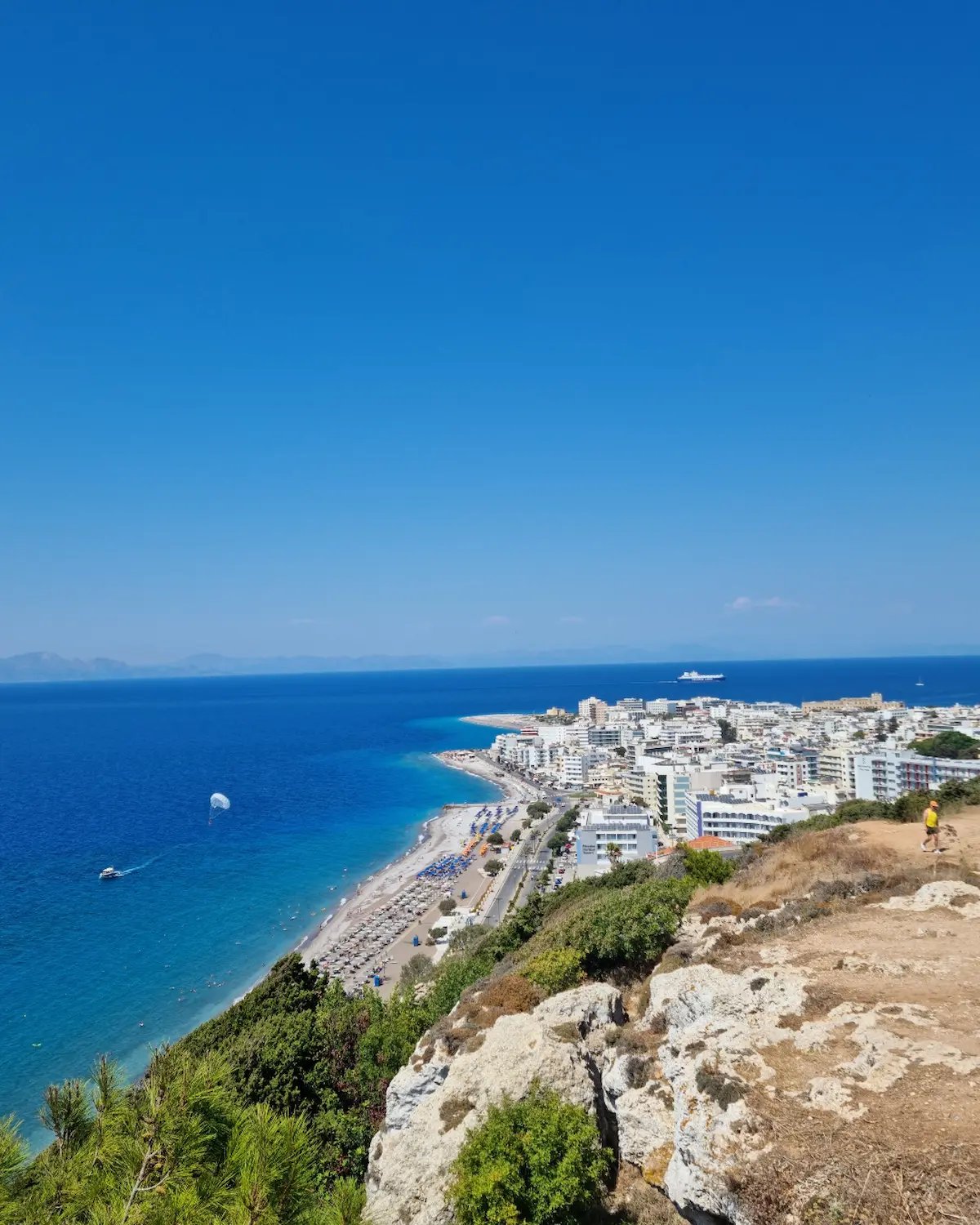
Elli’s biggest advantage is having Rhodes Town right behind your towel. At the northern end of town near the Aquarium, it combines clear water with a sociable beachfront. Walking is the simplest approach from central town; the route depends on your hotel or Old Town exit gate.
The shoreline mixes sand and fine pebbles, with a more pebbly, quieter stretch towards the Aquarium. The casino end can also be stonier at the waterline, so water shoes are useful. While convenient for a family visit, it isn’t my first choice for toddlers needing soft sand.
The offshore diving platform gives Elli its lively personality. The deeper water around it is for confident swimmers who can manage the return swim comfortably. For uninterrupted laps, I’d swim parallel to the shore away from the platform.
Go in the morning for a quiet swim before the crowds. Midday is for sunbathing, while late afternoon has a beach-bar mood. July and August are busiest. Some venues have summer music, so walk the promenade before choosing a sunbed if you prefer quiet.
- Facilities: Elli has sunbeds, umbrellas, canteens, showers, and changing cabins. Toilets are available in cafés and beach bars, as each venue arranges.
- Sunbeds: Prices vary. Establish the total cost, including any minimum spend, before settling in.
- Food: Beach bars cover snacks and cocktails, but nearby streets add bakeries, cafés, and tavernas. You don't have to pay beachfront prices for every meal.
- An easy combination: Swim, change, then visit the Aquarium or walk towards Mandraki Harbour and the Old Town. For route planning, use the Rhodes Town area guide.
- Mobility: Paved approaches reach the seafront, but sand separates the promenade from the water. For assisted sea access, confirm a working entrance and facilities in advance.
Kallithea for architecture and a swim
Kallithea Springs is a restored Italian-era spa, not just a beach. Its domed halls and pebble mosaics make the setting as important as the swimming. It's an excellent choice for anyone who enjoys architecture, not only a day by the sea.
Use the full name, Kallithea Springs, to find the historic complex, as other spots on the Kallithea coast are separate. The 'Springs' name is historic; you swim in the sea, not thermal pools.
Sunbeds occupy paved terraces and platforms around a small rocky cove. Entry is via ladders or small pebbly sections into water that deepens quickly. The clear, sheltered water is good for snorkelling, but this suits confident swimmers more than young children.
Plan for a few hours here. Explore the architecture, swim, and pause at the café-bar. For me, this is worth choosing because it feels different from an ordinary sunbed afternoon.
- Getting there: The Springs are about 9 km from Rhodes Town. A taxi or pre-booked transfer works for a single visit, parking is available, and the east-coast bus has a nearby stop.
- Costs and timing: The complex charges admission, with sunbeds usually extra. Check current opening hours and prices when planning, and arrive early in high season for a good spot.
- What to bring: Swimwear, a towel, sun protection and a snorkel mask. Water shoes help on the rocky entry; shade isn't guaranteed by your sunbed.
- Access needs: Main paths are generally flat, but the route to the cove involves steps. Contact the venue about the route to the water if you have mobility needs or a stroller.
The Breezy Northwest Coast
The northwest coast is a breezier alternative to sheltered Elli. Ixia and Ialyssos are the main resorts, known for windsurfing, beach bars, and broad Aegean views. Even without leaving town, the western shore has a different feel. Beaches like Psaropoula and Akti Miaouli offer sunset views and a livelier sea, better for a beach bar visit than for calm paddling.
A beach outing without hiring a car
For a central Rhodes Town stay, I wouldn’t hire a car just for the beach. Walk to Elli, and use a taxi or bus for occasional outings. A rental car is for exploring multiple beaches in one day, not just for a swim.
Zephyros, just south of town on the east side, is a less obvious option. Its soft sand and shallow water are a different experience from the breezier western shore. With cafés nearby, it's a good choice for a straightforward family beach outing.
Bus services change seasonally, so check the Rhodes Bus Guide for current schedules. For long beaches like Ixia, choose a specific venue as your destination. A taxi or pre-booked transfer can be more direct.
Consider a sightseeing boat trip to Lindos for a bigger outing. Choose it for the journey and views of Lindos from the sea, not as a dedicated swimming cruise. Check the itinerary; for more swimming, compare dedicated swim-stop boat trips.
Chapter 6 of 14
An East Coast Beach Road Trip
An east-coast beach road trip works best as a small group of stops, not a marathon drive. Choose an open shoreline for space, a resort for convenience, or a village waterfront for a swim followed by lunch.
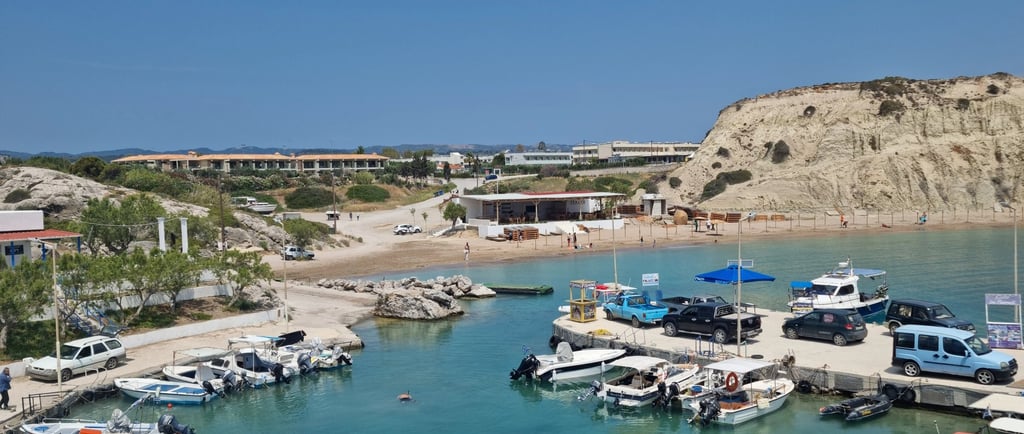
I recommend picking one main beach and leaving the next stop optional; you’ll enjoy the day more if you have time to linger.
Choose a stretch, not the whole coastline
Treat this as a choice of day trips: an open-shore swim, a resort stop, or a beach-and-taverna visit farther south. The coastal order shows nearby places, but you generally cannot walk between bays along the water's edge.
Using a car rental in Rhodes is my suggestion for this kind of exploring. It lets you choose your stops, stay for lunch, or leave if a beach doesn’t suit you.
If you’re driving from the north, Traganou is an optional first stop. If you're staying farther south, you don't need to add northern beaches; the Rhodes Island Guide’s area overview helps place your accommodation in context.
Without a car, I’d simplify the day to a single beach with food nearby. If using a prearranged driver, browse private transfer choices and confirm the exact drop-off and pickup points before you book.
Afandou for space between organised sections
Afandou is the stop for a broad horizon, clear water and room around your towel. Its long shoreline of mixed sand and pebbles gives it a different feel from a compact bay: you come here to swim, walk and slow down.
Facilities are in separate pockets, not along the whole beach. Organised sections offer sunbeds and canteens, while the gaps are for those who bring their own shade and water.
That layout is both the attraction and the compromise. Groups who value breathing room can settle comfortably here, but people expecting cafés beside every spot may find it inconvenient.
Sand and pebbles vary along the shore, so check the water entry. Water shoes help on pebbly sections, and with children I’d favour an organised area with a suitable entry; Afandou can also get breezier later in the day.
Afandou village is about two kilometres inland from the beach, making a village stop and a swim separate activities. Choose your spot based on whether you want refreshments nearby or prefer a self-sufficient afternoon.
- Choose an organised section for a longer stay with hired shade and a canteen nearby.
- Choose a gap between organised areas for a towel-and-book day, bringing your own water, snacks and shade.
- Keep cash for smaller beach businesses, and confirm sunbed costs before settling.
Kolymbia for a comfortable resort stop
Kolymbia is the comfortable middle ground: a relaxed resort shoreline with cafés, tavernas and organised beach sections, but without a big party scene. The eucalyptus-lined avenue and small harbour make a swim followed by lunch an easy plan.
The shore is mixed sand and small pebbles. Central and hotel-facing stretches have refreshments and loungers close together, while the northern edge becomes more pebbly and rocky, with deeper water and a quieter feel.
For families, the central stretches have a gentler entry. Confident swimmers might prefer the quieter northern edges, where a mask adds some casual snorkelling to a calm day.
Kolymbia suits groups who want an uncomplicated stop with food choices nearby. It is less compelling as a detour for dramatic scenery, and hotel toilets aren’t automatically available to beach visitors—use the facilities offered by your chosen beach business.
Pedalos and other seasonal activities give more active companions something to do. A morning swim avoids the strongest heat, while late afternoon leads naturally into dinner and a stroll.
For an optional companion beach, look at Tsambika rather than adding more stops. Kolymbia alone can easily fill the swim-and-lunch part of your day.
Stegna and Haraki for a beach-and-lunch day
Stegna and Haraki are my choices when the waterfront meal matters as much as the swimming. Both are villages, not large resorts, and I recommend choosing just one. Having two good lunch spots nearby is no reason to rush.
Stegna has a long mixed sand-and-pebble bay, small fishing boats and a strong seafood identity. The central stretch offers a softer sand mix and shallower entry, making it a straightforward family starting point.
The southern end is deeper and quieter, suiting confident swimmers. At the northern end, stones and a rocky seabed make water shoes useful and give casual snorkellers something to explore.
Sunbeds, umbrellas, cafés, showers and changing cabins make Stegna practical for a full day. A morning swim followed by a long lunch plays to its strengths much better than a brief photo stop.
Taverna Maria offers traditional Greek dishes, while Stegna Kozas is known for creative seafood and a good wine list. Book ahead in high season, and always confirm the total price before ordering whole fish priced by weight.
The road descends from Archangelos to the bay. Stegna and Tsambika are a driving combination, not a walk along the coast.
Haraki is a curved, mostly pebbled village bay (also spelled Charaki) with tavernas along the waterfront. The pleasure here is moving easily between a swim, coffee, and a meal without a separate journey for each.
Choose Haraki for quiet conversation and grilled dishes by the sea, not for beach parties. It works well for mixed groups where some want to swim and others would rather sit overlooking the bay.
Haraki has sunbeds and umbrellas; water shoes make the pebbled entry more comfortable. Check the actual depth and footing for children. A mask is good for exploring the rocky edges.
A swim at sandy Agathi followed by lunch in Haraki is another sensible pairing. The waterfront meal at Haraki is a worthwhile stop in its own right.
Where to stop before continuing towards Lindos
Haraki is a natural decision point before Lindos. If you have a good swim and lunch, there's no need to press on.
Feraklos Castle is an optional side trip from Haraki. Add an extra stop only if it interests you, not to fill a gap on the map.
If Lindos is your main destination, keep the preceding beach visit modest. Lindos involves walking and deserves more energy than a quick swim after several earlier stops.
- For shoreline space: Make Afandou the main beach and leave onward visits undecided.
- For resort convenience: Settle at Kolymbia, with Tsambika as an optional alternative.
- For a village-and-lunch day: Choose Stegna, or pair Agathi with a meal in Haraki.
- For a day continuing to Lindos: Choose one earlier stop, then give Lindos the rest of your attention.
Chapter 7 of 14
Lindos and Nearby Beaches
Your best beach near Lindos depends on how much sightseeing you want with your swim. Stay beside the village for sand and Acropolis views, choose the famous enclosed cove for scenery, or head north for a beach-first day with more room. I’d pick one main swimming stop rather than moving between bays.

Lindos Beach for the village-and-beach combination
Lindos Beach is my first choice for combining the village and beach in one outing. The main bay curves below the whitewashed houses and Acropolis, with mostly soft sand and shallow, sheltered water. This makes it a great spot for families, first-time visitors, and anyone who likes a swim with a memorable backdrop.
The trade-off is bustle, especially in July and August. Sunbeds, umbrellas, and beachfront cafés make a full day easy, though costs can be higher than elsewhere. Arrive before 10 am for a better choice of space; neighbouring Pallas Beach shares the bay and can feel slightly more relaxed.
By car or bus, plan for the final walk down from the village. The beach has some access provisions, but the complete journey to the sand and back uphill requires planning. Use the Rhodes bus-planning guide for services.
I suggest dedicating the morning to swimming, leaving time for a proper lunch and a visit to the village. You'll find tavernas on the sand, but the lanes above offer more choice, including rooftop meals which you can plan with the Lindos village guide. The rocky edges near Pallas are also worth exploring with a snorkel mask.
St Paul’s Bay for a scenic couples' outing
St Paul’s Bay is a separate cove on the other side of the Acropolis. Rocky cliffs enclose turquoise water, with a small white chapel and two compact beach areas. It’s a scenic spot for couples wanting a swim and a meal, but the setting offers scenery, not privacy.
You'll find sandy areas, rocky edges for snorkelling, and sheltered water. However, the limited space and changing depth make it less straightforward for young children than Lindos's main beach. For safety, swim away from boat routes near the bay entrance.
Sunbeds and umbrellas fill most of the beach, with strong demand in summer. For a meal, St Paul’s Bay Taverna offers Greek food by the water, while Tambakio is a more romantic, higher-priced option. Always check what your sunbed payment includes before settling in.
A morning visit is best for a full beach day, while late afternoon offers softer light for a swim before dinner. The walk down includes steep, uneven sections, and parking is located above the bay. Remember, the famous heart-shaped view is from above, not from your beach towel.
Vlycha for another bay near Lindos
Vlycha Beach, a few kilometres north of Lindos, is a better choice when swimming is the main event. Its long curve feels less intense than the main Lindos beaches in high season, offering a slower-paced day.
The shore is a mix of sand and small pebbles, and the water deepens gradually, unlike at Kalathos farther north. This makes Vlycha a solid family option, though water shoes can help with the varied footing at the waterline. Check your entry point before settling down.
From Lindos, a taxi is a good option; agree on a precise return pickup point. Services vary by section, and some hotel-front facilities may be for guests only, so it's wise to have your shade and refreshment plans sorted before you unpack.
If staying here, check your accommodation's real distance and route to the shore, as a sea view doesn't guarantee an easy walk. Vlycha is a good beach base, but remember to factor in travel time for evenings in Lindos.
Kalathos when room matters more than a famous cove
Kalathos Beach, 7km north of Lindos, is the opposite of the village's compact bays. Its 4km shoreline offers huge amounts of space, with organised sections separated by long, quiet stretches. It's a top choice for anyone tired of packed sunbeds.
The shore is coarse sand and smooth pebbles. More importantly, the seabed shelves quickly, making it better for confident swimmers than for toddlers. For them, I'd suggest Vlycha or Lindos Beach instead. Beach shoes are useful here.
A few tavernas operate near the organised areas, but you should bring your own supplies for the quieter parts. A rental car is very useful, allowing you to drive along the access road behind the beach to find your perfect spot, which isn't practical from a bus stop.
Don't try to squeeze Pefkos and its beaches into the same day. Combining Kalathos with time in Lindos village already provides a great contrast between an open shoreline and historic scenery.
Add a sail rather than another drive
A sailing outing adds variety without needing to find another parking spot. It's a chance to enjoy the water while someone else handles the boat.
For an organised trip that's a main part of your day, a Lindos sailing tour with food and drinks includes swimming stops and refreshments on board. It's a substantial outing, not just a way to reach a beach.
For a shorter trip, the three-hour late-afternoon Lindos swim-and-sail cruise fits well after you've spent the day in Lindos village or on the beach. Be sure to check departure points and inclusions before booking.
If time under sail matters more than a fixed itinerary, consider the Lindos Sailing Experience (5.5 hours). Its route and swimming stops follow the day’s wind and sea conditions. For a swimming-focused alternative, compare the Lindos Swim & Sail Cruise (5.5 hours); for rocky scenery and snorkelling, look at the 3 Caves & Lindos Cruise (5.5 hours).
Chapter 8 of 14
Southern Rhodes Beaches
Southern Rhodes is a strong choice for spacious beach days, long shoreline walks and quieter natural stretches, but it isn’t one continuous ribbon of soft sand. Much of this coast is mixed or pebbly, with resort-backed sections giving way to more self-sufficient beach outings farther south. I’d choose it for room to settle in rather than a packed circuit of famous bays, and recommend arranging transport around how much exploring you actually want to do.
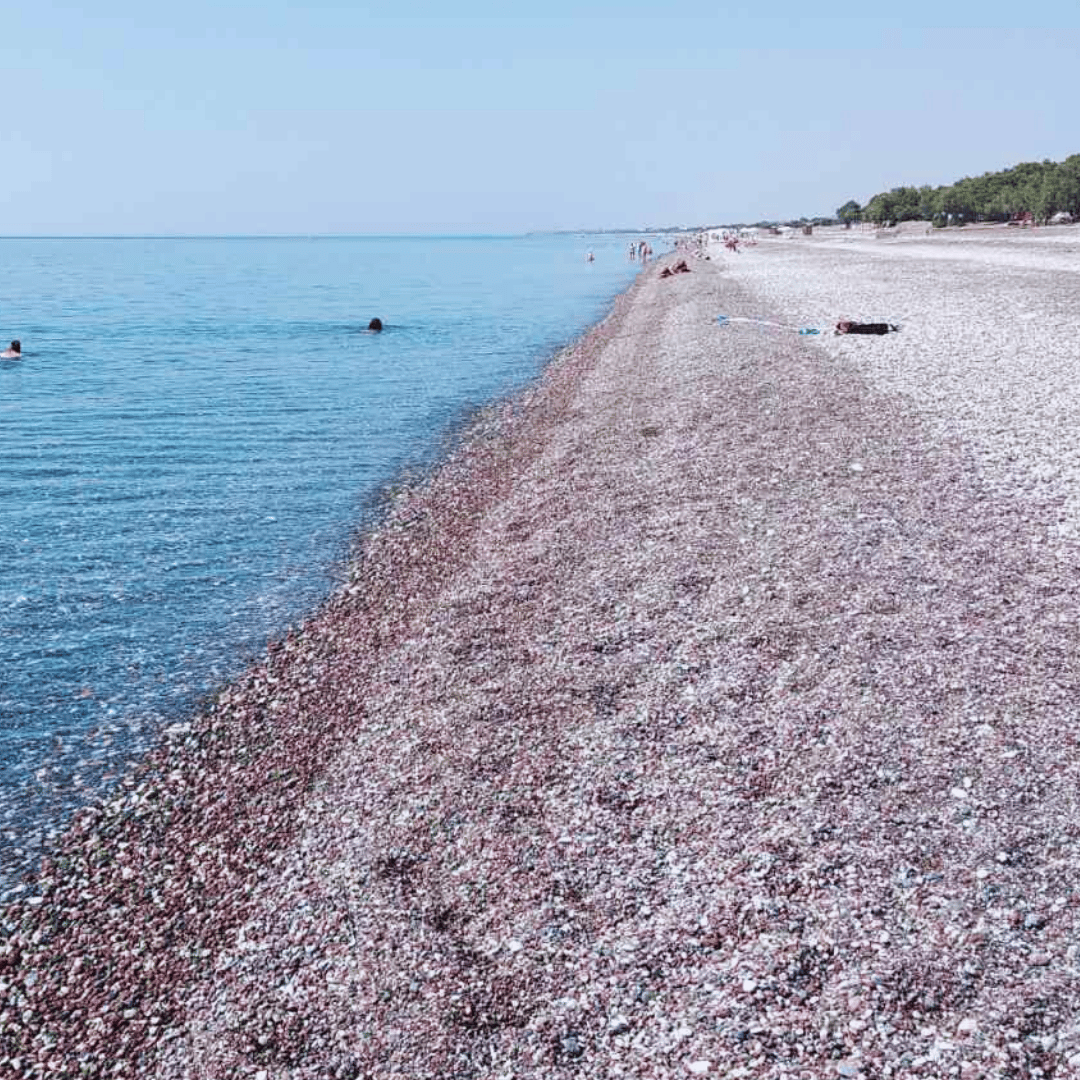
Lardos: Choose the Beach, Not Just the Village
Lardos Beach lies on the southeast coast beyond Pefki, offering a mixture of sand and pebbles. It makes sense for an unhurried beach day if you’re already staying nearby and enjoy a mixed shoreline; I wouldn’t choose it specifically for sandcastles or consistent sand underfoot.
Be aware that Lardos village is a separate destination with its own squares and tavernas, so an accommodation address saying “Lardos” doesn’t necessarily put you beside the sea. Always check the property’s exact map pin. For a day visit, choose your intended beach section before setting your navigation.
Hotel-associated names can help identify the stretch, but use a public beach approach. If shade or toilets are essential, confirm arrangements with the operator for that particular section. A swim followed by a separate visit to the village is a better plan than trying to squeeze several beaches into one day. The nearest sandy alternative is Glystra, which sits between Lardos and Kiotari.
Kiotari for a Spacious Coast and Boat Options
Kiotari Beach stretches along the southeast coast south of Lardos. It is mainly pebbly, with some sand-and-pebble sections, so water shoes are a good idea. Its appeal is a relaxed, spacious shoreline rather than a powder-sand bay. Kiotari is well-suited to anyone staying at a nearby coastal hotel.
Tavernas along the coast road make a lunch break straightforward, while organised beach services vary by section. Some hotel-front sunbeds are reserved for guests, so day visitors should find a public sunbed area or bring their own shade.
Kiotari also offers the chance to get out on the water. Browse private skippered boat trips from Kiotari, then choose between the Sightseeing Tour to Lindos (1.5 hours), South Coast Tour (2 hours) and Half Day Tour (3 hours). For an independent outing instead, see self-drive boat rental to Lindos and nearby bays and check its departure point and permitted cruising area. A beach session and one boat outing are enough for a full day.
Gennadi for Room to Spread Out
Gennadi Beach is the one I’d choose when space is the priority. Its long shoreline mixes sand and small pebbles, with low vegetation and small dunes behind it. It's a place to settle in with a book or take a long walk without organised activities as the focus.
There are organised sections with sunbeds and umbrellas, as well as quieter, natural stretches. Choose the former for comfort and the latter if you bring your own water and shade. Families can enjoy Gennadi, provided the mixed surface and water entry suit everyone. Waves can pick up on windy days.
I’d go in the morning for beach time before the midday heat, or later for a walk in softer light. Gennadi village, with its cafés and tavernas, is a walk from the shore, making a beach-and-village day a natural pairing. If you’re staying there with a pushchair or beach gear, ask your accommodation for the easiest walking route to the shore.
Plimmiri for a Natural-Coastline Day
Plimmiri Beach is a long, wild-feeling bay in the far south of Rhodes. Though it lies in the wider Lachania area, Plimmiri and Lachania are not interchangeable beach names; navigate specifically to Plimmiri Beach. It's a choice for independent travellers seeking a picnic, a shoreline walk, and plenty of space.
The surface is dark, coarse sand mixed with fine shingle. The water is clear, but the seabed shelves steeply and becomes deep close to shore, making it a better fit for confident swimmers than for young children. Beach shoes are useful for the hot sand and shingle.
You must bring your own food, drinking water, sun protection, and shade. Nearby hotels generally serve their guests, and I wouldn’t plan the day around finding an open taverna or hiring a lounger. Being self-sufficient is part of the experience.
Plimmiri’s dunes are a nesting site for protected loggerhead sea turtles (Caretta caretta). Stay off the dunes, leave nests and any markers undisturbed, take all rubbish away, and keep your distance from any turtle without blocking its route to the sea. Come for the coastline, not an expectation of seeing turtles.
I’d drive here; informal parking is available near the beach. A pre-arranged private transfer can also work. For another stop, a wander in Lachania village or Asklipio is a better fit than more beaches.
Getting Settled at a Southern Beach Base
Choose your southern base around convenience, not just a beach photo. Lardos village and a coastal hotel offer different holidays, while Kiotari and Gennadi combine resort life with a spacious shoreline. The Rhodes Island Guide’s where-to-stay advice can help with this decision.
For arrivals, I’d recommend pre-booked Rhodes airport transfers when you don’t want to drive after your flight. Book using the exact property address. You can arrange a transfer first and then a rental car only for exploring days. A car is best for visiting Plimmiri or multiple southern stops.
For one nearby beach outing, a taxi with an agreed return pickup may be simpler. Buses serve parts of the southeast coast, but use the Rhodes bus guide to plan current services and the final walk to your chosen beach.
Keep Prasonisi as a separate scenery-and-windsports decision. Its sandbar and riding scene are a deliberate outing, not a casual swimming stop. For the beach days themselves, pack footwear for mixed surfaces, water, a towel, and sun protection, adding personal shade for natural stretches. Mornings and late afternoons are comfortable choices in summer; leave the strongest midday heat for a proper break.
For beach-hopping between Pefkos, Lardos, Kiotari and Gennadi, compare Rhodes car rentals. A car is usually the simplest, quickest way between separate bays; for a beach beside your hotel, leave it parked and walk.
Chapter 9 of 14
West Coast and Windy Beaches
Choose Rhodes’ exposed coast for windsurfing, kitesurfing, big sea views and the pleasure of watching the water—not because you want a reliably gentle floating-and-paddling day. The northwest resort shoreline offers beach bars and sunset views close to Rhodes Town, while the far southern tip is a separate outing built around a striking sandbar landscape. Wind gives these places much of their character; whether that improves your beach day depends on what you’ve come to do.

Ixia and Ialyssos for windsurfing and sea views
Ixia and Ialyssos are connected beach areas along Rhodes’ northwest coast, not two sheltered bays. Ixia is about 4 km from Rhodes Town, with Ialyssos continuing farther along the shoreline, around 8 km from town. This is the convenient option for a few hours beside the Aegean without making the journey a major part of your day.
Ixia has the busier, more organised beachfront: hotels, loungers, beach bars and windsurfing sails moving across the sea. Ialyssos feels longer and more open, though it also has hotel-backed sections and facilities. I’d choose Ixia for a sociable afternoon and Ialyssos when the open shoreline matters more than a concentrated beach-bar scene.
Neither is a soft-sand beach. Ixia is generally narrow, with pebbles, stones, coarse sand and a rocky seabed in many places; Ialyssos mixes sand with smooth pebbles and has an abrupt change in depth. Water shoes help at both, but the footing and waves make this coast a better match for confident swimmers than for toddlers or hesitant paddlers.
Windsurfing is central to Ixia’s appeal, and kitesurfing is also part of this coastline’s character. The breeze typically builds through the day, so afternoons are particularly good for watching the action from a beach bar. Morning is often the better swimming window, but neither beach would be my choice for a dedicated snorkelling outing.
Organised sections have sunbeds and umbrellas, with restaurants and tavernas behind the beach and along the main road. Ask the charge before settling onto a lounger: buying a drink and hiring a bed can be separate arrangements. In Ialyssos, heading inland into town gives you another choice of tavernas and cafés.
You don’t need a car for a straightforward visit from Rhodes Town: west-coast buses and taxis serve both areas. Choose a specific beach bar, hotel or watersports centre as your destination, since each name covers a long stretch of coast, and use the Rhodes bus guide to plan. Leave time for a seafront walk or sunset drink—the view is a reason to stay even when swimming isn’t.
Prasonisi for the landscape and watersports
Prasonisi is at the far southern tip of Rhodes, a completely different proposition from the northwest resorts. Its broad sandbar faces an adjoining island, with water on both sides where the Aegean and Mediterranean meet. I’d make the journey for the landscape, photography or the windsurfing atmosphere—not solely to find somewhere to swim.
The sandy connection changes shape, and water can cover parts of it. Neither side is permanently calm, and a flatter-looking surface can still have currents and busy watersports traffic. With young children or weaker swimmers, I’d plan a sightseeing stop and keep everyone clear of riders, kite lines and launch areas rather than arrive expecting easy paddling.
Crossing to Prasonisi Island is optional and only possible when the sandbar provides a safe route. Stay on the Rhodes side if water is moving across the sand; you can appreciate the setting without reaching the island. Beyond the crossing, the ground is rugged and undeveloped, so an island walk needs secure footwear, not barefoot beach expectations.
For photographs, softer morning or evening light is appealing. For watersports, the forecast and suitable conditions matter more than a fixed hour. Surf schools and riders are part of the scene, so remote here doesn’t mean empty.
There are a few tavernas near the approach and surf schools, while small shops and sunbeds are seasonal options. Bring water, snacks, sun protection and a closed bag to keep wind-blown sand away from your belongings. Soft sand can make the visit demanding with a buggy or mobility aid.
I’d drive and make this a deliberate southern outing, perhaps adding a coffee in Gennadi or a brief visit to Lachania. Follow parking signs and finish the approach on foot rather than driving onto the sand. Without a car, arrange the return journey in advance; this is not the place to leave getting home as an afterthought.
Why an exposed coast can be the right choice
Wind isn’t simply a flaw. For windsurfers and kitesurfers, it powers the activity they’ve travelled for. For everyone watching, moving sails and an open horizon make the shore feel very different from a sheltered swimming cove. You can enjoy that energy without getting on a board.
The trade-off is comfort. Wind-driven waves can make relaxed floating difficult, while blowing sand and a persistent breeze can shorten a lounging session. A cooling breeze also makes the sun feel less intense without reducing the need for protection.
- Choose the northwest coast for an active beachfront atmosphere, easy access from Rhodes Town and sea-view drinks or a sunset.
- Choose Prasonisi when the sandbar landscape or wind-powered sports justify the journey south in their own right.
- Choose a more sheltered beach when the day depends on gentle paddling or children playing at an easy sandy water entry.
- Keep scenery and swimming as separate decisions: a beautiful horizon says little about how manageable the sea is.
West-coast scenery without a swimming obligation
Farther along the west coast, Kopria Beach near Kritinia and Fourni Beach below Monolithos make sense as pauses in a scenic outing. Pair Kopria with Kritinia Castle, or Fourni with Monolithos Castle, rather than turning the day into a race between beaches. A quiet hour beside the Aegean can be worthwhile even if you don't swim.
These stops offer a different experience from Ixia’s organised beachfront, so bring your own water, snacks and shade. If the sea is rough, enjoy the shoreline and views instead; you haven’t wasted the journey by staying dry. The Rhodes Island Guide’s area overview helps place the castle and village stops within the wider route.
My suggestion: if you want to combine west-coast beaches with villages and castles, rent a car rather than juggle buses. Pick one area to explore properly, leaving the northwest beaches and Prasonisi for separate outings.
Chapter 10 of 14
Best Beaches by Travel Style: How I'd Plan It
I’d choose your main beach for the day you want: sand and easy swimming, a snorkelling session, a village visit or a boat trip. Stay in one coastal area, adding a second stop only if it's a real contrast. A good lunch or time on the water often improves a day more than another swim.
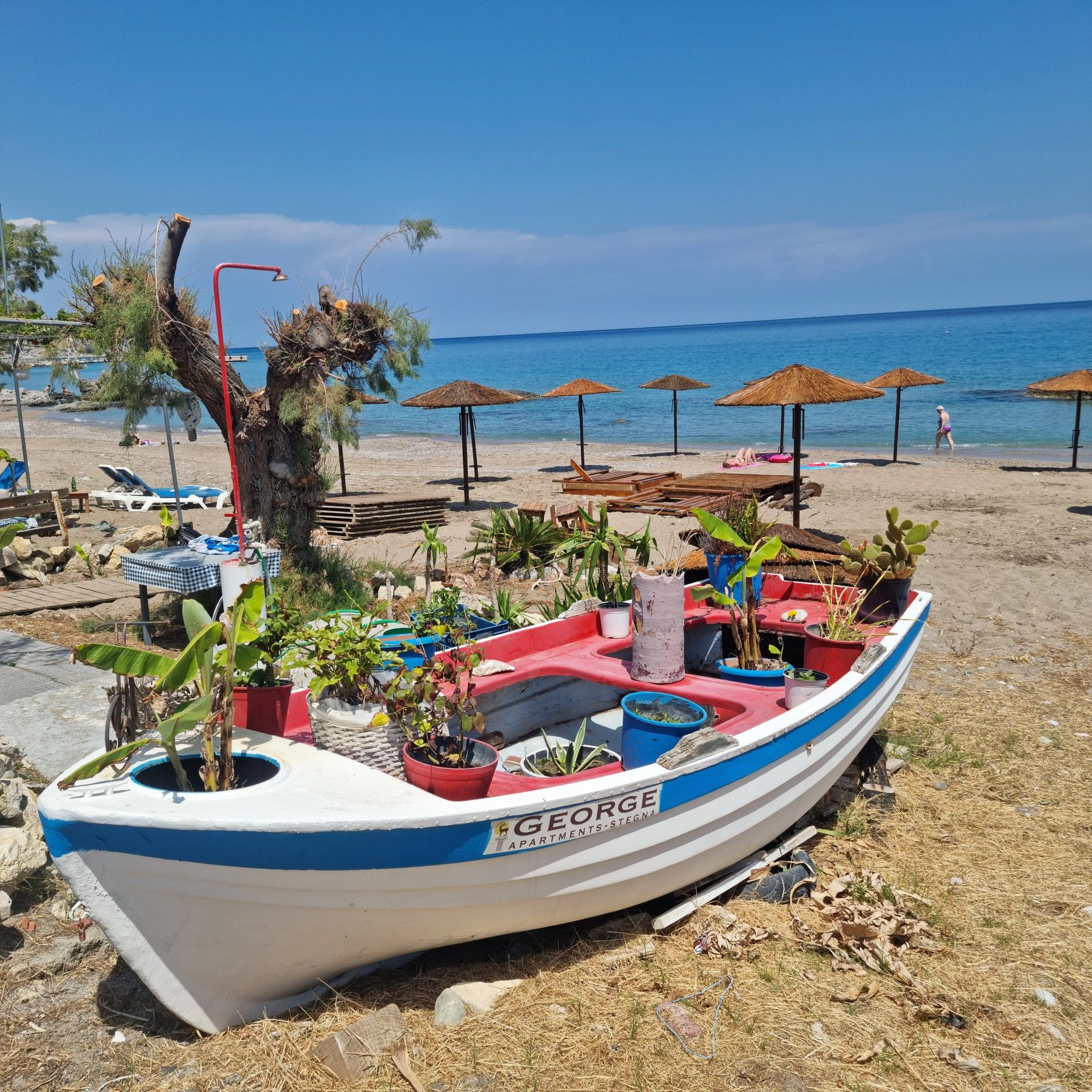
One beach day on a first visit
Tsambika is my all-round choice for a classic Rhodes beach day: long sand, clear water and room to spread out. Arrive around 09:00 and give it most of the day instead of squeezing it between sightseeing stops. Find out more in my full guide to Tsambika Beach.
For confident swimmers who prefer snorkelling, choose Anthony Quinn Bay instead. Its rocky entry and compact shore make it a poor substitute for a spacious sandy beach, but a much better choice for looking underwater.
- Choose a sandy beach for easy swims, shoreline walks and a comfortable day.
- Pick a cove when underwater scenery is the main goal; arrive before 09:30 in peak summer.
- Let your base influence the decision. I wouldn’t cross the island for a famous photo if a closer beach fits the day you want.
Children, couples and mixed-interest groups
With children, I’d favour an easy sandy entry and shade over dramatic scenery. Tsambika fits that, while Faliraki is a good choice when your group wants both watersports and a simple lounger-and-lunch day.
For couples, St Paul’s Bay is my scenery-led choice, particularly if a village walk and meal are part of the plan. Choose it for the setting, not privacy; it's a small, popular bay.
- Toddlers and sand play: make an easy beach the whole outing and skip rocky coves.
- Confident young swimmers: a snorkelling cove is rewarding, but check everyone is comfortable with the water entry and depth.
- Mixed-interest groups: stay where food, shade and activities are close together.
- Couples seeking quiet: favour space over a famous small bay and keep lunch leisurely.
Faliraki and the nearby coves
The useful plan is Faliraki plus either Ladiko or Anthony Quinn Bay—don't feel you must swim at all three. Make the cove your morning stop, then use Faliraki for a wider choice of lunch spots, sand and afternoon activities.
Ladiko is the gentler choice for swimming, reading and casual snorkelling. Anthony Quinn Bay gets my vote for dramatic scenery and underwater interest, though its uneven descent and deep water make it less straightforward.
A taxi works for a single cove trip from Faliraki; a car offers more flexibility. Pack a mask and secure footwear, and keep bags light for the walk down to a rocky shore.
- Beach comfort first: stay mainly at Faliraki and leave a late-afternoon cove visit optional.
- Snorkelling first: visit Anthony Quinn Bay early, then have lunch in Faliraki.
- Slower cove day: settle at Ladiko and skip the resort stop if another swim and a book sound better.
Kolymbia, Tsambika and Stegna
If you're staying in Kolymbia, decide between an easy resort beach day and a change of scene. Stay close for a simple swim-and-lunch, or make Tsambika your main outing for a proper sandy beach.
For a village lunch, I’d pair a morning in Kolymbia with Stegna. Taverna Maria offers traditional Greek food, while Stegna Kozas is a more creative seafood restaurant. Reserve ahead for either in July or August.
Choose one extra stop, either the beach or the meal, not a three-part circuit. Stegna is reached by road via Archangelos; the coast between it and Tsambika is not a simple walk.
- Kolymbia plus Tsambika: compare resort convenience with a full sandy beach day.
- Kolymbia plus Stegna: a stronger pairing when lunch and village atmosphere matter as much as swimming.
- Enjoying Tsambika? Eat lunch there and stay. Leaving is an option, not a required upgrade.
A Lindos-area day without rushing
For a first visit, Lindos Beach and the village make a full day. Start early to enjoy the sandy bay, leaving time for a meal and a wander instead of scheduling more beaches.
Add St Paul’s Bay for a contrasting view—a quick look or late-afternoon swim is enough. Vlycha is the alternative for a quieter, beach-focused stop with a mix of sand and pebbles away from the village crowds.
I’d choose one extra, not both. Remember Lindos beaches involve a walk down and back up. Vlycha is a separate bay to the north, so a taxi from Lindos is a good plan for a beach-only trip.
- Sightseeing-led day: explore early, take a food-and-water break, then settle at one beach.
- Couples’ day: village time plus St Paul’s Bay, with no need for a second sunbed rental.
- Beach-led day: give Vlycha most of your time and keep Lindos as the optional extra.
Pefkos, Lardos, Kiotari and the southern coast
South of Lindos, I'd start locally instead of driving north for famous names. In Pefkos, Lee Beach provides an easy sandy day. Lardos Beach offers sand and pebbles; combine it with a trip to the separate village for lunch.
Glystra is the sandy choice between Lardos and Kiotari, but bring your own water and shade. Both Kiotari and Gennadi have huge pebble-and-sand coastlines with plenty of room. Gennadi is my pick for a quieter feel, with organised sections and natural spots.
My suggestion: if you want the freedom to combine a beach with another bay or a village meal, compare Looneytravels car rental options. For one nearby beach, a taxi with an agreed return pickup can be simpler than hiring a car.
Chapter 11 of 14
Getting to Rhodes Beaches
A rental car is best for exploring multiple beaches, reaching quieter spots or changing plans on the fly. For a holiday based at one beach, walking, buses and taxis are often enough. The key detail is always the final approach: the journey from the road to the sand and into the sea.
When a rental car changes the holiday
I’d rent a car for days involving several beaches rather than arrange a separate connection for every stop. You can stay longer somewhere you like, leave when it feels too busy, or add a village lunch without rebuilding the journey home. That freedom is particularly useful for quieter west-coast stops and exploring southern Rhodes.
Compare Rhodes car rental with live prices and look beyond the headline rate. Collection location, insurance, fuel policy and road-use restrictions all matter, especially for reaching beaches outside the main resorts.
Kopria Beach, on the west coast near Kritinia, is a good example of where I’d favour driving: parking is behind the shore, and a car makes a beach-and-village outing much simpler. Navigate to the beach itself rather than the nearby village, and take the final approach slowly.
A car doesn't guarantee parking at every beach. Some remote approaches are unsuitable for ordinary rentals, so follow the specific beach's access advice. Use proper entrances, read parking signs and take valuables with you.
If your hotel is a short walk from the sea and restaurants, I wouldn't hire a car for the whole week. Group your exploring into driving days and enjoy easy local swims otherwise. The Rhodes car-rental decision guide can help you decide.
Buses and the last stretch to the beach
Buses are best for an unhurried day at a single beach. Use the Rhodes bus guide to plan your outward stop, walk to the shore, and return journey. Timetables change seasonally, so check the current one and note your last bus home before you set off.
For Faliraki Beach, bus 40 via Kallithea Avenue is the route to look for from Rhodes Town. The beach is long, so choose the entrance you want before deciding where to get off; arriving in Faliraki and arriving beside your preferred patch of sand can mean different things.
The same distinction matters at Lardos Beach: the village and coastal destination are separate places. A service labelled with a resort or village name is only useful once you know how to finish the journey to the shore.
With children or beach bags, the final walk from the bus stop is crucial. Check the actual route and terrain, not just map distance. If that walk looks awkward, I’d pick an easier beach or take a taxi to avoid an exhausting day.
Taxis, transfers and walking
A taxi is a good option for a single beach trip without a car or bus schedule. Give the driver a specific beach entrance, not just a resort name. Use the meter or, for a pre-booked ride, agree the fare and return pickup in advance.
I use pre-booked transfers for point-to-point journeys, especially with a group, luggage or a set schedule. Select your actual destination, noting that a beach transfer is different from an airport run. For quiet beaches, always pre-arrange the return journey.
Walking is the simplest option for Elli Beach from central Rhodes Town, and I wouldn’t hire a car just to go there. Your hotel location or Old Town exit gate determines the real walk, so plot it from where you’ll actually start. A precise beachfront landmark also makes meeting friends or a driver much easier.
Walking is great if your hotel has convenient beach access. Before booking anywhere described as “near the beach,” check its exact location and the route to the sand. The Rhodes Island Guide’s getting-around section puts these short journeys in context.
Beach Costs & Practical Access
Budget for the entire outing: transport, parking, shade, food and drink. Sunbed prices vary hugely by operator, season and location. Elli Beach illustrates this well, with everything from basic sets to expensive premium beds. Always get the full group price before settling in, confirming what's included (loungers, umbrella, duration, any minimum spend) and whether you can leave for lunch and return. A bed rental does not automatically include all nearby facilities.
For physical access, consider the whole path to the sea. Tsambika Beach has a large free car park beside the shore, but its soft sand can still be difficult for wheelchairs. Likewise, the paved promenade at Elli gets you to the seafront, but not across the sand and pebbles into the water.
For specific mobility needs, plan around one entrance, not a general beach label. Arrange the continuous route, including toilet access and any sea-entry equipment, before booking transport. Always confirm that equipment is operational at your chosen spot; a flat promenade is not enough.
Chapter 12 of 14
When a Boat Is Better Than a Car
A boat is better than a car when the coastline itself is the main event: swimming in bays, seeing cliffs from the water, or reaching a beach with difficult land access. Choose an organised tour, a private skippered outing for your own group, or a licence-free rental for more control. Use a car for open-ended time ashore, village stops, and complete freedom over your schedule.
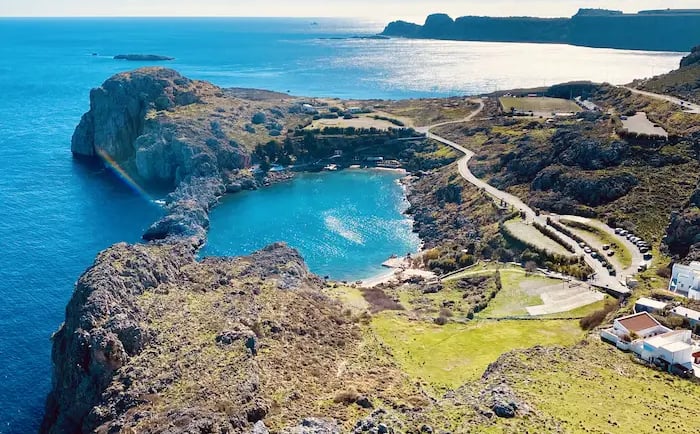
Swimming Trip or Sightseeing Trip?
Decide on your main activity first. A swimming trip is about time in the water; a sightseeing trip focuses on views and the destination. If you want both, find an itinerary that allows enough time for each.
Around Lindos Beach, seeing the village from the sea is a highlight. But viewing Lindos from a boat, swimming in its bay, and going ashore are different things. Check for explicit shore time if a village walk or taverna lunch is essential.
- Organised swimming trip: someone else handles the boat and route, but you follow a fixed schedule.
- Sightseeing trip: focuses on scenery over multiple swims. A stop may be a view from the boat, not time ashore.
- Private skippered outing: gives your group a private boat without you needing to operate it.
- Independent beach visit by road: for days when you want to settle on the sand, eat ashore, and set your own schedule.
Licence-Free Rental for an Independent Day
For more independence, I recommend licence-free boat rental around Lindos and nearby bays. A small motorboat lets you explore at your own pace within a permitted area. This option suits independent groups comfortable with operating the boat themselves.
Your freedom is not absolute. You must follow the operator's instructions on the cruising area, return time, and sea conditions. 'Licence-free' means no special permit is needed, but the briefing and rules are mandatory.
Pay attention during the handover to understand the controls, anchoring, and how to contact the operator. Before paying, review fuel arrangements, deposit terms, and safety equipment. If no one in your group truly wants to handle the boat, hire a skippered one instead.
Lindos Cruises: Sailing, Swimming or Caves
A 5.5-hour trip makes the boat a substantial part of your day. The Lindos Swim & Sail Cruise (5.5 hours) combines coastal sailing and swim stops, including Red Sand Beach, a remote spot with difficult land access and deep water suited to confident swimmers.
The 3 Caves & Lindos Cruise (5.5 hours) is the choice for caves and snorkelling. For a sailing-focused outing with a route chosen around conditions rather than fixed bays, compare the Lindos Sailing Experience (5.5 hours).
These trips are not interchangeable. Compare their swim stops, time ashore and inclusions; the duration alone does not tell you how the day is spent. The Late Afternoon Lindos Swim & Sail Cruise (3 hours) is a shorter option if you want beach time as well.
A Full Yacht Day on the Water
The nine-hour Lindos yacht tour with six swim stops is for those who want a full day on the water. It’s an option where the boat trip is the main event. While the trip has a swimming focus with six stops, remember this includes travel time.
Longer isn't always better. If your group is hesitant about the length, a five-hour or shorter private trip is a better fit. This is for groups enthusiastic about the full nine hours.
For a long trip, onboard comfort is as important as the route. Review details like shade, seating, and food. Pack for a full day, and factor in travel time to and from the boat.
Check the Departure Point Before Booking
A trip 'around Lindos' might not start at Lindos Beach. Check the exact meeting point and final approach to the boat before booking transport. In Lindos, this matters as the village is pedestrianised and the shore can be a steep walk.
If you're staying in the southeast, look at options from Kiotari Beach instead of travelling north. Private trips and shorter outings leave from here. I suggest using the boat marketplace to find a local skipper if you want a private trip without the driving.
Once you've decided on trip type and duration, browse Rhodes boat trips for more choice. Compare the whole outing, including the journey to the boat, not just the hours at sea. The Rhodes Island Guide's boat-trip section is useful for comparing different types of sea excursions.
Chapter 13 of 14
Watersports and Beach Activities
For windsurfing and kitesurfing, head to the northwest coast or Prasonisi. For a gentler day, try paddleboarding in calm water or snorkelling an east-coast cove. My advice is to choose your activity first, then the beach—and always book a lesson if you're new to a board sport.
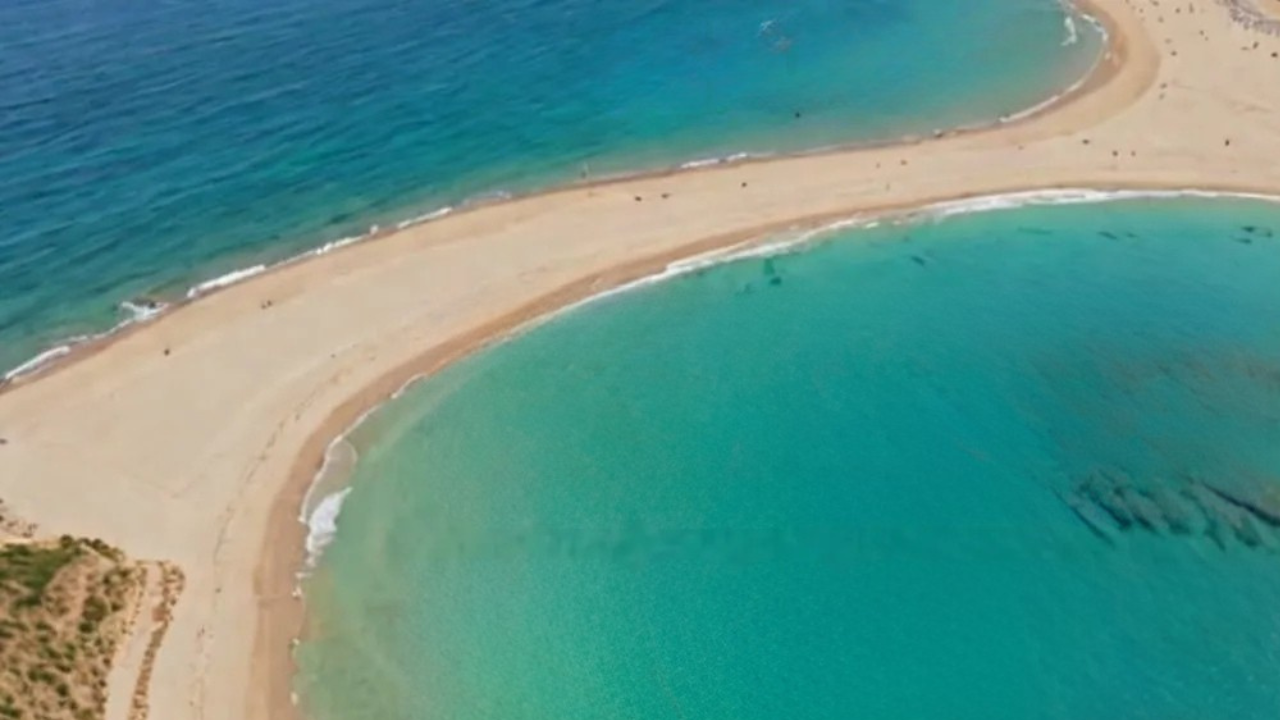
Windsurfing and kitesurfing
Ixia and Ialyssos are the go-to spots for windsports near Rhodes Town. Centres here offer lessons and hire for both windsurfing and kitesurfing. The breeze often builds during the day, but beginners should trust their instructor to pick the right time for a lesson.
Visit Prasonisi when windsports are a main event of your trip. The surf centres at this exposed southern tip offer tuition and rentals, but neither side of the sandbar is guaranteed to be calm. The landscape and riding scene are a huge part of the experience.
A bus or taxi from Rhodes Town is fine for Ixia and Ialyssos. For Prasonisi, I recommend driving. Non-riders will find plenty of beach bars at Ixia, while Prasonisi is better for companions who enjoy the scenery and watching the action.
- Complete beginner: book tuition, not a rental-only slot, and describe your swimming ability and previous experience honestly.
- Experienced rider: choose hire matched to your sport and level, with a local briefing on the riding area.
- Spectator: stay clear of launch and landing areas, boards and kite lines; watching is a perfectly good reason to come.
Paddleboarding and a gentler day afloat
Paddleboarding requires calm conditions, so don't choose a windsports beach. For a first session, calm water is more important than dramatic scenery. Our paddleboarding guide helps you find the right spot.
Book a lesson if you are new to stand-up paddleboarding (SUP). Learning how to handle the board and get back to shore is essential before exploring on your own.
For a mixed group, Tsambika is a good choice. It offers SUP, pedalos, and jet skis, so some can be active while others relax on the sand. Keep swimmers clear of the watersports launch zones.
Snorkelling and guided water activities
For independent snorkelling, Anthony Quinn Bay has fish and interesting underwater rocks. Nearby Ladiko is good for a shorter session. Both have rocky seabeds and are not substitutes for an easy sandy beach.
Anthony Quinn Bay is for confident swimmers; entry can be slippery and the water deepens quickly. Ladiko also has uneven footing. I recommend water shoes for both, and going when the sea is calm for the best visibility.
Guided snorkelling or diving trips are an option if you want equipment and instruction. Book the right experience for your level—a 'try-dive' for beginners is different from a trip for certified divers. Note that a boat trip with a 'swim stop' is not the same as a guided snorkelling tour.
- Independent snorkelling: best when you are comfortable swimming from shore and bringing your own equipment.
- Guided snorkelling: useful when you want organised support and equipment rather than arranging the outing yourself.
- First dive: choose a beginner try-dive; certified divers should look for an experience suited to their qualification and experience.
Planning Your Activity Day
Different activities need different conditions. Windy beaches for surfers are poor for paddlers, and launch zones are not for swimming. If only one person in your group wants a lesson, either pick a beach with other things to do or plan the activity separately.
Before paying, check all booking details: meeting point, lesson vs. hire, duration, and price. Plan transport to the meeting point, not just the beach in the photos. My advice is to decide if you want tuition or just hire gear, then use our watersports guide to find a session that fits. Don't try to cram too many other stops around it.
Chapter 14 of 14
My Rhodes Beach Advice
Give your holiday varied beach experiences instead of searching for one perfect spot. Pick places that suit the day you want and leave enough time to enjoy them. A car or boat helps when it opens up a new experience, but I wouldn't cross the island just to collect another famous name.
Choose variety, not a 'perfect beach' contest
A sand-and-swimming day at Tsambika and a snorkelling trip to Anthony Quinn Bay are different experiences, not competitors. Add a quiet day near your base for variety, and you can skip an island-wide tour.
Spread experiences across your holiday. If you enjoy exploring, dedicate a day to it. If everyone is happy swimming near the hotel, there’s no need to chase famous names from a list.
Leave room for a proper beach day
Adding another stop often takes away more than it adds. Packing up and moving replaces time for another swim, a relaxed lunch, or simply doing nothing.
I'd pair a long afternoon at Agathi with a meal in nearby Haraki. This gives the day a change of scene without a compulsory second swim. A nearby beach can remain just an option; you don't owe it a visit.
Turn your shortlist into a simple plan
Decide on the experience first, then the transport. I use car rental options for independent exploring, or book boat trips when I want to swim from the sea—not just to fit more beaches into the schedule.
Keep the plan small enough that you can change your mind without feeling you’ve missed half the day.
- Choose one main beach that fits your group and base.
- Keep one nearby alternative for a change of plan, not a mandatory stop.
- Leave time for swimming, lunch, or staying longer.
Use the Beach Masters to pick one main beach and a nearby alternative. Book transport via the Looneytravels Booking Marketplace only if it makes the plan work. Once you’re there, let the rest of the list wait.
Arrange your beach days: cars, boats and transfers
transferswater sportsFrequently asked questions
What is the best beach in Rhodes for a first visit?
I'd put Tsambika Beach near the top for a classic sandy beach day. Choose Lindos Beach instead when combining swimming with the village and Acropolis matters more.
Does Rhodes have sandy beaches?
Yes. Tsambika, Agathi, Faliraki and Glystra are useful starting points. Their settings and facilities differ, so soft sand alone shouldn't decide the day.
Which coast of Rhodes has the best beaches?
I'd start on the east coast for sandy bays and swimming-focused days. The west offers a different experience, especially around Ixia and Ialyssos for windsurfing, open-sea views and sunset. Neither coast promises the same water conditions every day.
Which Rhodes beaches would you choose with children?
Start by comparing Tsambika with Agathi for sand and shallow water. Tsambika is organised, while Agathi calls for your own shade and essentials. Vlycha is another option near Lindos, with water that generally deepens gradually.
Where should I go for clear water and snorkelling?
Anthony Quinn Bay and neighbouring Ladiko are strong choices for rocky-edged swimming and snorkelling. For a wider comparison, use the clear-water beach guide: striking water colour and underwater visibility aren't the same thing.
Which beach is easiest without a car from Rhodes Town?
Elli Beach is my starting point for someone staying in Rhodes Town. It lets you combine swimming with time in town without making the beach a separate day trip.
Where can I find a quieter beach in Rhodes?
Look for space rather than a supposedly secret name. Gennadi offers a long shoreline, while Kopria offers a smaller bay in the Kritinia area. The quiet-beach guide helps distinguish peaceful settings from genuinely remote outings.
Which beaches should I compare near Lindos?
Compare Lindos Beach, St Paul’s Bay, Vlycha and Kalathos. I'd decide between a village-and-beach day, a small scenic cove and somewhere with more room before choosing.
Is Red Sand Beach somewhere I can drive to?
Red Sand Beach isn't a park-beside-the-sand outing. The land approach becomes unsuitable for a normal rental car and finishes with roughly a two-kilometre hike; most visitors arrive by sea. Choose a boat whose stated route includes the beach rather than expecting every coastal trip to stop there.
How much should I budget for sunbeds, and does Blue Flag mean easy access?
Sunbed prices depend on the beach setup, position and what's included, so settle the total before choosing your spot. Blue Flag applies to named awarded sections rather than an entire coastline; use the Rhodes Blue Flag guide for certification details and the individual beach guide for access information.