
Chapter 1 of 8
Is Haraki Beach right for your day out?
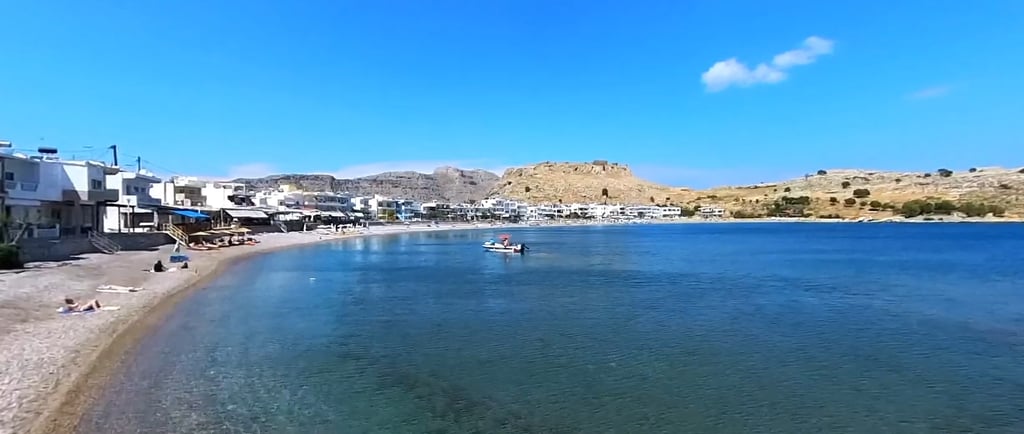
Haraki Beach suits an unhurried swim-and-meal outing, with a peaceful village waterfront rather than a party-beach atmosphere. On Rhodes’ east coast, Haraki—also written Charaki—combines clear water, a mostly pebbled shore and seaside tavernas within an easy waterfront stroll. Choose it when lunch and time by the sea matter more than entertainment or a packed activity programme.
A village waterfront rather than a party beach
Haraki feels peaceful without feeling isolated. Low buildings, family-owned tavernas and cafés follow the bay, with rugged hills behind and a small harbour adding to the seaside setting. The appeal is the village around the beach, not just the view from your towel.
You can stroll along the waterfront from one end of the bay to the other, keeping the sea beside you. That makes it easy to move between swimming, coffee and a slow lunch without turning each change of plan into another journey. Fish and grilled dishes feature at the seaside tavernas, so a meal can be part of the outing rather than a break from it.
The mood is conversation and clinking cutlery rather than loud music and a club atmosphere. Couples sitting by the water and families taking a stroll fit naturally here; anyone looking for a lively beach-party scene is likely to find it too quiet.
Who will enjoy Haraki—and who may prefer elsewhere
I'd recommend Haraki most strongly to people who want a simple beach day with somewhere pleasant to eat nearby. It also makes sense as a quieter change of scene if you're staying in Lindos or as a relaxed half-day outing from Kolymbia.
- Couples: waterfront meals, quiet walks and an intimate village setting are the main draw. Choose it for time together rather than nightlife.
- Independent beachgoers: it suits a self-paced visit built around swimming, reading, coffee and lunch, with no need to fill the day with organised activities.
- Families: having food and a promenade close to the beach makes breaks straightforward. The relaxed setting is a plus, but choose children's swimming spots according to the water entry and conditions on the day.
- Sand-first beachgoers: Haraki's mostly pebbled shore may not be your first choice. If soft golden sand is the deciding factor, look at nearby Agathi Beach instead.
- Party seekers or anyone wanting a secluded shoreline: Haraki sits between those extremes—a quiet village beach, not a clubbing destination or an empty bay. Use the Rhodes Island Guide's beach chooser if either of those is your priority.
My suggestion: give Haraki time for both a swim and a waterfront meal. If you only stop for a quick dip, you miss much of what makes it worth choosing.
Chapter 2 of 8
How do you get to Haraki Beach?
A car is the easiest and most flexible way to reach Haraki Beach from Rhodes Town, especially if you want more than one beach stop. A taxi is a practical alternative for a straightforward visit without driving; for a bus trip, settle the stop, onward access and return journey before committing to the day.
From Rhodes Town by car
Head south along Rhodes’ east coast towards Lindos, then follow directions for Haraki village and the beach. Keep navigation set to Haraki Beach rather than relying on a general village-area pin, and follow local signs on arrival.
My suggestion: compare Rhodes car rental prices if you want to visit several east-coast bays in one day. Having your own car lets you change your plans or stay for a waterfront meal without building everything around a return service.
For help choosing a rental, use the Rhodes Island Guide’s car-rental advice. Once you reach Haraki, choose permitted parking according to local signs and leave entrances and access routes clear rather than trying to get as close to the water as possible.
Bus planning and the return journey
Bus services change seasonally, so use the Rhodes bus-planning advice and confirm the current arrangements with the operator for your travel date. The key question is not simply whether a bus heads towards Lindos, but whether its actual stop gives you a workable route to Haraki Beach.
I'd only choose the bus once both ends of the journey are clear. It can suit a single-stop day when the service fits your plans, but a car is the better choice for spontaneous beach-hopping.
- Confirm the departure point in Rhodes Town and the service you need for your travel date.
- Ask for the exact stop serving Haraki and how you get from there to the waterfront, including any walking or additional transport.
- Check the return boarding point, departure times and last usable service before setting off.
- If the final approach involves walking, make sure the route suits your group, particularly with children, beach bags or limited mobility.
- If you want to stay for dinner, arrange an alternative return when the bus timetable does not fit.
Taxis, transfers and arrival access
An ordinary taxi is a convenient option if you're staying in a nearby resort and only want a visit to Haraki. Ask for the fare or charging basis when arranging the ride, agree a clear drop-off point, and organise your return pickup rather than leaving it until you're ready to go.
If you prefer a pre-arranged driver, browse private transfer options and confirm that the provider can handle your pickup location and Haraki destination. Explain any child-seat, luggage or mobility requirements, and ask about the walking distance between the agreed drop-off point and the beach.
Arriving directly from the airport is a separate booking: compare Rhodes airport transfers and confirm Haraki destination coverage during booking. Give the provider your exact destination so the arrival arrangements match where you need to go.
Chapter 3 of 8
What are the shore and swimming like?
Haraki Beach is mostly pebbled, with clear water and a curved bay that offers some shelter for swimming. It’s a good choice if you value a clear-water swim more than soft sand underfoot, but the entry and sea conditions deserve a look before you get in.
Is Haraki Beach sandy or pebbled?
Haraki is mostly pebbled, including near the water’s edge. If you have sensitive feet, I’d recommend water shoes to make walking into and out of the sea more comfortable; they’re helpful rather than essential.
If soft sand is the deciding factor for your beach day, nearby Agia Agathi Beach is the better match, with its golden sandy shore. For a wider comparison of shore types, use the Rhodes Island Guide’s beach chooser.
Water entry and swimming conditions
Clear water is one of Haraki’s main attractions, with blue-green shades across the bay and hills rising behind it. The curved coastline gives it some shelter, making it appealing for an unhurried swim when conditions are gentle.
Before entering, take a moment to watch the waves and choose a spot where you can see your footing. Wade in gradually to judge the depth and underwater surface rather than expecting a shallow shelf. Wind can still affect the bay, and neither calm water nor excellent visibility is guaranteed on a particular day.
Should you bring a snorkel?
I’d bring a mask and snorkel if you already enjoy a casual look underwater, rather than make snorkelling the main reason for choosing Haraki. The rocky edges offer somewhere to look when visibility and sea conditions suit, while the centre of the beach is the straightforward choice for a swim.
Keep your snorkelling within your swimming ability, leave space around rocks and skip it if waves make approaching or leaving the shore awkward. If snorkelling is your priority for the day, compare the options in our Rhodes snorkelling guide before choosing your beach.
Chapter 4 of 8
Does Haraki work for families and mixed-ability groups?
Yes—Haraki Beach works well for families and mixed-ability groups who want a relaxed beach day with waterfront cafés and tavernas close by. Its strength is that swimming does not have to fill the whole outing: a meal by the sea gives everyone something to enjoy together. I’d choose it for that flexibility, rather than for a day centred on young children paddling; plan water activities around the least confident swimmer and the conditions when you arrive.
Planning a beach day with children
Haraki’s quiet village atmosphere suits families who prefer an unhurried outing to a lively resort beach. The waterfront has cafés and seaside tavernas serving fish and grilled dishes, so you can break up beach time without making lunch a separate excursion.
My suggestion: start with a manageable spell on the beach, regroup over a waterfront meal, then decide whether the children have energy for more. That gives tired children—and relatives who would rather sit by the sea than swim—a proper place in the plan.
The mostly pebbled shore is a consideration for children who want to spend the day digging in sand or find uneven footing uncomfortable. If sand play is the priority, compare options using the Rhodes Island Guide’s beach-choosing advice rather than choosing Haraki solely for its family-friendly atmosphere.
- Let the least confident swimmer set the pace for shared water activities; confident swimmers can take separate turns rather than encouraging everyone farther out.
- Keep children close and assess their footing and comfort at the water’s edge before deciding how much swimming to include.
- Make lunch a genuine rest break, with another beach session optional rather than promised.
Non-swimmers and anyone needing easier access
Non-swimmers can still enjoy Haraki through a waterfront meal, café stop or a stroll suited to their stamina. Keep these as worthwhile parts of the outing, not simply something to do while everyone else swims; clear water alone is not a reason to enter beyond someone’s confidence.
For anyone with mobility needs, establish the actual route between your intended drop-off point, seating and the water before committing to the visit. A waterfront location does not tell you whether those individual sections will work for a wheelchair, walking aid or someone who tires easily.
- Ask about the walking distance, surface, slopes and any steps between the proposed drop-off and your chosen seat.
- Check the separate route onto the pebbled beach and to the water, including whether the person will need assistance.
- Discuss specific seating and toilet requirements directly with the waterfront venue you plan to use, alongside the Rhodes beach accessibility advice.
- If the route does not meet the group’s needs, choose another beach rather than relying on improvisation after arrival.
Chapter 5 of 8
What facilities can you use at the beach?
Haraki Beach has sunbeds and umbrellas, with seaside tavernas, cafés and small supermarkets close to the shore. Toilets are available at waterfront tavernas and restaurants, so the village businesses are an important part of the beach-day setup—not the same thing as public beach amenities. Seasonal kayak and SUP rentals add an option beyond swimming.
Sunbeds, umbrellas and shade
Sunbeds and umbrellas are available at Haraki Beach. If shade is important to your comfort, I’d make an umbrella your plan rather than rely on finding natural shade, and choose a position with enough coverage for everyone in your group.
Before settling in, ask the operator about sunbed and umbrella charges, what is operating for your visit—particularly early or late in the season—and access to toilets, showers and somewhere private to change. That gives you the practical details in one conversation without budgeting around a fixed price or expecting the same setup throughout the year.
If a particular facility is essential to your day, the Rhodes Island Guide’s beach-choosing advice can help you compare your priorities before choosing a bay.
Waterfront food and refreshments
Seaside tavernas and sea-view restaurants line Haraki’s waterfront, with cafés for coffee and small supermarkets for refreshments. You can break up a beach day with lunch nearby rather than making a separate journey for food.
The tavernas serve fresh fish and grilled dishes, and the atmosphere is more slow meal by the water than loud beach-club scene. My suggestion: leave time for a proper sit-down lunch—food beside the bay is part of Haraki’s appeal, not just a practical stop between swims.
For broader eating-out ideas, browse the Rhodes food guide. Here, the main advantage is simple: several food and drink options are gathered along the walkable waterfront.
Toilets, showers and changing arrangements
The toilets to look for are at the waterfront tavernas and restaurants. These belong to the businesses, so access follows each establishment’s arrangements rather than a guaranteed public or free-access system.
For showers and private changing space, use the operator’s answer to decide whether the setup meets your needs. If either is essential, establish that before committing to a sunbed or a full day on the beach.
Chapter 6 of 8
When should you visit Haraki Beach?
Choose an early morning at Haraki Beach if swimming, photography or a quiet waterside walk is your priority; come later in the day if you would rather linger over dinner and enjoy the waterfront atmosphere. My preference for a beach-focused visit would be a morning swim followed by lunch, with a proper shade break if you stay through the hottest part of the day.
Morning swims or a late-day waterfront visit
Early morning is my pick for enjoying Haraki at its most peaceful, with gentle light across the bay and a slower start along the waterfront. It suits swimmers who want beach time before the midday heat, as well as anyone bringing a camera or simply wanting a quiet stroll. Choose it for that atmosphere rather than a promise of perfectly still water or better visibility—swimming conditions depend on the day.
Late afternoon into evening is the better choice if the waterfront matters as much as the beach. Families stroll along the bay, couples settle at café tables, and on summer evenings the taverna lights reflect on the water. Come for the changing light and an unhurried meal, rather than a guaranteed view of the sun setting over the sea.
This is a low-key evening stop, not a nightlife destination: conversation, dinner and a walk are the appeal. If food is the main reason for your visit, the Rhodes food guide by area can help you plan the meal around your day.
Planning around midday heat and the season
Midday can still work well if you want to combine the beach with a waterfront lunch, but I would not build the visit around uninterrupted hours in the sun. During hot spells, alternate beach time with shade breaks and make lunch a chance to cool down. For families or anyone who finds heat tiring, a shorter morning visit or a later waterfront outing is the more comfortable plan.
Haraki generally has a quieter summer feel than Lindos, Faliraki or Tsambika, including in July and August, with people spread along the bay. Morning and evening are especially good choices for its gentler pace, though quieter does not mean deserted. If you are still choosing your travel dates, use the Rhodes Island Guide’s advice on when to visit alongside your preference for beach time or cooler-weather exploring.
Chapter 7 of 8
What should you pack for Haraki?
Pack drinking water, sunscreen, a hat, a towel and swimwear for Haraki; water shoes and a mask are optional extras, not essentials. Keep the beach bag simple, and use the Rhodes Island Guide’s practical essentials for wider holiday preparation.
Essentials for a comfortable beach day
- Drinking water: bring some for the journey and your time on the beach. Haraki also has cafés and small shops, so you’re not packing for an isolated outing.
- Sun protection and a hat: bring sunscreen to reapply after swimming, plus a light cover-up for time out of the water.
- Towel and swimwear: the basics for a swim and a comfortable break afterwards.
- Some cash: handy for small purchases, as some smaller shops prefer it.
Optional extras for swimming and exploring
- Water shoes: worth packing if you prefer covered feet in the water; otherwise, leave them out.
- A swimming or snorkel mask: an optional extra for confident swimmers, depending on conditions on the day. If snorkelling is a priority for your holiday, compare the Rhodes snorkelling spots rather than making a mask essential for Haraki.
- Suitable walking footwear: bring it if Feraklos Castle is already in your plans—the climb is short but steep, so I’d choose secure walking shoes rather than beach flip-flops.
- A separate bag for wet swimwear and towels: particularly useful if you’re changing into dry clothes and walking shoes after the beach.
Chapter 8 of 8
What should you combine with Haraki Beach?
Pair Haraki Beach with Agathi Beach if you want a sandy second swim stop, or Feraklos Castle if you’d rather swap the waterfront for a viewpoint. Lindos works as part of a wider sightseeing day, not as an immediate waterfront attraction. My suggestion: choose just one addition if relaxation is the priority—leave time for a slow meal at Haraki’s seaside tavernas rather than fitting everything in. To see how it fits alongside the rest of the coastline, have a look at my Rhodes beaches overview.
Agathi Beach for a second coastal stop
Choose nearby Agathi Beach if you like beach-hopping or want soft golden sand after Haraki’s mostly pebbled shore. That contrast is the best reason to move: you get a different beach setting without turning the day into a sightseeing itinerary. If everyone is settled at Haraki and another swim is all you want, I’d stay put rather than pack up simply to tick off a second beach.
Feraklos Castle for a change of scene
Feraklos Castle, the medieval fortress overlooking the bay, is the optional excursion to choose when you want scenery rather than more beach time. The climb is steep, so it suits a group happy with an uphill walk better than anyone seeking an entirely easy-going waterfront outing. The views are especially appealing in late-day light; I’d leave enough daylight for the descent rather than making sunset the start of the climb.
Keeping a Lindos combination realistic
Combine Haraki with Lindos when you want a broader day of swimming and sightseeing, with whitewashed lanes, the acropolis or a rooftop dinner as the other main event. Use the Lindos visitor guide to choose your priorities rather than squeezing all of Lindos around a beach stop. I’d keep Haraki as the relaxed part of that day and leave Agathi and Feraklos for another outing. If you want freedom over the order and how long you stay, I’d recommend renting a car for the combination.
If you’re arranging services for a wider day out, you can also browse the Rhodes Booking Marketplace.
Arrange transport for your Haraki beach day
transfersFrequently asked questions
Are Haraki Beach and Charaki Beach the same place?
Yes. Haraki and Charaki are spelling variants for the same destination, so you don't need to plan separate visits.
Where is Haraki Beach?
Haraki Beach is beside the village waterfront on the east coast of Rhodes. Agathi Beach and Feraklos Castle are nearby options for extending your visit.
Is Haraki Beach worth visiting?
I'd recommend it if your ideal outing combines clear water, a relaxed village waterfront and a seaside meal. If a lively beach-party atmosphere is your priority, I'd choose a different beach.
Is Haraki Beach good for families?
Haraki can suit a relaxed family outing, with seaside tavernas offering a break from beach time. Check the entry and conditions before children enter the water, and keep younger swimmers within close reach.
How should I get to Haraki Beach from Rhodes Town?
I'd rent a car if you want to combine Haraki with another stop; a taxi is an alternative if you'd rather not drive. Plan the return journey too, especially if you intend to stay for an evening meal.
Can I get to Haraki Beach by bus?
Check the current seasonal timetable for a service that works for Haraki, including the actual drop-off point and your return. Start with the Rhodes bus-planning advice; I'd choose a car or taxi if the connections leave too little time at the beach.
Is Haraki Beach safe for swimming on windy days?
A peaceful-looking bay isn't a guarantee of safe swimming. Assess the conditions when you arrive and stay out if waves or wind make you uncomfortable, particularly with children or less confident swimmers.
Can I eat beside Haraki Beach?
Yes, seaside tavernas are part of Haraki's waterfront appeal. I'd leave room in the day for a meal rather than making the beach a quick photo stop.
What can I combine with a visit to Haraki Beach?
Agathi Beach and Feraklos Castle are the nearby options highlighted for a Haraki outing. I'd choose one addition rather than rushing both; the Agathi Beach guide helps you decide whether to make it a two-beach day.