
Chapter 1 of 8
Is Prasonisi worth the journey?
Yes—Prasonisi Beach is worth the journey for windsurfers and kitesurfers, and I’d recommend it to non-surfers who enjoy dramatic coastal scenery, photography and watching the action on the water. At the southern tip of Rhodes, its broad golden sandbar and two-sea setting make it much more than a water-sports stop. I’d come for the landscape first, though: this is a stronger choice for a sightseeing visit than for a beach day built entirely around easy swimming, especially with children.
The sandbar and two-sea landscape
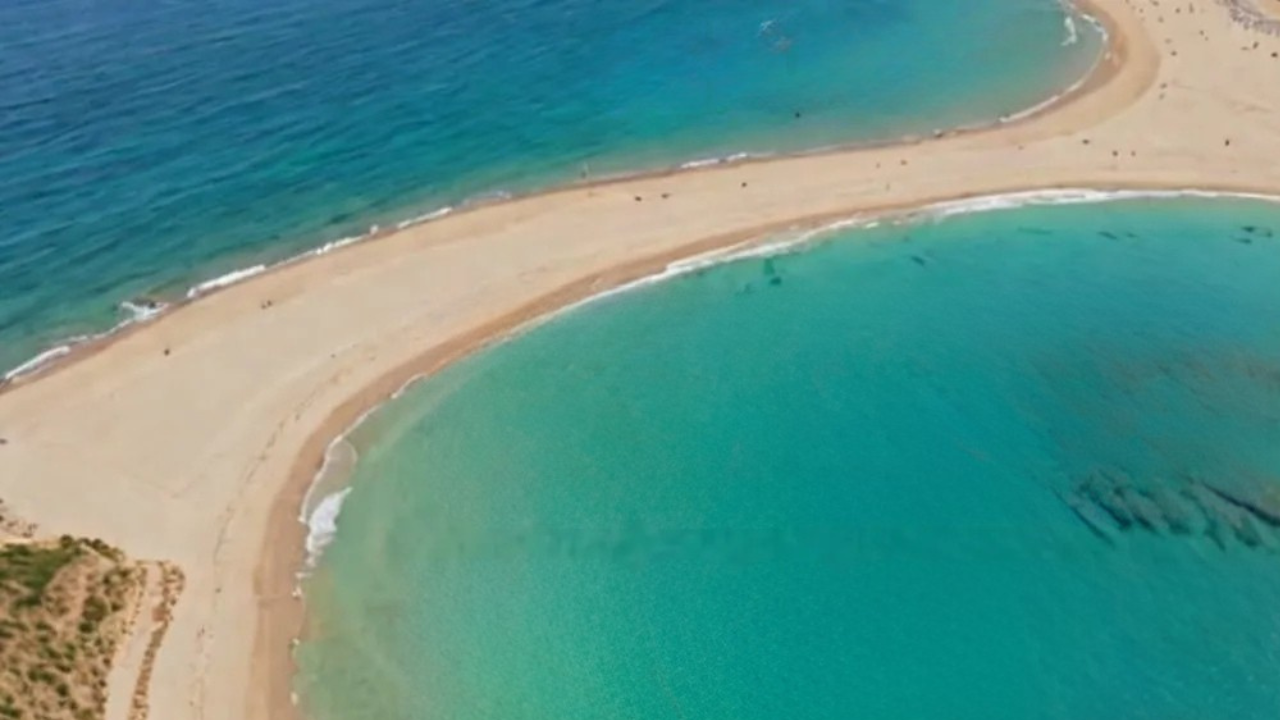
Prasonisi Beach sits at the very bottom of Rhodes, facing Prasonisi Island across a sandy strip that can form a land bridge between them. This is the island’s Aegean Sea–Mediterranean Sea meeting point, with water on both sides of the sandbar rather than a single shoreline in front of you. That geography is the main attraction—even without a surfboard, there’s a real reason to come this far south.
The scene is all about scale: wide golden sand, turquoise water, low hills and rugged coastline behind it. The sandbar changes shape through the year, and water can cover parts of it, so the landscape isn’t a fixed version of the photograph you’ve seen. Conditions on either side also depend on the weather; neither comes with a permanent promise of calm water or crashing waves.
On windy days, colourful sails and kiteboarders add movement to an already striking setting. It has that exposed, edge-of-the-island feel, but remote doesn’t mean empty or untouched: surf schools and water-sports activity are part of Prasonisi’s character. Come expecting an open coastal landscape with a sporty atmosphere, not guaranteed solitude.
Who will enjoy it most
Windsurfers and kitesurfers have the clearest reason to make Prasonisi a priority: wind is central to the beach’s appeal, not an inconvenience around the edges. For everyone else, the combination of sandbar, sea and riders gives you plenty to appreciate without entering the water. I’d particularly recommend it if you like places where the landscape itself is the attraction.
If trying the sport is your main reason for coming, I’d compare windsurfing and kitesurfing options and confirm that the session takes place at Prasonisi and suits your level before booking. Beginners need instruction matched to the conditions, rather than simply choosing whichever side looks quieter.
- Windsurfers and kitesurfers: the wind-driven atmosphere and active riding scene are the main draw, with lessons and equipment rentals available through surf centres.
- Photographers: the golden sand, changing water textures, rugged backdrop and colourful sails offer more than a standard beach view.
- Travellers who enjoy coastal walks: the broad sandy shoreline is a big part of the appeal, even without making an island crossing part of the visit.
- Families interested in sightseeing: watching the riders and seeing the sandbar can make a worthwhile outing, provided a swim isn’t the condition that makes or breaks the day.
When I'd choose another beach
I’d choose another beach if your priority is a straightforward swimming day, particularly with young children or anyone who dislikes wind. Wind, currents and water-sports traffic can make Prasonisi a poor match for that brief, even when part of the water looks inviting. A sightseeing visit and a swimming-led beach day are two different decisions here.
For a different beach-day brief, compare Tsambika Beach before committing to the journey south. You can also use the Rhodes Island Guide’s beach chooser to match your beach to the day you actually want, rather than choosing on scenery alone.
My verdict: make the journey if the sandbar, photographs or windsurfing atmosphere already excite you. If you’re simply looking for somewhere to spread a towel and spend most of the day swimming, I wouldn’t travel this far just for that.
Chapter 2 of 8
How do you get to Prasonisi Beach?
I'd recommend driving to Prasonisi Beach for the flexibility: it sits at the southern tip of Rhodes, and having a car lets you choose how long to stay and when to head back. If you don't want to drive, arrange a return taxi or private-driver trip, or check that the current bus services work for both legs of your visit.
Driving to the southern tip
Coming down the east coast, the route takes you past Kiotari and Gennadi before turning inland towards the cape. Plan Prasonisi as a deliberate outing rather than a last-minute detour, and check the route from your actual accommodation before setting off.
If you're adding another south-Rhodes stop, I'd compare Rhodes car rental options rather than build the day around several connections. For help deciding whether to hire a car for one day or more of your holiday, use the Rhodes Island Guide's transport advice.
Parking and the final approach
On arrival, follow posted access and parking signs, keep access routes clear and avoid driving onto the sand. Finish the approach on foot rather than trying to take the car closer to the shoreline.
If anyone in your group has limited mobility, ask locally about the current drop-off arrangements and the walking surface between parking and the beach. That is more useful than planning around a guaranteed short or easy walk.
Planning a visit without a car
For a bus visit, check the current outward and return journeys—including stops, departures and any connections—using the Rhodes bus-planning advice. I'd only commit to the day once both legs fit the time you want at the beach.
A taxi is another option from Kiotari, Lardos or Gennadi, though the distance can make it expensive. Agree the fare, pickup point and return time beforehand rather than leaving the journey back to chance.
If you're staying farther north and would rather not drive, request a quote for a private-driver trip to Prasonisi. Ask whether the quote includes waiting time or a separate return pickup, especially if you want to add another stop.
Chapter 3 of 8
Can you swim at Prasonisi?
Swimming at Prasonisi depends on the conditions when you arrive—not on which side has been labelled “calm”. A dip may be possible in suitable conditions, but wind, waves, currents and windsurfing or kitesurfing traffic can make swimming a poor choice on either side.
Assessing the water on arrival
Before getting changed, spend a few minutes watching the water and the activity around it. Prasonisi is an exposed, windy beach, and the contrast between its two sides is not a reliable swimming-safety guide.
A flatter surface only tells you that there are fewer visible waves; it does not tell you how strong the current is or how easily you could return to shore. Clear water and inviting sand are not enough to make the decision either.
- Look at the wind and waves where you would enter, not just the quieter-looking water farther along the beach.
- Check whether riders are launching, landing or passing through the water you are considering.
- Ask a local surf school about current conditions and heed any posted or spoken safety instructions.
- Skip swimming if conditions look challenging, advice discourages it, or you are unsure about the water.
Currents and water-sports traffic
Currents are a reason to be cautious here, even where the surface looks relatively smooth. There is no useful shortcut that makes one named side automatically suitable: judge the water in front of you rather than relying on a description of the Aegean or Mediterranean side.
Windsurfers and kitesurfers also need space, particularly where they launch and return to shore. Stay well away from riders, boards, kite lines and active launch areas, both in the water and on the sand.
A gap between passing riders is not an invitation to swim through their route. If you cannot keep clear of the activity, watching from the beach is the better option.
Visiting with children or weaker swimmers
With children or weaker swimmers, I’d plan Prasonisi as a sightseeing stop rather than arrive expecting easy paddling. The broad sandy landscape and colourful sails make it interesting without getting into the sea, and that takes the pressure off finding somewhere to swim.
Keep children closely supervised at the water’s edge and away from launching equipment. A shallow-looking edge or a quieter-looking side is not a promise of protected family water.
If swimming is the main purpose of your day, use the Rhodes Island Guide’s beach section to choose a beach that better matches your group. For a separate south-coast beach stop, explore Gennadi Beach as an option, while still judging its conditions on arrival.
Chapter 4 of 8
How can you try windsurfing or kitesurfing?
To try windsurfing or kitesurfing at Prasonisi Beach, arrange an instructed session matched to your experience and the conditions on the day. Surf centres offer lessons and equipment rental, but for a first attempt I’d choose tuition rather than hire equipment and head out alone.
Choosing an activity and lesson
Windsurfing is a major part of Prasonisi’s appeal: sails crossing the water, an open coastline and wind-driven action rather than a gentle beach activity. Kitesurfing is also part of the scene, but it is a different sport with its own instruction and equipment; make sure an enquiry for a “surf lesson” names the activity you actually want.
For a first visit, focus on finding a suitable introductory lesson rather than choosing by the most impressive riders offshore. Ask what the session covers, how much instruction you receive and whether it is private or shared, so you know what you are booking.
This suits travellers who want an active, coached experience and can keep their plans flexible around the weather. If you prefer something less dependent on wind conditions, compare other activities in the Rhodes Island Guide rather than committing to a lesson just because you are visiting Prasonisi.
Beginner suitability
Prasonisi has schools catering to beginners, so you do not need to arrive as an experienced windsurfer. What matters is suitable instruction, an appropriate teaching area and conditions that work for your level—not simply being on a particular side of the sandbar.
Strong wind and waves can make the beach exciting for skilled riders without making it suitable for someone’s first session. Let the instructor choose the teaching location and assess the conditions; a quieter-looking stretch of water is not enough to judge suitability yourself.
I’d approach a first lesson as an introduction, not a promise that you will be riding independently by the end. If the school recommends postponing, watching the action is a much better fallback than pushing ahead to keep a holiday schedule.
Questions to ask before booking
Get the practical details agreed before making the journey, especially if the lesson is your main reason for visiting. These are the questions I’d send with an enquiry:
- Is this windsurfing or kitesurfing, and is the session suitable for a complete beginner? Explain any previous experience and ask about swimming ability, age or other participation requirements.
- What does the lesson include? Confirm its duration, group size, instructor supervision and whether equipment rental is included or charged separately.
- Which equipment and protective items are provided, and what should I bring or wear? Ask how the equipment will be matched to your size and experience.
- Where exactly do we meet, and when should I arrive? Request the centre’s name and an exact meeting pin; use the Rhodes map for wider orientation rather than as a substitute for the provider’s directions.
- What happens if the wind or sea conditions are unsuitable? Ask how changes are communicated, whether the session can move to another time and what the cancellation or refund terms are.
My suggestion: Browse Rhodes water-sports options to compare activities, then check the actual activity location before booking. A Rhodes listing may take place elsewhere on the island, so confirm Prasonisi explicitly if that is where you want your lesson.
Chapter 5 of 8
Can you walk to Prasonisi Island?
Yes—you can walk to Prasonisi Island when the sandbar is exposed and the crossing is safe, but a summer visit does not guarantee access. Seeing the sandbar from the Rhodes side, crossing it, and continuing onto the island are three separate choices. If water is moving across the sand, stay on the mainland; an island walk is only worth starting when you can also return safely.
Deciding whether to cross the sandbar
The sandy connection changes shape through the year, and storms can leave it partly underwater. Make your decision from the conditions in front of you, not the month on the calendar or a photograph showing an uninterrupted strip of sand.
You do not need to reach the island to appreciate Prasonisi’s landscape. I'd keep the crossing optional rather than make it the main promise of the day—especially if you're travelling with children or anyone who would struggle if the return became more difficult.
- Look along the whole crossing before setting off: the sand nearest you being dry is not enough.
- Do not wade through moving water to reach the island, even if the remaining gap looks short.
- Check the return route as well as the outward crossing. A dry passage when you arrive is not a guarantee that it will stay that way.
- If waves begin washing across the sand or conditions deteriorate, abandon the walk. Turn back early while the route is still safe rather than pushing on.
Planning an island walk
Reaching the island does not commit you to exploring farther. Beyond the sandbar, the landscape is rugged and undeveloped, so this suits travellers happy with an exposed, informal walk rather than anyone expecting a surfaced promenade.
I'd recommend secure walking footwear rather than relying on the beach's soft sand: there are coarser patches nearer the island, and the terrain beyond is different from a barefoot shoreline stroll. Carry plenty of water and sun protection, and let the weather and the crossing determine how far you go—not a target you feel obliged to reach.
If uneven ground or mobility is a concern, use the accessible Rhodes guide to choose an outing that better matches your needs. For broader holiday planning, keep this as a conditions-dependent option alongside the Rhodes Island Guide’s things to do, rather than a walk your whole day depends on.
- Before continuing inland, pause and reassess the sandbar, wind and sea.
- Keep enough energy and water for the return; getting across is only the first part of the outing.
- Shorten the walk if the wind becomes tiring or conditions start worsening. There is no need to explore the whole island to make the visit worthwhile.
Chapter 6 of 8
When should you visit Prasonisi?
Visit Prasonisi when the conditions suit what you want to do, rather than choosing a supposedly perfect month or hour. For photography, aim for softer morning or evening light; for windsurfing or kitesurfing, let the forecast and your instructor guide the timing. If you mainly want to see the landscape, the trip can still be worthwhile without a swim, provided it is safe and comfortable to explore.
Timing a sightseeing or photography stop
Morning light suits photographs of the sandbar, shoreline and open coastal landscape. Evening brings another attractive option: the sun sets behind the hills, giving the sand and sea a soft golden colour. Sunrise and sunset are both worth considering if photography is the main reason for your journey.
Choose those times for the light, not for a promise of calm conditions. Wind, waves and the shape of the exposed sandbar affect what you can photograph and where you can safely walk, whatever the hour.
For a sightseeing visit, I’d prioritise a day when being outside looks enjoyable over arriving at an exact time. The broad sandy landscape and, when riders are out, colourful sails crossing the water give you plenty to appreciate without getting in the sea.
Choosing conditions for water sports
Plan a windsurfing or kitesurfing visit around the current wind and sea forecast, then use a local instructor’s judgement to choose a suitable session. A fixed midday or afternoon slot is no guarantee of the right conditions, and stronger wind is not automatically better—especially for a first lesson.
Prasonisi has schools offering lessons and equipment rental, but beginner suitability depends on the conditions and the instruction available that day. My suggestion: when arranging windsurfing or kitesurfing lessons, explain your experience level and ask how the session will be handled if the weather is unsuitable.
If you are coming to watch rather than ride, keep your timing flexible too. The action depends on conditions and riders being on the water, not simply on the clock.
Keeping the day's plan flexible
Check the forecast before committing to the journey, then decide whether this is a photography stop, a lesson day or a shoreline visit. For the wider question of when to take your holiday, use the Rhodes Island Guide’s timing advice; for Prasonisi itself, the day’s conditions matter more than a month on the calendar.
If swimming looks unappealing but conditions on shore are safe, you can still enjoy the scenery and watch the water-sports activity. If a relaxed swim is your main priority, I’d keep an alternative such as Gennadi Beach in mind and assess conditions there separately.
Leave room to shorten the stop if the wind makes it uncomfortable, or linger if the light and landscape are the highlight of your day. Any plan involving the sandbar or island also needs to fit the conditions you find on arrival, rather than relying on the season alone.
Chapter 7 of 8
What facilities can you rely on, and what should you bring?
Prasonisi has some beach services, but I’d arrive with the essentials rather than build the day around resort-style comfort. There are a few tavernas and surf schools, while small convenience shops and sunbeds are seasonal options. Bring plenty of water, sun protection and secure bags; if toilets, showers or a shaded seat are essential to your visit, arrange those details locally before setting off.
Food, toilets, shade and beach services
A few tavernas sit near the beach approach, and small convenience shops are a summer option. Bring drinking water and a snack anyway, especially outside summer, so your basic needs are covered without depending on an outlet being open.
Seasonal sunbeds are an option on the Mediterranean side, but arrange a bed and any umbrella locally for your visit. Prasonisi’s wide, open landscape is part of its appeal; if shade is essential, make a shaded resting place part of the plan before committing to a long stay.
Ask a local business directly about toilet and shower access, including whether facilities are for customers and when they can be used. If either service determines whether the trip will work for you, settle that before travelling rather than leaving it until you reach the sand.
Surf schools offer lessons and equipment rental. If you’re booking through the water-sports marketplace, check that the activity is specifically at Prasonisi and ask the operator what equipment and shore facilities are included for your dates.
A practical packing checklist
Keep your kit simple, but pack for both strong sun and wind. The practical planning section of the Rhodes Island Guide can help with the wider holiday checklist; these are the things I’d prioritise for Prasonisi itself.
- Plenty of drinking water and a snack, with enough for everyone in your group rather than relying on buying supplies at the beach.
- Sunscreen, sunglasses and a hat that stays secure in the wind; a light cover-up adds useful sun protection.
- A zipped bag for belongings and a protective pouch for your phone or camera to help keep sand out.
- Comfortable walking shoes if you plan to leave the soft sand for rougher ground. Water shoes are optional for coarse patches, not a substitute for walking footwear.
- A light jacket or wind-resistant layer for sitting around in breezy conditions, plus a towel and dry clothing if you plan to get wet.
Comfort and accessibility
Prasonisi is primarily sandy, with some coarser patches towards the Aegean side and nearer the island. That open, sandy setting suits travellers happy with a simple beach visit, but wind-blown sand and exposure can make prolonged lounging less comfortable. With young children or anyone who tires easily in the sun, I’d favour a shorter visit unless you have arranged somewhere comfortable to rest.
Soft sand can be demanding for wheelchair users, people using walking aids and anyone pushing a buggy. Before travelling, make a direct enquiry with a local operator or your accommodation about the route from your drop-off point to your intended beach spot, the surface underfoot, distances and any steps.
Ask specifically about accessible toilets, suitable seating and any assistance you need, rather than relying on a general description of beach access. The accessible beaches in Rhodes guide is a useful starting point for comparing alternatives if Prasonisi cannot meet your requirements.
Chapter 8 of 8
What can you combine with Prasonisi?
Combine Prasonisi with a brief stop in Gennadi or Lachania, rather than packing the day with extra sights. Gennadi works well for coffee or dinner, while Lachania offers a quieter whitewashed-village stop; Gennadi Beach is a separate beach option if you want more time on the coast. To see how it fits alongside the rest of the coastline, have a look at my Rhodes beaches overview.
A brief stop in Gennadi or Lachania
Gennadi is a friendly southern village with tavernas, making it a practical choice for a coffee break or dinner around your Prasonisi visit. Lachania suits travellers who would rather pause in a peaceful, whitewashed village with a more romantic feel.
My suggestion: choose one, not both, and leave yourself time to enjoy Prasonisi without rushing. These are optional stops to round out the day, not a checklist you need to complete.
Gennadi Beach as another option
If you'd prefer another beach stop to a village visit, consider Gennadi Beach. It offers another way to spend time on the southern coast, but neither beach guarantees calm water—choose where to swim based on the conditions that day.
Staying in southern Rhodes
A southern base makes sense if Prasonisi and the surrounding area are a priority, but Prasonisi itself is too remote to be a convenient base for exploring the whole island. Start with the guide to staying in Gennadi if you want a quiet village with tavernas, or consider Lachania for a peaceful inland setting.
Before booking, compare the south with other areas in the Rhodes Island Guide’s where-to-stay section. Choose your base around the rest of your holiday, not just this one beach visit.
Once you've chosen your accommodation, you can arrange Rhodes airport transfers for your arrival, checking that the booking covers your exact address. For wider holiday arrangements, the Rhodes Booking Marketplace is a useful next step, with travel-planning services if you'd like help organising more of your stay.
Book transport and water sports for your visit
water sportstransfersFrequently asked questions
Is Prasonisi Beach worth visiting if you don't windsurf?
Yes, if the sandbar landscape, photography and watching water sports appeal to you. I'd be less inclined to make the journey solely for a relaxed swimming day, especially with young children.
Where is Prasonisi Beach in Rhodes?
Prasonisi Beach is at the southern tip of Rhodes, beside Prasonisi Island. Its sandbar and contrasting sea conditions make it a distinctive destination rather than just another beach stop.
How do you get to Prasonisi Beach?
I'd recommend a car for flexibility, particularly if you want to add another stop. For public transport, check current services and your return journey before setting out; use the Rhodes bus-planning advice to help organise the trip.
Can you swim at Prasonisi Beach?
Swimming depends on the conditions when you arrive. Assess the wind, waves, currents and water-sports activity, follow local safety advice and stay clear of launch areas; if conditions look doubtful, keep this a sightseeing stop.
Is one side of Prasonisi always calm?
No. The two sides can have contrasting conditions, but neither should be described as reliably calm. Choose based on what is happening on the day, not a fixed rule about which sea is safer.
Is Prasonisi suitable for children?
It can suit a family visit to see the landscape and watch the riders, but I wouldn't choose it on the promise of easy paddling. Keep children away from water-sports launch areas and make any swimming decision separately after assessing conditions.
Can beginners try windsurfing or kitesurfing at Prasonisi?
For a beginner, I'd recommend instruction rather than heading out independently. Ask an instructor whether the day's conditions suit your ability and which activity or lesson is appropriate.
Can you walk to Prasonisi Island?
Only when the sandbar provides a safe crossing. Summer alone is not a guarantee of access; don't cross through moving water, and keep the return route in mind before continuing onto the island.
When is the best time to visit Prasonisi?
Choose around your purpose and the forecast rather than expecting one time of day to suit everyone. Photographers can prioritise the light, while water-sports beginners should let an instructor advise on suitable conditions.
What should you bring to Prasonisi Beach?
Bring drinking water, sun protection, secure bags and footwear suitable for any walking you plan to do. Pack essentials rather than making your day dependent on seasonal facilities being open.