
Chapter 1 of 8
Is Rhodes worth visiting in winter?
Yes—Rhodes in winter is worth visiting if you want flexible sightseeing, good food and a quieter atmosphere rather than dependable swimming or summer-style resort entertainment. December–February suits slow days exploring historic streets, stopping in cafés and getting outdoors when conditions suit. The trade-off is fewer seasonal services: everyday life continues, especially in Rhodes Town, but you lose much of the choice and bustle of the summer resorts.
Choose winter for culture and quiet
Winter makes sense if the place itself matters more to you than a packed activity programme. Rhodes Old Town has fewer people in its medieval lanes, giving you more space to notice the architecture and take photographs without the summer crowds. Many tourist shops close, so come for the streets and history rather than a busy shopping scene.
Food is another good reason to come: indoor taverna meals, meze, hearty stews, slow-cooked goat and homemade sweets fit the slower pace. If a long lunch is part of your ideal holiday rather than a gap between activities, you’ll probably enjoy this side of Rhodes. Explore what to eat in Rhodes for ideas beyond the usual holiday menu.
The island also becomes greener, with hills and valleys offering a different backdrop from summer’s dry landscapes. Walking, photography and village exploring can all be rewarding, provided you’re happy to rearrange a day rather than follow a fixed outdoor itinerary. Once that style of holiday sounds right, you can plan the rest of your Rhodes trip.
When a beach or resort holiday is the wrong fit
I wouldn’t choose December–February if swimming, sunbathing and spending most days beside a pool are the main reasons for your trip. Beaches still offer scenery and walks, but that is a different holiday from settling onto a sunbed and swimming whenever you fancy. Compare Rhodes across the seasons if beach time is non-negotiable.
Winter is also a poor fit if you want lively resort evenings, extensive tourist shopping or summer-style entertainment close at hand. Many seasonal hotels, restaurants and tourist businesses close, and coastal resort areas can feel very quiet. Rhodes isn’t deserted; the activity shifts towards places where people live year-round rather than revolving around holidaymakers.
The deciding question is whether fewer crowds matter more to you than having lots of options immediately available. If you’re content with a historic walk, a café stop and a good meal, winter can work beautifully. If that sounds like a fallback rather than a satisfying day, I’d choose another season.
Couples, families and older travellers
Interests and mobility matter more here than age or who you’re travelling with. Winter rewards people who enjoy a slower pace, but quiet surroundings alone won’t make it the right holiday for everyone.
- Couples: Choose winter for atmospheric Old Town walks, photography, sunsets when conditions allow and unhurried taverna meals. It suits a quiet break together better than a trip built around nightlife, beach clubs or resort entertainment.
- Families: Winter can work well if your children enjoy history, exploring streets and spending time in nature. I’d choose it for curious explorers, not for children whose holiday happiness depends on daily swimming and organised resort activities; keep the sightseeing flexible rather than filling every day.
- Older travellers: Cooler conditions can make sightseeing more comfortable if summer heat puts you off, and the quieter pace leaves room for regular café breaks. Mobility is the more useful consideration: medieval lanes include cobblestones that become slippery when wet, so a peaceful Old Town isn’t automatically an easy walking environment. Choose winter because its activities suit you, not simply because it is less crowded.
Chapter 2 of 8
What weather should you plan for?
Plan for mild but changeable weather in Rhodes in winter: rain, bright spells, cool evenings and wind that can make an exposed seafront feel much less inviting than a sheltered street. December–February suits flexible sightseeing and walking better than a tightly scheduled outdoor holiday. Keep your clearest days for countryside trips, allow for shorter daylight, and make swimming an optional extra rather than the reason you come.
Rain, wind and changeable sightseeing days
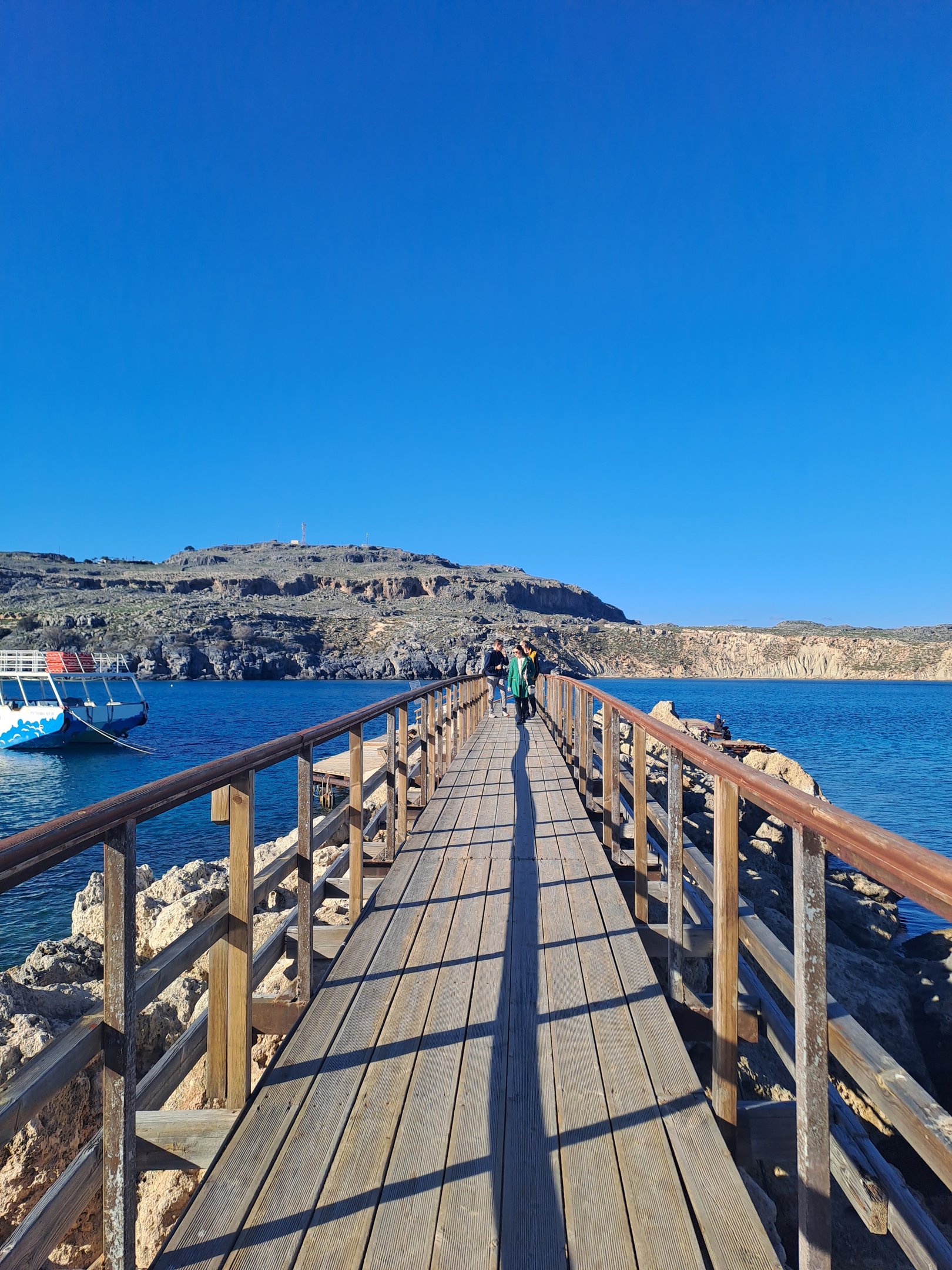
Winter brings rain showers and storms, but also bright, crisp days between them. Cooler conditions can be lovely for exploring Rhodes Old Town or walking through green countryside; the trick is keeping those outings movable rather than assigning every outdoor stop a fixed date.
Wind matters as much as rain, particularly on the exposed west coast. A dry forecast alone isn't enough reason to commit to a coastal viewpoint or a long seafront walk: look at the wind forecast too, and leave cliff edges and exposed shorelines out of stormy-day plans.
I'd keep a simple town-based alternative ready for poor weather: an indoor visit, a café stop and an unhurried lunch rather than a day spent driving between viewpoints you can't comfortably enjoy. Choose an option from the museums in Rhodes and check its winter opening day and hours before making it your rainy-day anchor.
- Clear, settled weather: prioritise countryside walks, coastal photography or a village outing.
- Showery weather: choose short walks with somewhere nearby to go indoors, rather than a long exposed route.
- Strong wind or storms: swap coastal viewpoints and forest walks for a more sheltered, town-based day.
Shorter daylight and realistic day trips
Winter gives you less daylight for sightseeing than summer, so resist fitting Lindos, mountain villages and west-coast viewpoints into one ambitious loop. I'd choose one main outing, add a nearby stop only if conditions allow, and leave time for the journey back.
For an unfamiliar countryside route, aim to do the walking and the more winding driving in daylight. Start earlier rather than saving your main outdoor stop for late afternoon, and check the day's sunset time when deciding your turnaround point.
The Rhodes Island Guide itinerary options can help you choose what to combine, but keep your winter version shorter and easy to change. A leisurely lunch or an unexpected shower shouldn't leave you rushing the final stop or driving back later than you'd intended.
Beach walks versus swimming
A winter beach visit can be beautiful without being a swimming day. Empty stretches of coast, dramatic skies and breaks of clear light suit walking and photography; on a settled day, a picnic can be a better plan than getting into the water.
The east coast generally offers calmer conditions than the more exposed west coast, but choose your beach around that day's wind and sea conditions. Ixia and Ialyssos can appeal for seaside walks, while their exposed waterfronts are much less comfortable when the wind picks up.
The sea is cold, and winter swimming is for people already comfortable with cold water—not a dependable family beach activity. If swimming and sunbathing are essential to your holiday, December–February is the wrong season to build around. Rough seas are a reason to stay out, regardless of how sunny it looks.
Moving into March
March brings the transition towards spring, with blooming hills and the possibility of warmer days, but it isn't a guaranteed switch to settled beach weather. Keep the same flexible approach if your trip crosses into March, and use spring planning to decide how to adapt your outdoor plans.
Chapter 3 of 8
What stays open in winter?
Yes—Rhodes stays open in winter, but everyday town life and the summer holiday trade are very different things. Rhodes Town has cafés, places to eat and essential shops serving residents, while many tourist businesses close for the season and attractions follow their own opening schedules.
Town services versus seasonal resort businesses
Rhodes Town is the most practical place for everyday needs in winter because it has year-round local life. You can find supermarkets, pharmacies, bakeries, cafés and restaurants without depending entirely on businesses aimed at holidaymakers.
The Old Town’s quiet streets tell a different story from its shopfronts: many tourist shops close for the season, even though local cafés still give you somewhere to pause. Coastal resort areas have fewer open businesses, so a peaceful seafront does not necessarily come with a choice of restaurants or functioning holiday facilities.
I’d build meals around cafés and tavernas serving local customers rather than plan an evening around a summer resort strip. Browse places to eat in Rhodes for meal ideas; winter food can mean hearty stews, slow-cooked goat, soups, meze and homemade sweets.
Before fixing your itinerary, check current attraction arrangements and the specific businesses you want to use for your intended dates, especially around Christmas, New Year and other holidays. Include any restaurant, hotel facility or organised tour that your plans depend on.
- Everyday town services: food shopping, pharmacies, bakeries and local cafés continue to serve residents.
- Seasonal holiday businesses: many tourist shops, hotels and resort-area restaurants close; summer facilities are not a dependable part of a winter trip.
- Visitor attractions: each has its own calendar, opening hours and access arrangements rather than one island-wide winter schedule.
Palace of the Grand Master winter hours
The Palace of the Grand Master’s listed winter opening hours are 08:30–15:30, from 1 November to 31 March, with Tuesdays closed. Plan it as a morning or early-afternoon visit, not a late-afternoon stop.
That operating season is broader than the December–February travel period covered here. The November and March dates describe the Palace’s winter timetable, not the boundaries of your winter holiday.
Palace exhibitions and other museum visits
The Byzantine Exhibition and the ‘Ancient Rodos’ exhibition are listed as closed in winter. An open Palace therefore does not mean that these exhibitions are accessible.
For other museum visits, including the Archaeological Museum, plan each stop separately rather than applying the Palace’s timetable to it. You can compare museums in Rhodes to decide which collections interest you, then build your day around their individual arrangements.
Chapter 4 of 8
Where should you stay in Rhodes in winter?
Rhodes Town is the practical starting base for Rhodes in winter: you have year-round local life, cafés, restaurants and everyday services around you, rather than a holiday area waiting for summer. I’d choose it for a first December–February visit, especially without a car. Ixia, Ialyssos, Lindos or a quieter village can work if you actively want a slower stay, but accommodation operating on your dates, proper room heating and nearby food matter much more than a pool or sea-view photographs.
Why I would start with Rhodes Town
Rhodes Town stays active because people live and work here throughout the year. Cafés, bakeries, restaurants, supermarkets and pharmacies make it easier to settle into an ordinary daily routine, while museums and cultural sights give you options beyond outdoor exploring. You can change your plans when rain arrives without making every outing a drive.
It is the strongest choice for a short break, a first winter visit or a trip focused on history and food. Families benefit from having meals and essentials close by, while travellers who prefer manageable walks can prioritise a straightforward town location over a more isolated coastal stay.
The trade-off is that you are choosing a working town, not a secluded retreat. If that suits you, choose where to stay in Rhodes Town by weighing the immediate neighbourhood and walking routes, rather than simply picking the most attractive room.
Choosing an Old Town location
The Old Town suits you if quiet medieval lanes and an atmospheric setting are part of the reason you are coming. Winter brings fewer people, but many tourist shops close, so a beautiful lane does not necessarily put you beside a convenient evening meal. Choose the immediate location, not just an address inside the walls.
Wet-weather practicality deserves particular attention here: cobblestones can become slippery after rain. Before committing, get clear arrival directions covering the vehicle drop-off point, the remaining walk with luggage and any steps into the accommodation. A map pin alone does not tell you how comfortable that arrival will be.
If you have limited mobility, a pushchair or heavy bags, I’d favour the simplest access over the deepest Old Town setting. You can still spend time in the quieter lanes without making them part of every trip between your room, transport and dinner.
When Ixia or Ialyssos makes sense
Ixia and Ialyssos make sense when you want a seaside setting, walks and sunsets while remaining close to Rhodes Town. They are conditional alternatives, rather than guaranteed year-round resort experiences: the useful question is what surrounds your particular accommodation during your stay, not how busy the area looks in summer.
The west coast can be windy in winter, so I would not make a seafront walk the only attraction of the location. A comfortable indoor base and nearby food are more valuable than a room whose main selling point is its balcony.
Choose either area if you are happy to travel into town for some meals and cultural outings. If you want to step outside each evening and choose where to eat without arranging transport, Rhodes Town is the simpler starting point. You can compare the wider setting in the Rhodes Island Guide’s Ixia and Ialyssos overview.
Lindos and quieter village bases
Lindos is a deliberate quiet-stay choice in winter. Its peaceful village setting suits photography, slow mornings and couples who want time together without resort bustle, but many hotels close and the village becomes very quiet. Choose it because that atmosphere appeals to you, not because you expect a quieter version of the full summer offering.
For a short first visit, I’d usually keep Rhodes Town as the base rather than commit the whole stay to Lindos. If you are drawn to staying there, compare Lindos accommodation areas with particular attention to arrival access and the practical route to meals.
Afandou, Faliraki and Kolymbia have fewer open businesses in winter, while quieter southern coastal areas can feel remote. A village base suits travellers who genuinely enjoy a slower rhythm and are comfortable with fewer choices; it is less appealing if you want spontaneous restaurant-hopping or plenty happening outside the door. Sundays can be especially quiet in villages.
For a village stay built around countryside drives, forest walks and several parts of the island, I’d rent a car rather than make each day depend on reduced winter bus services. The freedom is useful, but it does not replace having a comfortable room and a workable evening meal close to base.
Heating, access and nearby food
Before booking, settle the winter essentials directly with the accommodation: operation on your exact dates, heating in the room you are reserving, arrival arrangements and nearby places serving food. Keep that conversation specific to your stay rather than relying on a description built around summer facilities.
My suggestion: choose the warm, conveniently placed room over the more impressive resort setting. Pools, beach facilities and outdoor dining areas should not outweigh the basics that make a December–February stay comfortable.
- Heating: get a clear answer about the room’s heating provision; a listing that only mentions air conditioning is not enough detail.
- Arrival: have a straightforward plan for reaching the entrance with luggage, including the final walking section and access at your arrival time.
- Food: prioritise an open place for an indoor meal within a comfortable walk. A nearby café is useful, but it is not necessarily a dinner option.
- Self-catering: if cooking is part of your plan, choose accommodation with suitable kitchen facilities and practical access to groceries.
Chapter 5 of 8
How should you get around in winter?
You can enjoy a town-focused winter break in Rhodes without a car, using walking for sightseeing and arranging transport for your arrival and departure. If your plans include several villages, west-coast viewpoints or forest walks, I’d rent a car: independent transport makes those days much easier to organise. Buses remain an option for main-route journeys, but they’re a less flexible fit for a countryside itinerary with several stops.
A town-focused trip without a car
For a break built around Rhodes Old Town, Mandraki Harbour, museums and relaxed meals, I’d skip the rental car. Walking suits this kind of trip, especially if your accommodation is within comfortable reach of the places you want to visit.
Cooler temperatures make exploring on foot pleasant, although wet cobblestones can be slippery. If long walks or uneven surfaces are difficult for you, allow for occasional taxi journeys rather than making every outing a walking trip; the Rhodes Island Guide’s transport overview can help you compare your options.
When renting a car is worth it
A car becomes much more useful when you want to combine mountain villages, forest paths and coastal stops in one day. Places around Profitis Ilias, the Embonas countryside and the western side of the island are better suited to independent exploring than a day built around several bus connections.
Winter has less traffic than summer, but the main advantage is flexibility: you can shorten a walk, change your route or head back when the weather turns. That freedom matters more for an outdoor itinerary than it does for a few days spent entirely in Rhodes Town.
My suggestion: choose your countryside days first, then compare car rental prices for the period you actually need. Before booking, use the car rental advice to help assess the terms, and make sure the collection and return arrangements fit your winter travel dates.
Seasonal buses and return journeys
Buses do not disappear in winter: main routes serving places such as Ixia, Faliraki and Lindos remain useful options from Rhodes Town. They suit a straightforward outing to one destination better than a day combining villages, viewpoints and walking routes.
Services change seasonally, so check the timetable for your travel date—including the return journey—when you work out how to get around Rhodes. If the available journeys leave too little time at your destination, simplify the outing or choose a car rather than squeezing several stops into it.
Airport transfers and essential taxi trips
If you want to go directly from the airport to your accommodation without organising a rental car on arrival, arrange an airport transfer. Give the operator your flight details and exact accommodation address, and agree on the meeting point so you know where to go with your luggage.
Essential taxi journeys are better arranged ahead than left to chance, particularly your return to the airport or a pickup away from Rhodes Town. For a planned journey, you can also explore transfer options; settle the pickup time, location and price when arranging the ride.
If you’d rather organise the practical parts of your holiday together, browse transport and trip services. Choose options offered for your actual winter dates, since a service listed for Rhodes is not necessarily operating throughout December–February.
Chapter 6 of 8
What can you do in Rhodes Town in winter?
In Rhodes Town in winter, I’d build your day around a quiet Old Town walk, a history visit and a proper sit-down meal, with Mandraki Harbour saved for a dry spell. This suits you best if you enjoy architecture, photography and unhurried exploring rather than busy shopping streets. Keep the order flexible: outdoor time belongs in the better weather, while museum interiors and cafés give the day somewhere comfortable to go when rain arrives.
Explore the Old Town at a quieter pace
The pleasure of the Old Town in winter is having space to notice it. Quieter lanes and soft winter light make this a rewarding time for photographs and slow wandering, without the summer crowds pushing you along.
Many tourist shops close for the season, so come for the streets and atmosphere rather than a full afternoon of shopping. That quieter mood is lovely for couples and anyone who likes exploring slowly, but less satisfying if browsing busy shops is your main reason for visiting.
Use a dry spell for the medieval lanes, then add a walk around Mandraki Harbour if conditions remain comfortable. You can explore more of Rhodes Town when choosing a longer route; for a winter day, I’d keep the outdoor portion easy to shorten rather than commit to hours of walking.
Build a history-focused sightseeing day
Make the Palace of the Grand Master your main history stop, using the winter access arrangements covered earlier to choose your day. Give it a defined place in the itinerary rather than leaving it until after a long lunch, and plan around the areas accessible during your visit.
If you want more museum time, compare the museums in Rhodes, including the Archaeological Museum. Check its current opening arrangements before making it a second fixed stop; one well-paced interior visit is a better winter plan than a tightly packed list of entrances.
- Start with the weather: if it is dry, explore the Old Town before your planned interior visit; if rain is arriving, reverse that order where opening arrangements allow.
- Give your main history visit enough space, then stop for lunch rather than rushing straight to another attraction.
- After lunch, choose between more lanes, a café or Mandraki Harbour according to the weather and your energy.
- For families, I’d favour one history stop and a shorter walk over several consecutive museum visits.
Make time for food and cafés
Food is part of the winter holiday, not just something to fit between sights. Rhodes Town keeps its everyday café and restaurant life, and a long indoor lunch makes a good counterbalance to a cool morning outdoors.
Winter eating leans towards hearty stews, slow-cooked goat, soups, meze and homemade sweets. Look for these rather than expecting a particular dish everywhere, and ask what is cooking that day.
Use these Rhodes Town restaurant ideas to narrow your choices, then check winter opening before making a special trip. I’d choose somewhere comfortable for an indoor meal over a terrace chosen only for its view; afterwards, leave time for coffee and the quieter everyday rhythm of town.
Swap plans when rain arrives
For a wet day, put an accessible museum or Palace interior first, followed by lunch and a café. Keep any Old Town walk as an optional addition if the weather clears, rather than the backbone of the day.
The distinction matters: walking through medieval streets is still an outdoor activity, even when the route is history-focused. Mandraki Harbour and the seafront are outdoor choices too, not substitutes for museum shelter.
Rain can make the Old Town’s cobblestones slippery, so shorten the walk if footing becomes uncomfortable. If the rain arrives after your chosen attraction has closed, settle into a meal or café rather than trying to squeeze an exposed heritage walk into the plan.
Chapter 7 of 8
Which winter day trips are worth considering?
Lindos is worth considering for a quiet village wander, Koskinou for a shorter outing, Kritinia and Monolithos for west-coast scenery, Profitis Ilias for greenery and walking, and South Rhodes for peaceful beaches. Pick one outing that matches the forecast and your interests rather than trying to cross the island ticking off sights. In winter, the scenery is often the main attraction: plan a village lunch around somewhere you know is open, rather than making an unconfirmed taverna stop the centre of your day.
Lindos for a change of scenery
Choose Lindos if you want a peaceful village visit with time for photography rather than a busy sightseeing schedule. Winter strips away much of its holiday bustle, which is lovely if you enjoy quiet surroundings but less rewarding if shopping and a wide choice of places to eat are part of the appeal.
I'd make the village itself the reason to go, with any attraction visit an extra once you've checked its winter opening arrangements. You can get a feel for Lindos and its different areas before deciding whether that quieter atmosphere suits you.
If you're travelling by bus, check the current winter timetable, including your return, before settling on the day. Keep Lindos as the main outing rather than automatically adding a tour of the southern coast; the slower pace is part of what makes a winter visit worthwhile.
Koskinou for a village outing
Koskinou is my pick when you want a change from Rhodes Town without building the whole day around a longer excursion. Its colourful village doors look particularly vibrant in low winter light, making it a good choice for a gentle wander with a camera.
This suits travellers who enjoy noticing small details more than working through a list of attractions. It also makes a manageable alternative for families who want a little exploring rather than a long scenic drive. Leave room to linger if the weather holds, but there's no need to turn a short village visit into a full-day itinerary.
Kritinia and Monolithos
Kritinia and Monolithos are worth considering for winter viewpoints and dramatic west-coast scenery. On windy days, the waves can be impressive, but I'd choose a settled forecast for an outing here rather than make storm-watching the objective.
These are better choices for landscape lovers and photographers than for anyone looking for a day of indoor attractions. Choose one as your main destination, adding the other only if the weather and remaining daylight leave you enough room to enjoy both without rushing.
For this outing, I'd rent a car rather than build the day around bus connections. Independent transport is particularly useful for west-coast viewpoints and lets you shorten the route if conditions change. The Monolithos forest road is also a walking option to consider when conditions allow, rather than a compulsory addition to the drive.
Profitis Ilias and countryside walks
Profitis Ilias is the strongest choice here if you want green hills and forest scenery rather than another coastal stop. Winter brings lush colours to the countryside, while cooler temperatures can make walking more comfortable than in the summer heat.
I'd choose between a scenic drive with a modest walk and a walking-focused day, rather than trying to squeeze a substantial hike into a wider island tour. You can plan a visit to Profitis Ilias and then choose a suitable walking route for your fitness, the daylight available and that day's conditions. A route being appealing in winter doesn't make it suitable in every winter forecast.
Other countryside options include the Attavyros foothills, Embonas countryside and Seven Springs. Keep these as alternatives, not extra stops to collect on the same day. If walking is your main reason for going and the forecast turns wet, I'd switch to a shorter village outing rather than force the original plan.
South Rhodes and quiet coastlines
South Rhodes suits you if an almost empty coastline sounds appealing in its own right. Kiotari and Gennadi beaches feel remote and peaceful in winter, offering space for a beach walk, photography or simply a pause beside the sea.
This is a scenery outing, not a substitute for a summer beach day. Kiotari becomes very quiet and many businesses close, so it won't suit you if you want a lively resort promenade or lots of spontaneous café and restaurant choices.
I'd give the south its own outing on a settled day rather than bolt it onto Lindos or a west-coast route. Use the Rhodes area overview to choose a stretch of coast, then keep the plan simple: one beach area, an unhurried walk and time to return before the day feels rushed.
Chapter 8 of 8
What should you pack and plan around?
For Rhodes in winter, pack layers, a waterproof outer layer, comfortable shoes with grip and a small day bag for changing conditions. Keep outdoor outings movable, choose walking distances you can comfortably manage, and leave yourself a Rhodes Town alternative when rain or wind changes the plan.
Layers, waterproofs and grippy shoes
Pack for a sunny walk that might turn breezy or wet, rather than dressing for the best part of the day. A few removable layers are more useful than relying on one heavy coat, especially when moving between outdoor sightseeing and indoor cafés.
- Layers: bring comfortable tops and a warmer jumper or fleece for cooler spells and evenings.
- Waterproof outer layer: choose something you can carry easily and pull on when showers arrive; a hood is useful on windy stretches.
- Grippy shoes: wear comfortable walking shoes with a sound tread, rather than smooth-soled footwear. For forest walks, favour shoes suited to wet or muddy ground.
- Small day bag: leave room for your waterproof and a spare layer, and keep your phone and other essentials protected from rain.
- Before packing: use the Rhodes monthly weather overview for seasonal context, then adjust your clothing to the forecast for your actual dates.
Wet paving and accessible routes
Rhodes Old Town paving can become slippery in rain, so slow down on wet stone and take care around uneven surfaces and steps. That calls for sensible footwear and a manageable route, not avoiding the Old Town altogether.
If you use a wheelchair or walking aid, or tire easily, plan around comfortable walking distances rather than how close places look on a map. I'd choose a shorter outing with somewhere to sit indoors, leaving enough energy for the return journey.
Before booking accommodation, ask for the actual access details: steps at the entrance, lift access to your room and the surface of the approach. An accessible room is only part of the picture; the walk between your accommodation, meals and sightseeing needs to work for you too.
Trails and exposed coastlines
Cooler weather makes forest and countryside walks appealing, but recent rain matters as much as the forecast. Paths can be muddy or slippery, so choose a route that suits your footing and confidence, and turn back if the surface becomes uncomfortable.
Use the Rhodes hiking routes to shortlist a walk, then let the day's conditions decide whether to do it. A shorter woodland outing is a better choice than pressing on towards an exposed viewpoint simply because it was on the itinerary.
On the coast, keep well back from cliff edges during stormy weather and avoid wave-washed rocks or shoreline sections. The west coast can be particularly windy; dramatic waves are a reason to watch from a sheltered position, not to move closer for a photograph.
A flexible plan for unsettled days
I'd keep a shortlist rather than assign every outdoor outing to a fixed day. Give your clearest weather window to the walk or viewpoint you most want to see, and keep a town-based option—an indoor cultural visit, café stop or leisurely lunch—for unsettled conditions.
You don't need to abandon a whole day because of a shower, but leave room to shorten a walk or spend longer indoors. When putting together your Rhodes trip plan, leave gaps between activities rather than filling every available hour.
Arrange your winter transport
transfersFrequently asked questions
Is Rhodes worth visiting in winter?
Yes, if you want culture, quiet and a flexible sightseeing trip. I'd choose another season if reliable beach weather, swimming or a full resort programme were the main reason for travelling.
What is Rhodes winter weather like?
Plan for changeable weather, rain, wind and shorter daylight rather than uninterrupted sunshine. Keep outdoor trips flexible and pack layers, a waterproof jacket and shoes with good grip.
Is anything open in Rhodes in winter?
Yes—winter is not an island-wide shutdown. Rhodes Town is the practical starting point for a stay, while seasonal resort businesses need more careful planning. Choose accommodation and nearby services for your actual dates rather than relying on summer descriptions.
Where should I stay in Rhodes in winter?
I'd prioritise Rhodes Town, with accommodation close to food and sightseeing. Ixia, Ialyssos or a quieter village can work for a particular itinerary, but heating, nearby services and transport should decide the booking—not summer resort facilities.
Is the Palace of the Grand Master open in winter?
The Palace lists winter hours of 08:30–15:30 from 1 November to 31 March, with Tuesdays closed. That operating season is broader than the December–February period covered here. The Byzantine Exhibition and the 'Ancient Rodos' exhibition are listed as closed in winter, so an open Palace does not mean every exhibition is accessible.
Can you swim in Rhodes in December, January or February?
I would not book a winter holiday around swimming. Make beaches optional places for a walk in suitable conditions, and let the weather and sea state decide what is sensible on the day.
Do I need a rental car in Rhodes in winter?
Not necessarily for a trip centred on Rhodes Town. I'd rent a car for village visits and several countryside stops rather than build that itinerary around bus connections. Check seasonal bus schedules, including your return, and arrange any essential taxi journey ahead.
Is Rhodes in winter suitable for families or travellers with limited mobility?
It can suit families who enjoy history and short outings, but it is a less obvious choice for children expecting pools and beach entertainment. For limited mobility, prioritise straightforward accommodation access and short routes; wet paving, steps and uneven streets deserve extra care.
What can you do in Rhodes when it rains?
Keep an indoor sightseeing option and a relaxed meal or café stop available rather than forcing a countryside outing. The Palace can be one option within its listed opening hours, but avoid making Tuesday your only opportunity to visit.
Does this winter advice also apply to March?
March is a transition into spring rather than part of this December–February guide. Use Rhodes in spring to plan a March visit, even though the Palace's listed winter operating season continues through 31 March.
Related pages
- Rhodes Weather by Month (2026) – Temperatures, Sea & Best Time to Visit
- Rhodes in Spring (2026) – Weather, Crowds & Is It Worth It?
- Where to Stay in Rhodes Town (2026) – Best Hotels & Area Guide
- Lindos Rhodes (2026): Is It Worth Staying? Best Areas & Hotels
- Car Rental Rhodes (2026) – The Smart Way to Book Without Getting Ripped Off
- Getting Around Rhodes (2026) – What Actually Works (and What Doesn’t)