
Chapter 1 of 8
What is Rhodes weather like in July?
Rhodes in July is hot, predominantly sunny and very dry, with warm evenings and a sea that makes swimming a real highlight. Expect daytime heat to shape how much exploring feels comfortable; after sunset, conditions ease but remain warm. These are seasonal expectations, not a forecast for your dates, and a heatwave can make conditions substantially more demanding.
Daytime heat and evening comfort
July brings strong summer heat across Rhodes, particularly around midday. It suits you much better if swimming and relaxing are the priority than if you want to spend whole days walking between sights. The climb to the Lindos Acropolis is a good example of an outing where the daytime heat matters, rather than just the distance.
Evenings cool slightly after sunset, but think warm outdoor dinners rather than genuinely cool nights. That makes an evening wander through Rhodes Old Town more appealing than an extended midday walk, although sunset alone won't guarantee comfortable conditions during a particularly hot spell.
If heat tolerance is your main concern, compare July with other months using the Rhodes weather-by-month overview. I'd choose July for a swimming-focused holiday, not for escaping the heat.
Sea temperature and swimming expectations
The sea is warm in July, making this a rewarding month if swimming is central to your holiday. Expect summer swimming conditions rather than a chilly early-season dip, though how comfortable the water feels is personal.
Calm conditions are common along the east coast, but warm water and calm water are different things: wind and local conditions still matter on the day. A sheltered spot such as St Paul's Bay near Lindos illustrates the appeal of the east-coast bays, without guaranteeing flat water on every visit.
For choosing between sandy shores and smaller coves, use the Rhodes Island Guide's beach-planning section. July's warm sea is a reason to prioritise swimming, not a promise that every beach will offer the same conditions.
Sunshine, rainfall and coastal wind
Long, sunny days and very little rainfall are characteristic of July. Rain is unusual, but neither uninterrupted sunshine nor rain-free holiday dates are guaranteed. The practical issue is usually managing sun exposure rather than planning around wet weather.
The summer meltemi wind can bring a welcome breeze, especially along the west coast around Ixia and Ialyssos. It can make time by the coast feel more pleasant, but its strength and timing vary; I wouldn't choose Ixia solely on the promise of dependable natural cooling.
A breezy beach can still be hot and sunny, so keep shade in your plans even when the air feels more comfortable. Wind also affects how the sea behaves, which is why the conditions at your chosen beach matter more than a general island-wide description.
Typical July weather versus a heatwave
Ordinary July weather is already hot; a heatwave is an exceptional spell, not another name for the month's usual conditions. Monthly averages describe the broader climate and cannot tell you how hot a particular afternoon or evening will be during your stay.
Check the forecast for your dates and follow any heat warnings, paying attention to overnight conditions as well as daytime heat. If a heatwave arrives, switch from simply timing activities more carefully to reducing heat exposure: stay in shaded, cool places and avoid sunbathing or prolonged walking in the sun.
Chapter 2 of 8
How busy is Rhodes in July?
Yes—Rhodes in July is busy, with peak-season crowds at popular sights, busy beaches and lively resorts well into the evening. That atmosphere is part of the appeal if you want beach life, nightlife and plenty happening around you; it is less appealing if solitude is your priority. You can still have a relaxed holiday, but I’d keep the itinerary flexible rather than expect the island’s best-known places to feel quiet.
Rhodes Old Town and Lindos outings
Rhodes Old Town gets busy during the day, particularly when cruise ships arrive. Evenings bring a different atmosphere rather than an empty town: people gather in the medieval squares and narrow streets for dinner and drinks, with restaurants and rooftop bars adding to the bustle.
I’d choose an evening visit if you want to combine exploring with dinner and enjoy the summer atmosphere. If you prefer a more focused sightseeing visit, pick the places you most want to see rather than trying to cover every street and attraction in one outing.
Lindos is another popular July outing, and the Acropolis climb becomes very hot. An early-morning visit makes sense before the heat builds, but it is a heat-management choice—not a promise of empty lanes or no queues. I’d give Lindos its own outing rather than squeeze it into the same sightseeing day as the Old Town.
Resort atmosphere and beach visits
July’s resorts are fully active: beaches are busy, beach bars buzz through the day, and restaurants fill quickly at peak dinner hours. Faliraki is a good example if your idea of a holiday combines beach time with nightlife; choose that energy deliberately rather than expecting a secluded seaside escape.
The upside is that organised beach facilities and water sports are in full swing. Faliraki Beach, for example, has organised sunbeds and water sports, so it suits a day with activities and services close at hand. Popular beaches are shared summer spaces in July, not somewhere I’d build a plan around having the shoreline to yourself.
- If you enjoy a social holiday, lively beaches and evenings out are reasons to choose July—not simply crowds to work around.
- If busy surroundings wear you down, avoid making a famous beach or a bustling resort centre the compulsory focus of every day.
- For dinner, keep some flexibility over the restaurant or timing rather than relying on one walk-in table at the busiest hour.
Making room for a slower day
A relaxed July holiday needs gaps, not a different attraction for every spare hour. My suggestion: choose one main outing for the day and let the rest stay optional. After a busy Old Town evening or a Lindos visit, a day close to your accommodation can be more enjoyable than another cross-island checklist.
If you book a boat trip, let that be the day’s main plan rather than adding sightseeing at both ends. You can use the Rhodes itinerary ideas to decide what matters most, then leave room to shorten or swap an outing when you’ve had enough bustle.
Flexibility makes July easier, but it doesn’t turn peak season into a quiet escape. If solitude matters more to you than full summer energy, compare the monthly weather and seasonal travel patterns before committing to your dates.
Chapter 3 of 8
What should you prioritise when booking a July stay?
For Rhodes in July, prioritise effective room cooling, somewhere shaded to rest and an easy route to the beach and evening meals. A cheaper room loses its appeal if every swim or dinner involves a hot walk or an extra journey. Choose accommodation around the holiday you actually want, then compare the full cost for your dates—not just the headline nightly rate.
Cooling, shade and easy beach access
In July, I’d put reliable air conditioning ahead of a sea view. Your room needs to be somewhere you can comfortably sleep and retreat during the hottest part of the day, especially if you’re travelling with children or someone who struggles with heat.
Shade matters outside the room too. A shaded terrace or sitting area gives you somewhere to relax without staying indoors; an exposed balcony or pool deck is not the same benefit. During a heatwave, access to genuinely cool, shaded places becomes particularly important.
Easy beach access should also mean an easy return to your room. If you expect to swim most days, a manageable walk back for a rest is more useful than a long list of facilities you may barely use.
- Room cooling: establish that air conditioning serves the room type you’re booking, including the sleeping areas in an apartment, and whether it is included in the rate.
- Somewhere to rest: look for usable shade in the accommodation’s outdoor spaces rather than judging solely by pool photographs.
- Daily walking: consider the actual route to the beach and restaurants, including any steps or slopes that would be awkward with children, a pushchair or limited mobility.
- Evening comfort: if sleep matters more than nightlife, favour a room location away from the busiest entertainment areas.
July accommodation costs and value
July is one of the more expensive months to stay in Rhodes, with strong demand in popular beach areas. Once your dates are settled, start comparing suitable accommodation rather than relying on a last-minute bargain. There is no single booking deadline that guarantees the best price.
Compare the total for the same dates, party size and room type. Include the facilities and meals you’ll actually use, any separately charged essentials, and the transport your location would require. A lower room rate may offer poor value if you need repeated journeys just to reach the beach or have dinner.
Cancellation terms belong in that comparison too. A cheaper non-refundable rate makes more sense when your plans are firm; paying more for flexibility can be worthwhile when they are not. Read the cancellation deadline and payment conditions before committing.
- Put essentials first: cooling, suitable sleeping arrangements and a practical location should survive any budget cuts.
- Compare like with like: use the final stay total, with the same occupancy, meal basis and cancellation conditions.
- Pay for convenience you’ll use: beach proximity matters most for a swimming holiday; nearby restaurants matter if you want to eat out most evenings.
- Avoid paying for an imagined itinerary: a base that works for your ordinary holiday day is more valuable than one chosen around a single excursion.
Choosing a base without overplanning
Start with what you want within easy reach most days: swimming, dinner, nightlife or time around the Old Town. You don’t need a different outing booked for every morning. For the wider comparison, use choosing where to stay in Rhodes, then shortlist accommodation by its precise location.
My suggestion: choose a base where your usual beach day and evening meal work without a car, unless driving is already part of your plan. Use Rhodes trip planning to fit a few outings around that base rather than trying to cover the whole island.
Once your accommodation is settled, arrange the practical extras through the Rhodes Booking Marketplace. If you want a direct arrival journey, compare airport transfers with your accommodation address and party size in hand.
- Rhodes Town: a good fit if Old Town dinners and lively evenings are central to your holiday. If daily swimming matters equally, give the route to the beach as much attention as access to the historic streets.
- Faliraki: suits a beach-and-nightlife holiday, with a long sandy beach, organised sunbeds and water sports. If you want quiet evenings, choose the accommodation’s position carefully rather than booking on the resort name alone.
- Lindos: suits travellers drawn to the village atmosphere and nearby bays. Keep the route between your room, swimming and meals central to the decision; staying here is not a reason to fill hot days with sightseeing.
- Ixia: worth considering for a quieter alternative to the liveliest resort areas, with west-coast breezes that can offer some relief. A breeze is a bonus, not a substitute for effective room cooling.
Chapter 4 of 8
How should you plan July beach days?
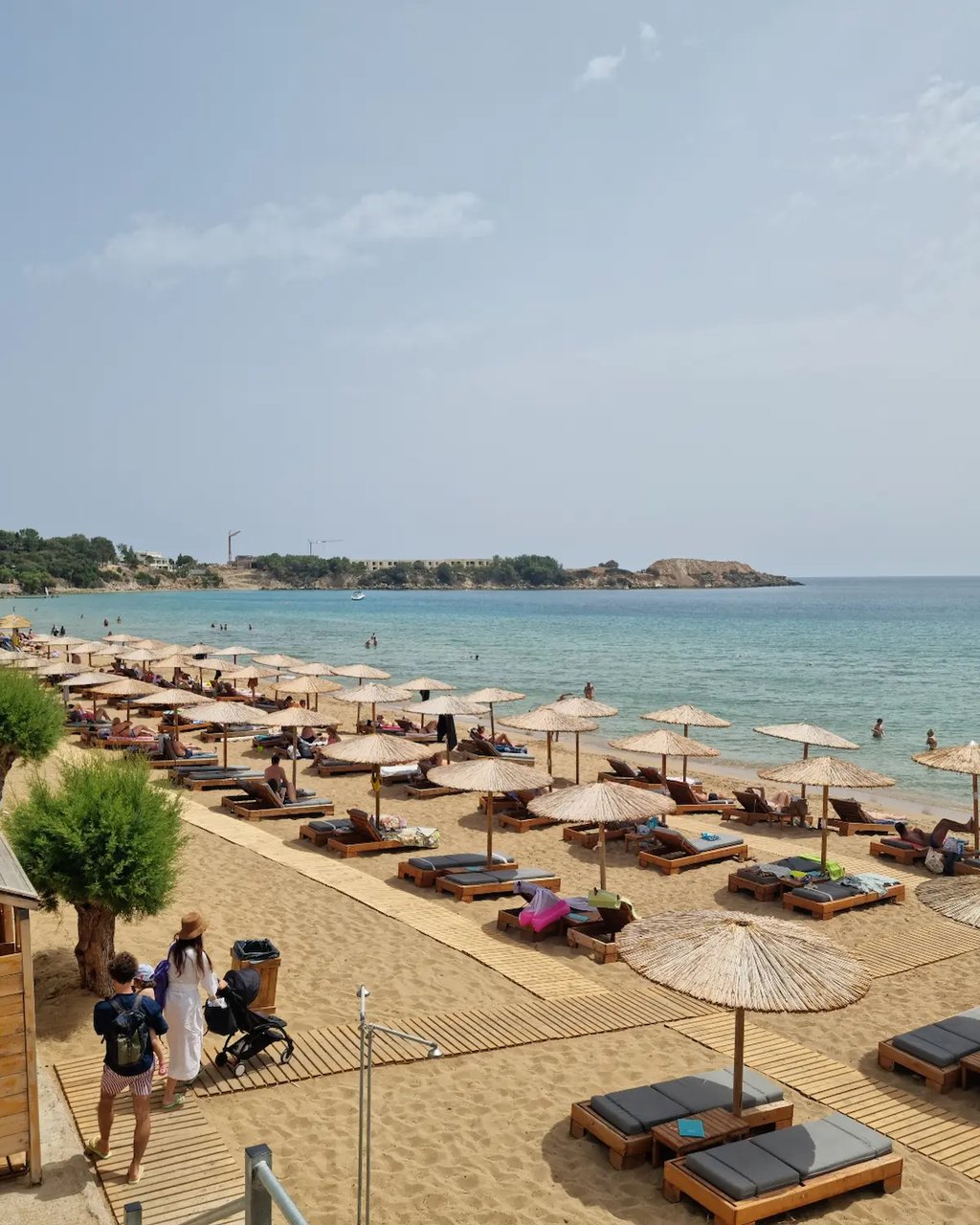
Plan July beach days around swimming, shade and as little unnecessary travel as possible. The warm sea makes a beach-focused holiday a natural fit, but you don’t need a different bay every day: for families or anyone wanting to unwind, one convenient beach is often the better choice. Save beach hopping for days when exploring genuinely appeals more than settling in.
Swimming as the focus of your holiday
Swimming deserves a central place in a Rhodes in July itinerary, rather than being something you squeeze between sightseeing stops. The sea is generally warm, beach facilities are in full seasonal operation, and long summer days leave plenty of room for an unhurried swim-and-rest routine. This suits travellers who want time in the water more than a packed programme of daytime walking.
Keep sea temperature separate from air temperature: a hot afternoon tells you little about the water conditions at your chosen beach. Calm conditions are common along the east coast, but warm water is not a promise of flat water; judge conditions on the day before getting in. If swimming is driving your choice of travel month, compare the sea and air conditions separately in Rhodes weather by month.
I’d build the day around a morning swim, a proper break and another swim later if you feel like it, rather than an uninterrupted stretch in the sun. During a heatwave, skip sunbathing and prioritise shaded, cool places—the beach is not automatically a suitable all-day escape from the heat.
Faliraki Beach as a practical example
Faliraki Beach illustrates why an organised beach can work well in July: it is long and sandy, with sunbeds and water sports. You can make swimming the main event and add an activity without turning the day into a journey between several places.
It suits travellers who prefer an active resort setting and organised facilities over a secluded cove. The trade-off is July’s busy beach atmosphere, so I wouldn’t choose it expecting solitude. For a family day, prioritise a convenient stretch with shade and an easy route back to your accommodation rather than choosing solely by the water-sports options.
One beach or a beach-hopping day?
For families, mixed-energy groups and anyone who dislikes repeatedly packing up, I’d choose one beach and stay flexible about how long you spend there. Fewer journeys mean more time swimming and fewer belongings to move around. Returning to a beach you already like is a perfectly good July plan, not a missed opportunity.
Beach hopping makes sense if discovering different stretches of coast is part of the fun for you. The east-coast route between Faliraki and Lindos offers opportunities to explore smaller bays, but you don’t need to cover that whole stretch in one day. Use the Rhodes Island Guide’s beach choices to pick stops that genuinely offer something different.
- Choose a single beach when easy access, shade and a relaxed pace matter most. This is my default recommendation for a low-effort family day.
- For a beach-hopping day, I’d start with two stops rather than a long checklist, leaving time to stay longer wherever you enjoy swimming.
- If you want several beach stops on your own schedule, I’d rent a car rather than build the day around multiple bus connections. Keep the route compact so driving doesn’t become the main activity.
Chapter 5 of 8
What can you do without filling the day with walking?
You can enjoy Rhodes in July without turning every day into a walking tour: choose one main outing, protect a substantial break in a cool place, and leave the evening optional. Visit Lindos early, give Rhodes Old Town an evening of its own, or choose a boat trip with shaded seating rather than a packed sightseeing itinerary. These are alternatives for different days—not a checklist to squeeze into one.
An early outing to Lindos
Plan your Lindos visit for early in the morning, before the heat builds. The climb to the Acropolis becomes very hot in July, so this is the outing to start early rather than save for after lunch. Early timing helps with heat exposure; it is not a promise of empty streets or a comfortable climb for everyone.
Decide whether your priority is the Acropolis or a shorter village visit. If the climb matters to you, make it the main activity and check current admission hours when planning your departure. If you want minimal exertion, particularly with children or anyone who struggles in the heat, I'd skip the climb rather than feel obliged to complete it.
Afterwards, leave time for a proper rest instead of adding several coastal stops on the way back. An early Lindos outing followed by a quiet afternoon is a complete day; dinner near your accommodation can be enough for the evening.
Rhodes Old Town in the evening
Rhodes Old Town works well as an evening outing when you want atmosphere without a full day of sightseeing. Temperatures ease somewhat after sunset, and the medieval squares and narrow streets fill with people heading out for dinner and drinks. Expect a lively evening, not a quiet or crowd-free alternative.
I'd build this around dinner and a short wander, rather than trying to cover the whole historic centre. Restaurants, rooftop bars and busy squares give you reasons to stop and sit, which suits travellers who want a little exploration without hours on their feet. Evening is the better choice for enjoying the streets and food; plan any specific attraction visit separately around its opening hours.
Keep this optional after another outing, especially if reaching Rhodes Town adds a substantial journey from your accommodation. You can choose a manageable focus for the evening in the Rhodes Island Guide’s Rhodes Town section, rather than crossing town to tick off several places.
A boat trip with room to rest
A boat trip can replace a day of walking with time sitting, watching the coastline and swimming. July options include Lindos coastal cruises, snorkelling trips and sunset sailing tours. They suit travellers who want a sea-based outing, but a boat is not automatically an escape from the heat: a long trip with little shade can leave you exposed for much of the day.
Compare Rhodes boat trips by shaded seating, total duration and how much of the itinerary keeps you in direct sun—not just by the number of stops. For a restful day, favour a trip where you can stay comfortably seated in shade between activities. A snorkelling itinerary makes more sense if swimming is your priority; a sunset sailing tour is worth considering if you would rather keep the middle of the day free.
My suggestion: choose the boat that gives you room to rest, even if another itinerary promises more places. Use the boat-trip planning options to narrow down the style of outing, then read the individual trip details before booking. Allow recovery time afterwards rather than committing to a second sightseeing programme.
- Shade and seating: look for a clear description of covered seating, rather than judging only by photographs of the sun deck.
- Time exposed: compare departure and return times, the length of the cruise and whether stops involve additional walking ashore.
- Getting there: include the journey to and from the departure point when deciding how demanding the day will be.
Chapter 6 of 8
How should your plans change during a heatwave?
During a heatwave in Rhodes, change the plan rather than trying to squeeze the same outings into cooler hours. Replace exposed sightseeing and sunbathing with time somewhere shaded and cool, and make postponing or cancelling an outing a normal choice. The Rhodes weather-by-month overview helps with seasonal planning, but heatwave conditions call for a different approach to your day.
Replace exposed outings with cool, shaded breaks
Avoid sunbathing during a heatwave, and stay somewhere shaded and cool. A beach afternoon is not automatically a suitable replacement for sightseeing: the priority is getting out of the heat, not simply moving closer to the sea.
My suggestion: make a quiet break in a cooled room your fallback, rather than searching for another outdoor activity to fill the gap. If your accommodation gives you a comfortable place to rest, spending part of the day there is a sensible holiday choice—not a wasted day.
Avoid strenuous activity and crowded places
Avoid prolonged walking or running in the sun and heavy physical work, especially in hot, windless and humid conditions. Moving an outing to early morning is not always enough; if it still involves sustained exertion or exposure, postpone it or leave it out.
That matters for plans such as the Acropolis climb in Lindos or a long sightseeing walk around Rhodes Old Town. Avoid crowded places too: swapping a daytime walk for a packed evening square does not address that part of the advice.
- Drop long walking routes and strenuous outdoor plans rather than trying to complete them with extra stops.
- Choose a quiet, cool place over a busy attraction, crowded beach bar or outdoor queue.
- Keep your replacement plan easy to abandon if conditions remain uncomfortable.
Water, clothing and a ventilated hat
Drink plenty of liquids, including water, and avoid alcoholic drinks during the heatwave. Keep water within easy reach rather than making your next drink depend on reaching a café or finishing an outing.
Wear light, comfortable, light-coloured clothing made from breathable fabric, with a hat that allows ventilation. These are supporting precautions, not a reason to push ahead with an exposed or strenuous day.
Chapter 7 of 8
What is the practical way to get around in July?
The practical way to get around Rhodes in July is to match your transport to your plans: rent a car for several beach stops or flexible departures, but keep things car-free if your beach, meals and evening activities are close to your accommodation. You don’t need a car for every July holiday; you do need to avoid turning each outing into a long walk or a complicated connection in the heat. For a broader comparison, explore the options for getting around Rhodes.
When a rental car helps
I’d recommend Rhodes car rental if you want to combine several beaches or decide for yourself when to leave and return. The east-coast stretch between Faliraki and Lindos lends itself to beach hopping, with smaller bays along the way. Having control over your departure also helps when you want an early start in Lindos rather than arriving after the heat has built.
A car is less compelling if most days will revolve around the same beach and nearby restaurants. My suggestion: rent for the exploring days rather than automatically making it a whole-holiday booking. Keep those outings selective, too—a car gives you flexibility, not a reason to squeeze every bay into one day.
- Choose a car when independent beach stops and control over your return matter most.
- Consider staying car-free when your main activities are within an easy walk and island exploration is only an occasional extra.
Keeping a car-free holiday manageable
Start with what you actually want to do, then choose a base close to it. If beach days and nightlife are the priority, Faliraki is a relevant option; if evenings in the Old Town are central to your holiday, prioritise convenient access to Rhodes Town. A location that saves you a daily cross-island outing is more useful than one that merely looks central.
Use Rhodes bus planning advice to work out your outings: services change seasonally, so check both the outward and return journey. Keep bus-based days focused on one main destination rather than trying to reproduce a multi-stop driving itinerary. For an occasional organised day out, compare Rhodes excursions and choose one with a departure point that works for your base.
Planning your airport arrival
I’d choose Rhodes airport transfers when a direct arrival suits your party, especially with children or several bags. It lets you organise the airport-to-accommodation leg separately without committing to a rental car for the rest of your stay.
If you plan to drive throughout the holiday, arranging airport collection with your rental can fit that plan instead. If you prefer the bus, work out the complete journey to your accommodation, including any connection and final walk with luggage. Use the Rhodes airport arrival advice to organise that first leg before departure.
Chapter 8 of 8
Is July the right month for your Rhodes holiday?
Rhodes in July is a strong choice if swimming, beach time and warm evenings are the holiday—not breaks between all-day sightseeing. You get a lively summer atmosphere and warm sea, but the compromises are intense heat, busy attractions and peak-season accommodation costs. I’d recommend it for beach-focused families, couples and friends; I’d reconsider it if you want long walks, quiet sightseeing or a lower-cost trip.
Choose July for swimming and summer atmosphere
July works best when you want an uncomplicated summer rhythm: swimming, a proper break from the heat, then dinner and drinks after sunset. Resorts are fully active, with beach facilities, water sports and boat trips giving you plenty to do without building the holiday around walking.
- Families: choose July if beach and pool time will keep everyone happy, especially when school holidays determine your dates. Prioritise easy beach access and somewhere comfortable to retreat during the hottest part of the day.
- Couples: July suits a holiday built around swims, seaside dinners and warm evenings in Rhodes Old Town. Choose it for atmosphere rather than solitude.
- Friends: July is a good fit for beach days followed by lively nights, particularly in Faliraki and Rhodes Town. The crowds are part of the appeal if you want a sociable holiday.
Reconsider it for walking-heavy or quieter trips
If your ideal day means hours wandering the Old Town, climbing to the Lindos Acropolis and then exploring somewhere else on foot, July makes that itinerary harder work. Short early outings can fit, but I wouldn’t choose this month for a walking-led holiday.
The same applies if busy beaches, crowded dinner spots or higher hotel costs would spoil the trip. A quieter base can change the atmosphere around your accommodation, but it cannot remove the July heat or the crowds at the island’s best-known sights.
Compare June and August before deciding
If your dates are flexible, compare June and August before committing. Heat-sensitive travellers and keen walkers should start with that comparison rather than choose July and hope to squeeze everything into the cooler hours.
If neither neighbouring month sounds right, use the month-by-month weather overview to widen your options. Once your dates are settled, use the Rhodes Island Guide to choose your base and build the wider itinerary.
My suggestion: if time on the water is one of your reasons for choosing July, leave room for a swimming cruise or sunset sailing trip rather than filling every day with sightseeing.
Book around your July plans
transfersFrequently asked questions
Is July a good time to visit Rhodes?
July is a good fit if swimming, beach days and lively evenings are your priorities. I'd choose a different month if you want a walking-heavy holiday or find summer heat difficult.
Is Rhodes too hot in July?
It can be too hot for the kind of holiday that involves hours of walking and exposed sightseeing. Plan a slower day, and during a heatwave replace strenuous outdoor outings with time somewhere shaded and cool.
What temperatures should I plan for in Rhodes in July?
Plan your holiday around summer heat rather than assuming you can sightsee comfortably all day. Use the forecast for your travel dates to make daily decisions; monthly averages are not a forecast and do not describe heatwave conditions.
Is Rhodes busy in July?
Yes—July brings the island's full summer atmosphere, so it is not the month I'd choose for a quiet sightseeing escape. Give popular outings some breathing room instead of trying to fit Rhodes Old Town, Lindos and several beaches into one day.
Can you swim in Rhodes in July?
Swimming is one of the main reasons to choose July. Build beach time around conditions on the day, and during a heatwave avoid sunbathing rather than relying on a dip to make prolonged sun exposure comfortable.
Is Rhodes in July suitable for families?
July can suit a family beach holiday if you keep the daily plan simple. I'd prioritise effective room cooling, shade and easy beach access over a packed excursion schedule.
What can you do in Rhodes in July?
Build your trip around swimming, a boat outing, an early visit to Lindos and an evening in Rhodes Old Town. Choose one main activity per day and leave space to change it when the weather calls for a quieter plan.
What should I do during a heatwave in Rhodes?
Stay in shaded, cool places and avoid sunbathing, crowded places, prolonged walking or running in the sun, and heavy physical exertion. Drink plenty of liquids including water, avoid alcohol, and wear light, comfortable, light-coloured breathable clothing with a ventilated hat.
Should I visit Rhodes in June, July or August?
Choose July if a summer beach holiday matters more to you than long days of exploring on foot. If you are reconsidering your dates, compare Rhodes in June and Rhodes in August rather than expecting a neighbouring month to solve every concern.
Related pages
- Rhodes Weather by Month (2026) – Temperatures, Sea & Best Time to Visit
- Lindos Rhodes Travel Guide (2026) – What Most Visitors Get Completely Wrong
- Faliraki Rhodes: Best Area to Stay or Too Busy? (2026 Guide)
- Faliraki Beach Rhodes (2026) – Sandy Beach, Clear Water & What Surprises Most Visitors
- Rhodes Bus Guide (2026): Routes, Prices + Airport Bus Tips Most Tourists Miss
- Rhodes Airport Diagoras (2026) – What Nobody Tells You Before You Land
- Rhodes in June (2026) – Perfect Timing or Already Too Hot?
- Rhodes in August 2026: How Hot Is It & Is It Too Crowded?