
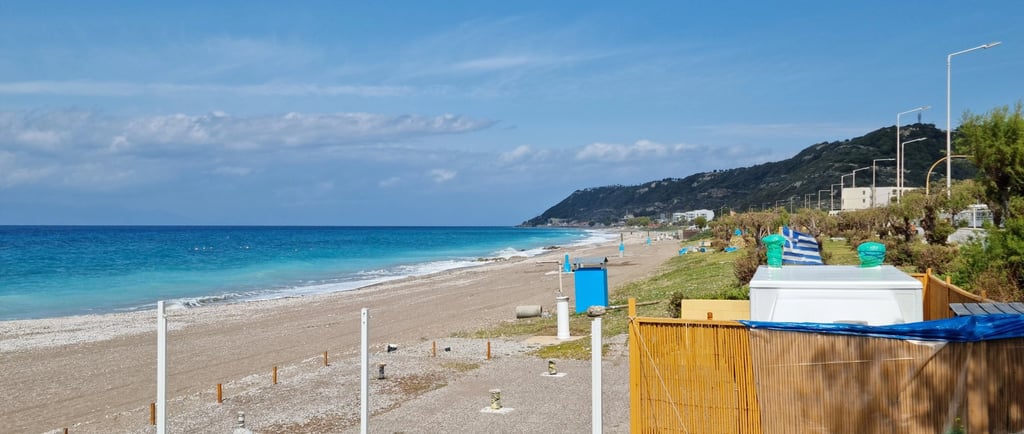
Chapter 1 of 13
Rhodes weather at a glance
Rhodes has a Mediterranean climate, with hot, dry summers and mild, wetter winters. Spring suits walking and exploring, summer favours beach days, autumn keeps the sea warm, and winter rewards flexible cultural trips.
What kind of climate does Rhodes have?
Rhodes sits in the south-eastern Aegean, closer to Turkey than mainland Greece. Its southerly latitude helps give it a long warm season. Winters are mild compared with northern Europe, but rain and wind can make them feel chilly.
The surrounding sea slows seasonal temperature changes because water warms and cools more slowly than land. In spring, sunny days arrive while the sea is still cool. In autumn, the water holds summer warmth even as the air starts cooling.
Why summers are dry and winters are wetter
Summer high pressure keeps the weather more settled. In everyday terms, sinking air makes rain clouds less likely to develop, so long dry spells are normal. Northerly summer winds, known as the Meltemi, often bring relief from the heat, though they can also make the sea rougher.
In winter, high pressure is less persistent, allowing more rain-bearing weather systems to reach Rhodes. Wet and windy spells alternate with brighter days; winter is not constant rain. These are seasonal patterns, not a forecast for your holiday.
What each season means for your holiday
The best fit depends on what you want to do, not just how warm you like the air. A comfortable walking day and a comfortable swimming day need different conditions.
- Spring: Green hillsides, wildflowers and milder temperatures make walking and sightseeing appealing. Showers remain possible, and the sea takes longer to warm up. Choose spring in Rhodes for exploring rather than a swimming-first holiday.
- Summer: Hot, mostly dry weather and warming seas suit beach-focused trips. Long daylight hours give you more time outdoors, but midday heat makes lengthy walks and exposed historic sites harder work.
- Autumn: The sea keeps its summer warmth while the air gradually cools. Early autumn still feels summery, but rain becomes more frequent as the season progresses. Autumn in Rhodes suits a mix of swimming and exploring, with more flexibility needed later on.
- Winter: Expect a mix of bright days, rain and windy spells, with shorter daylight hours. Rhodes Town remains lively while many beach resorts close. It suits museums, cafés and cultural visits better than a conventional beach holiday.
Chapter 2 of 13
Rhodes weather by month: average temperature, sea and rain charts
These charts show typical monthly conditions in Rhodes, not a forecast for your travel dates. Use them to compare daytime warmth, cooler nights, sea temperatures, rain and daylight before choosing your month.
These charts show historical averages, not a forecast. A single week can be hotter, cooler, wetter or windier than the average.
Daytime highNight-time low
Source: Rhodes Airport (Diagoras) weather station, WMO 16749 — NOAA Integrated Surface Database daily records via Meteostat. Period: 1991–2020 (all available days, about 20 years per month). Measured at the airport on the west coast; Rhodes Town and the south can feel a degree or two different.
Source: Open-Meteo marine model, sea surface temperature off the east coast of Rhodes. Period: 2022–2025 (recent four-year average). Surface water warms up slowly, so the sea is warmest in August and September and coolest in March.
Source: ERA5 climate reanalysis (ECMWF / Copernicus Climate Change Service) for the grid cell over Rhodes Airport, via the Open-Meteo historical API. Period: 1991–2020. Reanalysis combines observations with a weather model over a grid of about 30 km, so treat it as an island-wide picture.
Source: ERA5 climate reanalysis (ECMWF / Copernicus Climate Change Service) for the grid cell over Rhodes Airport, via the Open-Meteo historical API. Period: 1991–2020.
| Month | Day high °C | Night low °C | Sea °C | Rain mm | Rainy days | Daylight h |
|---|---|---|---|---|---|---|
| January | 15.1 | 10.3 | 19.5 | 113.5 | 11.8 | 10 |
| February | 15.4 | 10.4 | 18.1 | 83.5 | 10.1 | 10.9 |
| March | 17.5 | 12.1 | 17.7 | 54.4 | 7.1 | 12 |
| April | 20.3 | 14.3 | 18.3 | 30.2 | 5.2 | 13.1 |
| May | 24 | 18 | 20.3 | 15.2 | 2.9 | 14.1 |
| June | 27.9 | 21.8 | 24.6 | 1.4 | 0.3 | 14.6 |
| July | 30.2 | 24.1 | 27.8 | 0.3 | 0.1 | 14.3 |
| August | 30.5 | 24.8 | 28.8 | 0.2 | 0 | 13.5 |
| September | 28.3 | 22.8 | 27.8 | 10 | 1.2 | 12.4 |
| October | 24.6 | 19.2 | 25.7 | 48.2 | 4.9 | 11.3 |
| November | 20.7 | 15.1 | 23.1 | 75.9 | 7.6 | 10.3 |
| December | 16.9 | 11.9 | 20.8 | 120.1 | 12 | 9.7 |
- Rhodes Airport (Diagoras) weather station, WMO 16749 — NOAA Integrated Surface Database daily records via Meteostat — 1991–2020 (all available days, about 20 years per month)
- ERA5 climate reanalysis (ECMWF / Copernicus Climate Change Service) for the grid cell over Rhodes Airport, via the Open-Meteo historical API — 1991–2020
- Open-Meteo marine model, sea surface temperature off the east coast of Rhodes — 2022–2025 (recent four-year average)
- Astronomical daylight length for Rhodes (sunrise to sunset), via Open-Meteo — Average day of each month
- Daylight is the time between sunrise and sunset, not measured sunshine. Data compiled by Rhodes Explorer, October 2026. You're welcome to cite this table with a link.
How to read the monthly weather charts
Read the air and sea temperatures separately, especially if swimming matters to you. A warm afternoon does not automatically mean warm water.
- Air temperatures: Rhodes Airport station WMO 16749 historical averages for 1991–2020. These describe conditions at the airport, rather than every beach and village.
- Daytime high: the average of each day’s highest temperature during that month. It is not the hottest temperature you might experience.
- Nighttime low: the average of each day’s lowest temperature during that month. Use it to judge how much temperatures usually drop overnight.
- Sea temperatures: recent 2022–2025 east-coast model averages. These cover a different, much shorter period than the air and rainfall figures.
- Monthly rainfall: ERA5 reanalysis averages for 1991–2020, shown in millimetres. This is the average total rain over a whole month, not the amount per shower.
- Rainy days: ERA5 reanalysis averages for 1991–2020, counting days with at least 1mm of rain. Lighter showers may fall below that threshold.
- Daylight: the time between sunrise and sunset, shown in hours. It is not measured sunshine; cloudy hours still count as daylight.
What historical averages cannot tell you
A monthly average smooths out hotter, cooler, wetter and drier spells. It cannot tell you which days of your holiday will be sunny or whether a storm will arrive.
A rainy day need not mean continuous rain: a short, heavy shower can qualify. Equally, near-zero summer rainfall does not rule out an unusual shower. An average below one rainy day means rain is infrequent across the years, not that showers last less than a day.
The airport is on the breezy west coast, so its temperatures will not match every location. Averages also hide heatwaves: temperatures above 35°C happen in some summers. Local sea temperatures vary too, and a warm-water figure says nothing about waves or swimming conditions.
My suggestion: use the charts to narrow down your dates, then compare the best time to visit Rhodes for your holiday style. Closer to your trip, check the local forecast and use live cameras around Rhodes for a look at conditions now.
Chapter 3 of 13
Spring in Rhodes (March, April, May)
Spring in Rhodes suits walking, villages and outdoor exploring better than dependable swimming, especially in March and April. The hills are green and wildflowers bloom, but the sea is much cooler than in autumn after summer’s warmth. If you prefer exploring without intense heat, visiting Rhodes in spring is a good fit.
Rhodes weather in March
Historical averages: daytime high 17.5°C; nighttime low 12.1°C; sea 17.7°C; rainfall 54mm over seven rainy days; daylight 12.0 hours. These are averages, not a forecast for your stay.
March is a fresh, changeable walking month, with brighter spells between showers as winter rain eases. Coastal wind can make sunny stops feel cool, and the sea is at its coolest monthly average. Swimming is possible for hardy swimmers, but I wouldn’t choose March for a swimming-led holiday.
Build your days around Old Town walks, villages and green countryside, leaving room to change plans when showers arrive. Bring light trousers, comfortable closed shoes, layers and a rain jacket; evenings still need a warmer layer. The holiday feels quiet and more focused on everyday island life than beach resorts.
- Good: Green landscapes, wildflowers and comfortable walking temperatures when the weather is dry.
- Less good: Cool sea, chilly coastal wind and showers that can interrupt outdoor plans.
Rhodes weather in April
Historical averages: daytime high 20.3°C; nighttime low 14.3°C; sea 18.3°C; rainfall 30mm over five rainy days; daylight 13.1 hours.
April is not the best choice for a full beach holiday: sunny beach afternoons are possible, but the sea remains cool. Some people swim, while others find the water too chilly to enjoy for long. Bring a windproof layer for exposed coastal stops, where a breeze can quickly take the warmth out of the afternoon.
April works especially well for historic streets, village walks and exploring the island’s green landscapes without summer heat. Pack T-shirts, light trousers, walking shoes and a jumper or jacket for evenings, with light waterproof protection for occasional showers. Expect a relaxed holiday as the season gets going; what an April holiday feels like can help you decide whether that suits you.
- Good: Mild sightseeing weather, longer days and a quieter atmosphere than peak summer.
- Less good: Swimming can feel cold, rain is still possible and seasonal services are still opening.
Rhodes weather in May
Historical averages: daytime high 24.0°C; nighttime low 18.0°C; sea 20.3°C; rainfall 15mm over three rainy days; daylight 14.1 hours.
Is Rhodes hot in May? On average, it is warm rather than peak-summer hot, with mostly sunny days and much less rain. Swimming becomes more appealing towards late May, although comfort varies; coastal breezes can still feel cool when you leave the water.
May is a strong choice if you want beach afternoons alongside village visits, Old Town walks and lunches by the sea. Pack swimwear, sunscreen, a hat and sunglasses, but keep an evening layer for breezy outdoor meals. Beaches begin coming back to life without peak-summer crowds; planning a May visit helps you weigh up that balance.
- Good: Warm days, low rainfall and a comfortable mix of sightseeing and beach time.
- Less good: The sea is not summer-warm, especially earlier in the month, and swimming comfort is not guaranteed.
Chapter 4 of 13
Summer in Rhodes (June, July, August)
Summer is Rhodes’ hottest and driest season, with warm seas and outdoor plans best arranged around the heat. June offers the easiest beach-and-exploring balance; July and August suit travellers who prefer swimming to long walks.
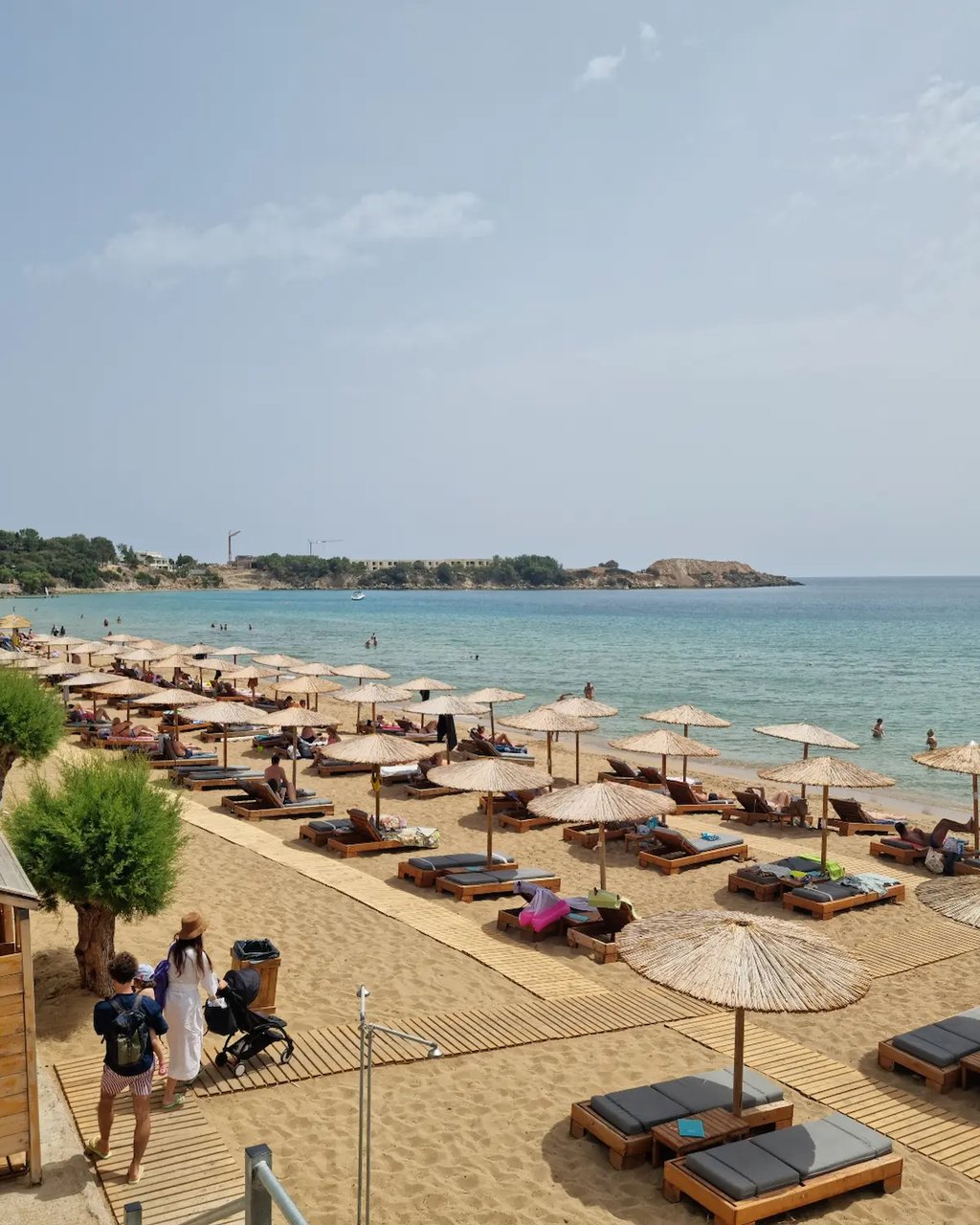
The figures below are historical averages, not forecasts or maximum temperatures. Sea figures are recent east-coast model averages, so conditions at your beach can differ.
Rhodes weather in June
Historical averages: daytime high 27.9°C, night low 21.8°C, with sea temperatures around 24.6°C. Rainfall averages just 1mm, with fewer than one rainy day during the month. There are about 14.6 hours of daylight, giving you plenty of time outside the hottest hours.
June is my pick if you want proper beach time without making every day revolve around escaping the heat. The sea is comfortable for most swimmers, including those who find spring swimming too chilly. Expect bright, summery days and a lively island, but fewer crowds than in July and August.
Explore the Old Town or villages early, then slow down for lunch and swimming. Keep strenuous walks out of the hottest part of the day, even when the temperature feels manageable. Use the Rhodes itinerary ideas to group nearby stops rather than filling every daylight hour.
Summer breezes can offer relief, especially on the west coast, but they can also make the sea choppier. A warm sea does not always mean calm swimming conditions. Pack light cotton or linen clothes, swimwear, sandals, high-SPF sunscreen, a hat, sunglasses and a refillable water bottle.
If swimming is your main reason for coming, June is a good month to consider a boat trip with swim stops. Choose an option with shade rather than spending the whole outing exposed to the sun. For the wider holiday picture, see what to expect in June.
- Good: Warm swimming, very little rain, long daylight hours and a useful balance of beaches and exploring.
- Less good: Midday can still be too hot for demanding walks, and a breezy beach may not suit relaxed swimming.
Rhodes weather in July
Historical averages: daytime high 30.2°C, night low 24.1°C, with sea temperatures around 27.8°C. Rainfall averages around 0mm, and rainy days are almost absent. Daylight lasts about 14.3 hours, though that does not mean every hour is sunshine.
July brings strong heat, very warm swimming and nights that offer limited cooling. It suits beach holidays and lively evenings much better than hiking or long city walks. Rain is unlikely to interrupt your plans, but the heat often decides how much you can comfortably do.
Put sightseeing first thing in the morning and leave proper gaps for shade, lunch and rest. Save another short walk for later, rather than trying to finish a full sightseeing route at midday. Before booking accommodation, check that your room has air conditioning; warm nights matter as much as daytime highs.
The Meltemi, a dry northerly summer wind, is often strongest during July and August. It can make exposed coasts feel more comfortable while making the water rougher, particularly on the west coast. Breezes do not remove sun or heat risk, so keep your shade breaks even when the air feels cooler.
Pack very light clothes, high-SPF sunscreen, a sunhat, sunglasses and a refillable water bottle. Two swimsuits are useful for beach-heavy days, along with sandals and a light evening shirt or dress. Read more about planning around July's heat if you are weighing swimming against sightseeing.
- Good: Very warm sea, long bright days, almost no rain and full summer energy.
- Less good: Hot nights, busy beaches and uncomfortable conditions for long walks, especially around midday.
Rhodes weather in August
Historical averages: daytime high 30.5°C, night low 24.8°C, with sea temperatures around 28.8°C. Rainfall averages around 0mm, and rainy days are almost absent. There are about 13.5 hours of daylight.
Yes, Rhodes in August can feel too hot for heat-sensitive travellers and anyone planning long midday sightseeing. It is the hottest month on average, although July is very close. Temperatures above 35°C occur in some summers; monthly average highs do not show those hotter spells.
For a warm-water beach holiday, August has a clear advantage: the sea reaches its highest monthly average. Swimming is a major part of the appeal, but beach time still needs shade and breaks from direct sun. Expect peak-season crowds alongside the heat.
Start sightseeing early, take a shaded or indoor midday break, and leave further exploring until later. Carry water and wear a hat and loose, light clothes. Meltemi breezes may bring relief, especially near the coast, but they cannot make a long midday walk comfortable for everyone.
With children, I’d plan one short outing rather than several stops before lunch, then leave room for rest. Keep beach sessions flexible instead of staying out because you planned a full day. Get more practical help with planning Rhodes with kids.
Pack high-SPF sunscreen, sunglasses, a sunhat, light cotton or linen clothes, swimwear, sandals and a refillable water bottle. If heat affects your sleep, make air conditioning a booking priority. For the wider trade-offs before choosing dates, read about deciding whether August suits you.
- Good: The warmest sea of the year, very little rain and weather suited to slow-paced beach holidays.
- Less good: Intense heat, warm nights and peak crowds; a poor match for heat-sensitive travellers or packed sightseeing days.
Chapter 5 of 13
Autumn in Rhodes (September, October, November)
Autumn in Rhodes keeps summer’s sea warmth while the air cools and rain becomes more likely. The sea cools more slowly than the air, so it stays warmer than in spring, though August remains the warmest-sea month.

The figures below are historical averages, not forecasts for your holiday dates. For the wider seasonal picture, explore what autumn in Rhodes feels like.
Rhodes weather in September
Historical averages: daytime high 28.3°C, nighttime low 22.8°C and sea temperature 27.8°C. Rainfall averages 10mm over about one rainy day, with 12.4 hours of daylight.
September still feels like summer, especially if swimming is your main reason for visiting. The sea remains very warm, sunny weather is common, and beach days fit easily alongside village walks and sightseeing.
Is September better than August? I’d choose September if you want warm swimming with less intense average heat. August has the warmer sea and longer days, so September is not automatically better for everyone.
Summer wind can still affect exposed beaches, especially along the west coast. Warm water does not always mean calm water, so choose a sheltered spot when the wind picks up.
You still have plenty of daylight for a beach visit and a walk through the Old Town. Start longer walks early on hot days, and leave less for late afternoon than you would in August.
Pack light summer clothes, swimwear, sandals, sun protection and comfortable walking shoes. A thin layer is useful for breezy evenings, even though nights remain warm.
The island gradually feels less crowded, without losing its summer atmosphere. Get more help with choosing a September holiday if you want beaches and exploring in the same trip.
- Good: Very warm sea, little average rainfall and less intense average heat than August.
- Less good: Hot days remain possible, exposed beaches can be windy, and evenings offer less daylight than peak summer.
Rhodes weather in October
Historical averages: daytime high 24.6°C, nighttime low 19.2°C and sea temperature 25.7°C. Rainfall averages 48mm over five rainy days, with 11.3 hours of daylight.
Yes, swimming in Rhodes in October remains realistic for many people on suitable days. The sea holds much of its summer warmth, and early October can still feel close to summer.
The difference is what happens around your swim. Wind, cloud and rain can make sitting on the beach or getting out of the water feel cool. Choose sunny, calm periods rather than building every day around swimming.
October suits you particularly well if you want to mix beaches with walking, villages and historic sights. The cooler air makes exploring more comfortable, but showers become more likely and autumn storms can sometimes be intense.
With shorter days, put longer outdoor plans earlier in your schedule. Keep a museum or another indoor visit available for wet weather, rather than trying to follow a fixed beach itinerary.
Pack beachwear alongside light trousers, closed shoes and a light evening layer. Bring a light rain jacket or compact umbrella too; summer clothes alone are not enough for every October day.
The quieter atmosphere is part of the appeal, but weather flexibility matters more than in September. Read more about swimming and travelling in October before choosing your dates.
- Good: Warm sea, comfortable sightseeing temperatures and opportunities to combine swimming with exploring.
- Less good: More rain, cooler conditions after swimming and shorter days for outdoor trips.
Rhodes weather in November
Historical averages: daytime high 20.7°C, nighttime low 15.1°C and sea temperature 23.1°C. Rainfall averages 76mm over eight rainy days, with 10.3 hours of daylight.
Yes, Rhodes gets rain in November, mixed with sunny spells. Early November can still feel pleasantly warm on sunny afternoons, but the weather is much more changeable than in summer.
The sea retains warmth, but that does not guarantee comfortable beach conditions. Cooler air, wind and unsettled seas can make swimming unappealing even when the water temperature looks inviting. Some people still swim on calm days; I would not choose November for a beach-first holiday.
November works better for flexible walking and culture plans. Use dry spells for the Old Town or village walks, and keep museums in Rhodes as an option when rain arrives.
Plan longer walks earlier because daylight is limited. Windy, wet spells are a reason to shorten exposed coastal walks, not push through them to keep an itinerary.
Bring light tops for sunny afternoons, trousers, a warmer evening layer and a jacket that protects against wind and rain. Closed, wet-weather shoes with a good grip are more useful than relying on sandals.
Resorts are quieter and fewer hotels are open, so I’d favour Rhodes Town for a culture-focused stay. Compare areas to stay in Rhodes and get more help deciding whether November suits your trip.
- Good: Mild sunny spells, quieter sightseeing and walking without summer heat.
- Less good: More frequent rain, possible storms, shorter days and unreliable beach conditions.
Chapter 6 of 13
Winter in Rhodes (December, January, February)
Winter in Rhodes is mild compared with colder European destinations, but it is not a reliable beach holiday. Expect sunny breaks between wetter spells, sometimes stormy seas, and cool evenings that need warm layers.
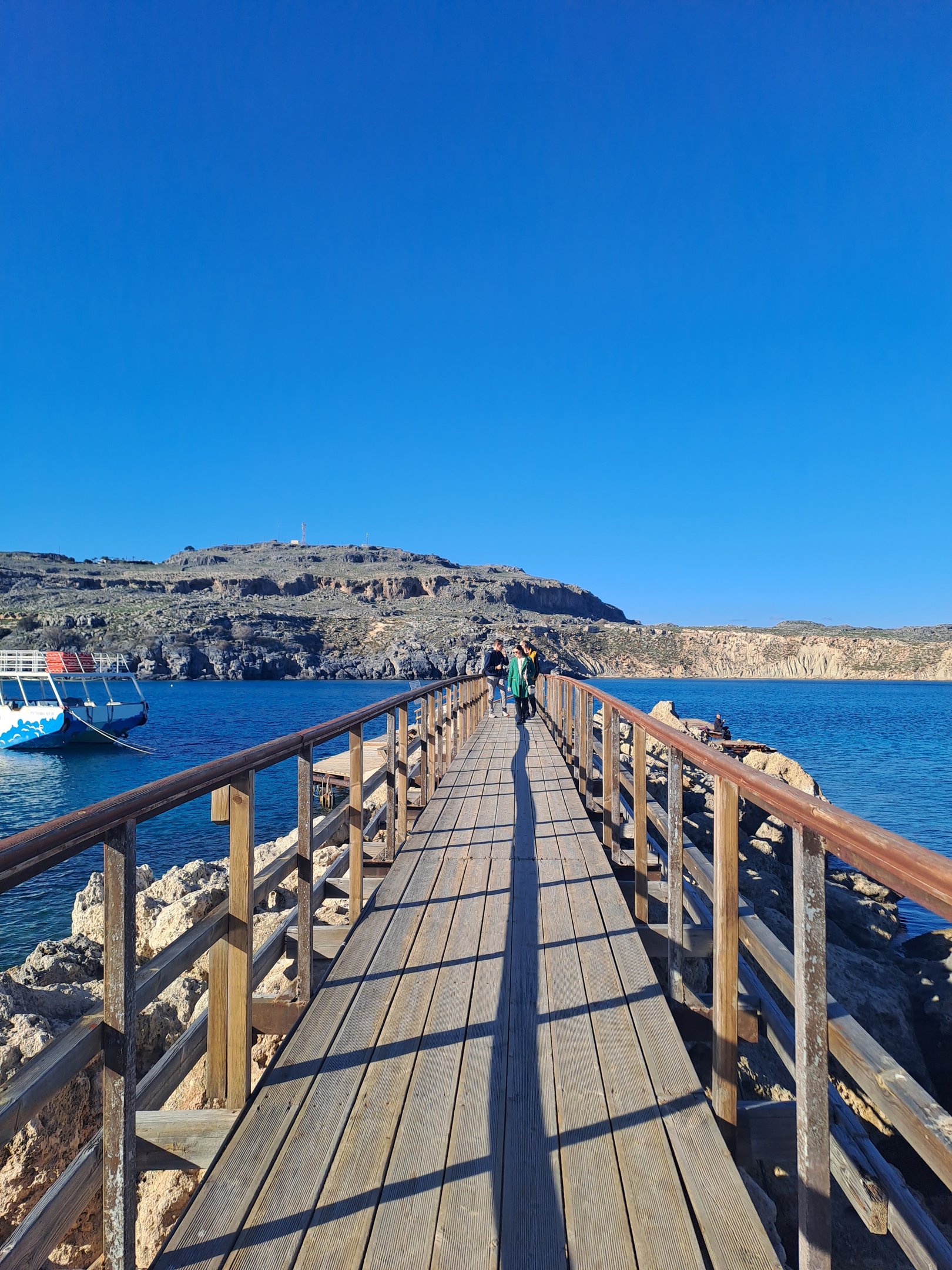
Rhodes suits a winter holiday if you want history, museums and walks rather than sunbathing. Rhodes Town stays lively with local cafés and shops, while many beach resorts and tourist services close. Start with planning a winter stay if you’re deciding whether this quieter season suits you.
Rhodes weather in December
Historical averages, not a forecast: daytime high 16.9°C; night low 11.9°C; sea 20.8°C. Average rainfall is 120mm across 12 rainy days, with 9.7 hours of daylight.
Is Rhodes warm in December? Think mild afternoons rather than summer warmth. Sunshine can make a sheltered walk pleasant, but cloud, wind and evening temperatures quickly change how it feels.
December is one of the wettest months, so a flexible cultural break works better than a packed outdoor itinerary. Use dry spells for Old Town streets and short coastal walks, then move indoors when rain arrives. Short daylight hours make it sensible to put outdoor plans earlier in the day.
Winter southerly winds can bring rough water, and exposed seafronts can feel much cooler than sheltered streets. The sea average does not make December a dependable swimming month: cold air, waves and wind matter too. For most travellers, beaches are places for a walk rather than a swim.
Pack warm trousers, jumpers and layers you can remove during sunny breaks. Bring a waterproof, windproof jacket and closed shoes with grip; a light summer jacket alone is not enough.
- Good: mild-weather sightseeing, quiet historic streets and a town-based break with room to change plans.
- Less good: short days, frequent wet spells and unreliable conditions for beach time or swimming.
Rhodes weather in January
Historical averages, not a forecast: daytime high 15.1°C; night low 10.3°C; sea 19.5°C. Average rainfall is 114mm across 12 rainy days, with 10.0 hours of daylight.
January and February are the coldest months in Rhodes. You can still get bright, blue-sky breaks, but cool, damp and windy days are part of the holiday. January works best if you enjoy a quiet city break and don’t mind changing your plans.
Walk around town between showers and keep a few museums in Rhodes in mind for wet weather. Exposed waterfront walks are less appealing during strong winds, especially when storms bring rough seas. Save those stretches for calmer conditions.
Swimming is best reserved for experienced cold-season swimmers in suitable, calm conditions. A sunny afternoon alone is not a reason to enter the water. Pack warm layers, a proper windproof and waterproof jacket, and closed shoes with good grip.
Does it snow in Rhodes? In some cold winters, snow settles on the highest mountains, including Attavyros at about 1,215 metres. It practically never settles at the coast, so a winter stay in Rhodes Town is not a snow holiday.
- Good: museums, local town life and quiet walks during sunny breaks.
- Less good: cool nights, damp spells and windy seafronts; unsuitable for a conventional beach holiday.
Rhodes weather in February
Historical averages, not a forecast: daytime high 15.4°C; night low 10.4°C; sea 18.1°C. Average rainfall is 84mm across 10 rainy days, with 10.9 hours of daylight.
February brings slightly longer days, but it is still winter rather than settled spring weather. Average rainfall is lower than in December and January, yet showers and stormy spells can still interrupt outdoor plans. The extra daylight gives you more room for town walks without guaranteeing better weather.
Build your days around the forecast: walk through the Old Town during dry spells and use museums when rain moves in. On windy days, choose sheltered streets over exposed coastal stretches. Southerly winter winds can still make the sea rough.
Despite the longer days, the sea is cooler than in January. Swimming remains an option only for experienced cold-season swimmers when conditions are suitable, not a reason to book February. Bring warm layers, rain protection and shoes with grip for wet paving.
I’d choose February for an unhurried cultural trip, not an early beach escape. If warmth and swimming matter more, compare the best months for your holiday style before choosing your dates.
- Good: longer days than early winter, quiet sightseeing and outdoor walks between wet spells.
- Less good: still-cool air, a cooling sea and no promise of settled spring sunshine.
My suggestion: choose a base in Rhodes Town so you can switch easily between sightseeing, cafés and indoor stops when the weather changes.
Chapter 7 of 13
Why the weather changes across Rhodes
Weather can differ considerably across Rhodes, so one island-wide forecast can miss the conditions at your beach. Wind direction, the way each shoreline faces and higher ground all affect what you feel locally.
One thing I always tell visitors is not to judge the whole island by looking at one forecast. Rhodes is a long island, and conditions can change considerably between areas. You might have heavy rain around Lindos while Kiotari enjoys sunshine—that is an example, not a fixed rainfall pattern. Before changing your plans, check the forecast for the actual area you intend to visit.
Rhodes Town and the north
Around Rhodes Town, exposure changes as the shoreline turns around the northern tip. A breeze blowing towards one waterfront may leave another stretch more sheltered. That means two nearby beaches can feel different even when the temperature forecast is the same.
When choosing a Rhodes Town base, think about which waterfront you will use, not just proximity to the sea. A breezy position can be welcome in summer, but less comfortable for sitting outside in cooler weather. For swimming, choose your stretch of coast around the day's wind direction rather than expecting the whole northern tip to behave alike.
Ixia and Ialyssos
Ixia and Ialyssos sit on the more wind-exposed west coast. Summer northerly winds, including the Meltemi, can bring choppy water and surf here. The breeze offers relief from the heat, but it can make a relaxed swim less appealing.
That wind is part of the appeal of Ixia and Ialyssos beaches for windsurfers. If gentle swimming is your priority, especially with children, I would favour the east coast during northerly winds. If windsurfing is the reason for your trip, this coast is a stronger match.
- For windsurfing: choose water-sports lessons or sessions suited to your experience, rather than choosing by wind strength alone.
- For a beach-focused stay: weigh the cooling breeze against the chance of choppy swimming conditions.
Faliraki and the east coast
The east coast is generally more sheltered during northerly winds, often giving you calmer water than the west. That makes Faliraki Beach a useful option when Ixia or Ialyssos feels too exposed. For families and travellers who prefer gentle swimming, this is often the more comfortable side in those conditions.
The same broad pattern helps explain the appeal of beaches around Kolymbia and Tsambika. But the east coast is not calm in every wind: a wind blowing towards the beach can change the water quickly. If you are staying around Kolymbia, compare the actual beach conditions rather than relying on the resort's sheltered reputation.
Lindos and the southeast
Lindos can feel intensely hot in summer, especially when there is little cooling breeze. The airport weather averages come from the breezier west coast, so they cannot describe exactly how sheltered Lindos will feel. There is no useful fixed temperature difference to apply every day.
A sheltered coastal option such as Lindos Beach can suit a swimming-focused day during northerly winds. Sheltered water does not mean relief from the sun, though. I would plan walking around Lindos early or later in the day, rather than combining midday sightseeing with a long beach session.
Pefkos, Lardos and Kiotari
Pefkos, Lardos and Kiotari share the broad southeast-coast pattern, but their beaches do not all face exactly the same way. Local beach orientation matters: the direction the shore faces helps decide how much wind and wave action reaches it. Conditions at one hotel beachfront may not describe the next stretch of coast.
Compare Pefkos Beach with Lardos Beach and Kiotari Beach using the day's wind direction, not just the resort names. For a swimming holiday, I would give the exact beachfront more weight than a general promise of sheltered east-coast weather. Nearby resorts can also have different cloud or rain conditions, so moving a short way may change your day—but sunshine is never guaranteed.
Gennadi and Prasonisi
Gennadi Beach belongs to the southeast-coast comparison; it is not interchangeable with Prasonisi at the southern tip. Its swimming conditions depend on the local wind and sea state. Being farther south does not automatically mean calmer water.
Prasonisi Beach is famously windy, with two seas meeting at the southern tip. Windsurfing and kitesurfing are major reasons to go. It suits a wind-sports day far better than a plan that depends on still air and gentle swimming.
For a family beach day, I would choose based on conditions rather than making Prasonisi the default southern destination. If you are going for wind sports, choose the activity and instruction around your ability.
The west coast and the mountainous interior
The west coast generally receives more of the summer northerly wind than the sheltered east coast. That can make coastal stops feel fresher, while also making the sea rougher. Choose it for the breeze rather than expecting consistently calm swimming.
Higher ground inland is cooler, and village evenings can feel noticeably cooler than the coast. Cloud and showers can also build over the mountains while nearby coastal areas remain brighter. A sunny beach forecast is therefore not enough to plan a mountain walk.
In suitable conditions, exploring Profitis Ilias offers an inland alternative to a hot coastal day. Take an extra layer if you will stay into the evening. If mountain cloud or showers are developing, choose a lower-level outing instead.
Chapter 8 of 13
Wind in Rhodes and the Meltemi
Rhodes’ west and northwest coasts are generally windier during summer northerly winds, while the east coast is often more sheltered. The Meltemi brings welcome cooling relief, but it can also mean windblown sand, rougher swimming conditions and changes to boat departures.
What the Meltemi feels like
The Meltemi is a dry northerly summer wind, usually strongest around July and August. It often strengthens in the afternoon and can continue for several days. Mornings can still be windy, so an early start is no guarantee of calm water.
On a hot day, the breeze can make sitting beside the sea much more comfortable. On an exposed beach, that same wind can blow sand around and make a relaxed swim less appealing. You can have clear blue skies and a very windy beach at the same time.
Windy shores suit windsurfers better than travellers looking for still water. If your ideal beach day means floating gently or swimming with young children, I’d prioritise shelter over a cooling breeze.
Which coast is more sheltered?
In the usual summer northerly winds, the east coast is often the better starting point for sheltered swimming. The west and northwest are generally more exposed. That is a useful island-wide pattern, not a promise about every beach.
Wind direction, the way a beach faces and its exposure matter more than its name alone. An east-coast beach can still be windy, especially when the wind changes direction. A bay’s shelter also depends on where the wind is coming from that day.
If calm swimming is your priority, compare Rhodes beaches before choosing your shore. Use the coast as your starting point, then narrow the choice using the conditions at the actual beach.
How wind affects swimming and boats
Sunshine and warm sea temperatures do not tell you whether swimming will be comfortable. Wind can create choppy water and breaking waves, making entry, swimming and getting out more difficult. For children or less confident swimmers, choose based on the water in front of you rather than the weather icon.
Boat departures also depend on sea conditions, not just whether the sky is clear. Rough water can lead to changed routes, delays or cancellations on an otherwise sunny day. A sheltered departure point does not tell you what the whole route will feel like.
Before heading out, check wind and sea conditions for your beach or boat route. You can also use live beach and harbour cameras for a quick visual check where views are available. For a boat departure, follow the operator’s latest update.
Winter winds and rough seas
Winter brings a different wind pattern, including southerly winds and stormy spells. These can change which shores are sheltered, so the summer rule of choosing the east coast becomes less useful.
Strong winds and rough seas can interrupt boat travel and make exposed shores unpleasant, even during a bright spell. Choose coastal outings around the day’s wind direction and sea conditions rather than returning automatically to a favourite summer beach.
Chapter 9 of 13
Rain, thunderstorms and heatwaves
The main weather risks in Rhodes are extreme summer heat and heavy storms, especially in autumn and winter. During severe weather, put safety ahead of your itinerary: leave the sea during thunderstorms, avoid flooded roads and reduce outdoor activity during heatwaves.

Heavy showers, thunderstorms and flooded roads
Rain in Rhodes can fall in short, heavy bursts rather than steady drizzle. Thunderstorms occur mostly in autumn and winter, and sometimes in spring. Intense rain can cause flash flooding on roads.
A wet forecast does not always mean rain all day, but a severe-weather warning needs a different response. Postpone exposed walks and unnecessary drives rather than trying to squeeze them between showers.
- Thunderstorms: leave the sea and beach, and seek shelter in a substantial building.
- Flooded roads: never drive or walk through a flooded crossing. Stop somewhere safe and choose another route only when conditions allow.
- Severe warnings: follow local instructions and road closures, even if your planned destination looks nearby.
- Seasonal planning: expect more changeable conditions during autumn in Rhodes, especially later in the season.
- Further safety advice: read Greek Civil Protection’s flood protection guidance.
Keeping safe during a heatwave
Historical averages hide the hottest days: temperatures above 35°C happen in some summers. A sea breeze can make the heat feel easier, but it is not a reason to push through a long walk.
My advice is to move sightseeing to early morning or later in the day and keep the hottest hours for rest. During a heatwave, shorten outdoor plans further or postpone them altogether.
- Choose shade and take regular breaks somewhere cool.
- Drink water regularly and carry enough for your outing.
- Reduce exertion: skip strenuous hikes and long, exposed sightseeing routes.
- Give children and heat-sensitive travellers extra breaks, easy access to water and shorter outdoor days.
- If heat is a major concern before booking, compare the best months for a more comfortable Rhodes holiday.
- For fuller precautions, read Greek Civil Protection’s heatwave protection guidance.
Fire precautions in dry weather
In dry summer conditions, avoid anything that could start a fire around forests or dry vegetation. Access restrictions can affect countryside outings, so respect closure signs rather than looking for another entrance.
If you spot a fire, call the Greek Fire Service immediately on 199. Clearly describe your location and the fire’s location.
- Do not use outdoor barbecues in forests or near dry vegetation during summer.
- Avoid spark-producing activities near dry vegetation.
- Never discard lit cigarettes outdoors.
- Obey high-risk access-prohibition signs and any emergency instructions.
- Read Greek Civil Protection’s forest-fire protection guidance before countryside trips in dry weather.
112 alerts and emergency help
In Greece, 112 is free to call and operates 24 hours a day, seven days a week, throughout the year. Use it for emergencies requiring immediate assistance.
Greek Civil Protection alerts can warn you about nearby forest fires, heavy rain and storms. They can also give protective instructions, including through Cell Broadcast messages sent to mobile phones.
Read an alert fully and follow its instructions promptly, including any direction to leave an area or avoid travel. Describe your location clearly when calling for help, and explain what is happening.
- 112: emergencies requiring immediate assistance.
- 199: call the Greek Fire Service immediately if you spot a fire.
- Further preparation: Greek Civil Protection’s protection-guidelines directory includes sections for heatwaves, forest fires and floods.
Chapter 10 of 13
Best time to visit Rhodes for the weather
I’d usually choose June or September for a swimming-led holiday in Rhodes, and spring or autumn for more comfortable exploring. Winter suits a quiet cultural break, rather than a beach holiday.
Weather is only part of choosing your dates. If crowds, budget and the holiday atmosphere matter too, compare the best months for your holiday.
For beaches and comfortable swimming
June to September offers the strongest balance of sunny beach days and warm water. For most holidaymakers, the realistic swimming season runs from late May or June through October.
Your comfort in cooler water matters at either end of that season. Hardy swimmers continue longer when conditions allow, but warm sea temperatures alone don’t make a windy or stormy day suitable.
- June: My early-summer choice for beach days without the usual intensity of July and August. The water becomes comfortable for longer swims; explore what to expect in Rhodes in June.
- September: My choice if warm water matters most, but you’d rather avoid peak summer heat. Rhodes in September still feels summery, with a gradually calmer holiday atmosphere.
- July and August: Best suited to heat lovers who want swimming to dominate the trip. Less comfortable if you also want long walks or full days at outdoor sights.
- Late May: A useful compromise for beaches and exploring, though the sea can still feel fresh. Choose June instead if chilly water would spoil your holiday.
- October: Still a realistic swimming month, especially early on, but allow more flexibility for rain and wind. See how October swimming and beach days fit your plans.
For sightseeing and hiking
April, May and October are my first choices for walking historic streets, exploring villages and visiting outdoor sights. Spring brings green hillsides and wildflowers, while autumn offers a better chance of combining walks with warm-water swimming.
Choose spring in Rhodes if nature and walking matter more than long swims. September also works for a mixed holiday, though it can still feel hot during longer walks.
Check the local forecast for your route before a hike, especially in the mountains. Spring and autumn can bring rain, storms or unusually warm days; the season alone doesn’t make every walking day suitable.
If your dates fall in July or August, keep sightseeing to early morning or late afternoon. When comparing excursions, favour plans that avoid long exposed walks around midday.
For a quiet off-season holiday
November to March suits travellers who want quiet streets, museums, cafés and everyday island life. You’ll get some bright days, but also wetter, windier spells and fewer daylight hours for exploring.
I’d base a winter visit in Rhodes Town, where cafés, shops and local life continue year-round. Many beach resorts close for the season, so choose your base carefully using the Rhodes Island Guide’s area comparison.
Choose Rhodes in winter for culture and a slower pace, not as a substitute for a summer beach holiday. Keep outdoor plans flexible and leave room for indoor stops when rain arrives.
The hottest, coldest and warmest-sea months
These are the usual patterns in historical averages, not forecasts for your travel dates. Use them to narrow your choice, then check local conditions closer to departure.
- Hottest month: August, with July nearly as hot.
- Coldest months: January and February.
- Warmest sea: August.
- Coolest sea: March, because the water takes longer than the air to warm after winter.
Once your dates are set, use the Rhodes Booking Marketplace to compare transport and activities that fit your plans. Then plan your Rhodes trip step by step to organise your base and travel.
Chapter 11 of 13
How to check the forecast in Rhodes
For checking the actual forecast, I recommend taking a look at meteo.gr, a useful local reference for Rhodes. Remember, though, that even the best forecast cannot tell you exactly what will happen in every village and beach. Always check the forecast for the area you are visiting, especially if you are planning a boat trip or a long drive.
Check the forecast for your actual destination
Use the live-forecast card to open meteo.gr, then look up your destination rather than relying on a general Rhodes forecast. Check the hours you expect to be there, including your return journey. The monthly averages help you choose travel dates; the forecast helps you plan the day.
If you’re staying in Rhodes Town but heading to Lindos, check Lindos rather than just your hotel’s location. For a longer drive, look at your main stops too. You can compare locations in the Rhodes Island Guide’s area overview before choosing which forecasts to open.
Look at wind and sea conditions
For a beach day or boat trip, read beyond the temperature and sunshine symbol. Meteo.gr also offers beach and swimming-condition information, including sea state. Use that alongside the wind forecast for the coast you plan to visit.
- Wind strength and direction: check both for your planned hours. Direction matters because the same wind affects exposed and sheltered beaches differently.
- Gusts: look at the gust forecast as well as the main wind figure. Gusts are brief, stronger bursts that can make conditions feel very different.
- Sea state: check the expected waves and sea conditions, not just sea temperature. Warm water does not mean calm water.
- Boat plans: a sunny symbol alone is not enough to decide whether to sail. Follow weather warnings and the operator’s decision about the route and departure.
Use live cameras to see conditions now
After reading the forecast, see current beach and harbour conditions for a useful visual check. Look for cloud cover, visible waves and how busy the beach appears. Choose a camera near your destination rather than assuming one view represents the whole island.
A camera shows one place at one moment, not conditions along an entire boat route or later that afternoon. Use it to complete your forecast check, not to replace weather warnings or the boat operator’s decision.
Chapter 12 of 13
What to do when the weather changes
A change in Rhodes weather need not ruin your day: choose indoor culture for rain, a more sheltered bay for wind, or another area when conditions allow. Your alternative plan should match the conditions, rather than keep you outdoors at any cost.

Rainy day in Rhodes
For steady rain, I’d choose an indoor cultural visit rather than a long sightseeing walk. Explore the museums in Rhodes and check current opening hours before setting off, especially outside summer.
Rhodes Old Town is not entirely indoors, so it works better between showers than during persistent heavy rain. Keep walks short and take care on wet cobbles. Combine them with sheltered food stops, choosing somewhere with indoor seating from Rhodes street food and cheap eats.
In ordinary unsettled weather, a village visit with a café or food stop can still make a good cultural outing. Save longer outdoor walks for a dry spell, and leave village exploring for another day during storm warnings.
For more alternatives, explore things to do beyond the beach or compare guided tours in Rhodes. Look at how much time each activity spends indoors: a guided walking tour still leaves you exposed to the weather.
If poor weather is forecast for your arrival, door-to-door transport may make handling luggage easier. You can book an airport transfer if that suits your journey.
Windy days
During northerly winds, switching from the west coast to a more sheltered east-coast beach can improve your beach day. Faliraki and other east-coast bays are sensible places to consider, but shelter does not guarantee calm water.
Check the actual bay’s wind and sea conditions before travelling, then assess the water when you arrive. Wind direction matters, so the same beach will not be the best choice every day. If waves make swimming unsuitable, choose a land-based activity instead.
Before booking a boat trip
Start by comparing boat trips with flexible dates, then choose a suitable Rhodes boat trip for your group. My suggestion: leave room to move your boat day rather than making it your only plan for your last day.
Wind can lead to route changes, postponements or cancellations, even when the sky is blue. A sheltered route may help, but it never overrides the operator’s decision about whether to sail.
Read the cancellation and date-change terms before paying; they vary between bookings. Check the operator’s latest departure information when windy weather is expected, rather than relying only on a general sunshine forecast.
If a sea crossing no longer suits the conditions, compare day trips from Rhodes and choose an option that stays on the island. A land-based outing still needs to suit the weather, especially if it involves exposed sights or long walks.
Use a rental car to chase better weather
Poor weather where you are staying does not necessarily mean your whole day is ruined. Check conditions elsewhere on the island before abandoning your plans. Having a rental car makes it much easier to change plans, explore another area and make the most of your holiday.
A car is useful if you want to switch beaches or combine several stops without building your day around buses. Get help with choosing the right rental car, then compare rental cars for your dates. If you already know your dates, check live car rental prices before deciding.
Use that flexibility for ordinary local differences in weather, not to drive into severe conditions searching for sunshine. During storm warnings, follow local instructions and postpone unnecessary journeys.
You do not need to rent a car just because one day looks unsettled. For a nearby indoor visit, a bus or taxi may be enough. Weigh the options for getting around Rhodes without a car, including how you will return.
Chapter 13 of 13
What to pack for Rhodes in every season
Pack for the season and your activities, not just the daytime high. Even a beach holiday in Rhodes needs sun protection and shoes that grip the Old Town’s cobbles.
Spring packing
- Light layers: T-shirts, light long sleeves and trousers or jeans, plus a thin jumper for evenings.
- Wind and rain protection: A light windproof outer layer and a lightweight rain jacket for changeable days.
- Walking shoes: Comfortable trainers or closed shoes with grip for cobbles and village walks.
- Sun protection: Sunscreen, sunglasses and a hat, even when the air feels mild.
- Swimwear: Bring it if you want to try cooler water, especially later in spring. For swimming expectations, see what to expect in Rhodes in spring.
Summer packing
- Lightweight clothes: Shorts, dresses and loose cotton or linen pieces, plus a light shirt for evenings.
- Sun protection: High-SPF sunscreen, a sunhat and sunglasses.
- Water bottle: Bring a refillable bottle for beach days and sightseeing.
- Beachwear: Swimwear and sandals; a second swimsuit is handy while the first dries.
- Sightseeing shoes: Pack comfortable shoes as well as beach sandals if you plan to explore Rhodes’ historic sights.
- Boat-trip layer: A light windproof layer can help when it feels breezy on the water.
Autumn packing
- Beachwear and sun protection: Keep swimwear, sunscreen, a hat and sunglasses in your bag, especially for September and October.
- Everyday clothes: T-shirts and shorts for warmer days, with light trousers for cooler weather.
- Evening layers: Bring a cardigan, light fleece or jacket. Pack warmer layers as November approaches.
- Rain protection: A light rain jacket is useful as showers return; a compact umbrella is another option.
- Footwear: Bring sandals for dry beach days and closed shoes with grip for wet streets.
Winter packing
- Waterproof jacket: Choose an outer layer that also blocks the wind.
- Warm layers: Pack jumpers, long sleeves and jeans or warm trousers. Layering makes it easier to adjust between sunshine and cooler spells.
- Comfortable closed shoes: Prioritise grip for wet cobbles and everyday walking.
- Extra warmth for outings: Bring another layer for the mountainous interior and exposed coast rather than packing only for Rhodes Town.
Book flexible boat trips and transport
transfersFrequently asked questions
When is the best time to visit Rhodes for the weather?
May, June, September and early October offer a useful balance of warmth and comfortable exploring. I'd choose June or September if swimming matters most. April suits sightseeing better than a full beach holiday.
What is the hottest month in Rhodes?
August is the hottest month, with a historical average daytime high of 30.5°C. July is almost as hot. These are averages, not limits: temperatures above 35°C happen in some summers.
What is the coldest month in Rhodes?
January and February are the coldest months. Historical average daytime highs are 15.1°C and 15.4°C, with nighttime lows of 10.3°C and 10.4°C.
When is the sea warmest in Rhodes?
August has the warmest sea in the east-coast averages, at 28.8°C. September remains warm at 27.8°C. March has the coolest average sea temperature, at 17.7°C.
When does the swimming season start and end in Rhodes?
For most holidaymakers, late May or June through October is the realistic swimming season. Hardy swimmers may swim outside these months. Your comfort also depends on wind, waves and the day's air temperature.
Does it rain much in Rhodes?
Summer is very dry, while about two-thirds of the year's rain falls between November and February. November averages 76mm across eight rainy days. Rain can arrive in heavy bursts rather than lasting all day.
Does Rhodes get thunderstorms?
Yes. Thunderstorms occur mostly in autumn and winter, and sometimes in spring. Leave the beach or water when a storm approaches, and follow any protective instructions in 112 alerts.
Is Rhodes windy?
Rhodes can be windy, especially on exposed west-coast beaches and at Prasonisi. Summer breezes can make the heat feel easier, but they can also bring rough water and affect boat trips.
What is the Meltemi in Rhodes?
The Meltemi is a dry northerly summer wind. It is strongest roughly in July and August, often builds during the afternoon and can continue for several days.
Which side of Rhodes is windier?
The west and northwest coasts are generally windier in northerly summer winds. East-coast beaches are often more sheltered. Wind direction still matters, so choose your beach using the day's conditions.
Is Rhodes sunny in winter?
Winter brings sunny spells between wetter periods, not dependable beach weather. December's historical average daytime high is 16.9°C. Expect cool evenings, rain and occasional storms.
Does it snow in Rhodes?
Snow settles on the highest mountains, including Attavyros, in some cold winters. It practically never settles at the coast. A winter visit to Rhodes Town is not a snow holiday.
How many hours of sunshine does Rhodes get?
Rhodes has long sunny summers, but daylight and sunshine are different measurements. Average daylight ranges from 9.7 hours in December to 14.6 hours in June. Clouds determine how much of that daylight is sunny.
Is Rhodes suitable for a winter holiday?
Yes, if you want culture, food and quieter exploring rather than a beach holiday. Rhodes Town stays lively, while many resorts close. I'd choose a town base and keep outdoor plans flexible.
Related pages
- Rhodes in Spring (2026) – Weather, Crowds & Is It Worth It?
- Rhodes in Autumn (2026) – Weather, Sea Temperature & Is It Worth It?
- Best Time to Visit Rhodes in 2026: Weather, Prices & When to Go
- Live Cameras in Rhodes 2026 — Beaches, Weather & Harbour Views
- Rhodes in April: Looks Perfect Online… But Here’s the Real Experience
- Rhodes in May (2026) – Weather, Temperature, Swimming & Is It a Good Time to Visit?
- Rhodes in June (2026) – Perfect Timing or Already Too Hot?
- Rhodes in July 2026: How Hot Is It & Is It Too Busy?