
Chapter 1 of 8
How do you choose a snorkelling spot in Rhodes?
Choose a snorkelling spot in Rhodes by how comfortably you can enter, swim and leave in that day’s conditions. I’d put that ahead of water colour, popularity or the promise of something interesting underwater.
Entry and exit come first
Start with the shore, not the view across the bay. You need a manageable way into the water and an exit you can use when you’re tired.
Assess the actual stretch where you plan to swim, rather than choosing by the beach name alone. A sandy bay, rocky shoreline or sheltered-looking cove still needs a closer look on arrival.
- Entry: choose footing you can manage comfortably. Consider loose pebbles, uneven rocks and waves breaking where you would step in.
- Exit: identify where you’ll get out before entering. Avoid a route that depends on a difficult climb or a long swim back.
- Wind exposure: judge the water in front of you that day. An east-coast location or an early start is no guarantee of calm conditions.
- Boat activity: look at where boats approach, turn or stop. A quiet beach does not necessarily mean quiet water.
Underwater interest is not water colour
A bright turquoise bay can be lovely for swimming without offering the snorkelling outing you want. Water colour seen from shore is different from visibility through a mask, and neither promises wildlife sightings.
Think about what you want to look at: the seabed, rock shapes or changes between sand and rock. Then consider whether you can reach that area comfortably and return without stretching your swimming ability. A rocky edge is only worth choosing if the approach and conditions work for you.
Waves and disturbed sand can cloud the water, even when the beach looks beautiful. I’d choose a manageable swim with something to see nearby over a long swim towards a dramatic-looking headland.
If your main aim is a pleasant dip, compare Rhodes beaches with clear water instead. For the whole beach day, weigh up the setting and facilities using the best beaches in Rhodes, then assess snorkelling conditions on arrival.
Match the outing to your swimming ability
A shore-snorkelling outing suits you best when you’re comfortable swimming without needing to stand. If that feels unsettling, independent shore snorkelling may not be the right choice for this holiday.
Shallow water can help with getting used to a mask, but it does not make every route suitable for beginners. What matters is the swimming required between your entry, the area you want to explore and your exit.
My preference would be a short, easy-to-reverse outing rather than a route built around reaching a distant feature. Save cave entry and swim-throughs for specialist activities, not a casual beach snorkel.
- New to snorkelling: choose a small area with an easy return, rather than setting a destination you feel obliged to reach.
- Confident swimmer: judge the return effort as carefully as the outward swim. Greater distance is not a measure of a better outing.
- Swimming with others: choose conditions and a route that suit the least confident swimmer, not the strongest.
- Uncomfortable on arrival: change the plan. A beach-only visit is a better choice than forcing a snorkel because you travelled there.
Chapter 2 of 8
Which bays and beaches should you consider?
Consider Ladiko Bay, Anthony Quinn Bay, Kallithea, Stegna, Traganou, Agathi and Tsambika for a beach visit with possible snorkelling. They offer different settings, not a ranking of guaranteed underwater interest or suitable conditions.
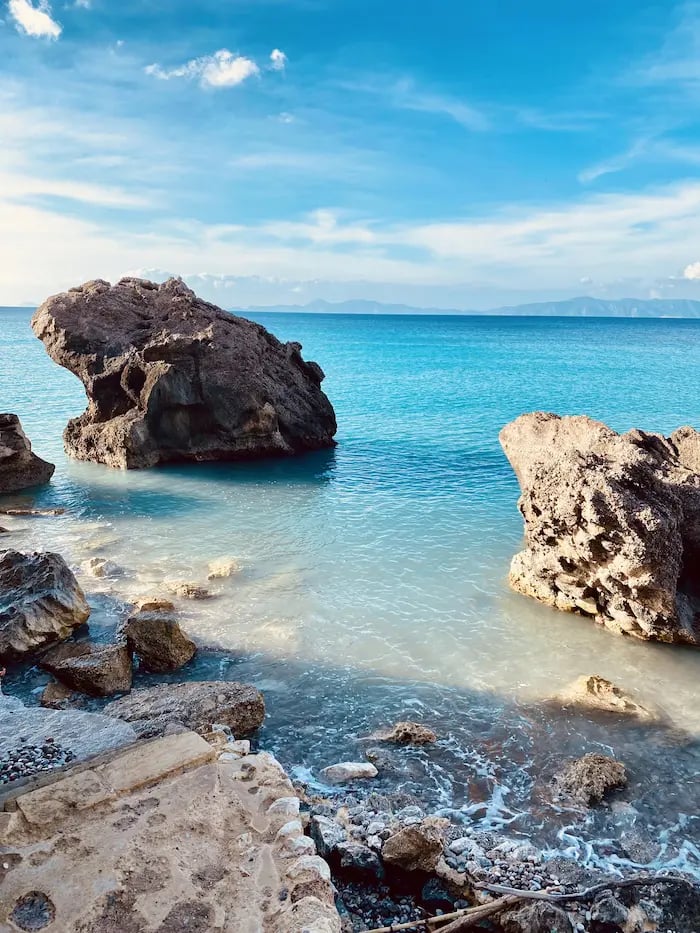
I’d choose somewhere you also want to spend time ashore, rather than travel only for blue-water photos. For a broader beach-day comparison, explore the beaches in Rhodes.
Ladiko Bay
Ladiko is a small, horseshoe-shaped bay with shallow swimming water. That makes it worth considering when swimming matters as much as trying your mask.
I’d pair it with Anthony Quinn Bay rather than declare either the better snorkelling choice. Shallow water alone tells you little about underwater interest or how comfortable snorkelling will feel that day. Plan the rest of your visit at Ladiko Beach.
- Decision: Consider Ladiko for a small-bay swimming day with snorkelling as an option, not a promised highlight.
Anthony Quinn Bay
Anthony Quinn Bay offers a narrow, rocky setting and makes a natural paired destination with Ladiko. It appeals if the coastal scenery is part of what you want from the visit.
The rocky setting may be less appealing if you mainly want sand underfoot. Choose it for the bay itself, rather than promises of deep-water sightings or a particular rock-side route. Find full visiting details at Anthony Quinn Bay.
- Decision: Consider it for a rocky-bay visit alongside Ladiko; neither bay guarantees better snorkelling.
Kallithea
Paths in the Kallithea area lead to sandy bays and rocky shores. This gives you different coastal settings to consider, rather than one single snorkelling location.
Keep those paths separate from the swimming entrance and ticket arrangements at Kallithea Springs. If you choose the Springs, check current admission and swimming arrangements before paying, including any separate facility charges.
- Decision: Consider Kallithea if you want to explore different shore settings, but choose the actual swimming place before committing.
Stegna Beach
I’d include Stegna if you already want a beach day there, with snorkelling as an extra. Keep the plan focused on the beach rather than an outlying cave swim.
Stegna makes more sense as a flexible stop than a journey built around guaranteed underwater sights. Use Stegna Beach for the wider visit, including food and getting there.
- Decision: A practical option to consider during a Stegna visit, without building the day around a remote swimming route.
Traganou Beach
Traganou is a long, pebbly beach on the Afandou coastline. It offers a different beach-day setting from the smaller bays on this list.
Pebbles may suit you better than sand, but they do not guarantee clear underwater views. I’d choose Traganou if you like that shoreline, rather than for a promised shallow route or fish sightings. Plan your visit at Traganou Beach.
- Decision: Consider it for a pebbly-beach day; look elsewhere if sand is essential to your comfort.
Agathi Beach
Agathi has a sandy beach and shallow swimming water. It is worth considering when your group mainly wants a sandy swimming day.
That shallow water is a reason to consider swimming here, not proof of good snorkelling. I’d keep the mask as an optional extra rather than choose Agathi for promised reefs or fish along one side. Find wider visiting details at Agathi Beach.
- Decision: Consider Agathi for sand and shallow swimming, with snorkelling secondary to the beach day.
Tsambika Beach
Tsambika is another sandy-beach option if snorkelling is only part of your plan. I’d choose it because you want to spend time on the beach, not for a rock-wall excursion.
Keep any snorkelling separate from promises of drift routes, quiet corners or particular wildlife. A remote wall swim is not a useful basis for choosing this beach.
- Decision: Consider Tsambika for a sandy beach day with optional snorkelling, rather than a dedicated underwater outing.
My suggestion: If you want flexibility to visit several beaches, I’d rent a car rather than build a tight beach-hopping schedule. Use the Rhodes transport overview to decide whether that fits your holiday.
Chapter 3 of 8
What works for beginners and families?
Beginners and families need calm, manageable water, comfortable equipment and a short, easy route back ashore. Ladiko and Agathi have shallow-water areas worth considering, but shallow swimming alone does not make a spot suitable for snorkelling.
Shallow swimming is not the same as easy snorkelling
Standing in shallow water and swimming with your face down are different skills. A beginner also needs comfortable breathing, a mask that fits and enough confidence to stop without panicking. Waves, awkward footing or difficulty seeing underwater can make even a short session uncomfortable.
Both Ladiko Bay and Agathi Beach have shallow-water areas suitable for children's swimming. They are options for a family beach outing, not a safety ranking for snorkelling. Choose your practice area by the conditions you find that day, rather than the bay's reputation.
I'd choose somewhere you can enter and leave comfortably, with room to practise close to shore. A distant rock wall or deeper water adds nothing useful to a first attempt. If the entry feels awkward or the water unsettles anyone, keep the outing to beach time.
- Good starting conditions: gentle water, clear footing and an obvious, nearby way back ashore.
- A manageable first route: stay close to your starting point, without needing a long swim to return.
- A reason to pause: waves keep splashing your face, you cannot see comfortably, or someone feels nervous.
A first session with a mask
Start in standing depth, with secure footing and a capable companion nearby. Get comfortable with the mask and snorkel before swimming farther. There is no need to cover any distance during your first session.
A mask that leaks or hurts makes learning harder. If you hire equipment, try the fit before taking it into deeper water. Sort out discomfort ashore rather than trying to ignore it while swimming.
- 1. Fit the mask: it should sit comfortably without needing an excessively tight strap.
- 2. Practise breathing: while standing, put your face in the water and take slow, relaxed breaths through the snorkel.
- 3. Practise stopping: lift your face, stand up and settle yourself before trying again.
- 4. Try a short swim: only move beyond standing practice when you feel comfortable and can swim back easily.
- 5. Finish early: stop before you feel tired, cold or frustrated. A brief, relaxed attempt is enough.
Children and close supervision
Children need close, active adult supervision throughout, including in shallow water. Keep young or inexperienced children within arm's reach, with an adult focused on them. An adult looking underwater at something else cannot give a child full attention.
A mask, snorkel and fins do not replace swimming ability. A child who enjoys paddling may still dislike having their face underwater or breathing through a snorkel. Let their comfort and swimming ability set the pace, rather than their age or another child's confidence.
My suggestion: start with one small goal—feeling comfortable looking underwater while standing. If your child becomes anxious, remove the equipment and return to ordinary beach play. You can compare beaches in Rhodes for an outing that works even without snorkelling.
- Before starting: agree that the child can stop at any time, without needing to explain or push through.
- During the session: stay close enough to help immediately and watch for discomfort or tiredness.
- If swimming confidence is limited: keep to supervised standing-depth practice, not a snorkelling swim.
- If conditions feel uncomfortable: stay ashore. Changing the plan is a sensible part of a family beach day.
Chapter 4 of 8
When are conditions suitable for snorkelling?
Conditions are suitable for snorkelling in Rhodes when the wind, waves and underwater visibility match your ability. Choose your day using the local forecast and the sea on arrival—not the season or an early start alone.
Seasonal wind and the meltemi
The meltemi brings northerly winds roughly from late May to late October. That seasonal pattern cannot tell you whether a particular bay will be suitable on your chosen day.
An east-coast location is not a guarantee of shelter. Check the local wind and wave forecast for the hours you expect to be there, including your return to shore.
Keep another beach in mind, but assess conditions again when you reach it. You can compare locations in Best Beaches in Rhodes; a beach description cannot replace seeing what the sea is doing that day.
Why mornings are not a guarantee
An early start can fit your plans, but morning does not automatically mean calmer or clearer water. Wind and waves can already be present when you arrive.
Water that looks bright blue from the beach can still be cloudy beneath the surface. Waves and disturbed sand can reduce visibility, so judge more than the colour or the view.
Before getting ready, watch the water where you would enter and return. If waves are breaking there, or you cannot judge a comfortable way back, leave the snorkel packed.
When to change your plan
Change your plan whenever conditions make entry, seeing underwater or returning to shore difficult. With children or first-time snorkellers, I'd be quicker to choose a dry-land activity rather than push through uncomfortable conditions.
- Breaking waves: stay out if waves make your entry or exit difficult, particularly around rocks.
- Poor visibility: skip the session if you cannot see clearly enough to stay aware of your surroundings.
- Difficult return: stay out if wind or water movement makes returning doubtful. If returning starts to feel harder while snorkelling, end the session before you become tired.
Keep a dry-land alternative
Changing bays is an option, not a promise of better conditions. Switching to swimming or another water activity also needs a fresh assessment.
If the sea is unsuitable, make it a sightseeing day instead. Find a land-based alternative among things to do in Rhodes and save snorkelling for a better day.
Chapter 5 of 8
What equipment should you bring or rent?
Bring a comfortable mask and snorkel, or arrange a rental before relying on it for your beach day. I’d choose a well-fitting mask over a longer shopping list, then add suitable footwear, drinking water and sun protection.
A comfortable mask and snorkel
Your mask should sit comfortably against your face without pinching your nose or pressing hard on your forehead. A tempered-glass mask is a useful starting point, but fit matters more than extra features.
Before swimming, try the mask in shallow water where you can stand comfortably. It should keep a seal without an overtightened strap. If water keeps entering, reposition it or try another size or shape.
Practise breathing through the snorkel while standing, then with your face in the water. The mouthpiece should feel comfortable without needing a hard bite. A splash guard can help reduce splashes entering the tube, but you still need to learn how to clear water.
Choose equipment for the person using it, especially with children. Light, short fins can help with swimming, but they need a comfortable fit and some practice. They are not a reason to swim farther or enter conditions beyond your ability.
- Mask: choose a comfortable seal rather than relying on a tighter strap.
- Snorkel: look for a mouthpiece you can hold comfortably and breathe through easily.
- Fins: optional for a simple shore session; choose a manageable pair that does not pinch or slip.
- Children’s equipment: fit each item to the child rather than sharing an adult set.
Rental equipment and fit
Renting can make sense for a one-off session, especially if you want to travel light. If snorkelling is a priority, I’d bring a mask and snorkel you already know fit. That saves spending your beach time sorting out an uncomfortable set.
Arrange rental ahead rather than counting on equipment being available at your chosen beach. Agree on what the set includes, the cost and return arrangements, then try the fit before accepting it. A set described as snorkelling equipment may not include every item you want.
Inspect the mask seal, strap and mouthpiece for damage, and ask how the equipment is cleaned between users. If you are joining an organised activity, establish whether equipment and suitable children’s sizes are included. Allow time to change an uncomfortable mask before the session starts.
Foot protection and a small beach kit
Water shoes are useful for shore entries over pebbles or rough rock. Choose a secure fit, but remember they cannot guarantee grip or protection from sharp surfaces. Awkward footing is still awkward footing, even with shoes on.
Keep the rest of your bag simple and pack for time out of the water too. When choosing where to go, compare beach surfaces and facilities across the Rhodes beaches rather than packing for a sandy shore everywhere.
- Drinking water: bring enough for your beach visit. For refill planning, read the practical advice on drinking tap water in Rhodes.
- Sun protection: pack sunscreen, a hat for shore breaks and a rash guard to cover your back while snorkelling.
- Towel: bring one for drying off and sitting comfortably between swims.
- Water shoes: useful for rough entries, but separate from fins and not a substitute for choosing manageable footing.
Chapter 6 of 8
How do you snorkel more safely?
To snorkel more safely in Rhodes, stay with a capable buddy, swim within your limits and keep a clear route ashore. Avoid boat routes, leave wildlife alone and keep caves and swim-throughs out of a casual outing.
Stay with a buddy and keep an exit in view
Choose a buddy who can swim comfortably in the conditions you face. Stay close enough to get each other’s attention and speak easily when you lift your heads. Two people exploring opposite ends of a bay are not keeping watch over each other.
Pick your entry and exit before you swim, and keep an easy route back throughout. Stay within the ability of the less confident swimmer, not the stronger one. Turn back while you still feel comfortable, rather than waiting until you become tired.
When comparing Rhodes beaches, put a manageable entry and exit ahead of beautiful water. A shallow beach or a sheltered-looking bay still needs a fresh decision on the day. If getting in or returning ashore looks difficult, choose somewhere else.
- Agree on a simple signal for stopping or returning to shore.
- Look up regularly to check your buddy, your position and your route back.
- Return together if either person feels tired, cold, anxious or uncomfortable.
Keep clear of boats and manoeuvring areas
Before entering, watch where boats arrive, leave and turn. Keep away from boat routes, moorings, boarding points and vessels that are manoeuvring. These are general precautions for any bay, not warnings limited to one Rhodes beach.
Keep looking up during your swim; watching the seabed can make it easy to lose track of nearby activity. Never rely on a boat operator spotting you. If your intended route crosses a boat access area, choose a different route or stay ashore.
- Stay within marked swimming areas where provided, while continuing to watch for boats.
- Do not swim between boats, beneath mooring ropes or close to propellers.
- Leave room for boats to move; avoid waiting beside a vessel that may start or turn.
Avoid sea urchins and leave wildlife alone
Watch where you place your feet, especially around rocks and gaps where you cannot see the bottom clearly. Avoid stepping on or touching sea urchins, and never reach blindly into cracks. Water shoes can help with rocky entries, but careful foot placement still matters.
Watch wildlife without touching, feeding or chasing it. Give animals room to move away, and resist following them farther from your buddy or your exit. You do not need to identify an animal to know that leaving it alone is the right choice.
- Avoid standing on rocks or other surfaces you cannot inspect clearly.
- Keep your hands off marine life and avoid grabbing rocks to pull yourself along.
- Control your fins so they do not strike the seabed or nearby animals.
Stay out of caves and swim-throughs
For a casual snorkel, stay in open water with a direct route to the surface. Do not enter caves, pass beneath rock arches or attempt underwater swim-throughs. A visible opening on the other side is not a reason to try.
If caves are part of the appeal of Traganou Beach, separate sightseeing from your snorkelling plan. I'd keep the swim outside enclosed spaces and within easy reach of the chosen exit. Fins and confidence are not reasons to extend a relaxed outing into cave exploration.
Chapter 7 of 8
How should you organise a shore-snorkelling day?
Plan your shore-snorkelling day around one main beach, with enough time to settle in and assess the sea. Choose transport that suits your plans, allow for access and rental costs, and keep a dry-land backup.
Choose one beach rather than a rushed circuit
My suggestion: give one beach most of the day rather than trying to tick off several bays. Moving repeatedly means more time travelling, carrying equipment and finding your way to the shore.
Keep a second location as an option, not a promise. If the sea is unsuitable, change the activity rather than spending the day chasing better water along the coast.
Choose somewhere that fits the part of Rhodes you are already exploring. Use the Rhodes Island Guide to fit the outing into your wider holiday without building an unnecessarily long travel day.
Car or public transport
If you want flexibility between coastal locations, I'd compare car rental options. A car lets you change plans without arranging the day around bus departures, but it doesn't guarantee better conditions elsewhere.
For one planned beach stop, public transport can work if the route and walking access suit your group. Use Rhodes bus routes and planning advice to check seasonal services, including your return journey.
Look at the whole journey, not just the bus ride. The walk from your stop to the shore matters when you are carrying equipment or travelling with children.
Access, facilities and arrival arrangements
Before committing to a beach, establish the current entry terms, facility charges and equipment rental costs together. Budget for the whole visit rather than just getting there, especially at Kallithea Springs.
At Kallithea Springs, clarify which swimming access your admission allows and which beach facilities cost extra. Keep admission, sunbeds and equipment hire separate in your budget unless they are explicitly included.
Paths in the wider Kallithea area lead to sandy bays and rocky shores. Choose access that suits everyone's mobility and the equipment you are carrying; these paths are not all a single Springs swimming entrance.
If you are still arranging transport for your arrival on the island, compare Rhodes airport transfers. Keep that airport journey separate from your beach-day transport arrangements.
Use Rhodes Booking Marketplace if you want to coordinate transport with the rest of your trip. You can also browse transfer bookings for journeys you want arranged in advance.
Chapter 8 of 8
Should you snorkel from shore or book a trip?
Choose shore snorkelling for a flexible beach day, or book an organised trip if you prefer a planned coastal outing. Either way, the swimming involved needs to match your ability.
Shore snorkelling or an organised outing
I'd choose the shore if snorkelling is just one part of your beach day. You can keep your swim short, take breaks and stay out if conditions look uncomfortable.
An organised outing suits you better if the boat journey and planned swim stops are part of the appeal. The trade-off is less freedom over your timing and route.
- Shore: you arrange transport and equipment, but control how much of the day you spend snorkelling.
- Organised trip: you follow a planned excursion, but still need to be comfortable with the swimming involved.
- Mixed-interest group: compare Rhodes beaches if some of you would rather stay on land.
Boat-trip options
My suggestion: start with Rhodes boat trips if you want a planned day on the water. Before choosing, ask about swimming requirements, included equipment and supervision during swim stops.
An additional option is Rhodes: Anthony Quinn Bay & Sea Caves Snorkeling Cruise. Choose it for the coastal outing, not because the title makes cave entry sound like a standard activity for everyone.
Cave entry needs separate suitability advice and appropriate guidance; it is not a casual extension of a snorkelling stop. For deeper planning, read what to expect from a snorkelling boat trip.
Scuba diving is a different activity
Snorkelling means looking underwater while swimming at the surface; scuba diving uses breathing equipment underwater. If that is the experience you want, Rhodes: Diving Adventure for Beginners and Experts is a separate alternative, not another snorkelling cruise.
Scuba has its own participation requirements. Before booking, discuss your experience and swimming ability with the provider, along with age, medical and any certification requirements.
If you have never dived, choose the beginner activity and follow the instructor's briefing. Being comfortable with a snorkel does not replace diving instruction.
Book a snorkelling trip or arrange your transport
water sportstransfersFrequently asked questions
Is Rhodes good for snorkelling?
Rhodes has bays and rocky shores to consider for shore snorkelling. Enjoyment depends on local conditions, a manageable entry and your swimming confidence—not just clear-looking water.
Where should beginners snorkel in Rhodes?
Start with easy access, calm water and a short route back ashore. Ladiko and Agathi have shallow swimming water, but assess the actual entry and conditions before choosing either for snorkelling.
Is Anthony Quinn Bay better than Ladiko for snorkelling?
There is no useful blanket winner for every swimmer. Choose the bay where you can enter, stay within your ability and leave the water comfortably that day.
Can children snorkel at Ladiko or Agathi?
Their shallow swimming water can help with getting comfortable in the sea. Children still need close adult supervision, suitable equipment and conditions they can manage.
Is the east coast of Rhodes always calm?
No. Wind and sea conditions vary, and an east-coast location does not guarantee shelter. Choose based on the water in front of you, not the coast's reputation.
What is the best time of day to snorkel?
Choose a time with manageable wind, waves and good visibility. Morning is not a guarantee of clear or calm water.
Can I rent snorkelling equipment?
If you plan to rent, arrange equipment before depending on a particular beach. Try the mask for fit and ask what is included; bring your own if a reliable fit matters to you.
Do I need water shoes for snorkelling in Rhodes?
They can help protect your feet during shore entry, but they do not make every rocky entry suitable. Look before placing your feet and avoid stepping on sea urchins or other marine life.
Can I snorkel into caves at Stegna or Traganou?
I would leave cave entry and swim-throughs out of a casual shore-snorkelling plan. Stay in open water with a clear route back to shore.
Does Kallithea Springs admission include snorkelling access?
Before paying, ask which swimming area your ticket covers and whether facilities cost extra. Paths to bays elsewhere in Kallithea are separate from the Springs entrance.
Should I book a snorkelling boat trip instead?
Choose an organised trip if you prefer a planned outing rather than arranging shore access yourself. Ask about swimming requirements, supervision and equipment; a boat trip does not remove the need for swimming confidence.
What marine life will I see while snorkelling?
Sightings vary, so I would not choose a beach around a promised species. Watch without touching, feeding or chasing wildlife, and leave enough space for it to move away.
Related pages
- Stegna Beach Rhodes – Calm Water, Seafood & Local Tips
- Agia Agathi Beach Rhodes 2026 — Wild Sandy Bay Guide
- Ladiko Beach Rhodes (2026) – The Small Cove Most Tourists Completely Miss
- Best Beaches in Rhodes (2026) – The Ones You’ll Want to See First
- Can You Drink Tap Water in Rhodes in 2026? Is It Safe?
- Traganou Beach Rhodes – Caves, Clear Water & Local Guide 2026
- Rhodes Bus Guide (2026): Routes, Prices + Airport Bus Tips Most Tourists Miss
- Snorkelling Boat Trips Rhodes (2026) – What They’re Really Like & Are They Worth It?
Planning your complete Rhodes holiday?
Our Island Mega Guide brings together everything you need to plan your Rhodes holiday, from choosing where to stay and finding the best beaches to transport, activities and practical travel advice.
Open the Rhodes Island Guide