
Chapter 1 of 10
Which Rhodes hidden gems suit your day?
Choose one area of Rhodes and one main interest, then add a nearby stop rather than crossing the island. Use the Rhodes map to group a village, castle, beach or nature stop into a day with time to enjoy each place.
Village streets and local food
Choose a village-led day if you enjoy wandering, taking photos and stopping for a slow lunch. You do not need a major attraction at every stop; the lanes, courtyards and food can be the reason to go.
- Colourful streets: choose Koskinou Old Village, near Rhodes Town, for painted doors and small courtyards. Lachania offers whitewashed houses, cobbled lanes and a village square farther south.
- A food-focused visit: choose Apollona for small bakeries, honey and melekouni, the sesame-and-honey sweet. Psinthos suits a taverna lunch, with pitaroudia chickpea fritters worth trying.
- Wine and local products: choose Embonas for wineries, Muscat wines and traditional goat dishes. Sianna combines honey and souma shops with west-coast sea views.
- A countryside setting: consider Archipoli for its green valley or Malona for citrus-growing surroundings. These suit slow exploring more than a packed sightseeing schedule.
Castles, churches and history
Choose heritage stops if you like ruins, old buildings and views as much as village streets. The choice includes lesser-known places and established attractions: Monolithos Castle is well known, not an undiscovered site.
- Village plus castle: Kritinia Castle is 2 kilometres northwest of Kritinia village, making the two a natural pairing. Choose it for a west-coast outing with stone houses and coastal views.
- Southern history: Asklipio brings together village lanes, a 15th-century defensive castle and the separate Church of the Assumption of the Virgin Mary. It also pairs with beach time around Kiotari or Gennadi.
- A dramatic coastal setting: Monolithos Castle overlooks the sea and offshore islands. The chapel of Agios Panteleimon stands at the top of the fort.
- Italian-era buildings: choose Eleousa and the Profitis Ilias area for forest settings and historic architecture. Farther south, Hagios Pavlos near Kattavia offers a different stop: an abandoned church with a tall bell tower.
Beaches, forests and viewpoints
Decide whether you want a swim, a coastal walk or an inland escape before choosing your stop. A dramatic beach is not always the best swimming beach, especially on the exposed west coast.
For a day centred on forests and landscapes, compare the nature spots in Rhodes. Spring and autumn suit exploring; in summer, favour mornings or late afternoons over exposed midday walks.
- Rugged coastal scenery: Fourni, near Monolithos, and Glyfada suit photography and walks. Strong waves make them less suitable for a relaxed family swimming day.
- A rocky cove near the north: Saint George Beach in Kallithea offers clear water and stone platforms rather than a broad sandy shore. It suits travellers comfortable with a rocky beach setting.
- Forests and mountain surroundings: choose Profitis Ilias or Salakos, at its foot. Eleousa adds historic buildings to an inland outing.
- Seasonal nature: the Lardos river walk offers flowers and running water in spring. Archipoli also appeals in spring and early summer, when flowers add colour to the countryside.
- Views rather than a beach day: consider Kritinia or Monolithos for west-coast sunset scenery. Go for the landscape, not a promise that you will have it to yourself.
Who will enjoy these stops—and who may not
These places suit independent travellers who enjoy choosing their own pace and making a few unhurried stops. Photographers, food lovers and families happy with village walks and lunch breaks have plenty to choose from.
If you need reliable toilets, shade, food and easy access at every stop, I'd choose a simpler resort-based day. Remote beaches, ruined castles and forest paths offer less predictability than an organised beach.
For families, I'd start with Koskinou or a Psinthos lunch rather than a wave-exposed west-coast beach. For several inland stops, use these village-by-car ideas to narrow your choices.
Without a car, keep the shortlist close to your base. Use Rhodes Public Transport's website or app for routes and estimated arrivals, including your return, and read the Rhodes transport advice before committing.
Lesser-known does not mean empty, and established sights still deserve a place if they match your interests. For choosing which part of the island fits your wider plans, use the Rhodes area overview.
My suggestion: if you want to combine inland villages with remote beaches, I'd rent a car rather than build the day around buses.
Chapter 2 of 10
Which villages should you choose for colourful streets?
Choose these villages for slow wandering: Koskinou for painted doors, Lachania for whitewashed lanes, Archipoli for flowers, and Malona for citrus-growing surroundings. Koskinou and Lachania are my strongest picks if attractive streets and photography are your main reasons to visit.
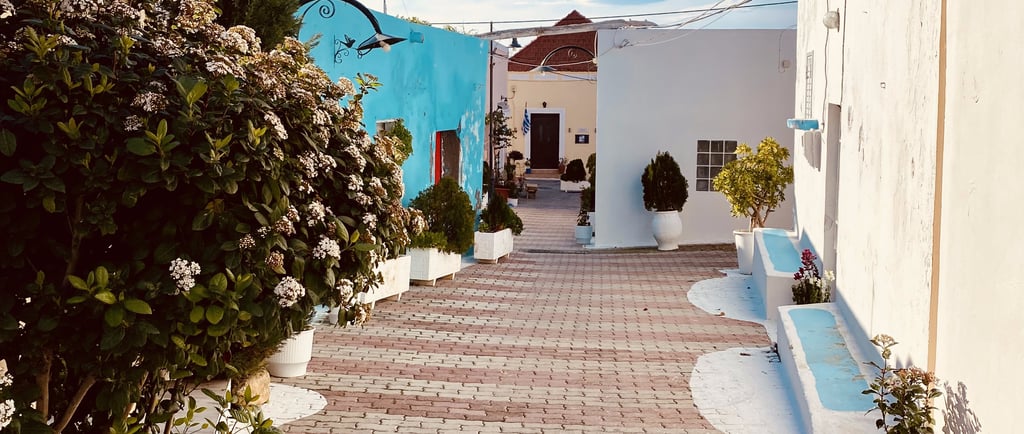
These are choices around the island, not a suggested four-village route. Find the closest match on the map of Rhodes, then choose a village route by car rather than crossing the island to collect every stop.
Koskinou Old Village: painted doors and colour
Koskinou Old Village is the best fit here for colourful architecture close to Rhodes Town. Its old alleys hold painted doors, small traditional courtyards, and splashes of colour that you miss from the main road.
Head into the old village on foot rather than judging Koskinou from a drive through. I’d choose a relaxed morning walk, leaving time to follow the smaller lanes rather than searching for one particular photo spot.
This suits photographers and families happy with a simple wander rather than a packed sightseeing programme. If your priority is the streets themselves, I’d choose Koskinou over Malona, where the surrounding farmland is the bigger draw.
Lachania: whitewashed village streets
Lachania gives you a different look: whitewashed houses, cobbled lanes, restored buildings, and a small central square. It sits in southern Rhodes, beyond the main tourist zones, and has an almost Cycladic feel.
Choose it for a slow walk followed by dinner, especially if you are already exploring the south. Early evening is my recommendation, when the warmer light brings out the whitewashed streets.
You can combine Lachania with beach time around Gennadi without making the village visit feel rushed. If you are staying near Rhodes Town and only want a short outing for photographs, Koskinou is the more practical choice.
Archipoli: flowers and village character
Archipoli’s appeal is its flowers and rural setting rather than brightly painted architecture. The village sits in a fertile valley with vineyards, fig trees, and small farms around it.
Spring or early summer is the best choice if flowers are your main reason for coming. Leave time for the countryside drive as well as a walk through the village; the setting is part of the visit.
Archipoli suits travellers who enjoy everyday village scenes more than a list of major sights. It also works for families content with a gentle wander, but I wouldn’t make it the day’s only activity for children wanting more variety.
- Useful pairing: Combine the village with Epta Piges if you want a separate nature stop.
Malona: citrus-growing village surroundings
Choose Malona for its orange groves and farmland, not as an alternative to Koskinou’s colourful alleys. This rural village is close to Haraki Bay, making it a useful choice when you want countryside and coast in the same outing.
A slow drive through the citrus-growing surroundings is the main recommendation here. Spring adds the scent of blossom, with April a particularly good month to aim for.
I’d combine a village wander with time at Haraki rather than make Malona a standalone sightseeing day. It suits travellers interested in farming landscapes; for whitewashed streets and a walk followed by dinner, I’d favour Lachania.
My suggestion: If you want to combine a village with countryside stops and a beach, rent a car for the flexibility. If you prefer not to drive, compare your options in getting around Rhodes before choosing the village.
Chapter 3 of 10
Where can you build a village visit around food and local products?
Choose Apollona for mountain village life and traditional food, Embonas for wine, Sianna for honey, or Psinthos for tavernas and springs. These villages suit travellers who want a local-product stop or a relaxed meal alongside a village walk.
- Wine first: choose Embonas for wineries, Muscat wines and a traditional taverna meal.
- Honey first: choose Sianna for family-run honey shops and west-coast sea views.
- Lunch first: choose Psinthos, especially after a morning at Butterfly Valley.
- Mountain atmosphere first: choose Apollona for small producers, bakeries and traditional cooking.
Apollona: mountain village life
Apollona is the choice for mountain character, traditional cooking and small family businesses. Its cooler air makes it a welcome summer change from the coast. Come for a village walk with something good to eat, rather than a packed sightseeing schedule.
Local families run honey farms, olive workshops and small bakeries. Try melekouni, the sesame-and-honey sweet, from a family shop. It gives you a simple way to try a local speciality without making a full meal the focus.
Apollona also deserves a place on your shortlist for homemade village food. I’d choose it over Sianna if you want mountain surroundings and a broader food stop, rather than mainly buying honey. For more dishes to look for during your holiday, explore what to eat in Rhodes.
- Best for: traditional cooking, small producers and a slower mountain-village visit.
- Look for: melekouni, village bakeries, honey and olive products.
- Less suited to: travellers who want wine to be the main event; choose Embonas instead.
Embonas: wine country
Embonas is Rhodes’ wine capital, with wineries producing Muscat wines and traditional tavernas serving local goat dishes. Its mountain setting and lively village character make it more than a quick bottle-shopping stop. Choose it when wine and lunch are the main reasons for heading inland.
I’d have a taverna meal, then leave the afternoon for exploring the village and visiting a winery. Mid-afternoon is a good time to aim for a slower visit, but arrange any tasting you particularly want before travelling. You can plan a wine-focused visit around the wineries that interest you.
If you prefer a planned activity, compare wine tastings and vineyard experiences. Check what each option includes, especially transport, before booking. Embonas still works for non-drinkers who want traditional food, though Psinthos is my simpler choice for a meal-led stop.
- Best for: wine lovers and travellers who want a winery visit alongside lunch.
- Look for: Muscat wines and local goat dishes.
- Planning priority: organise your tasting and transport together if you intend to drink.
Sianna: honey culture
Sianna is the clearest choice if you want to buy local honey during a village visit. The village overlooks the Aegean on Rhodes’ west coast, with wide sea views from its square. Honey shopping and a short wander fit naturally together here.
Look for thyme honey in a family-run shop. Sianna is also known for souma, a traditional spirit, so it offers a different local-product stop from Embonas’ wine culture. I’d choose Sianna for honey and sea views, rather than making a winery visit the centre of the day.
This stop suits you best if browsing local products is part of the pleasure. If you mainly want a long taverna lunch, I’d put Psinthos or Apollona ahead of it.
- Best for: honey shopping and west-coast scenery.
- Look for: thyme honey and souma.
- Make time for: the sea views from the village square, not just the shops.
Psinthos: tavernas and springs
Psinthos is my pick when a village meal matters more than shopping or wine. Its springs, shaded streets and traditional tavernas give you a reason to slow down. It also suits families who enjoy a simple walk followed by lunch.
The village is close to Butterfly Valley, making it a natural lunch stop after a morning nature visit. Leave time to walk through the shaded corners before sitting down. This works better as a relaxed food stop than as a long checklist of sights.
Order pitaroudia, the chickpea fritters that are a Rhodes classic. Village menus can also include homemade pasta, salads with local olive oil, grilled meats and slow-cooked goat. Choose from the day’s menu rather than arriving fixed on one dish.
- Best for: a taverna lunch, shaded village exploring and a slower family outing.
- Try: pitaroudia, especially if you want a traditional vegetarian dish.
- Combine with: Butterfly Valley in the morning, then lunch in Psinthos.
My suggestion: if you want to visit several villages, rent a car rather than build the day around buses. Choose your stops using these village routes by car, but leave enough time for a proper meal.
Chapter 4 of 10
Which inland stops offer forests and old buildings?
Choose Salakos and Eleousa for village sightseeing, and Profitis Ilias for forest scenery and Italian-era buildings. The monastery, Archipoli’s forest paths and Petaloudes back trails offer walking options, but plan those separately from roadside stops.
You can enjoy the old buildings and mountain setting without making this a hiking day. If you want several inland stops, compare their locations on the map of Rhodes rather than choosing by name alone.
Salakos: a mountain village starting point
Salakos sits at the foot of Mount Profitis Ilias, with natural springs and a cooler mountain setting. Choose it if you want village time alongside forest scenery, rather than a day devoted entirely to walking.
Nature paths above the village offer sea views, while Salakos itself suits a slower afternoon. You can make the village your destination or use it as the starting point for the monastery route below.
I’d keep Salakos on the shortlist if your group has different interests: some village atmosphere, some scenery, and an optional walk. For a wider driving route, choose villages to visit by car without trying to fit them all into one day.
Monastery of Prophet Elias: path or road
A 650-metre path connects Salakos with the Monastery of Prophet Elias, and road access is also available. The path’s length alone tells you neither the walking time nor how demanding you will find it.
Prophet Elias and Profitis Ilias are English and Greek forms of the same name. Here, distinguish the monastery from the wider mountain area and its separate Italian-era buildings.
Choose the path if walking is part of your plan; choose road access if the monastery is your main interest. Road access does not guarantee entry, so check local visiting arrangements if seeing the interior matters to you.
Profitis Ilias: forest and abandoned Italian buildings
Profitis Ilias offers an Italian-era forest settlement, stone architecture, abandoned buildings, a small hotel and winding woodland paths. It makes a strong change from beach days, especially if you enjoy photography and old buildings.
Autumn is a particularly good choice for the forest atmosphere. The mountain setting offers cooler air, but I’d still avoid walking in the midday heat during July and August.
The appeal is the mix of woodland and architecture, not a tour of abandoned interiors. Enjoy abandoned buildings here and in Eleousa from outside, respect barriers, and keep away from damaged structures.
Eleousa: historic buildings and atmosphere
Eleousa lies in the forest below Profitis Ilias, with a quiet square and large historic Italian-era buildings. Its abandoned settlement buildings give it an eerie, almost cinematic atmosphere.
Choose Eleousa if you like architectural details and places that feel different from Rhodes’ whitewashed villages. It is less suited to anyone expecting a polished attraction with a set visitor route.
Add the circular pond with freshwater fish to your wander rather than stopping only for the buildings. Eleousa and Profitis Ilias make a natural pairing: one focuses on the settlement, the other on the wider forest setting.
Archipoli forest paths
Archipoli sits in a fertile valley surrounded by old forest, vineyards, fig trees and small farms. Choose it for countryside scenery and village life rather than a major historic monument.
Spring and early summer are especially appealing for flowers. The roads around the village also suit a countryside drive, so a forest walk need not be the whole reason to come.
For families, I’d start with the village and decide on a separate woodland route that fits everyone’s ability. Archipoli can also be paired with Epta Piges if you want another nature stop rather than more village sightseeing.
Petaloudes back trails and the Land of the Deer
The Petaloudes back-trail recommendation points to woodland behind Butterfly Valley, with riverbeds, wooden bridges and forest paths. Spring and autumn are good seasons to consider this kind of outing.
Choose these paths for a nature walk, not for guaranteed wildlife encounters. The name “Land of the Deer” is not a promise that you will see deer.
For all the forest walks in this chapter, check seasonal access and fire restrictions locally before setting out. Follow closures, carry water and sun protection, wear suitable shoes, and use a route you can follow confidently.
If you want a quick sightseeing stop without route preparation, I’d choose a village instead. For a walking-focused day, choose more nature stops in Rhodes and give the forest time rather than squeezing it between several drives.
My suggestion: I’d rent a car for several inland stops rather than build the day around buses. For a car-free visit, use the Rhodes Island Guide’s transport advice and check outward and return services before choosing your stops.
Chapter 5 of 10
Which west-coast castles deserve a stop?
Choose Kritinia and Monolithos if you want castle ruins with west-coast sea views. Kritinia works well with a village wander, while Monolithos combines a clifftop setting, a small chapel and a memorable sunset.
Kritinia village and Kritinia Castle
Kritinia village and Kritinia Castle are separate stops. The castle is 2 kilometres northwest of the village and 55 kilometres from Rhodes Town.
The village has old stone houses and a traditional atmosphere. Choose it for a slow wander before heading to the castle, rather than expecting the ruins within its streets.
The castle is the stop for coastal views and a romantic late-afternoon setting. I'd visit the village first, then leave time to explore the ruins without rushing towards sunset.
This pairing suits you if you enjoy village streets as much as historic viewpoints. You can plan your Kritinia Castle visit before deciding how much else to add.
Saint Paul remains and Italian-era buildings
Within Kritinia Castle are the remains of the Catholic Church of Saint Paul. The site also contains buildings associated with its use during the Italian occupation.
These details make the castle more than a sea-view stop, especially if you enjoy old buildings. Give yourself time to look at the remains as well as the coastline; the church here is a ruined structure, not a separate village church visit.
Monolithos Castle and Agios Panteleimon chapel
Monolithos Castle stands above a cliff, surrounded by pine forest, with views over the sea and small offshore islands. The chapel of Agios Panteleimon stands at the top of the fort near Monolithos.
Choose this stop if the landscape matters as much to you as the ruins. It's an established attraction, but the clifftop setting still makes it a strong choice for a west-coast afternoon.
Bring water, sun protection and a small snack or cold drink if you want to linger over the view. Enjoy it from a safe place away from exposed edges rather than sitting on the castle walls.
Fourni Beach is a nearby coastal stop you can combine with Monolithos earlier in the day. Keep the beach visit separate from your castle time, and plan your Monolithos Castle stop before setting out.
Choosing a sunset stop
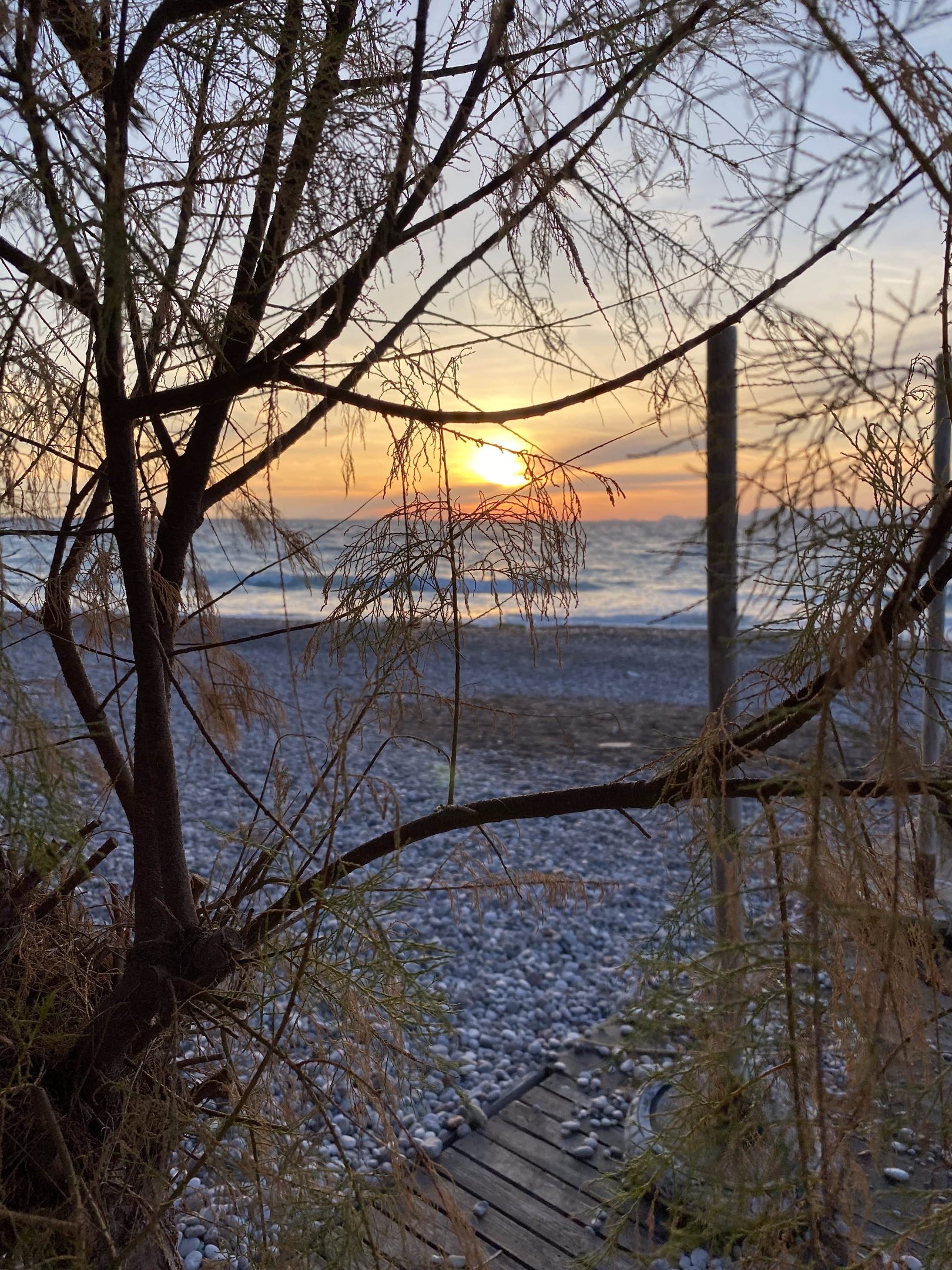
I'd choose Kritinia for a village-and-castle afternoon, and Monolithos for the cliff, forest and offshore-island views. Both deserve consideration for sunset; neither needs a promise of empty surroundings to be worth your time.
Pick one as your final stop rather than trying to fit both into the last light. Use the Rhodes island map to see which fits your route and return journey.
Late afternoon brings softer light, while spring and autumn offer cooler conditions for exploring. In July and August, avoid making an exposed hillside visit the centre of your midday plans.
If you're not driving, use the Rhodes Public Transport website or app to check routes and estimated arrivals. Check your return journey too, and compare your options in the Rhodes Island Guide's transport section.
- Choose Kritinia: You want old stone village houses followed by castle ruins and sea views.
- Choose Monolithos: You want a clifftop castle, Agios Panteleimon chapel and a possible Fourni Beach combination.
- Choose an earlier visit: You're travelling with children or prefer not to manage the return walk in fading light.
My suggestion: If you want to combine a castle, a village and a beach, I'd rent a car rather than build the afternoon around buses.
Chapter 6 of 10
What makes Asklipio worth exploring?
Asklipio is worth exploring for its village church, defensive castle and old footpath linking the village with farming land. Choose the church and castle for a heritage stop, or add the old Asklipio path for a longer visit.
Asklipio Castle: why it was built
Asklipio Castle was built in the 15th century to protect the village and oversee the surrounding coastline and inland roads. Its hilltop position served a practical purpose: keeping watch over approaches by land and sea.
This is a good stop if you enjoy understanding how a village defended itself, rather than simply photographing old walls. Use the Rhodes island map to place Asklipio within your day before adding more stops.
The castle hill, cisterns and ruins
The castle stands on a hill described as 250 metres high. That figure describes the hill, not the climb you will make from your starting point.
Inside the castle are two cisterns and other ruins. The cisterns are water-storage structures, giving you something specific to look for beyond the defensive remains where access permits.
I’d choose this for an interest in ruins and defensive history, rather than an intact castle interior. Follow any barriers or signs, and keep children away from edges and openings.
Church of the Assumption of the Virgin Mary
The Church of the Assumption of the Virgin Mary in Asklipieio is a separate attraction in the village. Keep it on your shortlist alongside the castle, rather than looking for it within the hilltop ruins.
It adds a religious-history stop to a visit otherwise focused on defence and farming life. The church museum is another possible addition; ask locally about visiting arrangements for the church, museum and castle before organising your visit around interior access.
If you prefer buildings to countryside walking, I’d focus on the church and castle and leave the old path optional. You do not need to turn Asklipio into a walking day to make the stop worthwhile.
The old Asklipio path
The old Asklipio path is a historic footpath connecting the village with traditional farming areas. Its appeal is cultural as much as scenic: it helps you picture how people moved between their homes and the land.
Keep this as a separate walking option, not a route you must follow to reach the castle. Get local directions and advice on current path conditions before setting out, and leave enough daylight for your return.
- Choose the heritage stop if your main interests are the village church and castle.
- Add the old path if you want time outdoors and a closer connection with the village’s farming past.
- Skip the path if you need a clearly defined walking distance or a fixed finish time.
My suggestion: If Asklipio is one of several village stops, I’d rent a car for flexibility. If you prefer not to drive, compare your options in getting around Rhodes before setting your route.
Chapter 7 of 10
Where should you explore in southern Rhodes?
Choose Mesanagros, Arnitha and Kattavia for a day centred on southern Rhodes, not another detour on a full-island circuit. Mesanagros offers a remote, spiritual atmosphere, Arnitha has a pine-forest setting, and Kattavia pairs with the separate Hagios Pavlos stop.
Find your chosen stops on the map of Rhodes before deciding how many to include. If you’re considering buses, use the Rhodes Public Transport website or app for routes and estimated arrivals. Check your return journey too, and compare your options under getting around Rhodes.
Mesanagros: a remote village choice
Mesanagros is a tiny village deep in the south, with a remote feel and a spiritual character. The approach through hills and wide-open landscapes is part of its appeal, so leave room to enjoy the drive.
Choose it if you enjoy small villages and a slower day rather than a packed sightseeing schedule. Panagia Skiadeni monastery is another stop to consider for its local religious history. If that interests you, explore more monasteries in Rhodes when choosing your route.
Arnitha: a village among pine forests
Arnitha suits you if old houses and a village in a pine-forest setting sound more appealing than a major attraction. Its character is quiet and deeply local, with the surrounding countryside central to the appeal.
Bring a camera for the old houses, but keep your visit focused on the village rather than relying on a forest walk. For any walk beyond it, check local access and fire restrictions first. I’d choose Arnitha for relaxed wandering, not a day that needs organised activities.
Kattavia: a southern village stop
Kattavia is another village choice for a day exploring the south. Keep the village visit separate from Hagios Pavlos in your plans: the abandoned church complex stands outside Kattavia, not in its centre.
Lachania is another southern village option if it fits your route better. I’d choose the stops that interest you most rather than make all four villages compulsory; you can compare other villages to visit by car before settling on your day.
Hagios Pavlos and the Azienta San Marco complex
The abandoned Hagios Pavlos church and its tall bell tower stand on the southern road, 3 kilometres before Kattavia. This is a separate heritage stop, particularly interesting if you want to see traces of Rhodes’ Italian period.
The complex was the seat of Azienta San Marco, an Italian-founded agricultural company established in 1935. That connection gives the buildings an agricultural history as well as a religious one.
Plan to appreciate the architecture from outside, wherever access is permitted. Abandoned buildings are not an invitation to enter; respect barriers and posted restrictions rather than exploring interiors.
My suggestion: rent a car if you want to combine several southern villages. The flexibility is more useful here than trying to fit remote stops around bus connections.
Chapter 8 of 10
Which beaches and coastal landscapes belong on your shortlist?
Choose Kokkina or Saint George for a beach visit when conditions suit swimming; choose Fourni or Glyfada for dramatic west-coast scenery. Kiotari’s dunes belong on your shortlist as a coastal landscape, not a beach-day destination.
For a day away from resort facilities, bring drinking water, sunscreen, a hat and your own shade. If toilets, refreshments and sunbeds are essential, choose another beach with those services using the Rhodes Island Guide’s beach comparison.
- Kokkina: a red-rock cove near Apolakkia, with pebbles, deep-blue water and no facilities.
- Saint George: a small rocky cove in Kallithea, with flat stone sunbathing platforms and clear water for snorkelling.
- Fourni: cliffs, strong waves and sunset scenery near Monolithos; not the first choice for a swimming day.
- Glyfada: rugged west-coast scenery, wind and strong waves; best considered for photography and coastal walks.
- Kiotari dunes: natural sand formations south of Kiotari, with wind-made patterns to photograph without crossing the dunes.
Kokkina Beach in southern Rhodes
Kokkina is a red-rock cove near Apolakkia, with a pebble shoreline and deep-blue water. Its appeal is the simple setting: there are no facilities, so you need to arrive prepared.
Choose it if you enjoy a beach without resort services and are happy to bring everything you need. For swimming, choose a calm day and judge the water when you arrive. With children, I’d favour a serviced beach if an easy, predictable day matters most.
Late afternoon is especially rewarding for the light, which gives the red rocks a warm glow. You can make this a scenery stop rather than committing to a full beach day.
Saint George Beach in Kallithea
Saint George is a small rocky cove near Kallithea Springs, and one of the closer choices to Rhodes Town. Flat stone platforms are used for sunbathing, while the clear water makes snorkelling its main attraction.
This is the pick if you prefer a rocky swimming spot to a conventional stretch of beach. Bring your snorkelling kit, but look carefully at your entry and exit before getting into the water. If you want sand for children to play on, I’d choose somewhere else.
It fits naturally alongside a visit to Kallithea Springs rather than a long drive around the island. Keep it separate from your west-coast plans: the reason to come here is the cove and clear water, not wind-swept coastal scenery.
Fourni Beach near Monolithos
Fourni is worth considering for its dramatic cliffs, strong waves and west-coast sunsets. People come here to fish, walk and spend time beside a wilder stretch of sea.
It is not a swimming beach for everyone. I’d choose Fourni for the landscape first, especially if your alternative is a beach day built around long swims. For family swimming, a sheltered east-coast beach is a better starting point.
Fourni is a natural companion to a Monolithos outing, giving you a coastal stop without adding an unrelated part of the island. Leave time to enjoy the shore rather than rushing down for a photograph and leaving immediately.
Glyfada Beach on the west coast
Glyfada’s appeal is its rugged coastline and the force of the west-coast wind. Strong waves make it a better choice for photography and coastal walks than a day centred on swimming.
Choose it if the sea and scenery are the whole point of your outing. It is less suitable if you want a sheltered place to settle down for repeated swims. Keep back from breaking waves when taking photographs.
Compared with Fourni, I’d choose Glyfada for a nature-focused coastal stop rather than a Monolithos pairing. If that sounds like your kind of day, explore more nature spots in Rhodes instead of adding beaches simply to fill the route.
Kiotari sand dunes
South of Kiotari, natural dunes add a different kind of scenery to the coast. Wind creates ripple patterns across the sand, making this a rewarding place for simple landscape photography.
Choose the dunes for a short scenery stop or evening light, not as a promise of swimming facilities. Sunset watching is another reason to pause here, particularly if you are already exploring the southern coast.
Keep vehicles off the dunes and stay on existing routes around them rather than walking across the sand formations. Photograph the patterns from the edge, leave vegetation undisturbed and take your rubbish away.
My suggestion: if you want to explore Fourni, Glyfada or several southern coastal stops, rent a car rather than building the day around buses. You’ll have more freedom to stop for scenery and change plans if the sea looks rough.
Chapter 9 of 10
Which walks and viewpoints are worth adding?
Add the Lardos River Walk, St. Paul’s Bay viewpoint, Charaki viewpoint or Agios Markos chapel when you’re already nearby. They’re optional stops for a slower day, not reasons to rush across Rhodes.
Lardos River Walk
Behind Lardos village, this walking route follows the riverbed. Choose it for a nature walk, birdwatching or a gentle morning break rather than a dramatic sea view.
Spring brings flowers and gently running water, making it a particularly appealing season for this walk. The riverbed setting changes with the seasons, so flowing water isn’t the reason to choose it in summer.
I’d combine it with time in Lardos village rather than make a separate island-wide journey. For families who enjoy simple nature walks, this is a better starting choice than the cliff viewpoint above Charaki.
The alternative St. Paul’s Bay viewpoint
The alternative view of St. Paul’s Bay is from above, reached by a small path from the main road. It gives you a view across the bay rather than putting you on the shoreline.
Choose it if you want photographs or a pause during a visit to Lindos. If swimming is your priority, plan a separate visit to the bay below; this is a viewpoint stop.
Early morning is my pick for the light. You’re stepping away from the beach activity below, but this is still St. Paul’s Bay, so don’t expect guaranteed solitude.
Charaki viewpoint above the castle
Above the castle ruins overlooking Haraki Bay, a flat cliff area opens onto views of turquoise water and the curving coastline. Charaki and Haraki are spellings you’ll see for the same place.
This stop suits travellers who want a coastal panorama rather than another stretch of beach. The viewpoint is above the ruins, not down by the water, so keep it separate from plans for shoreline access.
Sunrise and evening light are the attraction here. I’d choose an evening visit with a daylight return rather than approach an unfamiliar cliff before dawn. Stay well back from the edge, especially with children; a flat area still needs care.
The little chapel of Agios Markos
The little seaside chapel of Agios Markos near Gennadi offers a quiet pause on a wild stretch of coastline. People come to light a candle or spend time looking out to sea, while the surrounding rocks offer places to sit.
Choose it for the coastal setting rather than a long sightseeing visit. Late-day light makes it an appealing addition to time around Gennadi, but keep the rocky return in daylight.
Before setting off, confirm the exact chapel pin locally and place it alongside your other stops on the Rhodes island map. Agios Markos is a separate stop from Hagios Pavlos near Kattavia and Agios Panteleimon at Monolithos; those names aren’t interchangeable.
My suggestion: choose the stop nearest your main outing. If you’re linking several villages and coastal stops, I’d rent a car; compare your options in the Rhodes Island Guide’s transport section.
Chapter 10 of 10
How can you turn your shortlist into a manageable day?
Choose one area of Rhodes, keep your shortlist to two or three stops, and leave room for a meal. A village with a nearby castle or beach makes a better day than trying to cross the island.
Choose one area, then add nearby stops
Start with the place you most want to visit, then see where your chosen stops sit on the island. Choose nearby additions rather than collecting places scattered across Rhodes.
Build the day around one of these simple combinations. Leave time for village lanes, coffee and lunch rather than filling every gap with another attraction.
- Kritinia village and Kritinia Castle: combine a village wander with the castle, 2 kilometres northwest. Late afternoon suits this pairing if you want sunset views.
- Monolithos and Fourni: combine the village and castle area with coastal scenery. Fourni can have strong waves, so make this a landscape stop rather than a promised swimming session.
- Asklipio church and castle: start around the Church of the Assumption of the Virgin Mary, then add the castle if everyone wants the climb. Kiotari or Gennadi can be an optional beach finish.
- Butterfly Valley and Psinthos: pair a morning nature visit with a village lunch. Psinthos is a good choice for traditional food, including pitaroudia, the local chickpea fritters.
When renting a car makes sense
I'd rent a car for a day combining inland villages, west-coast beaches or several southern stops. It gives you more freedom to pause for lunch, change direction or drop a stop.
For that kind of day, compare Rhodes car rental options, including vehicle types and insurance cover. Choose for your passengers and planned route, not just the headline rental price.
Use these village-by-car planning ideas to narrow your route rather than adding more destinations. A car helps you connect places, but it does not remove the walking at castles, viewpoints or village lanes.
Using Rhodes Public Transport
Use the Rhodes Public Transport website and app to plan routes and see estimated arrivals at stops. Work out the outward and return journeys before adding another village or coastal stop.
Bus schedules change seasonally, so review both journeys alongside the Rhodes bus planning advice. Choose your destination around the journey that works, including any walking between the stop and the place you want to explore.
For a bus-based day, I'd keep one village as the main outing rather than copy a multi-stop driving route. A bus serving an area may still leave you some distance from its castle, beach or trail.
Planning around children, walking and heat
With children, I'd choose one village and one optional activity, with lunch between them. Koskinou suits a colourful wander, while Psinthos works well for a slower day built around food.
Spring and autumn suit walking days. In summer, walk early or late, and avoid exposed hillsides and forest walks during the midday heat in July and August.
For a nature-focused outing, choose your walk using these Rhodes nature spots rather than adding an unfamiliar trail at the last minute. Follow local signs and any seasonal restrictions.
- Carry water, sunscreen and hats. Bring your own shade if your beach choice has no facilities.
- Wear shoes with grip for stone paths, castle approaches and uneven ground; keep beach footwear for the beach.
- Allow shade breaks and shorten the route when needed. A castle climb is optional, not a requirement for enjoying the village.
- For family swimming, favour a sheltered east-coast beach and judge conditions on the day. Fourni and Glyfada are better choices for scenery when waves are strong.
- Take rubbish away and leave paths, dunes and village surroundings as you found them.
Choosing a bookable outing
If you prefer not to drive or organise several connections, browse Rhodes excursions and experiences. Choose by the actual stops and pace, rather than expecting an outing to cover every place on your shortlist.
Before booking, read the pickup arrangements, walking requirements, meal inclusions and time allowed at each stop. A fixed itinerary suits travellers who want the day organised; independent exploring suits those who want to linger or change plans.
If food is your main interest, make a wine tasting or village food experience the centre of the day. For wine tasting, choose transport that leaves you free not to drive.
Keeping airport transfers separate
If you only want a rental car on exploration days, arrange a Rhodes airport transfer separately for your arrival. You can then choose rental dates around your village and countryside plans rather than automatically keeping a car throughout your stay.
Where to book
transfersFrequently asked questions
Where should I go off the beaten track in Rhodes?
Start with the kind of day you want. Choose Koskinou or Lachania for village streets, Kritinia or Asklipio for castles, and Kattavia for southern heritage. I'd explore one area rather than cross the island chasing a long list.
Are these places really secret?
No. Some are smaller village stops, while others, including Monolithos Castle, are established attractions. Choose them for what interests you rather than expecting somewhere nobody else visits.
Do I need a car to explore Rhodes hidden gems?
I'd rent a car if you want to combine several villages, beaches or heritage stops. It gives you more freedom to choose your route without building the day around bus connections.
Can I visit these places by public transport?
Use the Rhodes Public Transport website or app to plan routes and see estimated arrivals at stops. Build your day around the outward and return services shown, rather than expecting a direct bus to each attraction.
How far is Kritinia Castle from Kritinia village?
Kritinia Castle is 2 kilometres northwest of Kritinia village and 55 kilometres from Rhodes Town. The village and castle are separate stops.
What is there to see at Asklipio Castle?
The castle contains ruins and two interior cisterns. It was built in the 15th century to protect the village and oversee the surrounding coastline and inland roads.
Is the Church of the Assumption inside Asklipio Castle?
No. The Church of the Assumption of the Virgin Mary in Asklipieio is a separate village point of interest. Plan it alongside the castle rather than confusing the two.
Can I reach the Monastery of Prophet Elias by road?
Yes, there is road access as well as a path from Salakos. Choose the road option if you want a sightseeing stop rather than a walk.
What is the abandoned church near Kattavia?
It is Hagios Pavlos, an abandoned church with a tall bell tower on the southern road, 3 kilometres before Kattavia. The complex was the seat of Azienta San Marco, an Italian-founded agricultural company established in 1935.
Which stops would you choose with children?
I'd start with a short village visit rather than a day built around castle ruins or remote paths. Keep the plan flexible, bring water and sun protection, and choose walks that suit your children.
Related pages
- Best Nature Spots in Rhodes (2026) – Mountains, Forests & Hidden Places
- Rhodes Villages to Visit by Car (2026) – Beautiful Hidden Places
- Getting Around Rhodes (2026) – What Actually Works (and What Doesn’t)
- Rhodes Wine Tasting Guide 2026 — Best Vineyards to Visit
- Kritinia Castle Rhodes – Local Guide, Medieval Festival, History & How To Visit
- Monolithos Castle Rhodes – Local Guide, History, Beaches & How to Visit (2026)
- Monasteries in Rhodes: Top Sacred Places to Visit
- Lindos Rhodes Travel Guide (2026) – What Most Visitors Get Completely Wrong
Planning your complete Rhodes holiday?
Our Island Mega Guide brings together everything you need to plan your Rhodes holiday, from choosing where to stay and finding the best beaches to transport, activities and practical travel advice.
Open the Rhodes Island Guide