
Chapter 1 of 7
Where you can usually rely on English
In my experience, in the main tourist centres like Rhodes Town, Faliraki, and Lindos, you'll find English is spoken everywhere from hotels and restaurants to shops. Checking into your hotel, ordering dinner, or asking about a boat trip in English is perfectly normal. Most menus and information signs in these areas will have an English version.
The larger hotels and resorts almost always have English-speaking staff at reception. Keep in mind that not every single employee will have the same language level. My advice is, if you have a complicated request or there's a misunderstanding, just go back to the front desk. It's much easier than trying to explain it multiple times to a staff member who might be struggling to understand.
If language is the main thing making you hesitate about a trip here, please don't let it be. For the bigger picture on whether the island is right for you, I've written my thoughts on if Rhodes suits your first trip to Greece.
Chapter 2 of 7
What changes in villages and routine services?
When you get out into the smaller villages and more rural parts of Rhodes, you're more likely to meet people with limited English. But please, don't see that as a reason to avoid these incredible places. I've found it's more about the individual person and their business than a simple 'resort vs. village' rule.
For a quick purchase or asking where something is, you can usually manage with a few words and pointing. For anything more involved, you'll need a bit more patience. I always recommend starting by politely asking if they speak English, rather than just launching into a long story.
For any non-tourist services, my advice is to prepare, not assume. If you need to discuss official paperwork or a complex service issue, bring the document with you and have your main question written down. It's always worth asking if there's an English-speaking colleague who can help if things aren't clear.
Chapter 3 of 7
Make everyday requests easy to understand
Here's what I've found works best: speak clearly, at a normal pace, and make one request at a time. And please, avoid slang. If someone doesn't understand you, try using simpler words or showing them what you mean. Trust me, repeating the same sentence louder is never the answer.
Restaurants and cafés
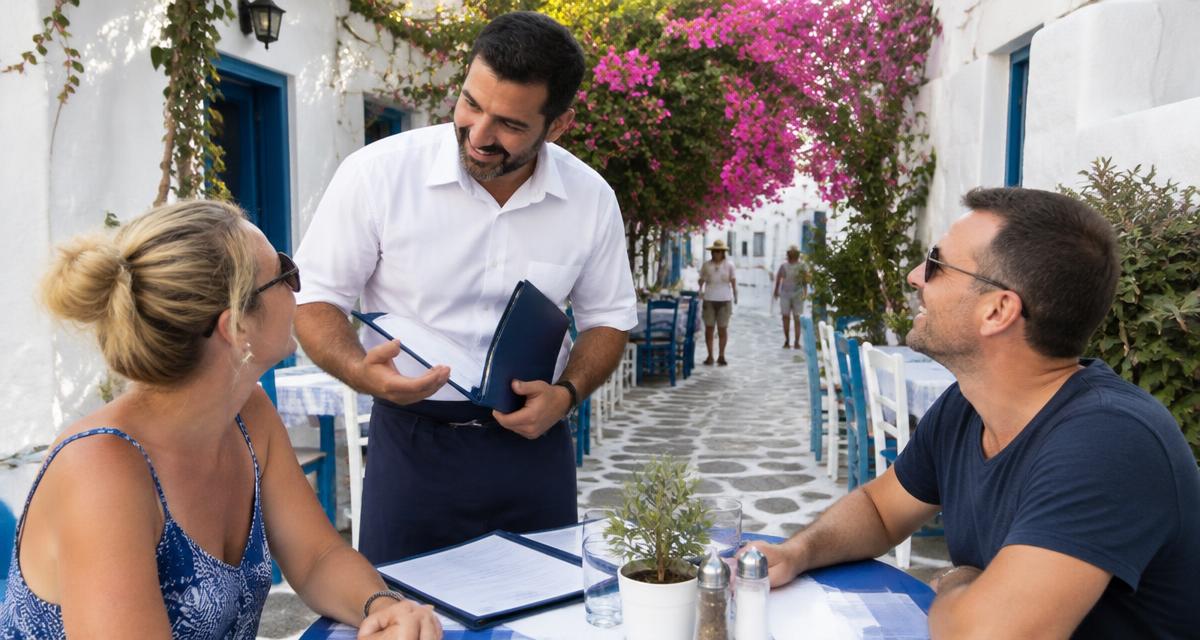
In tourist spots, you'll find most menus are in English. If you're unsure about pronunciation, I suggest just pointing to the item as you order. If you want to make a change, like leaving an ingredient out, it's clearer to state that as a separate request after ordering the main dish.
My strong advice is to treat allergies completely differently from simple preferences. You must state the allergy clearly and ask the staff to confirm they understand. A nod isn't enough. If you can't be 100% certain they've understood your allergy request, I would not risk ordering that dish.
Accommodation and activity bookings
I always tell people to have their booking confirmation ready on their phone. It solves most check-in or reservation questions instantly. If you have a special requirement, send a short message to the hotel in advance so you have their reply in writing.
For any guided tour or activity, you must confirm the language of that specific tour before you pay. Just because the website is in English doesn't guarantee the guide will be.
Chapter 4 of 7
Use written place names for directions
When it comes to taxis, my advice is simple: show, don't just tell. While many drivers have basic English, your pronunciation of a Greek place name might not be what they're used to. I always recommend having your hotel's name, full address, and a map pin saved on your phone.
You'll notice that our road signs often have place names in both Greek and Latin letters. This transliteration is a huge help for recognizing names, but it doesn't mean every notice or sign will be translated into English.
If you need to ask for directions, I find it's easiest to just show the person the exact destination on your phone. A simple “Is this the right way?” is much easier for them to answer than a long explanation of where you think you're heading. I'd even take a screenshot in case you lose your internet connection.
Chapter 5 of 7
Take extra care with medical conversations
This is an area where I urge you to be extra cautious. You can often find English-speaking help in pharmacies and clinics in tourist areas, but you absolutely cannot assume everyone will be fluent. Ask at the beginning, and if there's any confusion, ask if someone can help with communication.
My strong recommendation is to bring the actual medicine packaging or a written list of your medications and any prescriptions. Don't just rely on a spoken brand name. Show any allergy information clearly. While a translation app is useful to start a conversation, it should never be your only method for understanding important medical instructions.
In a medical emergency, you should call 112 or 166 for an ambulance. Give your location and explain the situation as clearly as you can. Don't delay the call to try and perfect a translation. For non-emergencies and finding a pharmacy, I've created the practical guide to pharmacies and hospitals in Rhodes.
Chapter 6 of 7
A little Greek is useful courtesy, not a requirement
Let me be clear: you do not need to learn conversational Greek for a holiday in Rhodes. However, from my own experience, a simple greeting and a thank-you in Greek is a wonderful way to start and end any interaction, even if the rest is in English.
These few words are all you need to show a bit of courtesy. I've written them using Latin letters so you can easily save them to your phone.
One last piece of advice from me: if you're ever given a price verbally that seems unclear, ask to see it on the menu or get them to write it down. It’s a simple check that helps you avoid the common Rhodes tourist scams.
- Yassas — hello.
- Efharisto — thank you.
- Parakalo — please.
- Ne — yes.
- Ohi — no.
Chapter 7 of 7
Your communication checklist before you go
So, to wrap this up, my advice is that for a standard resort holiday, you'll be perfectly fine with English. If you're like me and love exploring the villages, then a little extra preparation with written information goes a long way. For everything else you need to plan, I've put together my pre-arrival essentials for Rhodes.
If you have any other questions about phones, power, or anything else practical for your trip, I've probably answered it in my main Rhodes practical travel questions guide.
- Save your accommodation address, map pin, and all booking confirmations on your phone.
- Download a translation app and check its offline mode works before you travel.
- For any important needs, write them down in short, clear English sentences.
- Always confirm that important details (like allergies) have been fully understood.
- Learn to say 'hello' and 'thank you' in Greek, but then feel comfortable using English.
Frequently asked questions
What language is spoken in Rhodes?
The official language here in Rhodes is Greek. However, in my experience, English is so widely spoken in hotels, restaurants, and tourist shops that you can easily have a great holiday without knowing any Greek at all.
Can I manage in Rhodes if my own English is basic?
Yes, I think so. My advice would be to keep your requests simple and use short sentences. I also find it helps to show people what you mean, for example by pointing to a menu item or showing your hotel booking on your phone.
Should I learn the Greek alphabet before visiting?
Honestly, for a typical holiday, I'd say it's not necessary at all. You'll find most of our major road signs show place names in Latin letters as well as Greek, so you can read them. My top tip is to have your addresses saved on a map on your phone.
Should I download a translation app?
I think it's a smart backup to have, especially if you want to explore the villages or have a specific question. A word of caution from me, though: please don't rely on an app 100% for important information like medical instructions or serious allergies.