
Chapter 1 of 7
Choose the right place for help
My advice here is simple: match the help to your problem. Don't automatically head for the hospital for something minor.
- Pharmacy: For something non-urgent like a minor sting, a cough, or just a question about medicine, I'd always start here. Pharmacists are very knowledgeable and will tell you if you need a doctor.
- Doctor or clinic: If it's more than a pharmacist can advise on, or if they send you there, it's time to see a doctor. You'll generally need to make an appointment.
- Emergency services: If you believe it's a genuine emergency, don't waste a second. Call 112 or 166 immediately. Don't lose precious time comparing clinics or checking your insurance.
Chapter 2 of 7
In an emergency: call 112 or 166
For any medical emergency, call 112 (the general European emergency number) or 166 (which connects directly to Greece’s ambulance service, EKAV). State your location as clearly as you can, describe what's happened, and follow their instructions precisely.
I always tell people to save their accommodation's name and full address on their phone. If you're out somewhere, give the name of the village, a nearby landmark or restaurant—don't just say 'Rhodes'. If you're unsure, ask someone close by to help you identify your location.
This is important: don't try to drive to the hospital or get a taxi in an emergency. Let the trained professionals assess the situation and decide where you need to go. They are equipped to manage it far better than you can.
You should also know that an emergency ambulance from the public EKAV service is free. However, if a private clinic arranges its own ambulance, that's a different story and you will be charged. Never assume a privately arranged transfer is covered in the same way.
Chapter 3 of 7
Rhodes General Hospital and private clinics
The General Hospital of Rhodes is our main public hospital, with an Accident & Emergency department, outpatient clinics, and inpatient services. Tourists can absolutely receive care there; what you end up paying will depend on the treatment you get and what health cover you have.
For non-emergency enquiries, the hospital's main switchboard is +30 22413 60000. I'd use this to ask about which department you need or how to make an appointment. This is not an emergency line—for that, you must use 112 or 166.
The hospital is located at Christiaan Barnard 1, Rhodes 85133. If you have a planned visit, I strongly advise calling that switchboard number first to confirm exactly which department and entrance you should go to.
A common mistake I see from visitors staying in places like Lindos or Kiotari is underestimating the drive to Rhodes Town. If your situation is not an emergency, it's worth asking about a suitable local doctor before you set off on a long journey across the island.
Before accepting a private appointment
Your hotel staff can certainly help you contact a doctor. However, their referral doesn't automatically mean your insurance will cover it or that you'll be seen any faster. You have to be the one to ask about payment and coverage before you agree to an appointment.
- Can the doctor actually assess your specific problem, and when can they see you?
- Will you be able to communicate effectively in English?
- Is the service public, contracted with the state (EOPYY), or completely private?
- What are the charges, and do you have to pay everything upfront?
- Does your travel insurance company need to pre-authorise the visit?
Chapter 4 of 7
Find a pharmacy, including 24-hour duty pharmacies
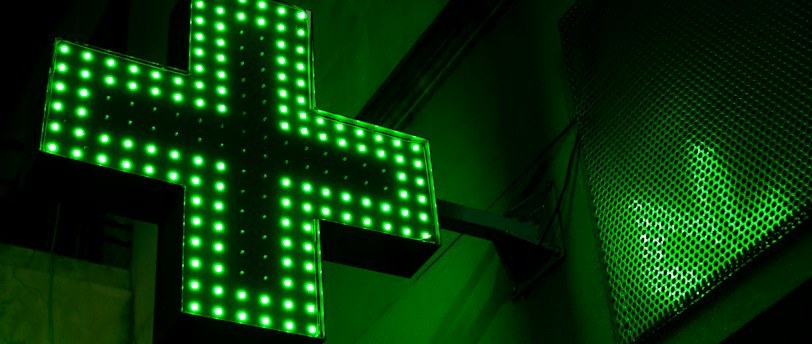
You'll see the green cross symbol for pharmacies all over Rhodes Town, in the resort areas, and in the villages. Ask your accommodation for directions to the nearest one, but my top tip is to confirm it's actually open before you go.
When you get there, clearly explain your problem, any other medicines you take, and all known allergies. If you're looking for a specific medicine, bring the packaging or prescription. Trust the pharmacist's judgement; they will tell you if you need to see a doctor.
For issues like marine stings or insect bites, I'd rather you avoided them in the first place! My guide to 'dangerous' animals explains how, so hopefully you won't need this page at all.
Is there a 24-hour pharmacy in Rhodes? Use the duty rota
This system often confuses visitors. We don't really have 24-hour pharmacies. Instead, an out-of-hours service is provided by a single 'duty pharmacy' on a rota. You can find out which one it is by checking the notice posted on the door of any closed pharmacy. Your hotel can also help. My advice is to always confirm the date, the specific hours, and the address. If you can, phone ahead before you set off.
If you need a replacement medicine
I can't stress this enough: bring your essential medicines with you, plus copies of your prescriptions. If you lose them or run low, go to a pharmacy immediately with your prescription and the original box. Don't wait until you've taken your last dose. You can't assume your usual brand is stocked here, or that you can buy a prescription drug without the necessary paperwork from a local doctor.
Chapter 5 of 7
Understand EHIC cover and travel insurance
An EHIC is for medically necessary care during your trip, but it only works within the Greek public system and with certain contracted providers. It is not a magic card that makes all private clinics free. You must present your EHIC and some photo ID when you access care.
EOPYY is Greece's national healthcare organisation. Some private doctors are contracted with EOPYY, but state-covered appointments may be limited. To avoid a surprise bill, my advice is to always ask before you see the doctor if your appointment will be covered.
- Public hospital care: If you're an eligible EHIC holder, this should be covered.
- Contracted private care: You may still have to pay a portion of the bill yourself.
- Non-contracted private care: Your EHIC will not cover this. You pay the full cost.
- Prescribed medicines: You will almost certainly have to pay a patient contribution. Ask the pharmacy how much.
Keep the paperwork
This is exactly why I believe good travel insurance is essential. An EHIC doesn't cover things like private treatment or medical repatriation (getting you home). Check your policy and call your insurer's assistance line before arranging any non-emergency care.
My advice is to keep everything: itemised invoices, receipts, medical reports, prescriptions. If you pay for something that might have been covered by your EHIC, you may be able to claim a reimbursement from your home country's health fund, but don't just assume every expense will be refunded.
Chapter 6 of 7
Prepare the information a clinician will need
I think it's a very smart idea to keep a small medical information file with you. It becomes incredibly useful if you suddenly feel unwell, are travelling alone, or are trying to get help for a family member.
- Passport or other ID, plus your EHIC if eligible.
- Insurance policy details and the assistance number.
- Your medicine list, prescription copies and known allergies.
- Relevant medical information and an emergency contact.
- Your accommodation’s full address and phone number.
Chapter 7 of 7
Your quick medical-help checklist
Before you head out for care, just run through these points. But let me be crystal clear: never let paperwork or planning get in the way of calling for help in a true emergency.
If you still have a question about health, safety, or anything else about your trip, I recommend browsing my Rhodes practical travel questions hub. I've likely provided a focused answer there.
- Emergency? Call 112 or 166.
- Routine visit? Confirm the provider, appointment and charges.
- Pharmacy visit? Check opening hours or the duty rota.
- Take ID, health-cover details and medicine information.
- Keep the records and receipts afterwards.
Sources and product information
Frequently asked questions
Can I arrange dialysis or other ongoing care during my stay?
Yes, but you absolutely must arrange this before you travel. Services like dialysis, oxygen therapy, or chemotherapy require advance booking. My advice is to contact the providers in Rhodes directly to confirm availability, eligibility rules, and all charges. You must also clear this with your own health fund or insurer.
Does an EHIC cover a private dentist in Rhodes?
No, an EHIC does not cover private dentists in Rhodes, as they are not part of the EOPYY contract system. You might get necessary emergency dental care through a public hospital or health centre, but you would have to check availability first. In my experience, you should expect to pay privately for most dental care.
Will every pharmacist or doctor speak English?
You shouldn't assume so, although many healthcare professionals in tourist areas speak excellent English. My strong advice is to ask when you make an appointment. I also think it's wise to bring written names of your medicines and any key medical information. Your hotel can help with the first call, but always confirm important details directly with the clinician yourself.