
Chapter 1 of 8
How do I use the interactive map of Rhodes?
Use the interactive map of Rhodes to find places and compare their positions across the island. Start with where you’re staying, look for places that interest you, then read the destination details before adding a stop.
Start with your base
Find your town or village first, then use it as your reference point. Compare each place you want to visit with your base and with the other places that interest you.
If you haven’t chosen where to stay, compare the positions of possible bases before booking. The Rhodes area descriptions help you decide which setting suits your holiday, beyond where it sits on the map.
I’d start with the area around your base rather than filling a list with stops across the whole island. For broader holiday decisions, use the Rhodes Island Guide alongside the map.
Find places that interest you
Use the map to look for beaches, villages, historical sights, castles, monasteries, viewpoints and food stops. It suits independent exploring, especially if you want ideas beyond the usual headline attractions.
Choose the kind of visit you actually want before building a shortlist. A quiet swim, a village lunch and a morning among ancient ruins call for different stops.
Keep the map for the location question and use destination information for the experience. For example, read about Stegna Beach to decide whether it suits your beach day, then compare its position with your base.
- Beach day: look for places along the stretch of coast you want to explore.
- History: find the sights that interest you, rather than adding every ruin or castle.
- Village or food stop: compare its location with the main place you want to visit.
Read a location before adding a stop
A place’s position helps you decide where it fits, but the destination details help you decide whether to go. Read about the setting, access and what there is to do before committing to it.
Match the full place name with its area, especially when looking for ancient sites. Monte Smith is the location of the Acropolis of Rhodes and Ancient Stadium; use the Rhodes sights overview to choose what interests you.
My suggestion: keep your first shortlist small. Add a stop because you want to spend time there, not simply because it appears close to another pin.
Chapter 2 of 8
Where can I find beaches on the map?
Use the beach locations on the map of Rhodes to see which stretches of coast fit your outing. Then read the individual beach pages to decide which beach suits the day you want.
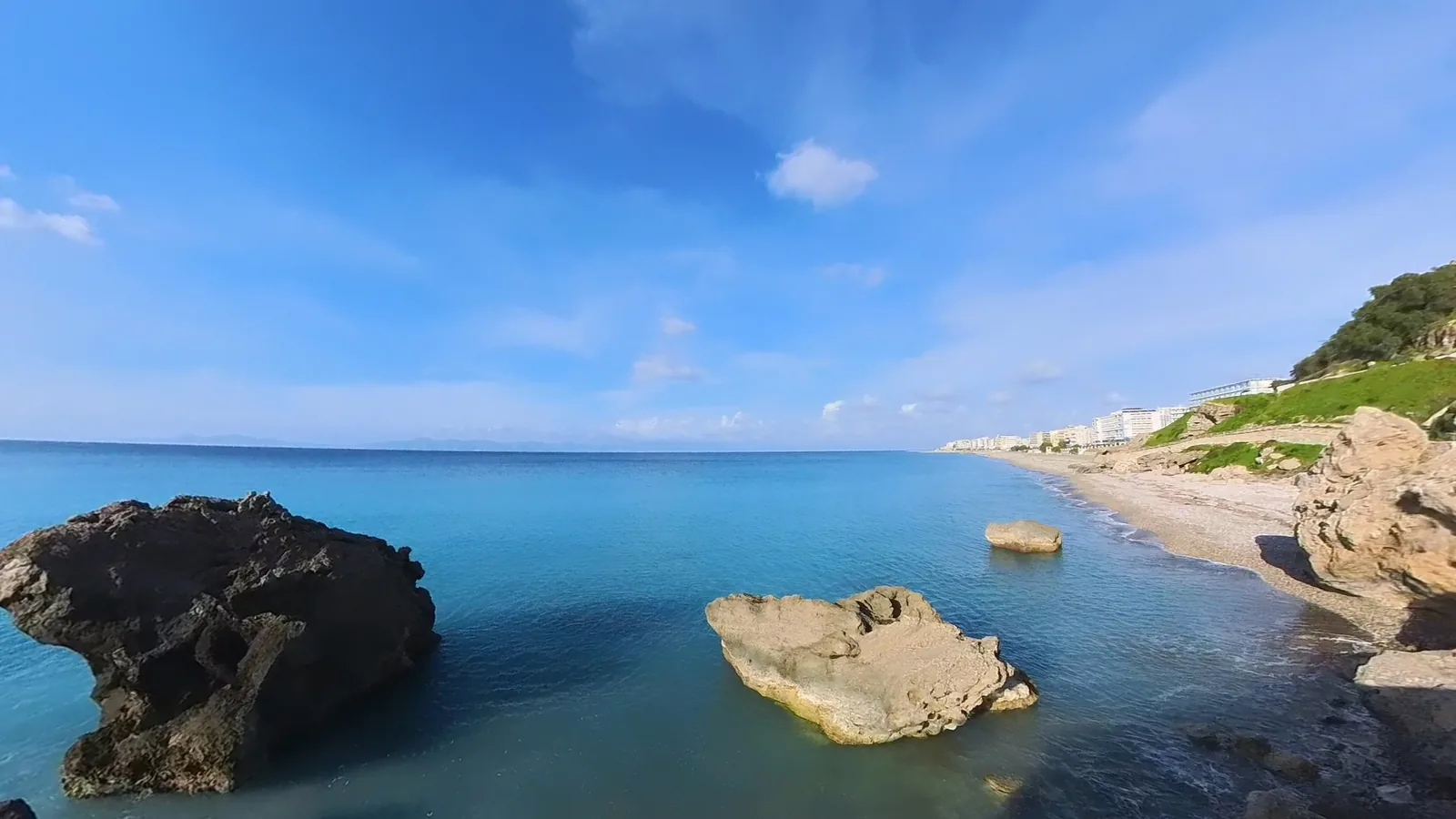
Locate a beach near your base
Start with the area where you’re staying and look along the nearby coast for beach locations. This helps you narrow your choices without starting with an island-wide list.
For a short beach break, I’d start close to your base rather than plan around a beach across the island. If you’re still choosing where to stay, use the Rhodes Island Guide’s beach overview alongside the map.
Read the beach details before choosing
The map helps you choose an area; the beach page helps you choose the beach. Read the details that matter to your group before making it your destination.
A beach pin marks a location, not the road entrance, parking area or a safe walking approach. Use the individual beach page for access advice rather than heading straight towards the pin.
If several beaches fit your plans, compare them when choosing a beach in Rhodes. I’d choose the one that suits your day, not simply the nearest dot.
- Beach and water: read about the shore and swimming conditions.
- Your group: look for family suitability or accessibility advice where relevant.
- Facilities: find out what is available before deciding what to bring.
- Access: read how to reach the beach and whether the approach suits you.
Chapter 3 of 8
Which villages and food stops can I locate?
Village and food locations on the map of Rhodes help you add a useful stop around your main destination. Use them to find somewhere to explore or eat near a beach, historic sight or viewpoint, rather than making a separate journey.
Villages to build an outing around
The map includes local villages alongside beaches, monasteries and other sights across Rhodes. These stops suit you if you want time away from the main tourist attractions, without filling every hour with sightseeing.
I’d choose a village near the place you already want to visit, rather than chase several scattered stops. Browse these village ideas to decide which deserves more of your day, then use the map to understand its location.
Restaurants, local shops and nearby stops
Restaurant and food locations give you a starting point when deciding where to break for a meal. Location helps narrow your choices, but choose somewhere you actually want to eat—not simply the closest pin.
Compare places to eat in Rhodes before making a restaurant the reason for a detour. If a meal matters to your day, check current opening times and booking arrangements directly with the restaurant.
For a casual village stop, leave some time to look around rather than planning only lunch. If a local shop catches your eye, you’ll have room to stop without rushing to the next attraction.
Chapter 4 of 8
Where are the main historic sights?
On the map of Rhodes, the Acropolis of Rhodes and Ancient Stadium are at Monte Smith. Ancient Kamiros is on Kamirou Avenue, while Filerimos—the Acropolis of Ialyssos—is in Ialyssos.
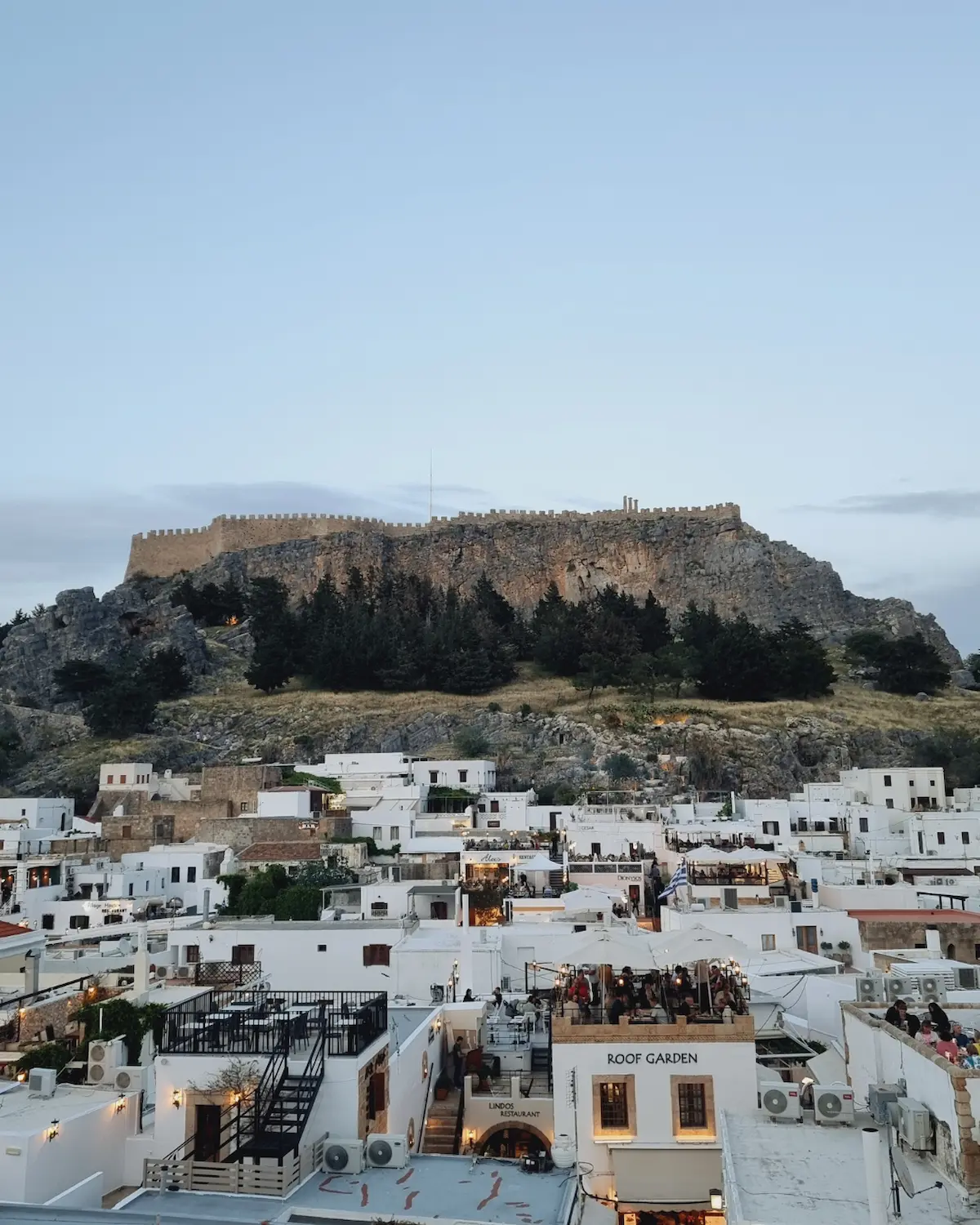
Monte Smith: Acropolis of Rhodes and Ancient Stadium
Monte Smith is the location to look for when finding the Acropolis of Rhodes and Ancient Stadium. These names belong to the same historic area, rather than two separate parts of the island.
If these are the sights you want to see, start with Monte Smith when planning your visit. Keep Filerimos separate: that is the Acropolis of Ialyssos, not another name for the Acropolis of Rhodes.
Ancient Kamiros on Kamirou Avenue
Ancient Kamiros is on Kamirou Avenue. Search for the archaeological site by its full name, rather than using the avenue alone as your destination.
I'd locate Kamiros before adding other stops to your day, so you can judge their positions on the island map. For help choosing between historic attractions, browse the main sights in Rhodes.
Filerimos in Ialyssos
Filerimos is in Ialyssos and is also known as the Acropolis of Ialyssos. If you see either name while planning, you are looking at the same historic destination.
The distinction matters when choosing your map destination: Filerimos means Ialyssos; the Acropolis of Rhodes means Monte Smith. If you want to spend more time in the area, explore things to do in Ialyssos before adding extra stops.
Grand Master Palace courtyard and the wall walk
The Grand Master Palace courtyard is the location associated with the Walk on the Wall and palace gardens. Use the courtyard as a location reference, rather than a guaranteed entrance to either attraction.
Check the current visitor entrance and access arrangements before setting out, especially if the wall walk is your main reason for visiting. I'd make it part of exploring Rhodes Old Town, rather than build the whole visit around wall-walk access.
Chapter 5 of 8
How can I find viewpoints and walking areas?
Use the map of Rhodes to find scenic places and walking areas, then use separate route information to plan your walk. A viewpoint pin helps you choose where to go; it is not a walking route.
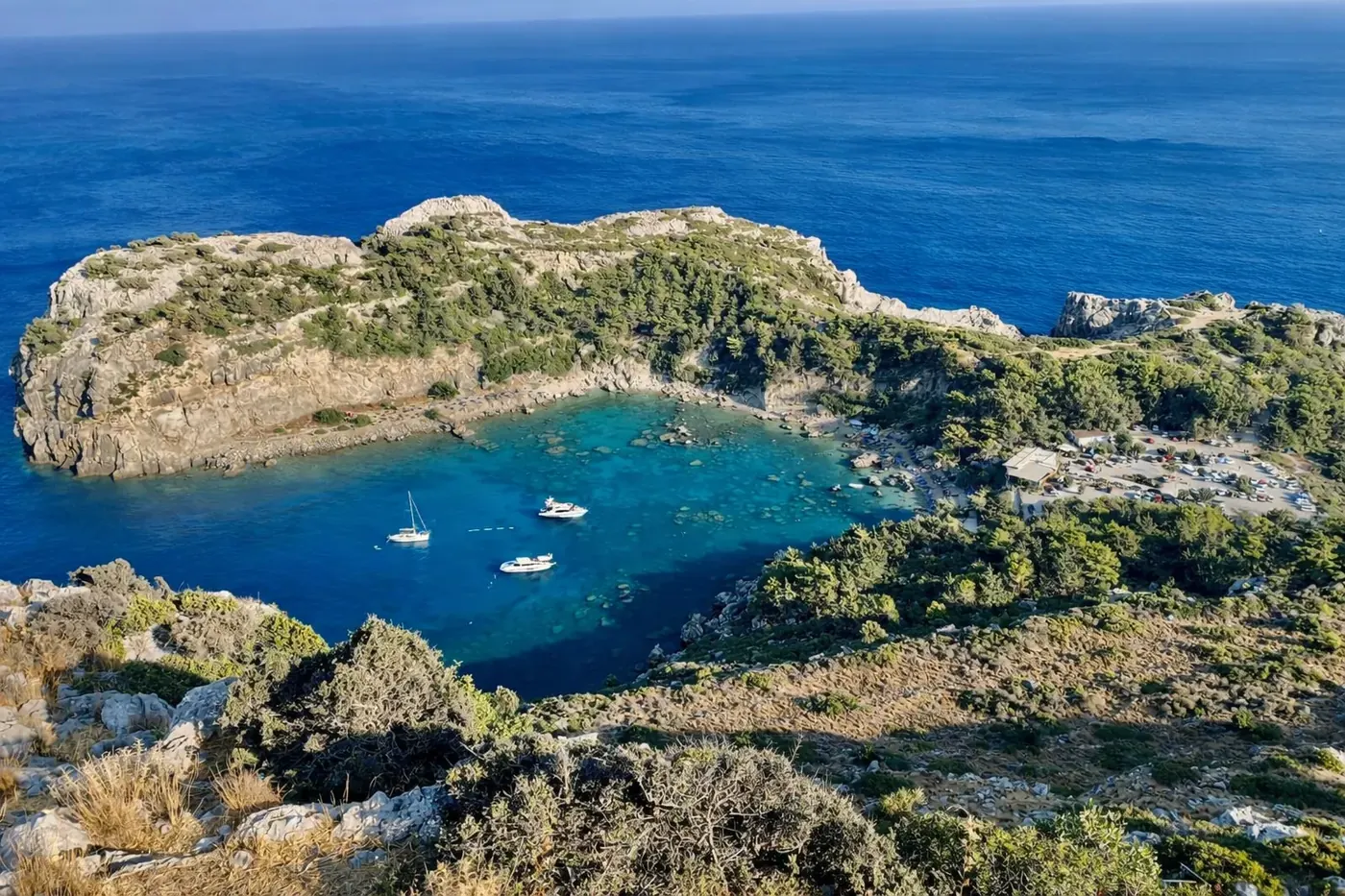
Scenic locations and coordinates
Look for viewpoints, monasteries and walking areas near the part of Rhodes you want to explore. This works well if you want a scenic stop without building your whole day around a hike.
Keep the place name alongside any coordinates you save. A viewpoint coordinate identifies the scenic location, not necessarily somewhere to park, a visitor entrance or a trailhead.
If you would rather stop for a relaxed outdoor break, browse picnic spots in Rhodes. Choose the kind of stop you want first, rather than choosing only by how close its pin looks.
Use walking pins to choose, not navigate
I’d use the pins to make a shortlist, then choose a walk using its own route description. Marker placement alone tells you nothing about steepness, surfaces, road conditions or whether a walk suits children.
Before setting out, get route information covering the starting point, distance, terrain and return route, plus current access restrictions. Keep detailed walking directions separate from this island-wide map.
- For a scenic stop: find the actual approach and visitor access, rather than heading straight towards the viewpoint coordinate.
- For a walk: follow a described route, not a line you imagine between nearby markers.
- For other outdoor plans: compare things to do in Rhodes before deciding how much of your day to spend walking.
Chapter 6 of 8
How do I turn nearby places into an outing?
Choose one main destination on the map of Rhodes, then add nearby places after checking the route between them. Two pins can look close while the journey needs a detour, so plan around the actual route.
Choose one main stop
Start with the place you most want to visit, rather than collecting every interesting pin around your accommodation. A beach, village, historic sight or walking area can give the day a clear focus.
I’d choose a main stop that makes the outing worthwhile on its own. This keeps the day flexible, especially with children or travellers who prefer a slower pace.
- 1. Locate your base: find where you are staying so you can picture the outward journey and return.
- 2. Select the main stop: choose the place you would least want to miss.
- 3. Compare nearby options: look for a meal, viewpoint, village or beach that adds something different.
- 4. Check transport: compare the actual route between stops using your chosen way of travelling, including the return.
- 5. Leave spare time: allow room for food, rests and staying longer somewhere you enjoy.
Add a nearby stop without overloading the day
Add one extra stop first, rather than turning a simple outing into a full-island circuit. Straight-line closeness tells you little about road access or how convenient the journey will be.
Monte Smith is a useful place to focus a history outing: both the Acropolis of Rhodes and Ancient Stadium are there. Filerimos is in Ialyssos, so you could compare options in the same area through things to do in Ialyssos. These are starting points for your own plan, not a fixed route.
Keep this map-based plan focused on one outing. For choosing your base and spreading sightseeing across several days, use planning your Rhodes holiday.
- Beach-led day: consider a nearby food stop instead of adding another beach simply because it appears close.
- History-led day: balance the main sight with a meal or viewpoint rather than another demanding visit.
- Village-led day: leave room to explore and eat; add another place only if the journey fits comfortably.
- Walking-led day: keep the walk as the main activity, with any later stop optional.
Match an activity to your chosen area
Choose the area before choosing a booked activity. Browse things to do by area to keep your ideas geographically focused.
Once you have chosen your area, compare Rhodes activities and travel bookings that fit the day. A booking with a fixed start time becomes your main stop; build anything else around it.
If you want to add a bookable activity, compare experiences by meeting point as well as what they include. Before paying, check the start and finish locations, duration and whether transport is included.
- Keep it nearby: an activity elsewhere on Rhodes may work better on another day.
- Match your energy: a busy activity followed by a demanding walk can leave little room to relax.
- Protect fixed times: leave breathing room before a booking rather than squeezing in one more stop.
Chapter 7 of 8
How should I plan transport between map stops?
Choose your stops first, then choose transport—not from how close the pins look on the map of Rhodes. Compare the actual routes between them before deciding whether to walk, take buses or rent a car.
Walking, buses and Rhodes Public Transport
Walking makes sense for a small group of stops connected by a suitable pedestrian route. Look at the walking route rather than the straight-line gap between pins, and keep the distance comfortable for your group.
Rhodes Public Transport is a free web and smartphone service for Android and iOS. It supports route planning by walking, bus, bicycle and car, plus estimated bus arrivals at specific stops. Use it to compare the journeys between your chosen places.
Buses suit a day when you can fit your stops around the services available. Timetables change seasonally, so use Rhodes bus routes and practical advice to plan your outward journey and return. Keep bus-stop arrival estimates separate from the timetable when planning your day.
When renting a car helps
A car is worth considering when you want several stops and more freedom over how long you stay. For a compact outing with suitable walking routes or convenient buses, you may not need one. Choose it for flexibility, rather than assuming a particular map pin requires a car.
If you want several stops without building the day around buses, I’d compare Rhodes car rental prices. You can also browse car rental options once you know which day and pickup location suit your plans.
My suggestion: decide which outings benefit from driving before choosing how many days to rent for. For a wider comparison, see getting around Rhodes before committing to a car for your whole stay.
Airport transfers to your base
Plan your airport journey separately from your sightseeing transport. You can arrange a transfer to your accommodation without deciding to rent a car for the whole holiday. This suits travellers who want the arrival journey settled but prefer to choose outings later.
If you want your arrival journey arranged, compare Rhodes airport transfers to your base. Use your exact accommodation address and flight details when booking, rather than only the nearest resort name.
Chapter 8 of 8
What should I know before following a map pin?
A pin on the map of Rhodes marks a destination, not automatically its entrance, parking area or a safe route. Use it to find the place, then follow visitor signs for the final approach.
How places are selected
The selection focuses on useful stops for independent exploring: beaches, villages, food spots, historic sights, viewpoints and walking areas. It brings familiar attractions and less obvious stops together so you can see what is nearby.
This is a starting point, not a list of every worthwhile place on Rhodes. A place missing from the map can still deserve your time. For wider holiday planning, use the Rhodes Island Guide.
Location pins, entrances and parking
Separate the destination from the way in. For a beach, archaeological site or walking area, look for signs directing you to visitor access and permitted parking.
I'd follow signs and barriers on the ground rather than keep moving towards a screen marker. If steps or uneven ground could affect your visit, explore accessible beaches in Rhodes and choose an approach that suits your needs.
Last review and practical limits
A map location alone cannot tell you today's access conditions, opening arrangements or transport availability. Before setting out, check the details that could change your day: entry arrangements for a sight, local access notices and your return transport.
Leave room to change plans if you meet a closure or restricted entrance. A nearby alternative is a better choice than trying to force a route through.
Book transport for your chosen stops
transfersFrequently asked questions
What can I find on this map of Rhodes?
The map brings together beaches, villages, viewpoints, historic attractions, restaurants, hiking spots and local favourites. Use it to understand where places sit before choosing your stops.
How should I use the map to plan a day out?
Choose your main stop, then look for nearby places that interest you. Check the actual route before adding them: places close on a map can need a longer journey.
Does this page rank the best beaches in Rhodes?
No. The map helps you locate beaches and see what is nearby. Use the Rhodes beach comparison to choose a beach that suits your day.
Where are the Acropolis of Rhodes and Ancient Stadium?
Both are at Monte Smith. Keep these separate from Filerimos, which is the Acropolis of Ialyssos.
Where are Ancient Kamiros and Filerimos?
Ancient Kamiros is on Kamirou Avenue. Filerimos, the Acropolis of Ialyssos, is in Ialyssos.
Where should I look for the Walk on the Wall and palace gardens?
The Grand Master Palace courtyard is the associated location. A location pin alone does not tell you the visitor entrance or current access arrangements.
Can I explore Rhodes without renting a car?
You can plan around walking and buses rather than driving. Rhodes Public Transport supports route planning and estimated bus arrivals at specific stops; build your outing around the return journey too.
Does a map pin show where I can park or enter?
A place marker locates the destination, not necessarily its parking area or visitor entrance. Follow the detailed place information and local signs for the final approach.
Can I use the map as a hiking guide?
Use it to locate walking areas, not to judge trail difficulty or follow a route. Read the relevant walking information before setting out.
Should I try to see the whole island in one day?
I'd choose a smaller area and give yourself time to enjoy it. Seeing several pins together is a useful starting point, not proof that they make a comfortable day trip.
Related pages
- Stegna Beach Rhodes – Calm Water, Seafood & Local Tips
- Best Beaches in Rhodes (2026) – The Ones You’ll Want to See First
- Most Underrated Villages in Rhodes 2026 — Local Hidden Gems
- Best Restaurants in Rhodes (2026 Local Guide)
- Things to Do in Ialyssos Rhodes (2026 Guide – Beaches, Surf & Local Spots)
- Rhodes Old Town Guide 2026 — What to See, Eat & Explore
- Best Picnic Spots in Rhodes (2026 Local Nature Guide)
- Rhodes Travel Guide 2026 – Local Tips, Itinerary, Beaches & Where to Stay
Planning your complete Rhodes holiday?
Our Island Mega Guide brings together everything you need to plan your Rhodes holiday, from choosing where to stay and finding the best beaches to transport, activities and practical travel advice.
Open the Rhodes Island Guide