
Chapter 1 of 8
Where should you shop in Rhodes Town?
Start in central Rhodes Town for jewellery, clothing, footwear, cosmetics and household items. If your shopping time is short, I’d choose the New Town shopping area near Mandraki rather than spend the day crossing the island.
The New Market and Mandraki
The New Market is also called Nea Agora, the historic market building near Mandraki Harbour. The name also appears in descriptions of the central shopping area, covering jewellery, clothes, shoes, cosmetics and household goods.
For practical shopping, focus on the surrounding central streets rather than making your visit depend on entering Nea Agora. Check access locally if you specifically want to go inside the building.
This area suits you if you want to browse shops while spending time in town. Combine it with coffee near Mandraki, and use these ideas for planning time in Rhodes Town to choose what else fits your day.
Rhodes Town is a practical shopping destination by bus; you don’t need to hire a car just for browsing here. Use the Rhodes transport advice to plan the journey from your accommodation.
Jewellery, clothes and everyday purchases
New Town is the better starting point for fashion, jewellery and modern shops. You’ll find Greek clothing brands, boutiques and footwear, alongside cosmetics and household items.
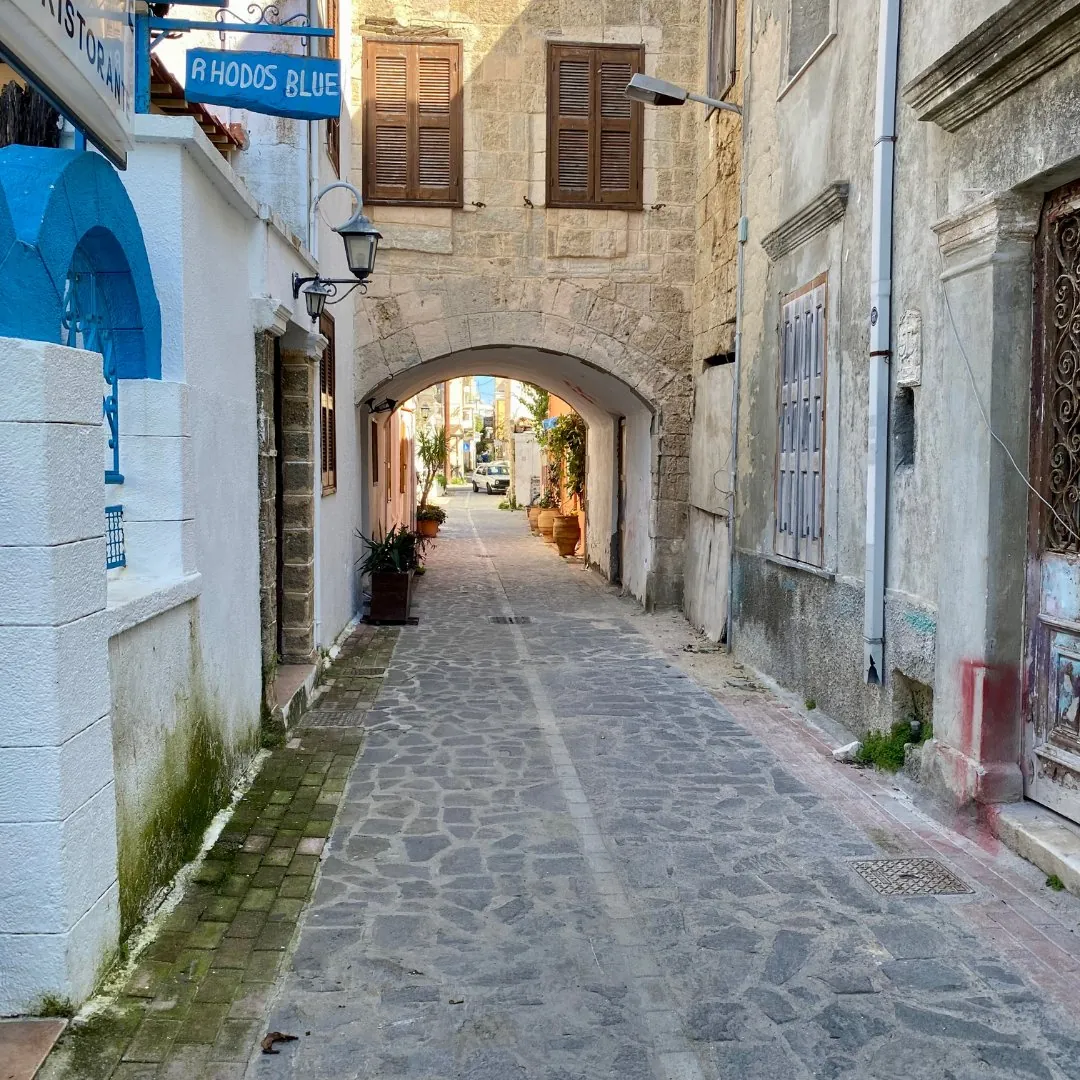
Old Town has a different focus: craft shops, ceramics, leather goods, natural-product boutiques and art. Choose it for browsing gifts in the lanes, rather than as your first stop for a straightforward clothes-shopping trip.
For natural cosmetics, Mermories Shop is one name to look for in Old Town. Rhodes Town also has leather shops selling sandals, belts, bags and wallets; detailed souvenir choices can wait until you know which shopping area suits you.
If your list mixes practical purchases and gifts, start with what you need in New Town, then browse Old Town. Leave some room in your Rhodes trip plans rather than turning a short shopping stop into a rushed island-wide search.
- Jewellery and fashion: start in New Town for boutiques, Greek clothing brands and gold or silver jewellery.
- Footwear: use the central shopping area for shoes; consider Old Town leather shops if you want sandals.
- Cosmetics and household items: begin in the central shopping streets rather than the produce market.
- Art and craft browsing: choose Old Town for ceramics, leather goods, photography and small artisan shops.
New Market versus the open-air market
The New Market near Mandraki and the Rhodes Town open-air produce market are separate places. The shared word “market” is easy to misread, but they serve different shopping needs.
Choose the central shopping area for clothes, jewellery, shoes and everyday purchases. Choose the open-air market for seasonal fruit, vegetables, herbs, olives, bread and other food products.
The open-air market suits you if browsing food stalls is part of the experience you want. It is not the best match if your main aim is comparing fashion shops or buying household items.
If you have limited time, pick the place that matches your shopping list rather than trying to visit both. When asking for directions, say “Nea Agora near Mandraki” or “the open-air produce market” instead of simply “the market”.
My suggestion: If you only have one shopping stop, choose New Town for everyday purchases or Old Town for crafts and gifts. Save a cross-island shopping trip for a particular producer or product you really want.
Chapter 2 of 8
Which villages are worth a shopping stop?
Choose Siana for honey and souma, Embonas for wine and mountain produce, and Archipoli for village food shopping. Koskinou suits craft-and-food browsing, Lindos combines seasonal stalls with boutiques, and Archangelos is the focused choice for ceramics.
You don’t need to visit all six: add shopping to a village visit you already want to make. Use the Rhodes map to choose stops along your route, then explore the surrounding areas in the Rhodes Island Guide.
Siana for honey and souma
Siana is a mountain village with strong beekeeping and souma-making traditions. Choose it if honey and local drinks interest you more than clothes or general souvenir shopping.
Souma is a strong grape spirit, and tastings are part of the village’s shopping appeal. Alongside honey and souma, look for locally made olive oil, herbal products and handcrafted wooden items.
Siana makes sense alongside Embonas on a mountain-village day. You can finish with sunset at Monolithos Castle, rather than making a separate journey just to buy a jar or bottle.
Embonas for wine and mountain goods
Embonas is the strongest choice if wine is your main shopping interest. It sits at the foot of Attavyros Mountain and is the centre of Rhodes’ winemaking region.
Pair village browsing with a winery visit so buying a bottle becomes part of the day’s experience. You can compare winery visits and tastings in the Rhodes wine tasting guide.
There is plenty here for food shoppers who aren’t interested in alcohol. I’d choose Embonas for a mountain food stop, rather than for a wide choice of fashion or craft boutiques.
- Wine and spirits: wine from producers, plus local souma.
- Fresh food: mountain vegetables and seasonal produce.
- Cupboard gifts: homemade jams, raisins, nuts, dried fruit and mountain herbs.
Archipoli for village food shopping
Archipoli suits you if you prefer simple village food shopping to rows of souvenir shops. Honey, herbs and small-scale farming give the village its shopping character.
Look for thyme and pine honey, dried oregano and olive oil from village families. Handmade candles and soaps add a few non-food options without turning this into a general shopping destination.
Combine a stop here with the forested areas towards Seven Springs. A beach lunch at Stegna or Haraki can round out the day, keeping shopping as one enjoyable stop rather than the whole outing.
Koskinou for crafts and food
Koskinou is a good choice when you want both handmade goods and something sweet to take away. Its colourful village setting suits a relaxed walk, with a small craft-and-food stall scene that is especially active in summer.
Ceramics, textiles and herbal soaps sit alongside village sweets and traditional koulourakia biscuits. Family-run outlets also sell olive oil, so this is a useful mixed stop when your group has different shopping interests.
I’d combine Koskinou with Kallithea Springs rather than dedicate a full day to shopping here. Choose it for a small-scale browse, not a large market or an extensive choice of shops.
Lindos for seasonal stalls and ceramics
Lindos suits you if you want shopping woven into a sightseeing day. Its lanes have boutique shops, while seasonal food and craft stalls usually appear between spring and early autumn.
There isn’t a weekly market to plan around. The seasonal stalls offer crafts, honey, jam, herb blends, ceramics and natural soaps; boutiques broaden the choice beyond food gifts.
For ceramics, Lindos offers boutique browsing rather than the workshop-focused stop you’d choose in Archangelos. Textile artisans, linen clothing, handcrafted jewellery and artwork make it useful when you want several kinds of gifts in one place.
Aim to browse in the morning, before the heat builds. Combine it with the sights and beaches of Lindos rather than travelling there only for seasonal stalls.
Archangelos for ceramics
Choose Archangelos when ceramics are the main reason for your shopping stop. Its workshops make it a more focused destination than villages where pottery is one item among food and souvenir stalls.
This is the place to prioritise if you want to spend time looking at handmade ceramics. If you simply want a piece while browsing other gifts, Lindos or Koskinou may fit your plans better.
I’d add Archangelos to an existing village visit rather than drive across the island for a casual browse. If you have a particular workshop in mind, check its opening arrangements before making a special journey.
My suggestion: if you want to visit several producer villages, I’d rent a car rather than build the day around buses. If wine or souma tastings are part of the plan, choose a non-drinking driver before setting off.
Chapter 3 of 8
Which food gifts are worth buying?
Honey, olive oil, dried herbs and traditional sweets are the most practical food gifts to buy in Rhodes. Keep fresh fruit, vegetables, bread, cheese and fish for meals during your holiday rather than your souvenir shopping.

Pine, thyme and wildflower honey
Honey is one of the strongest choices for a useful Rhodes souvenir, especially for someone who enjoys it at breakfast. Small family beekeepers produce honey on the island, with Archipoli and Siana good places to look.
Keep the varieties separate when comparing jars. A honey’s type tells you something different from its origin: look for both the variety and a named producer.
- Pine honey: darker and richer, and a good option if that is the style you enjoy.
- Thyme honey: lighter and floral; compare it with pine honey before choosing.
- Wildflower honey: another local option worth tasting rather than buying on the name alone.
- Where to look: Archipoli, Siana, local food stalls and selected Old Town shops. Seasonal stalls in Lindos also sell honey.
- What to read: the producer’s name and stated origin. A Rhodes-themed label is less useful than clear information about where the honey comes from.
Olive oil beyond souvenir packaging
I’d choose olive oil that someone will actually cook with, rather than a decorative bottle bought mainly for its shape. Small-producer extra virgin olive oil is a useful starting point, but plain packaging alone proves nothing about quality.
Look for a named producer, a clear origin and a harvest date. These help you compare bottles beyond the souvenir branding and distinguish Rhodian oil from oil simply sold on Rhodes.
Family-run outlets in Koskinou, Archipoli and Siana are places to look, alongside local markets and smaller Old Town gourmet shops. You do not need to make a village trip just to buy one bottle.
- For someone who cooks: choose a practical bottle of extra virgin olive oil with clear producer details.
- For a more intense flavour: consider an unfiltered oil if that suits the recipient’s taste.
- For decorative bottles: judge the oil’s label first. Attractive packaging neither guarantees nor rules out a worthwhile purchase.
Herbs and spices
Dried herbs are a straightforward gift for someone who likes cooking Greek food. Oregano, thyme, sage and rosemary are the main options to look for, rather than buying a generic blend without knowing its ingredients.
Archipoli and the mountain villages around Attavyros are good places to browse for herbs. Embonas sells mountain herbs too, while seasonal Lindos stalls offer herb blends.
I’d favour clearly named herbs from a seller who can explain their origin. For a blend, read the ingredient list so you know what you are taking home and how you will use it.
- Oregano: a useful first choice if you want to recreate Greek meals at home.
- Thyme, sage and rosemary: choose herbs you already enjoy cooking with, rather than buying every variety.
- Spice and herb blends: look for named ingredients and origin information, not just a broad “Greek seasoning” label.
Traditional sweets
Traditional sweets work well when you want something to share rather than another household souvenir. Start with something you have enjoyed during your stay; explore Rhodes food specialities to connect purchases with dishes and treats you have tried.
Pasteli, loukoumi and spoon sweets are practical take-home options. For fresh bakery sweets, choose with your journey in mind and ask the baker about storage and how long they will keep.
Koskinou is a place to look for village sweets and koulourakia biscuits. Embonas offers homemade jams, raisins, nuts and dried fruit, while seasonal Lindos stalls also sell jam.
- Pasteli: a sesame-and-honey bar, and a simple choice for a small food gift.
- Loukoumi: Turkish delight, including rose or mastic varieties.
- Spoon sweets: another traditional option if you prefer a jarred gift.
- Baklava: buy from a local bakery; browse bakeries in Rhodes if you want to try some before choosing.
- Koulourakia: traditional biscuits to look for among village sweets.
- Melomakarona: a seasonal choice at Christmas, rather than something to expect throughout the year.
Fresh produce for your holiday
Fresh produce is worth buying for your stay, especially if you have a kitchen or want a simple picnic. Treat it as holiday food rather than a take-home gift, and buy amounts you can finish.
Tomatoes, cucumbers, seasonal fruit, olives and village bread make an easy starting point. Afandou is a place to look for everyday food shopping, while Embonas offers mountain vegetables alongside its longer-lasting products.
Cheese and fish make more sense when you can store them properly and prepare them soon. If you only want picnic food, keep the shopping simple rather than buying ingredients that need a kitchen.
- For a simple lunch: tomatoes, cucumbers, olives and fresh bread.
- For breakfasts and snacks: seasonal fruit, with nuts or dried fruit if you want something longer-lasting.
- For self-catering: fresh garlic, vegetables, feta or graviera, plus fresh fish when available.
- For extra flavour: homemade pickles, which are among the food products to look for in Afandou.
Chapter 4 of 8
Which wine and local spirits should you choose?
Choose Athiri for a crisp white, Amorgiano for an earthy red, or Muscat for a floral, sweet wine. Souma is Rhodes’ local grape spirit; buy a bottle as a gift, or make choosing it part of a village tasting outing.
Athiri, Amorgiano and Muscat
These three names give you a useful starting point when browsing Rhodian wines. Choose around what you or the person receiving the gift already enjoys, rather than buying the most decorative bottle.
- Athiri: a crisp white, worth starting with if white wine is your usual choice.
- Amorgiano: an earthy red for someone who prefers red wine.
- Muscat: floral and sweet; choose it for a sweet-wine drinker rather than someone who prefers dry wines.
- Cair Brut: a local sparkling option if you want something beyond the three main choices.
Souma, the local grape spirit
Souma is a traditional grape spirit, similar to tsipouro, made in small distilleries. It is strong, and flavours vary between villages, making it a more personal choice than a bottle bought only for its label.
Siana is a good stop for souma tastings, while Embonas and Salakos are also places to look for it. I’d choose souma for someone who already enjoys spirits; wine is the better fit for a wine drinker.
Choosing a bottle or a tasting
For a straightforward purchase, try small gourmet shops in the Old Town or the Cair shop in Rhodes Town. You don’t need to spend a day travelling to the villages just to buy one bottle.
For a longer outing, Embonas is the main wine stop, with bottles sold directly by producers. There are also wineries in Pastida and Siana; compare wine-tasting stops in Rhodes before choosing where to spend your time.
A tasting suits you if you enjoy comparing wines and want the purchase to be part of the holiday. If you only want a gift, a shop visit is simpler: tell the seller your budget and preferred style.
Embonas wine tasting and a Siana souma stop can form part of the same countryside day. If you want to extend it, sunset at Monolithos is an option; use the Rhodes Island Guide to fit the outing around your other plans.
A car is useful for several village stops, but the driver should skip the alcohol. Before booking a tasting, check what is included, particularly transport and whether bottles are purchased separately.
My suggestion: If you want help choosing rather than guessing from labels, book a local tasting experience. Choose one with transport included if everyone in your group wants to drink.
Chapter 5 of 8
Which non-food souvenirs are worth considering?
Choose ceramics for a lasting Rhodes keepsake, or cosmetics for a practical gift the recipient will use. Textiles, leather goods and small artworks are also worth considering if they suit someone’s home or everyday style.
Ceramics for a lasting gift
Ceramics are my first choice for someone who wants a souvenir to keep for years. Look for hand-painted detail, natural colours, traditional Rhodian designs and pieces signed by the maker.
Archangelos workshops and ceramic boutiques in Lindos are good places to start. You can also browse ceramics at Old Town artisan stands and craft stalls in Koskinou.
A handmade appearance and local production are different things. Brush marks, an uneven shape or a Greek design cannot tell you where a piece was made. Ask who made it and where; a maker’s signature gives you something specific to discuss.
Choose for its intended use, not just its appearance. If you want a bowl or plate for meals, make sure it is suitable for food and follow its care instructions. Decorative ceramics suit someone who enjoys displaying objects, but are less useful for a gift recipient with limited space.
- For a craft-focused gift: favour identifiable makers and hand-painted work over generic printed patterns.
- For everyday use: choose a manageable size and get clear guidance on washing and use.
- For a display piece: match the colours and dimensions to the recipient’s home.
- For an interest in pottery: ask about the firing method and how it affects the finish.
Olive-oil, herb and beeswax cosmetics
Olive-oil soaps, beeswax balms and herbal body oils are practical alternatives to decorative souvenirs. Shampoos and handmade creams are other options, especially when you already know what the recipient likes.
Browse Old Town cosmetics boutiques, village producers and handmade-product stalls. Mermories Shop in the Old Town is one option to look for; soaps also feature among the craft offerings in Lindos and Koskinou.
Read the full ingredient list rather than choosing by the olive branch or herb pictured on the packaging. Olive oil, herbs and beeswax describe ingredients, not where the product was made or how it will suit someone. A handmade label alone does not mean Rhodes-made.
I’d choose a small soap over a large skincare set when I’m unsure of someone’s preferences. For anyone who avoids fragrance or particular ingredients, choose around those preferences rather than the word “natural”. If local production matters to you, look for a named maker and a clear place of manufacture.
- Olive-oil soap: a simple gift for someone who uses bar soap; compare ingredients and scent.
- Beeswax balm: choose a clearly labelled product with a stated use, rather than an anonymous pot.
- Herbal body oil: best for someone whose scent preferences you know.
- Cream or shampoo: a more personal choice; favour a small size when buying something unfamiliar.
Choosing something you will use
My suggestion: buy one well-chosen item rather than several souvenirs you would never choose at home. Think about the recipient’s routine, available space and taste before deciding what feels most “Greek”.
Textiles are a strong alternative if you prefer something less fragile than pottery. Rhodes has weaving and embroidery traditions, with textile artisans in Koskinou and Lindos. For more context behind these crafts, explore Rhodes folklore and local traditions.
Rhodes Town also has leather shops offering handmade items. Choose by material, fit and finish rather than price alone; very cheap products described as leather deserve a closer look at their material labels. Being sold in Rhodes and being made in Rhodes are separate things across all these categories.
- Textiles and embroidery: consider table runners, embroidered pillowcases, woven bags and lacework. Match dimensions and care needs to how they will be used.
- Leather goods: sandals, belts, bags, wallets and bracelets can become everyday favourites. Try wearable items for fit and inspect stitching and fastenings.
- Art and photography: small canvas paintings, sketches, black-and-white prints and ceramic-mounted artwork make personal keepsakes. Choose a subject you genuinely want to see at home.
- Candles and wooden crafts: look for handmade candles in Archipoli and handcrafted wooden items in Siana. Choose a useful size and an identifiable maker.
- Clothing and jewellery: linen clothing and handcrafted jewellery are options in Lindos; New Town offers fashion and jewellery shops. Buy for fit and taste, with clear material information.
Chapter 6 of 8
How should you plan a market visit?
Plan a scheduled produce-market visit in Rhodes Town differently from browsing village shops or seasonal stalls. If you only want a few gifts, I’d choose a flexible stop somewhere you already plan to visit.
Market days, stall availability and shop hours can change, so check locally before making a special journey. For the wider holiday, use the Rhodes Island Guide to choose an area worth exploring even if there are fewer stalls than you hoped.
Open-air produce shopping in Rhodes Town
The Rhodes Town open-air produce market is the best fit here for fresh food and everyday shopping. Choose it for seasonal fruit, vegetables and ingredients, rather than rows of souvenir shops.
Farmers bring produce from villages including Archipoli, Salakos and Maritsa. The appeal is the mix of food, conversations and local shoppers stocking up, with colourful displays that also reward a slow browse.
This is a separate outing from the central shopping area called The New Market, or Nea Agora, near Mandraki. That name refers to a different shopping setting, not the open-air produce market.
Once you know when the market is running, aim for the earlier part of the morning for cooler browsing and better choice. Rhodes Town is a practical bus destination; use the Rhodes bus guide to plan your journey and return.
- Fresh produce: Look for seasonal fruit, tomatoes, cucumbers, garlic and olives.
- Kitchen supplies: Herbs, spices, honey, bread, feta and graviera give you more than just picnic fruit to browse.
- Variable selection: Fresh fish depends on the season and the stalls trading that day.
- Best suited to: Travellers who enjoy food shopping, local daily life or buying ingredients for a self-catering stay.
- Less suited to: Anyone wanting a quick, predictable gift stop. Village shops or shopping streets are easier to fit around other plans.
Seasonal stalls in Lindos
Lindos has seasonal food and craft stalls rather than a weekly market. These usually appear between spring and early autumn, making browsing an extra part of a village visit rather than its main purpose.
You may find handmade crafts, ceramics, natural soaps, honey, jam and herb blends. It suits you if you want a few small gifts while exploring, but not if you want a broad fresh-produce shop.
I’d leave room for browsing during a Lindos village visit, rather than travel there just for stalls. For herbs, favour sellers who can tell you what they grow over an anonymous packaged mix.
Village browsing without a fixed market day
Village shopping is often a mix of small shops, producer outlets and occasional stalls, not a formal weekly market. Pick the village for its setting and the products you enjoy, then browse whatever is open.
Use the map of Rhodes to choose a stop near your route. A short browse works well; you don’t need to turn every honey shop or fruit stall into a separate destination.
- Archipoli: A good choice for honey, herbs and small-scale farming products. Look for thyme or pine honey, dried oregano, handmade candles and olive oil from village families. It pairs naturally with the forested area towards Seven Springs.
- Embonas: Choose this village at the foot of Attavyros for wine producers and mountain food shopping. Vegetables, homemade jams, raisins, nuts, dried fruit and herbs add variety beyond the wine. It suits a longer food-focused stop more than a quick souvenir run.
- Siana: Best for a browse centred on honey and souma, the local grape spirit. Olive oil and handcrafted wooden items add other options. Where tastings are offered, they help you choose between different honey flavours.
- Koskinou: Food and craft stalls are especially associated with summer. Look for ceramics, textiles, herbal soaps, village sweets and koulourakia biscuits. It makes a sensible browsing stop before or after Kallithea Springs.
- Afandou: Choose this large, year-round village for everyday shopping rather than a staged market outing. Fruit, olives, cheese, village bread and homemade pickles are the main things to look for.
- Kolymbia: Occasional seasonal farmers’ stalls offer fruit, honey, herbs and olive oil. This is a convenient option for east-coast holidaymakers, especially families wanting fruit before visiting Tsambika Beach or Seven Springs.
My suggestion: If you want to browse several villages, I’d rent a car rather than build the day around buses. For a few gifts, keep it simple and shop near somewhere you’re already visiting.
Chapter 7 of 8
How do you fit shopping into your trip?
Keep shopping in Rhodes Town simple: arrive by bus if needed, then browse on foot. For several village stops, consider a rental car and combine shopping with sightseeing, lunch or a beach.
A simple Rhodes Town shopping outing
You don’t need to rent a car just for shopping in Rhodes Town. Choose Old Town for crafts and souvenirs, or New Town for fashion and jewellery, then explore on foot.
I’d start in the morning, browse a few Old Town side streets and stay for lunch. This suits you better than a packed island route if you want a relaxed browse rather than specific village products.
- Art and craft morning: explore Old Town’s artisan lanes for ceramics, textiles and photography, then have lunch inside the walls.
- Fashion-focused outing: spend more of your time in New Town’s clothing, jewellery and modern shops rather than trying to cover every souvenir lane.
- Shopping and seaside time: have coffee near Mandraki, then finish with an afternoon at Elli Beach. Keep purchases light if you’re carrying them all day.
- Market-focused morning: make the Rhodes Town open-air market your main shopping stop, then continue to coffee or sightseeing rather than adding another full shopping circuit.
Village shopping with a rental car
If you're combining several village stops, I'd compare Rhodes car rental options rather than build the whole day around buses. A car gives you more freedom to linger with producers and combine shopping with countryside stops.
Choose one area or theme rather than trying to visit every shopping village. Use the map of Rhodes to group your stops before booking a car.
Combine Lindos shopping with time exploring Lindos, rather than making it a separate souvenir run. Morning browsing works well before the heat builds, leaving the rest of your visit for the village and its sights.
- Honey and countryside: visit Archipoli for honey, herbs and small village products, walk around Seven Springs, then have lunch at Stegna or Haraki.
- Wine and mountain villages: combine Embonas wineries with Siana’s honey and souma shops, then finish at Monolithos for sunset. Keep the driver alcohol-free; buy bottles to enjoy later.
- Crafts and Kallithea: pair Koskinou’s textiles, ceramics and village sweets with a visit to Kallithea Springs.
- East-coast stops: fit Afandou shopping into an outing nearby. In Kolymbia, seasonal fruit stalls can be a useful stop before Tsambika Beach or Seven Springs, rather than the reason for a separate journey.
- Specialist shopping: make Archangelos a planned stop if ceramics are your priority. Salakos can fit a village-products outing when it already suits your route.
Using buses for a shopping day
Buses are a practical choice for a Rhodes Town shopping day, especially when you don’t want to drive. They suit a single main destination better than a day built around several producer villages.
Bus services change seasonally, so check Rhodes bus routes and travel tips for current planning information, including your return. Build the day around the services available from your accommodation, not a long shopping list.
- Choose your main destination first: Rhodes Town for a broad browse, or another town or village that fits the available service.
- Allow time between shopping and your return departure. A relaxed lunch is easier to shorten than an extra village stop.
- Keep purchases manageable: one reusable bag is more comfortable than several loose bags, especially with fragile ceramics or heavy bottles.
- If several village stops are essential, change the transport plan rather than trying to squeeze them between bus departures.
Arrival transfers and other bookings
If your first stop after landing is your accommodation, you can book a Rhodes airport transfer separately from your shopping plans. Drop your luggage first and leave browsing for an outing when you’re not carrying travel bags.
For a wider day out, browse Rhodes transport and experience bookings alongside your shopping stops. Choose the main activity first, then add nearby shops rather than filling every gap with another journey.
If tasting local products matters more than browsing shelves, compare food and village experiences. Read the itinerary for the stops and transport included, especially if wine tasting is part of the day.
Use the Rhodes Island Guide to choose what else to see near your shopping stops. For organising the rest of your stay, fit this outing into your wider holiday plan rather than giving souvenirs a whole extra day.
Chapter 8 of 8
How do you choose well and get purchases home?
Choose by the product, its origin and how you will use it—not just the souvenir label. Before paying, make sure you can pack it safely and bring it home within your baggage and destination rules.
Check the maker, ingredients and origin
Something bought in Rhodes is not automatically made in Rhodes. A Greek design, island name or pretty village display tells you less than clear maker and origin details.
If supporting local producers matters to you, look for a named beekeeper, grower, winery or craftsperson. For handmade goods, ask where the item was made and which parts were made by hand. A seller who can explain the product gives you more to work with than a souvenir label.
Choose food gifts you will actually use. You can explore Rhodian dishes and flavours if you need ideas beyond another bottle for the cupboard.
- Honey: look for the producer and stated origin. Taste before buying when samples are offered; pine, thyme and wildflower honey give you different flavours.
- Olive oil: favour clear producer details, stated origin and a harvest date. Look for extra virgin oil rather than choosing by a decorative bottle alone.
- Herbs: compare aroma where samples are available, and look for growing or packing details. Attractive packaging alone tells you little about where the herbs grew.
- Wine and souma: choose clearly labelled bottles with producer details and alcohol strength. Keep receipts, especially for wine and spirits.
- Ceramics: look closely at painted details, the finish and any maker’s signature. Hand-painted and handmade are different claims; clarify both if the craft is why you are buying. For bowls, plates or cups, confirm they are suitable for food use.
- Cosmetics: read the ingredient list rather than relying on the word ‘natural’. Choose fragrance-free products if that is your preference, and check for ingredients you avoid.
- Textiles and leather: compare material details, stitching and finish. A very low price is a reason to inspect a ‘leather’ claim, not proof of a bargain.
- Sweets: keep ingredient and allergen labels with the gift. Pasteli contains sesame and honey, so consider who will receive it.
Compare value without fixed price claims
Compare like with like: the same quantity, material and level of craftsmanship. A smaller jar can look cheaper while costing more for the amount inside.
A village stall is not automatically better value than a town shop. Equally, a higher price may reflect handmade work rather than better packaging. I would pay more for a useful, well-made piece with a clear maker than for a large souvenir set.
Bring some small-denomination cash for smaller purchases, but judge value by the final price offered. Paying cash is not a guarantee of a discount.
- Food and drink: compare net weight or volume, producer, origin and product type.
- Ceramics and textiles: compare size, materials, finish and the work involved—not just the pattern.
- Cosmetics: compare the amount inside and ingredients, rather than the gift box.
- Total cost: include protective packing and any extra baggage you would need. A cheap bottle becomes less appealing if it pushes your bag over its limit.
Pack honey, oil, wine and ceramics
Before buying liquids or food gifts, read your airline’s current liquid, alcohol and baggage rules. Also check security rules for your departure and any connecting airport, plus your destination’s food and alcohol restrictions.
Honey, oils, creams and drinks need particular attention when travelling with cabin baggage only. Small packaging does not automatically make an item suitable for your route. Check the rules first rather than relying on a shopkeeper’s flight advice.
For permitted purchases, pack against both leaks and impact. Keep labels and receipts, but remember that neither replaces baggage or customs requirements.
- Honey and spoon sweets: check that the lid is secure, place each jar in a separate sealable bag, then cushion it.
- Olive oil, wine and souma: keep the original closure intact. Use a protective bottle sleeve or padded wrapping, with a separate leak-resistant bag.
- Glass containers: keep them apart and away from the suitcase edges. Pack soft items around them so they cannot knock together or move.
- Ceramics: ask for protective wrapping at purchase. Wrap each piece separately, protect handles and rims, and use a rigid box where practical.
- Cabin-carried ceramics: consider this only if the packed item fits your airline’s size and weight limits. It still needs protection inside your bag.
- Final luggage check: weigh the fully packed bag, including wrapping. Keep any purchases needing declaration easy to identify.
Choose gifts for limited luggage
With limited luggage, I would choose flat, light or solid gifts before bottles and jars. Save larger ceramics and several bottles of wine for a trip with enough baggage space.
Keep your baggage choice alongside the rest of your Rhodes trip planning, especially if you expect to bring gifts home. These are the options I would shortlist:
- Dried oregano, thyme or sage: compact gifts for someone who cooks, where your destination permits them.
- Packaged pasteli or loukoumi: small food gifts with ingredient labels kept intact, subject to destination rules.
- Solid olive-oil soap: less awkward to pack than bottles of body oil or jars of cream.
- A small embroidered textile or woven item: soft, foldable and easier to protect than pottery.
- An unframed sketch or photo print: pack it flat between stiff protective layers.
- A small leather wallet or bracelet: useful without taking much room, provided the material and maker suit what you want.
- Final choice: buy fewer useful gifts rather than filling every gap. One item someone will enjoy is often better than several bought just because they say Rhodes.
Book transport and local experiences
transfersFrequently asked questions
Where should I go shopping in Rhodes?
Start in central Rhodes Town for jewellery, clothes, footwear, cosmetics and household items. For a village shopping trip, consider Siana for honey and souma, Embonas for wine, or Archangelos for ceramics.
What is worth buying in Rhodes?
Honey, olive oil, herbs, wine, souma, ceramics, natural cosmetics and traditional sweets are worth considering. I'd choose something you'll use rather than buying a souvenir just because it carries the island's name.
What can you buy at the New Market in Rhodes?
The central shopping area around the New Market is associated with jewellery, clothing, footwear, cosmetics and household items. Plan to browse the surrounding area rather than making an indoor visit your only reason to go.
Is the New Market the same as a farmers' market?
No. Keep the New Market shopping area separate from Rhodes Town's open-air produce market when planning your visit. They are different shopping stops.
Which villages are good for local products?
Siana suits honey and souma shopping, while Embonas suits wine and mountain products. Archipoli offers a village-food focus, and Koskinou combines craft and food browsing.
Where can I look for ceramics in Rhodes?
Archangelos and Lindos are places to look for ceramics. Ask who made a piece and where it was produced if local craftsmanship matters to you.
What kinds of honey should I look for?
Pine, thyme and wildflower honey are options to look for. Read the producer and origin details rather than choosing by the souvenir packaging.
Which wines should I look for in Rhodes?
Look for Athiri, Amorgiano and Muscat. Embonas is a useful village stop if wine is a priority; you can also explore wine-tasting options in Rhodes.
Do I need a car for shopping in Rhodes?
You don't need to rent a car just for central Rhodes Town shopping. I'd consider one if you want to combine several village stops, especially when shopping is part of a wider island day out.
What souvenirs are easiest to take home?
If packing space is tight, I'd start with small packets of herbs or a compact gift. Honey, oil, wine and ceramics need more careful packing. Follow your airline's baggage rules and your destination's food and alcohol restrictions.
Related pages
- Rhodes Island Guide – Discover Beaches, Towns, Food & Local Tips
- Monolithos Castle Rhodes – Local Guide, History, Beaches & How to Visit (2026)
- Rhodes Wine Tasting Guide 2026 — Best Vineyards to Visit
- Best Things to Do in Lindos Rhodes (2026 Guide – Beaches, Acropolis & Village)
- Rhodes Food Guide 2026 — Traditional Dishes You Must Try
- Best Bakeries in Rhodes (2026 Local Guide – Greek Pastries & Bread)
- Rhodes Folklore and Local Traditions Explained (2026 Guide)
- Rhodes Bus Guide (2026): Routes, Prices + Airport Bus Tips Most Tourists Miss
Planning your complete Rhodes holiday?
Our Island Mega Guide brings together everything you need to plan your Rhodes holiday, from choosing where to stay and finding the best beaches to transport, activities and practical travel advice.
Open the Rhodes Island Guide