


Area guide
Apolakkia guide: what to know before you go
Apolakkia is a farming village in a valley in south-west Rhodes, inland from the Aegean coast. Watermelons, the village square, old churches and the reservoir shape a visit here—not a seafront promenade or a long list of organised attractions.
For most visitors, it works best as part of a western driving day: combine the village with Monolithos Castle and a beach stop rather than making the journey solely for a walk around the square. Use the Rhodes Island Guide to place it within a wider island itinerary.
Apolakkia village: rural character and whether to stay

Agriculture remains central to Apolakkia’s identity. Olive groves and citrus trees surround the village, while watermelons have earned it a reputation as Rhodes’ melon-growing centre. The square is the natural starting point, with small tavernas and an Italian-period building adding another layer to the village’s appearance.
Come for a modest village stop with time to eat, not an attraction-filled afternoon. Walking through the centre makes more sense when paired with the parish church, the lake or the coast. The village and its surroundings offer different kinds of stops; they are not one compact sightseeing area.
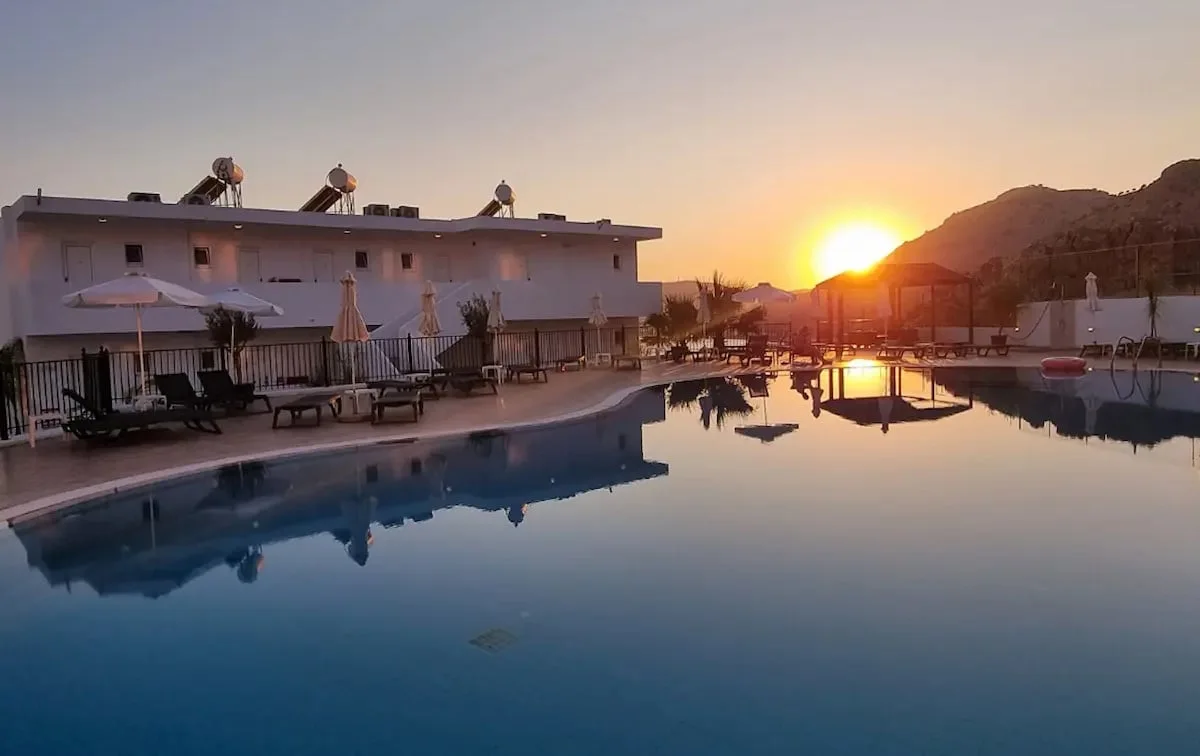
As a holiday base, Apolakkia suits you if rural quiet is the aim and you will have a car. For a first Rhodes holiday, a beach-focused family stay or evenings with plenty of choice, choose elsewhere. You are inland, and trips to Rhodes Town are substantial. Compare alternatives through Areas of Rhodes before committing to a stay.
Apolakkia’s churches and the remains of Agia Marina Castle
Start with Agia Marina, the main parish church by the village square. Dedicated to Apolakkia’s patron saint, it remains a place of worship and pilgrimage rather than simply a sightseeing stop. If it is open and no service is underway, look for the carved wooden iconostasis and religious paintings; dress respectfully and avoid interrupting worship.
The Castle of Apolakkia, also called the Castle of Agia Marina, stood on the low hill east of the church. Probably dating from the 14th century, it belonged to the period of the Knights of Saint John. Very little survives. Treat it as a historical detail to notice, not a substantial castle visit, and do not expect intact towers or a developed visitor attraction.
Agios Georgios Vardas is the stronger choice if Byzantine church history interests you. Dating to 1289–1290, it is known for its frescoes. Ask locally about access before making it the centrepiece of your day: an old church is not necessarily somewhere you can enter whenever you arrive.
Agia Marina celebrations and Apolakkia’s watermelon festival
Saint Marina’s feast day is 17 July, with the village’s main religious panigiri traditionally held on the eve of the feast. The square becomes a gathering place for music, dancing and food, bringing residents and visitors together. This is a community celebration, so allow room for the religious observance as well as the evening festivities.
Apolakkia also has a watermelon festival celebrating its agricultural identity, with Greek music, dancing, food and drinks. Check the current programme locally rather than building your trip around an assumed annual date. The watermelon celebration and the Agia Marina panigiri are separate events.
If you are coming for either celebration, arrange your journey home before settling in for the evening. A daytime sightseeing route and a village festival need different transport planning, especially if your accommodation is on the other side of the island.
Apolakkia Lake and the countryside around the dam
Apolakkia Lake is a reservoir north of the village. The dam supports local irrigation, and the wetland habitat attracts birds. It is worth adding if you want a nature stop alongside the village’s churches and square.
Keep the plan simple: enjoy the views, watch for birds and take a walk where access is clear. Do not assume there is a maintained, waymarked circuit around the entire shoreline. Bring water, sun protection and shoes suitable for uneven ground, and avoid turning a short summer stop into an exposed midday walk.
The rural roads around Apolakkia also pass olive groves and citrus-growing land. They offer another way to see the agricultural setting, but remember that these are working roads rather than pedestrian paths. Leave access clear and stay out of cultivated plots.
Apolakkia beaches, Monolithos and nearby places to combine
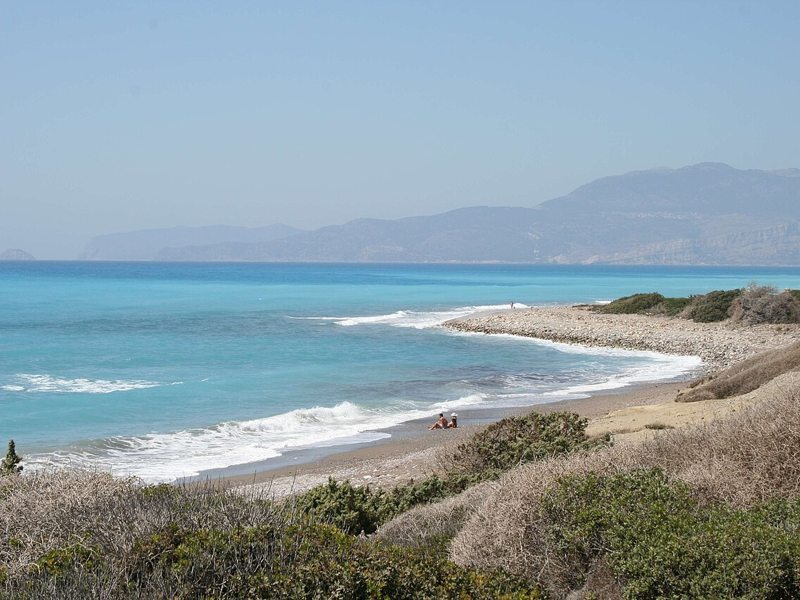
Apolakkia village is not on the beach. Its nearby coast is a separate outing, with a long, lightly developed shoreline rather than a resort waterfront. Apolakkia Bay includes protected dune and coastal habitat, so use existing access routes, leave vegetation undisturbed and take your rubbish away.
Limni is reached by a dirt road near Apolakkia Dam. Check your rental agreement before taking a hire car onto an unsurfaced road, and turn back if the surface is unsuitable. Bring what you need rather than relying on beach facilities. Assess the sea when you arrive; a quiet shore is not automatically a safe swimming spot.
- Western route: combine Monolithos, its castle and Fourni with Apolakkia. Monolithos Castle is 13 km away, typically 15–20 minutes by road. Fourni is a small pebbly bay below the castle, best treated as a simple beach stop rather than somewhere with extensive facilities.
- East-coast alternative: Gennadi is 17 km away, typically 20–25 minutes. Use it as the next village stop before heading to the coast; the measured distance is to Gennadi, not a particular beach entrance.
- Village combination: Asklipio is 23 km away, typically 25–35 minutes. Pair it with Apolakkia if you would rather spend the day visiting villages than moving between beaches.
- Resort connection: Kiotari is 24 km away, typically 30–40 minutes, making Apolakkia a practical inland-and-western outing from a south-east coast stay.
Eating, coffee and everyday supplies in Apolakkia
The small tavernas around the square are the straightforward choice for a meal. Make lunch part of your village stop rather than expecting a large restaurant district. Ask what is available that day; there is no need to plan around a named restaurant to enjoy the square.
For coffee, check what is serving around the centre when you arrive. There is a small food shop for basic supplies, but do your main shopping before a longer rural stay. If you need a particular ingredient, baby supplies or medication, do not assume you will find it in the village.
Carry water and a snack before heading to the lake or a remote beach. For medical planning, use Pharmacies and hospitals in Rhodes rather than relying on an unverified local service.
Getting to Apolakkia by car, bus or taxi
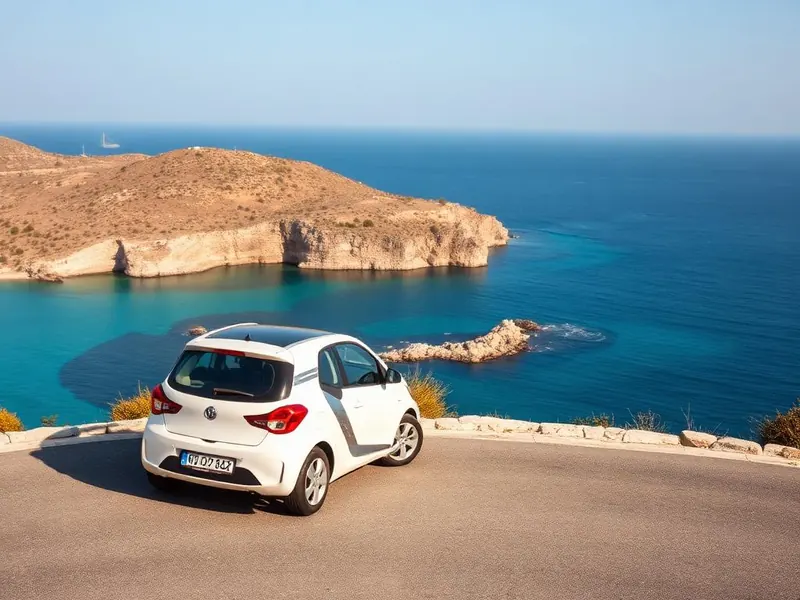
A rental car is the practical choice if you want to combine Apolakkia with the reservoir, churches and beaches. Those stops are spread out, and reaching the village is only part of the journey. From Rhodes Town, plan a full outing rather than a quick detour.
Bus services are limited. Check the live Rhodes bus timetables for your exact travel date and confirm both directions before setting off. Do not assume a bus into the village gives you a useful same-day return or access to the lake and remote beaches.
For a taxi visit, prearrange the return collection and agree any waiting or additional stops. Use Rhodes taxi prices for planning, then obtain a quote for your actual itinerary.
Roads around Apolakkia often have little traffic, but watch for loose gravel, rocks after storms, crosswinds and deep shadows near sunset. Refuel before a long southern or western loop and download offline maps. The quiet road is still a road that needs your attention.
Road distances from Apolakkia around Rhodes
Use these road distances to choose a manageable route. Typical drives exclude sightseeing stops, and you should leave extra margin for unfamiliar roads and traffic. The Monolithos figure is for the castle; the Rhodes Town reference point is the Old Town/Mandraki area.
| From Apolakkia to | Road distance | Typical drive |
|---|---|---|
| Monolithos Castle | 13 km | 15–20 min |
| Gennadi | 17 km | 20–25 min |
| Asklipio | 23 km | 25–35 min |
| Kiotari | 24 km | 30–40 min |
| Plimmiri | 26 km | 30–40 min |
| Embonas | 30 km | 30–45 min |
| Lindos village | 38 km | 45–60 min |
| Rhodes Airport | 68 km | 70–95 min |
| Rhodes Old Town (Mandraki) | 83 km | 90–125 min |
Frequently asked questions
How far is Apolakkia from Rhodes Town?
Apolakkia is 83 km by road from the Rhodes Old Town/Mandraki reference point. Allow a typical drive of 90–125 minutes, excluding stops.
Is Apolakkia on the beach?
No, the village is inland. Plan a separate trip to the nearby coast; Limni involves a dirt-road approach near Apolakkia Dam.
When is Apolakkia’s watermelon festival?
It is a summer celebration of the village’s watermelon-growing tradition. Check the current date locally, and do not confuse it with the Agia Marina religious celebration around the saint’s feast on 17 July.
Is Apolakkia Castle worth a special trip?
No—not unless you have a particular interest in fragmentary medieval remains. Very little survives; Monolithos Castle is the better addition to a general sightseeing day.
Can you visit Apolakkia without hiring a car?
Yes, using a bus connection that works for your date or a prearranged taxi. For the village, lake and beaches together, a car is substantially more practical; check bus return options before travelling.
Plan where to stay in Rhodes
- Where to Stay in Rhodes — All 16 main areas and every village guide
- Rhodes Area Comparison — Areas side by side by travel style
- Rhodes Greece Hotels — Hotels by area, style and budget
- Top Hotels in Rhodes — My curated hotel picks, area by area
- Where to Stay Without a Car — Walkable bases with good bus links
- Where to Stay With Kids — Family areas by age and holiday style
- Best Villas in Rhodes — My handpicked villas, ready to book