
Chapter 1 of 8
Which quiet beach in Rhodes should you choose?
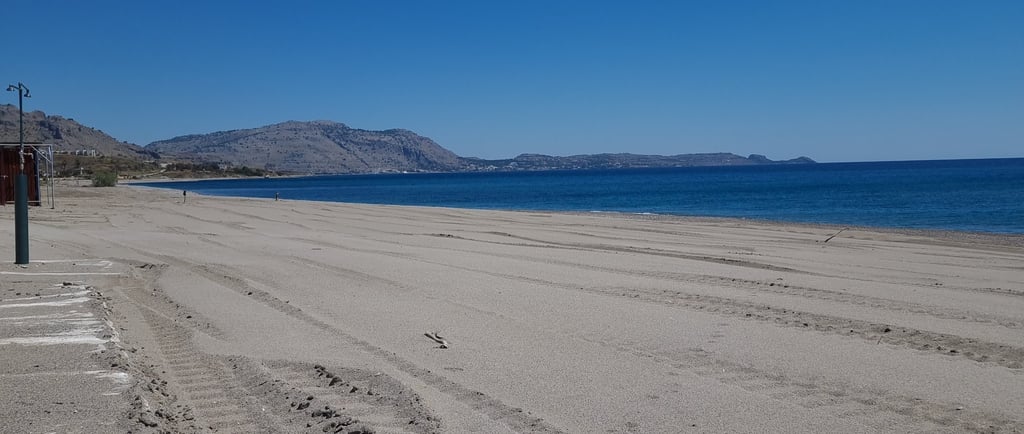
Choose Gennadi or Kiotari for long-coastline space, Glystra or Agathi for soft sand, Haraki or Kopria for a smaller-scale local atmosphere, and Fourni or Glyfada for wild scenery. The best quiet beaches in Rhodes aren’t all secluded: some offer room to spread out along a developed shoreline, while others trade convenience and gentle swimming for a more remote setting. If fewer crowds are only one part of your decision, start with the wider Rhodes beach shortlist.
More space or more seclusion?
For breathing room without making isolation the whole point of your day, I’d start with Gennadi and Kiotari. Their long coastlines let you move away from busier stretches; Kiotari also has resorts along the shore, so a quiet section isn’t the same thing as an undeveloped beach. Gennadi’s pebbly surface makes it a better match for long walks and open space than for anyone set on a soft-sand bay.
Smaller bays offer a different kind of peace. Haraki has a village atmosphere and restaurants along its promenade, while Kopria offers a low-key beach setting near Kritinia. These suit travellers who want a relaxed day with some life around them, rather than a feeling of being completely cut off.
Fourni and Glyfada are the scenery-first choices, but remoteness comes with a different beach experience. Fourni has cliffs and strong waves; Glyfada is a windy, open west-coast stretch. I’d choose them for walking, photography and time outdoors—not as substitutes for a gentle family swimming bay.
The useful distinction is between fewer people, less development and calmer water: those are three separate priorities. For the island’s broader coastal layout, the Rhodes Island Guide’s beach overview helps put these choices in context.
Choose by the beach day you want
Start with what would make the day enjoyable, then decide how much convenience you’re willing to give up. A peaceful lunch-and-swim day needs a different shortlist from an afternoon spent photographing a rugged coastline.
- Room to walk, read and spread out: choose Gennadi Beach or Kiotari. Their appeal is the length of the shoreline and the option to find a quieter section, rather than the intimacy of a secluded cove.
- Soft sand and family swimming: shortlist Glystra Beach and Agathi. Both have sandy shores and shallow water; Glystra is a small, protected bay, while Agathi offers quieter corners towards either end, away from the sunbed rows. I’d favour these over the wild west-coast options when gentle swimming matters most.
- A relaxed swim with lunch nearby: choose Haraki Beach for its village bay and promenade restaurants. Kopria is the alternative for a smaller, low-key beach-bar atmosphere. Neither choice needs to feel deserted to deliver a peaceful day.
- A mix of sand and pebbles: keep Lardos in mind as another easygoing option. Its spread-out shoreline and village-like atmosphere make it a useful middle ground if you’re less concerned about finding an all-sand bay.
- Wild scenery rather than gentle water: choose Fourni or Glyfada. They suit walkers, photographers and nature lovers, but are poor matches for nervous swimmers or families whose main aim is calm-water play.
My suggestion: if Fourni and Glyfada appeal and you want to explore several south- or west-coast beaches, I’d rent a car rather than build the day around limited public transport.
Chapter 2 of 8
Where can you find space along a longer coastline?
Gennadi, Kiotari and Lardos are good places to look when you want more space between towels rather than a completely secluded beach. A long coastline gives you more room to choose where to settle; a tiny bay can feel crowded with relatively few people. I’d choose Gennadi for its open pebbly shore, Kiotari for a slow day with a seaside walk, and Lardos for its relaxed, friendly character.
Gennadi Beach: a long pebbly shore
Gennadi Beach is my pick if open space is the main attraction. One of Rhodes’ longest beaches, it has a pebbly shore, clear deep-blue water and a peaceful atmosphere that suits long walks and quiet afternoons.
Choose it over Kiotari or Lardos when the idea of an expansive pebble beach appeals more than the atmosphere around your sunbed. If soft sand is essential, Gennadi would not be my first recommendation; water shoes are a sensible addition if pebbles bother your feet. Its length gives you options even during the busy summer months, without guaranteeing solitude wherever you arrive.
Kiotari Beach: room for a slower day
Kiotari Beach suits travellers who want peaceful swimming, a long seaside walk and very little else on the agenda. Its defining advantage is the length of the coastline: there is room to look beyond one beach setup rather than judge the whole place by the first section you see.
I’d choose Kiotari over Gennadi if your priority is a slow beach day around a resort area rather than specifically a pebbly, open-shore escape. Compared with Lardos, the long coastline is the main draw. Locals come for morning swims and sunset walks, but the presence of resorts means this is a search for breathing room, not an undeveloped hideaway.
Lardos Beach: an easygoing alternative
Lardos Beach is the choice I’d make for a relaxed, friendly beach day rather than a search for isolation. Its spread-out coastline, mix of sand and soft pebbles, and village-like atmosphere give it a gentler, easygoing character; the central and southern sections are particularly worth considering for a quieter spot.
Choose Lardos over Gennadi or Kiotari when atmosphere matters more than the sheer length of the shore. It suits couples and families who want an uncomplicated day, with generally gentle waves rather than a wild-coast experience. If you are also choosing a holiday base, the Rhodes Island Guide’s Lardos section helps put the beach in the context of the surrounding area.
My suggestion: If you want the flexibility to compare stretches before settling down, I’d rent a car rather than build the day around several fixed stops.
Chapter 3 of 8
Which quieter sandy bays would I choose?
I’d choose Glystra for a smaller, gentle sandy bay, and Agathi for soft sand with the option to look for a quieter corner at either end. Both belong on a family shortlist, particularly if sand matters more to you than a long stretch of coastline. Neither promises an empty beach: a compact bay such as Glystra gives you less room to move away from other beachgoers.
Glystra Beach: small, sandy and gentle
Glystra Beach is a small, soft-sand bay with protected shores and a gentle swimming character. I’d recommend it to families, couples and sand-preferring swimmers who want a relaxed beach day rather than a wild coastal escape.
Its compact size is both the attraction and the compromise. If it feels busy when you arrive, there is less coastline to spread out along, so I’d aim for early morning or later in the afternoon rather than rely on finding an empty patch whenever you turn up.
Between these two, Glystra would be my choice if the smaller-bay setting is the main draw. For children, that is a recommendation about the beach’s character—not a guarantee of safe swimming; assess the water on the day and keep supervision close.
Agathi Beach: soft sand and quieter corners
Agathi Beach, also called Agia Agathi, is the same sandy destination under two names. Its appeal here is the soft sand and the possibility of finding a quieter spot towards either end of the bay, away from the sunbed rows.
I’d shortlist it for families who want sand for beach play and swimmers planning an unhurried day in the water. Rather than expecting the whole beach to be quiet, make choosing your corner part of the plan: the edges offer a better prospect of space, not guaranteed solitude.
Compared with Glystra, I’d choose Agathi when finding a quieter section matters more than the intimacy of a small bay. If your priority is seeing almost nobody else, neither would be my first recommendation.
Chapter 4 of 8
Where can you find peace without chasing isolation?
Choose Haraki if you want a peaceful village bay with restaurants nearby, or Kopria if a low-key, local-feeling beach day sounds more appealing. Both suit travellers who want a relaxed atmosphere without making isolation the point of the outing. I’d shortlist them for an easygoing day by the sea, not for guaranteed silence or a shore all to yourself.
Haraki Beach: a peaceful village bay
Haraki Beach is the stronger choice if you like your beach to be part of village life. The small bay has clear, usually calm water, with restaurants lining the promenade. Its appeal is the combination of a relaxed swim and somewhere nearby to sit down for a meal—not an escape from every sign of development.
I’d recommend Haraki for couples wanting a slow seaside day and families who prefer a gentle village setting to a remote outing. My choice would be a morning swim followed by an unhurried meal along the promenade. If your idea of peace means no restaurants, no passing people and no village activity, this probably isn’t your beach.
Haraki also makes sense as a seaside base for calm swimming and quiet evenings, rather than just a beach stop. If that sounds like your kind of holiday, use the Rhodes Island Guide’s where-to-stay advice to weigh the setting against the rest of your plans.
Kopria Beach: a local-feeling alternative
Kopria Beach sits on the west coast near Kritinia and offers a different kind of quiet: simple beach life with a local feel. Clear, warm water and a low-key atmosphere are the draw, rather than Haraki’s village promenade. There is a beach bar, so this is a relaxed beach setting rather than an undeveloped retreat.
I’d choose Kopria if you want an informal beach day and care more about the atmosphere than having a village waterfront around you. It is less suited to anyone whose main requirement is complete seclusion; a local-feeling beach is still a shared place, not a private one.
For a west-coast outing with Kopria among several stops, I’d rent a car for the flexibility. Keep the plan unhurried: this is a place to choose for slowing down, rather than adding another beach to a packed itinerary.
Chapter 5 of 8
Which wild beaches suit a scenery-first escape?
Choose Fourni or Glyfada if your idea of a quiet beach day is dramatic scenery, walking and photography rather than gentle swimming. These west-coast beaches offer a wilder, less polished experience: Fourni brings cliffs and strong waves, while Glyfada offers a long, wind-exposed coastline. I’d put both on a scenery-first shortlist, not make them my first choice for an easy family swimming day.
Fourni Beach: wild west-coast character
Fourni is a remote, rugged beach near Monolithos, with cliffs, strong waves and striking sunsets. That rougher character helps keep it quieter and makes it particularly appealing to walkers, photographers and anyone who values natural scenery over a conventional beach setup.
I’d choose Fourni for time taking in the coastline, with late afternoon especially appealing if you want to stay for sunset. It’s a poor match for small children or nervous swimmers, so make the landscape—not a long, gentle swim—the reason you come.
Glyfada Beach: wind and dramatic scenery
Glyfada is a long, windy stretch of the west coast where open space and raw natural beauty are the main draw. Its wind exposure helps keep the crowds down, and it suits long walks, photography and quiet afternoons when you’re happy with a more exposed shoreline.
I’d pick Glyfada if walking beside the sea matters more to you than spending the afternoon in it. If calm water is the priority—especially with children—Glystra Beach is a better fit for your shortlist; Glyfada’s quiet atmosphere doesn’t mean quiet water.
My suggestion: if you want to explore several west-coast beaches, I’d rent a car rather than build the day around limited public transport. The Rhodes Island Guide’s transport advice will help you plan the wider route.
Chapter 6 of 8
When will a quiet beach suit your swimming plans?
A quiet beach suits a swimming day when the water conditions match your confidence—not simply when there are fewer people on the shore. I’d start with the east coast for relaxed swimming, look south for more space, and choose the west for wild scenery and walks. Those are useful starting points, but wind, waves and the conditions when you arrive matter more than a beach’s quiet reputation.
Choose the coast for the conditions
Quiet atmosphere and calm water are two different things. An almost empty beach can have lively waves, while a village bay can offer a more comfortable swim with restaurants and other beachgoers nearby.
- East coast for calmer-water choices: this is where I’d begin for families, less-confident swimmers and anyone who wants a relaxed dip. Shortlist places such as Glystra or Haraki, then judge the water on the day rather than expecting every east-coast beach to be equally sheltered.
- South for space: the long coastlines around Gennadi and Kiotari suit travellers who value room to spread out and long seaside walks. More space on the shore is the attraction; it is not a promise of gentler swimming conditions.
- West for a wilder feel: Fourni and Glyfada are better starting points for dramatic scenery, photography and walking than for a reliably gentle swim. Their windier, wave-exposed character makes them less appealing for small children or nervous swimmers.
Use timing to improve your chances of peace
My suggestion: try an early visit if a peaceful swim is the priority. Morning light and a quieter start make it an appealing choice, but arriving early cannot guarantee an empty beach or calm water.
Late afternoon is another option for softer light and a slower beach visit, especially if you would enjoy a walk as much as a swim. Keep sunset plans separate from swimming plans: a beautiful evening view does not tell you how comfortable the water will be.
Spring and autumn generally offer a quieter beach atmosphere than the busiest summer period, without guaranteeing solitude or swimming weather. In summer, choosing a longer beach and moving away from the organised sections can matter more than finding a supposedly perfect arrival time. For the wider seasonal trade-offs, use the Rhodes Island Guide’s advice on when to visit.
Make the final decision at the water
Before settling in, pause at the shoreline and look at the actual entry and wave movement. Clear water and a peaceful shore are appealing, but neither tells you everything about how easy it will be to get in, swim and get out.
With children, I’d prioritise a manageable entry and comfortable conditions over finding the emptiest corner. Inspect where they will step into the sea and keep them close; a family-friendly reputation is no substitute for watching the water together.
- Check your entry and exit: look at the sand, pebbles or rocks underfoot and whether waves make stepping in or out awkward.
- Match the swim to everyone in the group: if someone is uncomfortable with the wind or waves, choose another beach or enjoy this one from the shore.
- Reassess if conditions change: the decision to swim is not fixed for the whole day. Getting out and changing plans is better than sticking with a beach simply because you came for a quiet swim.
Chapter 7 of 8
Can you reach a quiet beach without a car?
Yes, a quiet beach day in Rhodes is possible without a car—but the sensible choice depends on where you’re staying and how the complete outward-and-return journey works. I’d start with a beach close to your accommodation rather than chase a remote cove across the island. Walking from a nearby base, taking a short taxi journey or choosing a workable bus route can make more sense than renting a car for one afternoon.
When I'd rent a car
I’d rent a car for a day exploring several quieter beaches, particularly along the south and west coasts, where beaches are spread out and public transport is limited. It gives you more freedom to change your plan or leave when you’re ready, rather than organise your swimming around connections.
If you're exploring several quieter beaches, I'd compare car rental options rather than build the day around multiple bus connections. For a single beach near your accommodation, though, I’d compare the practical door-to-door options before committing to a rental.
If you prefer not to drive but want a more remote outing, ask about a private driver for a planned beach trip. Agree the destination, accessible drop-off point and return pickup before booking; a one-way ride only solves half the day.
Choosing a realistic car-free beach day
Your accommodation base matters more than a beach’s position on a shortlist. If you’re staying near Gennadi or Kiotari, I’d first look for space along the nearby coastline; around Lardos or Pefkos, consider a nearby beach reached by a short taxi journey. Neither approach needs an island-wide beach-hopping plan.
For a holiday built around beach days without driving, Haraki Beach is worth considering as a base: the bay sits beside the village, with restaurants along the promenade. Before choosing accommodation, check the actual walking route to the shore rather than relying on the resort name alone.
Use bus planning in the Rhodes Island Guide to assess the whole journey. Services change seasonally, so check the current outward service, return departure and final walk from the stop together—not just whether a bus passes through the nearby village.
If you’re booking accommodation close to your chosen beach, Rhodes airport transfers can help with the arrival journey. Keep that separate from arrangements for any beach outings during your stay.
- Choose one beach with a straightforward journey rather than squeeze several stops into a car-free day.
- For families or anyone with limited mobility, prioritise a manageable final walk over a more secluded setting.
- Count waiting time, connections and walking in both directions when deciding whether the trip feels relaxing.
Parking, final access and the return journey
Arriving near a beach is not always the same as reaching the water comfortably. Before setting off, establish the exact beach entrance and the walking section from your parking place, bus stop or agreed drop-off point.
For a late-afternoon visit, work backwards from your return journey rather than letting sunset decide when you leave. I’d choose a closer beach if getting home depends on a tight connection or an uncertain pickup.
- Driving: ask locally about the current approach and suitable legal parking. Follow signs, leave access clear and check your rental agreement before taking an unpaved approach.
- Final walk: check the surface, gradient and distance, especially if you’re carrying beach gear, pushing a buggy or travelling with someone who finds uneven ground difficult.
- Taxi or private driver: agree a recognisable pickup location, return time and contact method before being dropped off.
- Bus: leave enough time to walk back to the correct stop without rushing, with a margin before your planned departure.
Chapter 8 of 8
What should you arrange before your beach day?
Before your beach day, sort out shade, pack your own essentials and decide how you’ll get there and back. I’d keep the plan to one beach rather than a cross-island circuit: a quiet afternoon is much easier to enjoy when you’re not watching the clock or relying on facilities you haven’t checked. For a wider look at the island's beaches, see my complete Rhodes Beach Guide.
Sunbeds, shade and everyday essentials
Sunbed availability, arrangements and charges can change through the season, including at Kopria Beach. Confirm the current terms locally before settling in, including whether an umbrella is included or a purchase is required, rather than budgeting around free beds.
If toilets, showers or somewhere to buy lunch are essential to your day, check those details for your chosen beach before leaving. This matters especially with children or for a longer stay: choose somewhere that meets your practical needs rather than chasing the most isolated stretch.
Make shade part of the plan, not something to work out once you’re hot. Bring suitable portable shade if you need it, or choose a beach where you’ve confirmed an available option; natural shade isn’t something to count on.
Pack for the beach you chose
For Gennadi Beach, pack with its pebbly shore in mind: I’d bring footwear that makes walking over pebbles comfortable and a padded mat if you prefer sitting on the beach. If sand underfoot matters more to you, choosing a sandy bay such as Glystra or Agathi is a better solution than trying to make a pebble beach suit you.
For a more remote, scenery-first outing, carry what you’ll need for the whole stay rather than building the day around buying supplies on arrival. Keep the bag practical—enough to be comfortable, but manageable if you want to walk along the shore.
- Drinking water for everyone, plus snacks or lunch if you’re planning a longer stay.
- Sunscreen, a hat and sunglasses, with suitable shade for the length of your visit.
- Footwear suited to your chosen shore and any walking you plan to do.
- A towel or beach mat, especially if you’re not planning to use a sunbed.
- A charged phone, with your destination and return arrangements saved.
- A bag to take your rubbish away.
Keep the day simple
My suggestion: choose one beach and leave time for its surroundings. Haraki Beach makes that particularly easy: spend time by the bay, then enjoy a meal along the restaurant-lined promenade and a little time in the village instead of driving off to another coast.
That approach suits anyone who wants an unhurried day rather than a checklist of beaches. Decide on your return arrangements before settling in, then give yourself permission to stay put.
If you still need transport, use the Rhodes Booking Marketplace to arrange a rental car or a transfer for your beach day.
Book transport for your quiet beach day
transfersFrequently asked questions
Which beaches in Rhodes are least crowded?
Gennadi and Kiotari are good starting points when your priority is space along a long coastline. Fourni and Glyfada offer a wilder alternative, but I'd choose them for their atmosphere rather than expect guaranteed solitude.
What are the best quiet beaches in Rhodes for families?
I'd start with sandy Glystra or Agathi if sand matters most to your family. Choose your swimming spot around the conditions that day, and keep children close rather than relying on a beach's gentle reputation.
Can I visit quiet beaches in Rhodes without a car?
Yes, but I'd build the day around a beach close to your accommodation rather than a remote destination. For a bus trip, confirm both the outward and return services and the walk between the stop and the beach; for a transfer, agree the pickup location and return arrangement.
Which quiet beaches in Rhodes have sand rather than pebbles?
Glystra and Agathi are the sandy choices in this shortlist. Gennadi is the clearer choice if you prefer a long pebbly coastline and room to spread out.
Does a quiet beach always have calm swimming water?
No. Fewer people tells you little about wind or waves: Glyfada is a windy, wild option, while the east coast is the better starting point when calmer water is your priority. Make the final swimming decision at the shore.
Is Haraki a secluded beach?
Haraki is a peaceful village bay rather than an isolated beach escape. I'd choose it for a relaxed village setting, not for the feeling of being far from everything.
When should I visit if avoiding crowds is my priority?
My suggestion is to try an early visit and keep your plans flexible. A beach's atmosphere changes with the season and the day, so choose somewhere with room to move rather than counting on a particular hour being empty.
Should I choose Gennadi or Glystra for a quiet beach day?
Choose Gennadi for a long pebbly shore and the opportunity to find more space. Choose Glystra if a smaller sandy bay is more important than having a long coastline to explore.
Are secluded beaches in Rhodes better for swimming?
Not necessarily. Fourni and Glyfada appeal for their wild character, but seclusion is not a swimming-safety measure. If swimming is the main reason for your trip, put the sea conditions ahead of the scenery.
Related pages
- Best Beaches in Rhodes (2026) – The Ones You’ll Want to See First
- Gennadi Beach Rhodes 2026 — Long Quiet Pebbly Coast
- Glystra Beach Rhodes (2026): Calm Sandy Bay & What to Expect
- Haraki Beach Rhodes 2026 — Clear Water & Village Vibes
- Kiotari Beach Rhodes 2026 — Long Quiet Coastline Guide
- Lardos Beach Rhodes 2026 — Quiet Coastline for Relaxed Days
- Agia Agathi Beach Rhodes 2026 — Wild Sandy Bay Guide
- Kopria Beach Rhodes 2026 — Free Sunbeds & Local Vibe Guide