
The Ancient Island: City-States & The Colossus
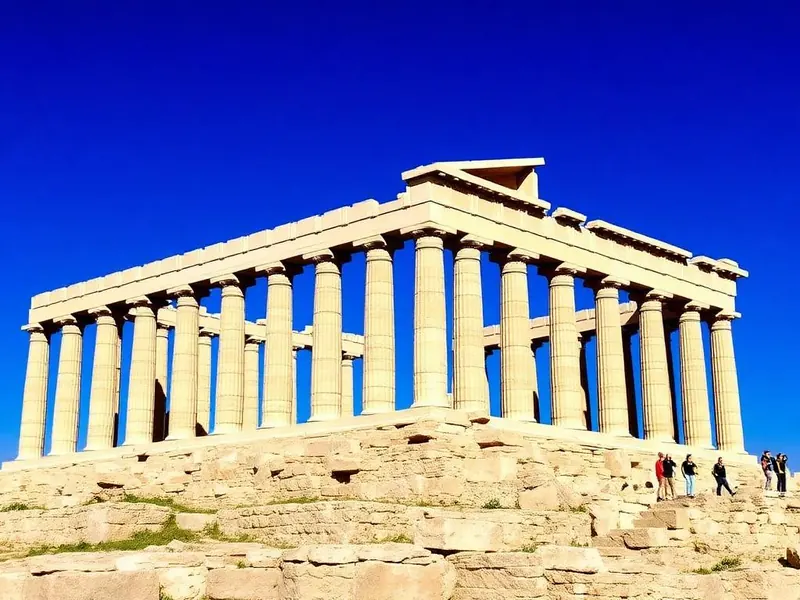
Before Rhodes Town became the capital in 408 BCE, the island was dominated by three powerful city-states: Lindos, Ialysos, and Kamiros. To connect with this early history, the Acropolis of Lindos and the ruins of Ancient Kamiros are the essential starting points. They offer a direct look at the island's political landscape before the unified capital was established.
The famous Colossus of Rhodes was a real statue built to celebrate a military victory, but it was destroyed by an earthquake in 226 BCE. No parts of the bronze wonder survive, and its exact location is a matter of theory, not fact. The popular image of the statue straddling the harbour is a later myth, and the deer statues at Mandraki are modern symbols, not ancient markers.
Medieval Defences: From Byzantine Walls to Knights' Castles
The Knights of St John arrived in 1309 to an already fortified capital. The Old Town’s defensive layout began in the late Byzantine period, a foundation the Knights later expanded dramatically. Viewing the walls with this sequence in mind reveals a story of successive efforts to protect the city.
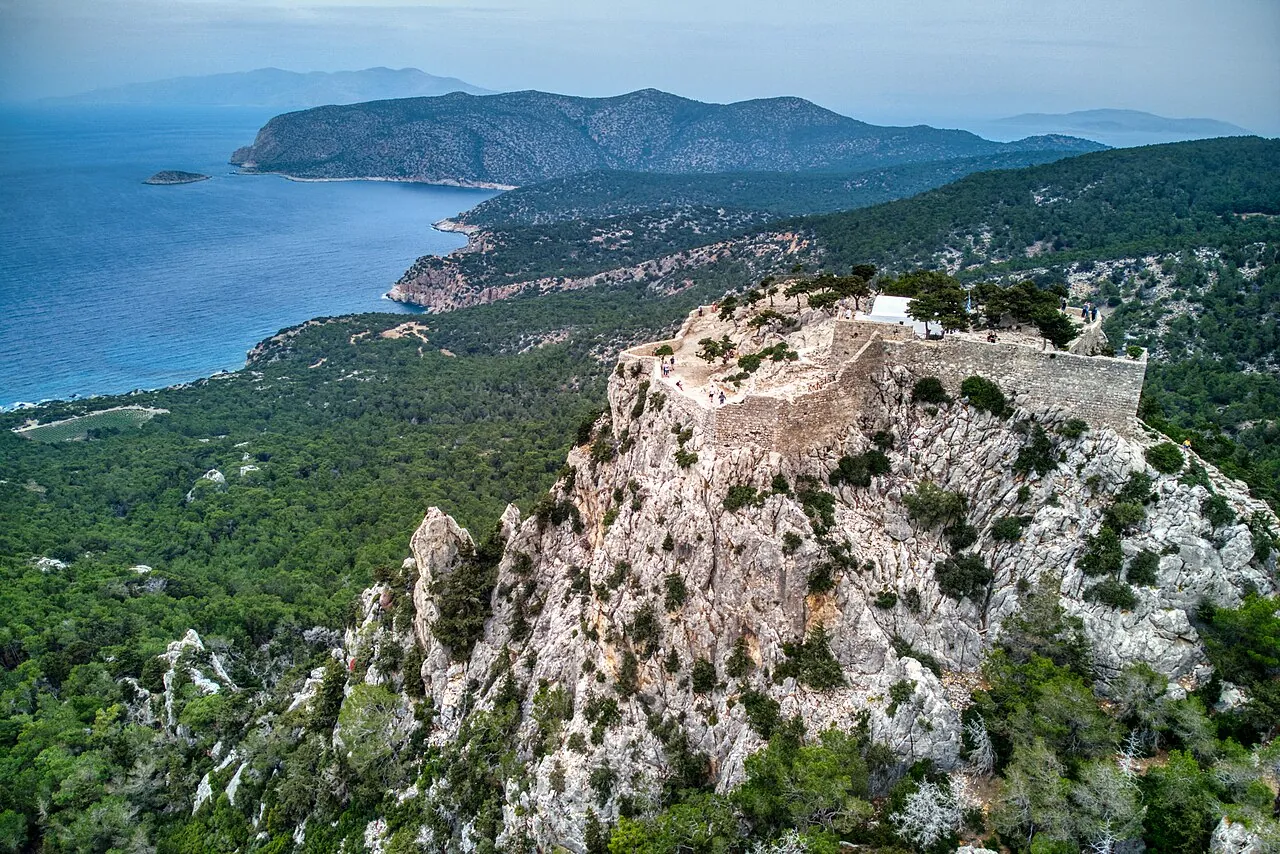
This defensive focus was not limited to the capital. Out on the rugged west coast, Monolithos Castle showcases a different approach. Built in 1476, its power comes from the landscape itself, with the fortress perched atop a sheer, standalone rock. It’s a powerful example of how natural features were used as strategic assets.
A Modern Legacy: Italian Architecture by the Sea
For a complete change of pace and period, Kallithea Springs reveals a 20th-century chapter of Rhodes’ history. Developed by the Italian administration as a grand thermal spa, it has nothing to do with ancient healing sites. Today, its purpose has changed again; the restored complex is a cultural monument appreciated for its unique architecture, landscaped gardens, and sea access.
The site is defined by its ornate, Mediterranean and Middle Eastern-influenced style, with a grand rotunda, mosaic floors, and white colonnades. Below the buildings, a sheltered cove provides a place to swim from rocky platforms, combining a cultural visit with time by the water.
How to Choose Your Historical Sites
Rhodes offers a wide range of historical sites, each telling a different part of the island's story. Use these suggestions to focus your visit based on your interests:
- For ancient history, prioritise the Acropolis of Lindos and Ancient Kamiros. Treat the Colossus as a fascinating story, not a surviving monument.
- For fortifications, contrast the layered defensive history of the Old Town with the wild, landscape-defined setting of Monolithos Castle.
- For a west-coast historical drive, choose from Filerimos, Ancient Kamiros, Kritinia Castle and Monolithos to trace a path through different eras.
- For distinctive architecture combined with a swim, Kallithea Springs offers a completely different kind of visit from the ancient sites and castles.
Related Rhodes guides
Next, read our local guides to Lindos, Ancient Kamiros and Monolithos Castle. Check the details of the specific place or listing before you book, as general island advice will not fit every trip.
Frequently asked questions
Can I see the Colossus of Rhodes?
No. The statue was destroyed by an earthquake in 226 BCE and no parts of it survive. Its exact location remains unknown, and the famous image of it straddling the harbour is a myth. The deer statues at Mandraki harbour are modern additions.
Is Kallithea Springs an ancient site?
No, it represents a much later period of history. The complex was designed and built as a thermal spa by the Italian administration in the early 20th century. It is now a restored cultural monument, not an ancient ruin.
Which sites are best for seeing Rhodes' ancient history?
The Acropolis of Lindos and the ruins of Ancient Kamiros are the best places to visit. They were two of the three original city-states that existed on the island before the capital, Rhodes Town, was founded.